
Clarithromycin & Calcium Channel Blocker Interaction Checker
Select the Calcium Channel Blocker (CCB) you are currently taking to see the interaction risk with Clarithromycin.
Interaction Analysis
Recommended Action Plan
- ✓
- ✓
- ✓
Imagine your blood pressure dropping so fast that you feel dizzy, nauseous, or even faint within two days of starting a common antibiotic. This isn’t a rare side effect; it is a predictable chemical collision between Clarithromycin, a widely prescribed antibiotic, and calcium channel blockers (CCBs), the standard treatment for high blood pressure and heart conditions. When these two drugs meet in your body, they don’t just coexist-they clash. The result can be severe hypotension (dangerously low blood pressure) and, in some cases, acute kidney injury requiring hospitalization.
If you are taking medication for hypertension or angina, this interaction matters to you. It is not theoretical. Major health agencies like the FDA and Health Canada have issued specific warnings about this combination because it causes preventable harm at an alarming rate. Understanding why this happens-and what safer alternatives exist-can protect your health during your next infection.
The Hidden Mechanism: How Clarithromycin Blocks Your Body’s Cleanup Crew
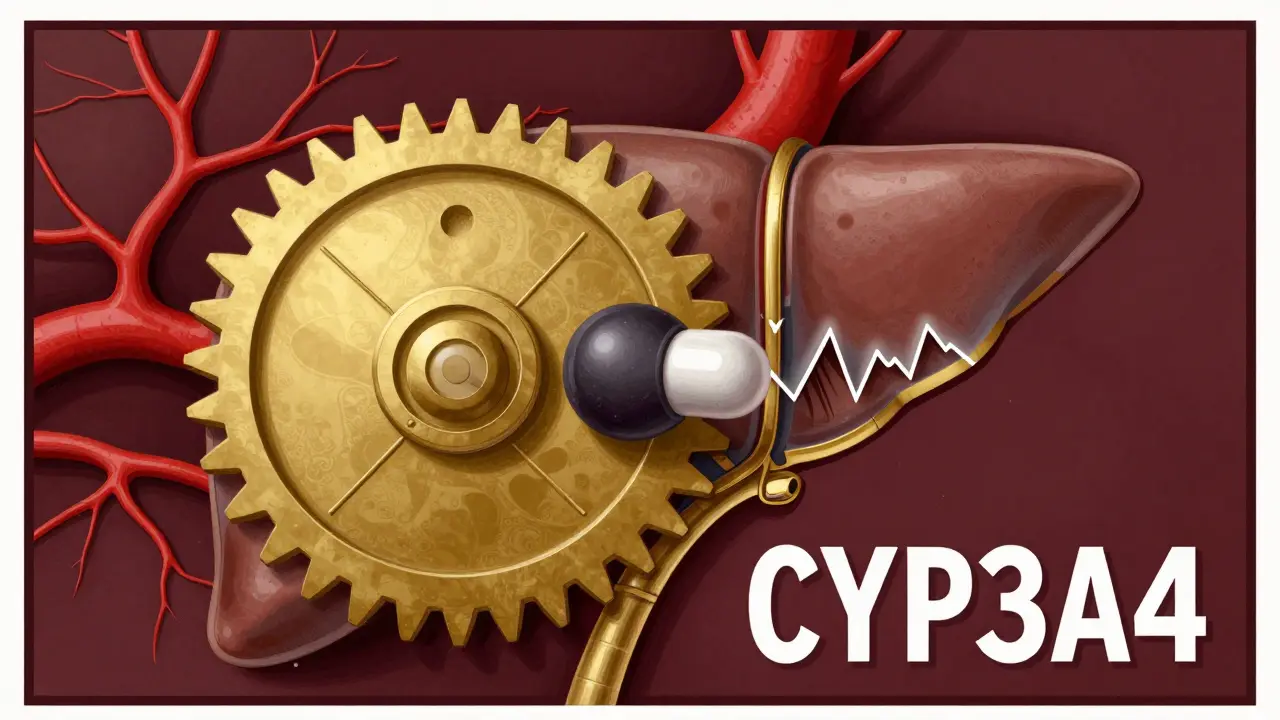
To understand the danger, we need to look inside your liver. Your body uses enzymes to break down medications so they can leave your system safely. One of the most important of these enzymes is CYP3A4, a cytochrome P450 enzyme responsible for metabolizing nearly half of all prescription drugs. Most dihydropyridine calcium channel blockers, such as nifedipine and amlodipine, rely heavily on CYP3A4 to clear them from your bloodstream.
Here is where clarithromycin steps in. It is a potent inhibitor of CYP3A4. Think of it as a roadblock. When you take clarithromycin, it shuts down the enzyme’s ability to process other drugs. Studies show it reduces the metabolism of calcium channel blockers by 50% to 80%. Without that cleanup crew working, levels of the blood pressure medication build up in your blood. Pharmacokinetic data reveals that clarithromycin can increase the exposure (Area Under the Curve) of nifedipine by nearly three times and amlodipine by 1.6 times. That surge in drug concentration forces your blood vessels to dilate too much, causing your blood pressure to plummet.
Who Is at Highest Risk? The Nifedipine Danger Zone
Not all calcium channel blockers carry the same level of risk. While the interaction affects the entire class, some drugs are far more dangerous when mixed with clarithromycin than others. A landmark 2013 study published in JAMA analyzed over 96,000 patients and found a clear hierarchy of risk:
- Nifedipine: Carries the highest risk. The odds ratio for adverse events was 5.33. In practical terms, the number needed to harm is just 159 patients. This means for every 159 people taking this combination, one will likely end up in the hospital.
- Felodipine: High risk, though slightly lower than nifedipine.
- Amlodipine: Moderate to high risk. Because it is the most commonly prescribed CCB, it accounts for the largest number of actual incidents simply due to volume.
- Verapamil and Diltiazem: These non-dihydropyridines also interact but present additional risks related to heart rhythm (bradycardia) rather than just blood pressure drops.
Age plays a massive role here. Older adults often have reduced kidney function and may take multiple medications. The American Geriatrics Society Beers Criteria specifically lists clarithromycin as potentially inappropriate for older adults taking CYP3A4 substrates. If you are over 65 and on nifedipine, the risk is not just elevated-it is critical.
| Drug Name | Type | Interaction Severity | Key Risk Factor |
|---|---|---|---|
| Nifedipine | Dihydropyridine | Very High | Highest odds ratio (5.33); rapid onset |
| Felodipine | Dihydropyridine | High | Significant metabolic inhibition |
| Amlodipine | Dihydropyridine | Moderate-High | Most common cause due to high prescription rates |
| Verapamil | Non-Dihydropyridine | Intermediate | Risk of bradycardia and heart block |
Real-World Consequences: From Dizziness to Dialysis
What does this interaction actually look like in a patient? Case reports paint a vivid picture. In a 2017 report published in BMJ Case Reports, a 76-year-old woman took her usual dose of nifedipine (30 mg daily) and started clarithromycin (500 mg twice daily) for a respiratory infection. Within 48 hours, her systolic blood pressure dropped from a normal 130 mm Hg to a dangerous 70 mm Hg. She required intravenous fluids and ICU monitoring.
This is not an isolated incident. Data from the FDA Adverse Event Reporting System identified nearly 2,000 cases of hypotension linked to this specific combination between 2010 and 2020. The consequences go beyond feeling faint. Severe hypotension reduces blood flow to the kidneys. This lack of perfusion can trigger Acute Kidney Injury (AKI), sudden loss of kidney function that may require temporary dialysis. The JAMA study noted that the absolute risk of hospitalization for AKI doubled when clarithromycin was used compared to safer alternatives. For patients with pre-existing heart failure or chronic kidney disease, this drop in blood pressure can be fatal.
The Safe Alternative: Why Azithromycin Wins Every Time
You might wonder if you should just stop taking your blood pressure medication. Absolutely not. Uncontrolled hypertension carries its own severe risks. The solution lies in choosing the right antibiotic. Not all macrolide antibiotics inhibit CYP3A4.
Azithromycin, another popular macrolide antibiotic often used for respiratory infections, is chemically different. It does not significantly block the CYP3A4 enzyme. In the large-scale JAMA study, patients who took azithromycin alongside their calcium channel blockers showed no statistically significant increase in adverse events compared to those not on antibiotics. Switching from clarithromycin to azithromycin cuts the risk of hospitalization for acute kidney injury by 50%.
Erythromycin, another older macrolide, behaves similarly to clarithromycin and carries the same high risk. Newer options like fidaxomicin do not affect CYP3A4 but are typically reserved for gut-specific infections. For general respiratory or skin infections where a macrolide is indicated, azithromycin is the clear winner for safety.

Action Plan: What You Should Do Before Taking Clarithromycin
Knowledge is protection. If you are prescribed clarithromycin, follow these steps immediately:
- Check Your Med List: Look for nifedipine, amlodipine, felodipine, verapamil, or diltiazem. If you see any of these, flag it for your prescriber.
- Ask for a Swap: Politely ask your doctor, "Since I am on a calcium channel blocker, can we use azithromycin instead to avoid the blood pressure drop?" Most doctors will agree instantly once reminded.
- Monitor Closely if Necessary: If you must take clarithromycin (perhaps due to resistance patterns), monitor your blood pressure at home every 4 to 6 hours for the first three days. Watch for symptoms like extreme fatigue, blurred vision, cold sweats, or confusion.
- Know the Red Flags: If your systolic blood pressure drops below 90 mm Hg or falls more than 30 points from your baseline, seek emergency care. Do not wait.
Clinical decision support systems in hospitals are getting better at catching this, but community pharmacies and private practices still miss it frequently. A 2018 study found that less than half of electronic health records had active alerts for this specific interaction. You are your best advocate.
Why Does This Still Happen?
Despite warnings from the FDA since 2011 and major studies highlighting the danger, clarithromycin prescriptions continue to overlap with CCBs. Why? Habit and oversight. Doctors often prescribe clarithromycin for stubborn sinus infections or pneumonia without fully reviewing the patient's cardiovascular history. Additionally, patients may fill prescriptions at different pharmacies, fragmenting their medical record visibility.
The Institute for Safe Medication Practices classifies this as a "high-alert" interaction. Yet, it still causes thousands of hospitalizations annually. The good news is awareness is growing. Recent data shows azithromycin now accounts for over 68% of macrolide prescriptions for patients on CCBs, up from 52% a decade ago. But until the gap closes completely, vigilance is required.
How quickly does the hypotension occur after taking clarithromycin?
Symptoms typically appear rapidly, often within 24 to 72 hours of starting the antibiotic. The peak effect usually coincides with steady-state levels of clarithromycin in the blood, which takes about 2-3 days. However, sensitive individuals may experience a drop in blood pressure after just the first or second dose.
Can I take my calcium channel blocker and clarithromycin at different times of day to avoid the interaction?
No, timing the doses separately will not prevent the interaction. The issue is not about the drugs mixing in your stomach; it is about clarithromycin shutting down the liver enzyme (CYP3A4) that processes the blood pressure medication. Once the enzyme is inhibited, it stays inhibited for several days, regardless of when you take the pills.
Is erythromycin safe to take with calcium channel blockers?
No, erythromycin is also a potent inhibitor of CYP3A4 and carries similar risks to clarithromycin. It can cause significant increases in calcium channel blocker levels, leading to hypotension and potential kidney injury. Azithromycin is the preferred alternative in this scenario.
What should I do if I already developed low blood pressure from this combination?
Stop taking the clarithromycin immediately and contact your healthcare provider or seek emergency care. Lie down with your legs elevated to help restore blood flow to your brain. Your doctor may need to temporarily adjust your blood pressure medication dosage until the clarithromycin clears your system, which can take several days.
Are there other antibiotics that interact with calcium channel blockers?
While macrolides like clarithromycin and erythromycin are the most notable offenders, other strong CYP3A4 inhibitors include certain antifungals (like ketoconazole) and HIV protease inhibitors. Common antibiotics like penicillins, cephalosporins, and doxycycline generally do not have this specific metabolic interaction with CCBs.