Throwing away a bottle of pills because they expired feels wasteful. It’s frustrating, especially when you paid good money for them. But here is the hard truth: most of us are accidentally speeding up that expiration clock without even realizing it. We keep our heart medication in the bathroom cabinet or our insulin on the kitchen counter next to the toaster. These small habits don’t just ruin the drugs; they waste billions of dollars annually and can leave you unprotected when you need treatment most.
The United States sees roughly $20 billion worth of medication go bad every year due to improper handling. That isn't just a statistic; it represents failed treatments and potential health risks. The good news? You have total control over this. By understanding how light, heat, and humidity attack pharmaceutical compounds, you can extend the life of your prescriptions and over-the-counter remedies significantly. Let’s look at exactly where your meds should live and why your current stash spot might be the problem.
The Bathroom Cabinet Trap
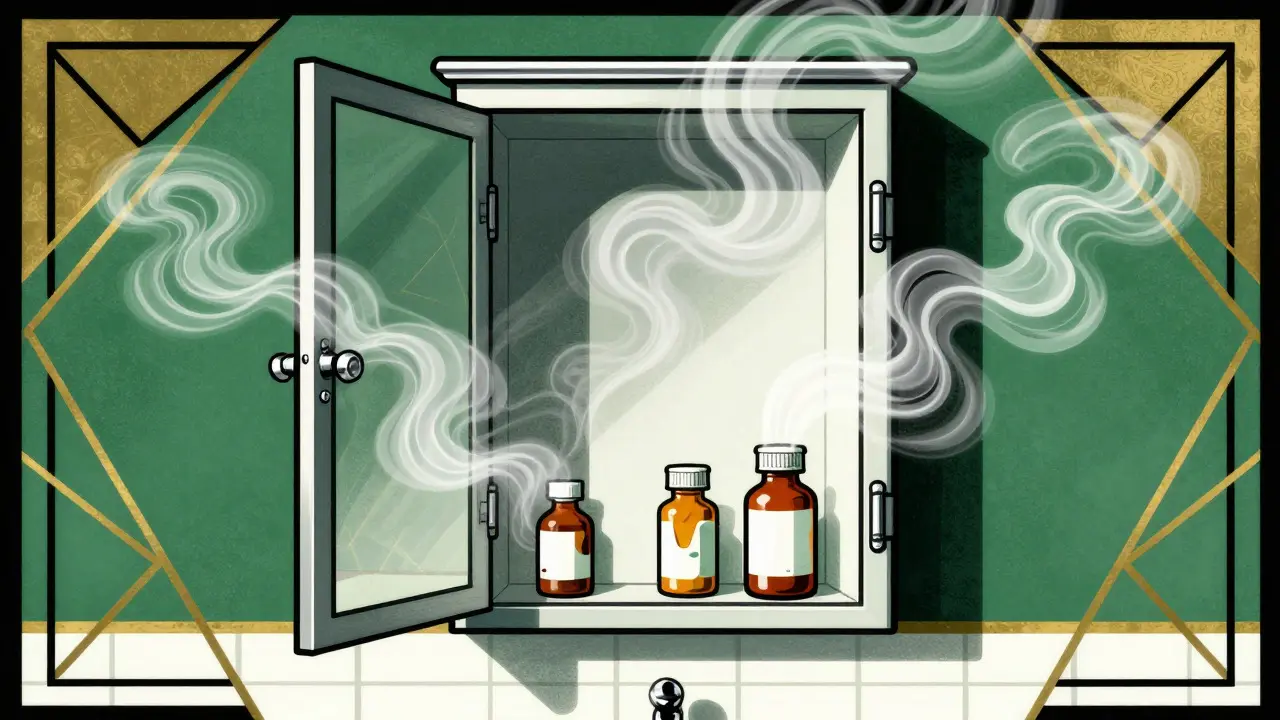
If you open your medicine cabinet after taking a hot shower, you aren't looking at a storage space. You're looking at a sauna. This is the single biggest mistake people make with medication storage. The bathroom is a high-humidity environment. When you run a shower, relative humidity can spike from a comfortable 40% to nearly 95% in minutes.
Moisture is the enemy of chemical stability. For solid dosage forms like tablets and capsules, the ideal relative humidity is below 60%. In a steamy bathroom, that moisture seeps into the bottle, even if the cap is tight. A study by UCHealth in 2023 showed that aspirin exposed to these humidity spikes breaks down 300% faster than it would in a dry room. That vinegar smell you sometimes get from old aspirin? That’s acetylsalicylic acid breaking down into salicylic acid and acetic acid. It means the pain relief is gone, and worse, it could irritate your stomach lining.
Moving your meds out of the bathroom doesn't mean hiding them in a closet floor. It means finding a cool, dry place. A dresser drawer in a bedroom or a locked cabinet in a hallway is far superior. These areas maintain steady temperatures and low humidity levels, keeping your pills intact for their full shelf life.
Kitchen Counters and Heat Fluctuations
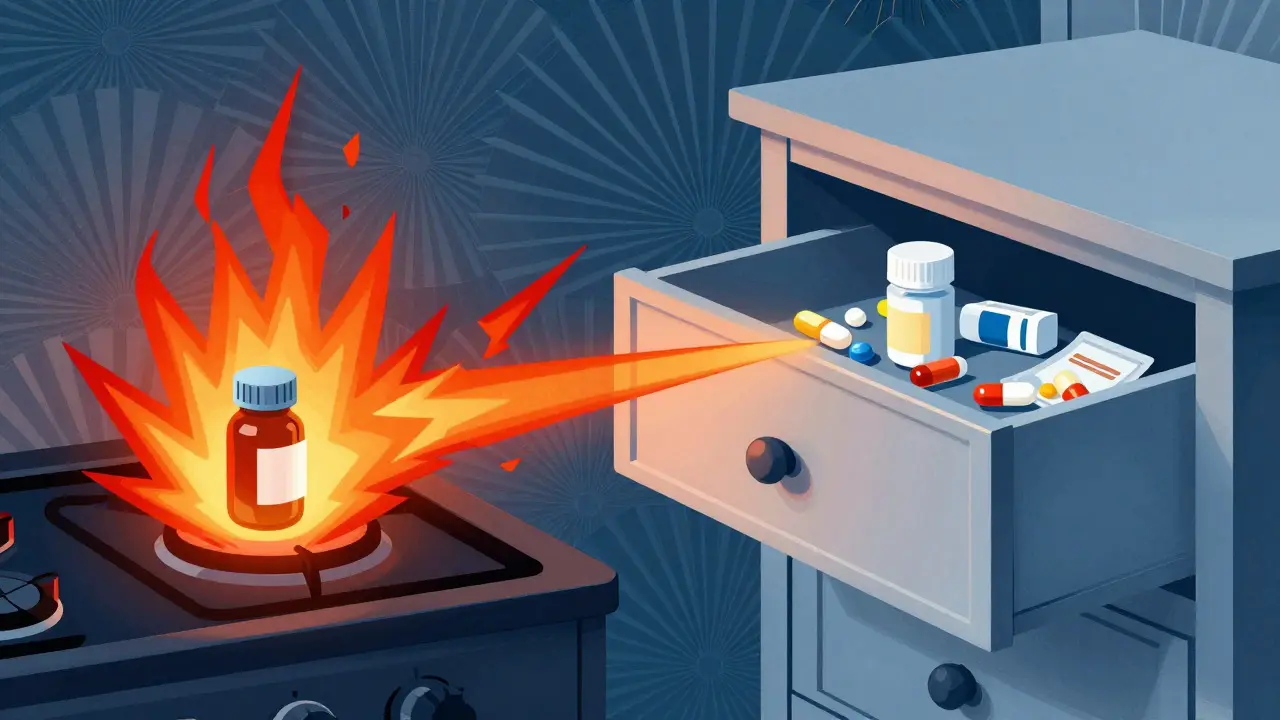
The kitchen seems convenient because you’re always there, but it’s actually one of the harshest environments for drugs. Think about what happens in a kitchen during the day. You boil water for pasta, you bake cookies, you run the dishwasher. All of this releases heat. Research from the Swedish Medical Center found that temperature near stoves and ovens can fluctuate by more than 15°C (27°F) within just 30 minutes.
Most solid medications are designed to be stored between 20-25°C (68-77°F). When temps swing wildly, the chemical bonds in the drug molecules weaken. Antibiotics are particularly sensitive. That same research indicated that 42% of common antibiotics degrade significantly within 90 days if stored near heat sources. If you take an antibiotic that has lost potency, you aren't just wasting money; you risk developing a resistant infection because the bacteria weren't fully killed off.
Avoid storing meds above the fridge, near the window where sunlight hits, or under the sink if pipes run through there. Look for interior walls away from appliances. Consistency is key. Your body expects a specific dose of medicine; a degraded pill delivers less, throwing off your treatment plan.
Refrigeration Rules: What Goes In and Out
Not everything needs the cold. In fact, putting things in the fridge that don't belong there can cause condensation issues when you take them out. However, certain liquids and biologics strictly require refrigeration to stay effective. Insulin is the classic example. Unopened insulin must be kept between 2-8°C (36-46°F). Once you start using a vial or pen, it can usually sit at room temperature for up to 28 days, depending on the brand. Check the label.
When you do refrigerate meds, placement matters. Don't shove them in the door. The door is the warmest part of the fridge because it opens and closes constantly, causing temperature swings. Instead, store liquid medications in the center of the main compartment, away from the back wall where frost can form. This zone offers the most stable temperature.
Eye drops are another category that often requires refrigeration, especially after opening. The American Society of Health-System Pharmacists warns that eye drops stored beyond their expiration date-or improperly-can become contaminated with bacteria like Pseudomonas aeruginosa. This bacteria can cause serious eye infections. Keep multi-dose eye drops in the fridge and discard them after the timeframe listed on the box, which is often 28 to 30 days after opening, regardless of the printed expiration date on the tube.
Light Exposure and Original Containers
Light, specifically ultraviolet (UV) radiation, breaks down many active ingredients. This is why so many prescription bottles are amber or brown. According to the Journal of Pharmaceutical Sciences, these dark containers block 97% of UV light. Clear plastic or glass offers almost no protection.
This brings us to a crucial rule: never transfer your medications to generic pill organizers or clear jars unless directed by a pharmacist. The original manufacturer's container is engineered to protect the drug. It includes desiccants (little packets that absorb moisture) in some cases and blocks light. When you move pills to a weekly organizer, you expose them to air, light, and humidity every time you open the lid. Use those organizers only for the week's supply, and keep the rest in the original bottle.
Nitroglycerin tablets are extremely sensitive to light and air. They must stay in their original dark glass container, tightly capped, and not carried in your pocket where body heat affects them. If you take nitroglycerin for chest pain, proper storage isn't just about saving money; it's about ensuring the drug works during an emergency.
Organizing to Track Expiration Dates
Even with perfect storage, meds expire. The FDA defines the expiration date as the last day the manufacturer guarantees the drug retains 90-110% of its labeled potency. To avoid surprise expirations, you need a system.
One effective method used by healthcare institutions is color-coding. You can buy dot stickers in different colors. Assign red for medications expiring this year, blue for next year, and green for two years out. Stick these dots on the front of the bottle. At a glance, you know what needs attention.
Designate one person in the household to check dates monthly. Set a calendar reminder. During this check, look for physical signs of degradation. Tablets that are crumbling, discolored, or have strange odors should be tossed immediately. Liquids that look cloudy or have particles floating in them are also compromised. Don't taste-test to see if they still work; if they look wrong, throw them out.
| Medication Type | Ideal Temperature | Humidity/Light Needs | Common Mistakes |
|---|---|---|---|
| Tablets/Capsules | 20-25°C (68-77°F) | Low humidity (<60%), Dark | Bathroom cabinets, car glove boxes |
| Insulin (Unopened) | 2-8°C (36-46°F) | Refrigerated, Center shelf | Freezing, Door shelves |
| Eye Drops | Varies (Often Refrigerated) | Closed tightly, Clean hands | Using past 28-30 days post-open |
| Nitroglycerin | Room Temp | Original Dark Glass Container | Transferring to plastic bags |
| Liquid Antibiotics | As Directed (Often Fridge) | Shake well, Discard after course | Keeping leftovers for future use |
Safe Disposal of Expired Drugs
Once a medication expires or shows signs of spoilage, getting rid of it safely is the final step. Flushing drugs down the toilet was once common advice, but it pollutes water supplies. Only flush medications if the label specifically says to do so (usually potent opioids or nitroglycerin).
The best option is a drug take-back program. The DEA hosts National Prescription Drug Take Back Days twice a year, with thousands of collection sites nationwide. Many local pharmacies and police stations also have permanent drop-off kiosks. If you don't have access to these, mix the pills with unpalatable substances like dirt, cat litter, or used coffee grounds in a sealed bag before throwing them in the trash. This prevents pets or children from digging them out.
Proper storage saves money and keeps you healthy. By moving meds out of the bathroom, avoiding kitchen heat, respecting refrigeration rules, and keeping them in their original packaging, you ensure that when you need that medicine, it actually works.
Can I store my medications in the car?
Generally, no. Cars experience extreme temperature fluctuations. In summer, the interior can exceed 60°C (140°F), melting capsules and degrading chemicals. In winter, freezing temperatures can break down liquid suspensions. Unless you are transporting meds temporarily in an insulated bag, the glove box is a poor long-term storage solution.
Is it safe to take expired medication?
For most solid, dry medications, taking them shortly after expiration likely won't hurt you, but they may be less potent. However, for critical conditions like epilepsy, heart disease, or asthma, reduced potency can be dangerous. Liquid antibiotics and eye drops pose higher risks of bacterial contamination after expiration. Always consult a pharmacist before using expired critical meds.
Why shouldn't I put pills in a weekly organizer?
Weekly organizers expose pills to air, light, and humidity every time you open them. They also lack the child-resistant locks and protective coatings of original bottles. Use organizers only for the current week's supply, and keep the remaining stock in the original pharmacy container to preserve stability.
How do I know if my medication has degraded?
Look for changes in appearance or smell. Tablets that are cracked, discolored, or softer than usual are suspect. Liquids that are cloudy, have floating particles, or smell odd should be discarded. Aspirin that smells like vinegar has broken down. If in doubt, ask your pharmacist.
Where is the best place to store insulin?
Unopened insulin must be refrigerated between 2-8°C (36-46°F) in the main body of the fridge, not the door. Once opened, most insulins can be kept at room temperature (below 25°C/77°F) for up to 28 days. Protect it from direct sunlight and extreme heat.
Everyone needs to stop keeping their meds in the bathroom cabinet because it is literally a sauna and you are ruining your expensive prescriptions. The humidity spikes from hot showers destroy the chemical stability of tablets way faster than people realize. I have seen aspirin turn into vinegar smell just from sitting there for a few months. It is not just about saving money on replacements but actually getting the therapeutic effect when you need it. Most people think a tight cap stops moisture but it does not stop vapor from seeping in over time. You want a dry cool place like a bedroom drawer or a hallway closet instead. This simple move can save billions in wasted healthcare costs annually. Stop treating your medicine cabinet like a storage unit for toothpaste and pills together. The science is clear on this one.
i usually keep mine in a small box in my desk drawer since it stays cool and dark all day long works great for me no issues with expiration dates ever
The notion that pharmaceutical companies provide adequate guidance on storage is fundamentally flawed, as they prioritize profit margins over patient education, leading to widespread degradation of compounds due to environmental factors such as humidity and heat which are rarely monitored by the average consumer who trusts the label blindly without understanding the complex chemistry involved in drug stability mechanisms.
It is morally irresponsible to let medications degrade when proper storage is so simple and accessible to everyone in modern society. We waste resources daily by ignoring basic instructions that could preserve health and reduce financial burden on families. When we fail to store insulin correctly we risk diabetic emergencies that could have been prevented with minimal effort. Antibiotics losing potency leads to antibiotic resistance which is a global health crisis fueled by individual negligence. We must take ownership of our health management rather than blaming manufacturers for spoilage caused by our own habits. A dresser drawer is not hard to find yet millions still use bathrooms. This lack of diligence reflects poorly on our collective responsibility toward personal wellness and resource conservation. Let us do better for ourselves and future generations.
I completely agree with the point about light exposure being a major factor in medication degradation, especially for those sensitive compounds! It is fascinating how much UV radiation breaks down active ingredients, which is why amber bottles exist in the first place. Many patients transfer their pills to weekly organizers without realizing they are exposing them to air and light every single time they open the lid. I always recommend keeping the original container for long-term storage and only using organizers for the immediate week's supply. This small habit change can significantly extend the shelf life of your prescriptions and ensure you get the full dose every time. Thank you for sharing these valuable insights!
In many cultures, storing medicine in the kitchen is common practice due to space constraints, but this guide highlights why that might be problematic. Heat fluctuations from cooking appliances can indeed compromise drug integrity. It is important to adapt traditional practices to scientific recommendations for better health outcomes. Finding a consistent temperature spot away from windows and appliances is key. This knowledge helps bridge cultural habits with medical best practices.
Hey team, let’s get this right because your health depends on it! Storing meds properly is a game changer for effectiveness. Don’t ignore the fridge rules for insulin and eye drops. Keep them in the main compartment, not the door, to avoid temp swings. Check labels often and toss anything looking weird. Small steps lead to big health wins! Stay sharp and stay healthy out there.
The philosophy of preservation applies to both mind and body. Just as we curate our thoughts, we must curate our environment to support well-being. Medication storage is a metaphor for intentionality. If we neglect the physical vessel, we neglect the potential within. Consistency breeds reliability. Let us be mindful of where we place what sustains us.
People really think they know better than the FDA guidelines? It is hilarious how everyone ignores the basic chemistry of degradation. You keep your nitroglycerin in your pocket and wonder why it fails during an emergency. It is not magic; it is physics. Moisture destroys tablets. Heat melts capsules. Light breaks bonds. Yet here we are debating bathroom cabinets. The ignorance is staggering and frankly dangerous. Stop making excuses and read the leaflet.
Well folks, it seems like we have a real issue on our hands with how we treat our precious little pills! :D You see, most people just throw everything in the bathroom because it is convenient, but convenience comes at a cost, my friends! The humidity levels there are absolutely brutal on chemical structures, causing breakdown rates that would make any pharmacist cry tears of joy! 😂 And don't even get me started on the kitchen counter next to the toaster, which is basically a slow-motion oven for your antibiotics! You have to respect the process, you have to understand the science, and you have to stop being lazy about where you put your life-saving drugs! It is all about control, it is all about power, and it is all about not wasting twenty billion dollars a year on garbage! So please, for the love of god, move your meds to a dry drawer before they turn into useless dust! 🙌
This is such helpful info! I never realized how much heat from the dishwasher affects nearby items. Do you think a dedicated medicine box with silica packets would help if I had to keep it in a smaller apartment?
There is a quiet wisdom in maintaining order in our homes. Chaos invites decay, whether in our minds or our medicine cabinets. By creating a stable environment for our treatments, we acknowledge the fragility of our bodies. It is a meditative act to check expiration dates monthly. It grounds us in the present moment and prepares us for the future. Simplicity is the ultimate sophistication in health care.
Why does everyone care so much about saving a few bucks on pills? Just buy new ones if they expire. But seriously, I bet half of you guys don't even know what desiccants are. You probably eat those little packets too. Anyway, stop complaining about storage and start taking your meds. Your bathroom cabinet is fine unless you live in a swamp. Get over yourselves.
it makes sense that moisture ruins things i feel bad for anyone who lost their insulin because they kept it near the stove its scary to think about how easy it is to mess up something so important i hope everyone reads this carefully
Oh wow, another article telling us how to live our lives properly because apparently we are all too stupid to figure out that bathrooms are wet places. How quaint. I suppose next you will tell us to drink water instead of poison. Thanks for the lecture, dear. I shall continue storing my existential dread in the same drawer as my antidepressants, where they belong.