
When you pick up a prescription at the pharmacy, there is a high chance it is a generic version of a brand-name drug. In fact, generics make up about 90% of all prescriptions filled in the United States today. You trust that this cheaper alternative works exactly like the original. But once the FDA is the U.S. Food and Drug Administration, the federal agency responsible for protecting public health by regulating food, drugs, and medical devices approves a generic drug, does it just walk away? Absolutely not.
The reality is that clinical trials before approval only involve a few hundred or thousand patients. They cannot catch every rare side effect or long-term issue. This is where post-market surveillance is the systematic monitoring of drug safety and efficacy after they have been approved and released to the general public comes in. It is the safety net that watches over your medication throughout its entire life on the market. For generic drugs, which rely on proving they are bioequivalent to a brand-name reference rather than running their own massive safety trials, this ongoing watchfulness is critical.
Why Generics Need Extra Watchful Eyes
To understand why the FDA keeps such a close eye on generics after approval, you first need to know how they get approved in the first place. Under the Hatch-Waxman Act is a 1984 law that created the framework for generic drug approval, allowing manufacturers to prove bioequivalence instead of repeating full clinical trials, generic manufacturers do not need to prove their drug is safe and effective from scratch. Instead, they must demonstrate bioequivalence is the demonstration that a generic drug delivers the same amount of active ingredient into a patient's bloodstream in the same amount of time as the brand-name reference product. Essentially, they prove the generic behaves like the Reference Listed Drug (RLD) is the original brand-name drug that serves as the standard for comparing the safety and efficacy of generic versions.
This approach saves money and speeds up access to medicine, but it creates a unique challenge for safety monitoring. If a problem arises with a generic, is it because the drug itself has a flaw, or is it a manufacturing error specific to one batch? Since generics skip the extensive pre-market clinical testing that new molecular entities undergo, the FDA relies heavily on real-world data to spot issues that bioequivalence studies might miss. This is especially true for "complex generics"-drugs like inhalers, topical creams, or modified-release pills where small differences in formulation can impact how the drug works in the body.
The Three Pillars of FDA Surveillance
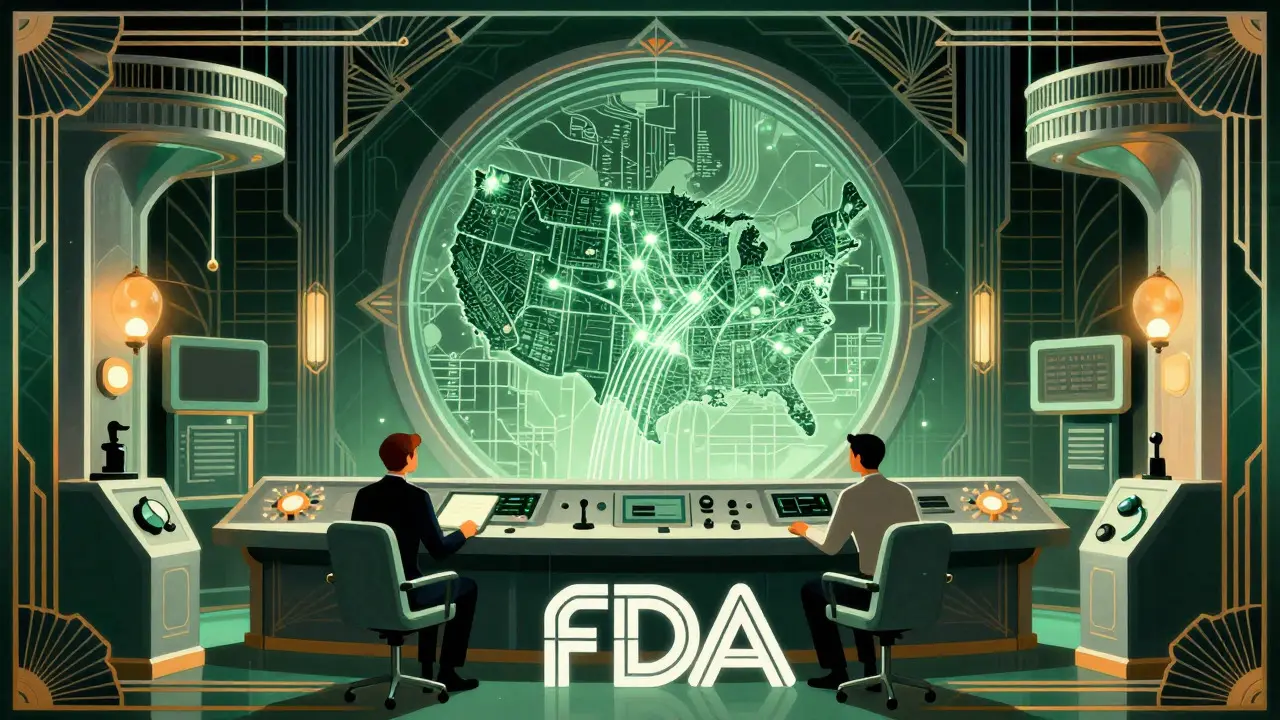
The FDA does not use a single tool to monitor drug safety. Instead, it employs a multi-layered system designed to catch problems from different angles. Think of it as a security system with motion sensors, cameras, and alarm bells.
- Spontaneous Reporting (MedWatch & FAERS): This is the foundation. The MedWatch is the FDA's program for collecting reports of adverse events and product quality problems from healthcare professionals, patients, and consumers allows anyone to report a bad reaction. These reports flow into the FDA Adverse Event Reporting System (FAERS) is a computerized database that stores and analyzes reports of adverse events and medication errors associated with FDA-regulated products. While valuable, this system relies on people remembering to report issues, which means it can be incomplete.
- The Sentinel Initiative: To fix the gaps in spontaneous reporting, the FDA launched the Sentinel Initiative is a proactive surveillance system that uses electronic health records and insurance claims data to detect safety signals in real-time across millions of patients. Established in 2008 and significantly expanded in recent years, Sentinel pulls data from insurance claims and electronic health records (EHRs) covering over 200 million Americans. It doesn't wait for a doctor to call; it scans vast datasets to find patterns that suggest a safety risk.
- Facility Inspections: Safety isn't just about the drug formula; it's about how it's made. The FDA conducts periodic, unannounced inspections of manufacturing facilities. Investigators check if the plant follows Good Manufacturing Practices (GMP). If a factory is cutting corners, the FDA can shut it down or force a recall before widespread harm occurs.
Spotting Signals: How Data Becomes Action
Having data is one thing; making sense of it is another. The FDA's Center for Drug Evaluation and Research (CDER) has an Office of Surveillance and Epidemiology staffed with epidemiologists and safety evaluators. Their job is to sift through the noise in FAERS and Sentinel to find "signals." A signal is any information that suggests a new potentially causal association between a drug and an event.
For generic drugs, this process is tricky. If a patient reports a side effect after switching from a brand-name drug to a generic, was it the drug? Or was it the "nocebo effect"-where expecting a worse experience leads to feeling worse? Studies have shown that a significant percentage of adverse event reports for generics involve complaints about perceived differences in efficacy, even when no pharmacological difference exists. The FDA's experts have to distinguish between a true safety hazard and patient perception or unrelated health issues.
When a strong signal is detected, the Office of Generic Drugs (OGD) is the specific division within the FDA CDER responsible for reviewing and approving generic drug applications and monitoring their post-market safety steps in. They investigate the potential issue. Depending on the severity, regulatory actions can include updating the drug's label with new warnings, issuing "Dear Healthcare Provider" letters to alert doctors, or enforcing voluntary product recalls if a manufacturing defect is found.
The Challenge of Complex Generics
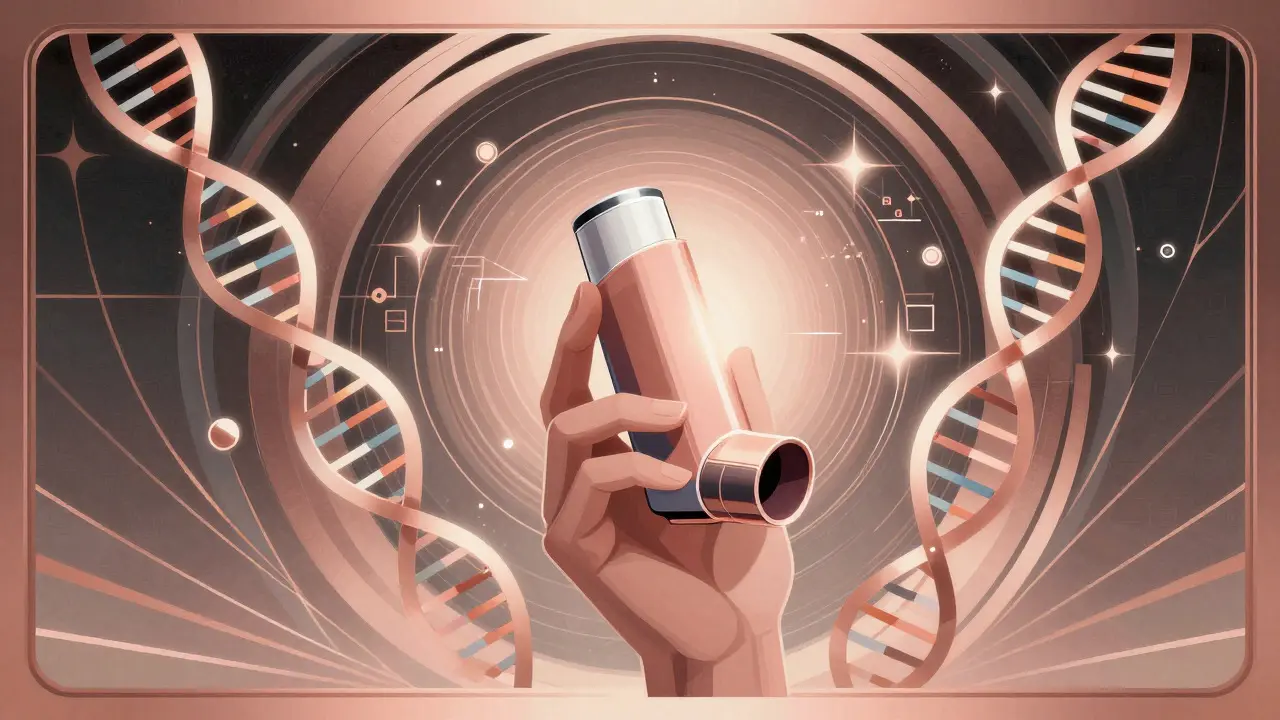
Not all generics are created equal in terms of simplicity. Simple oral tablets are straightforward to test for bioequivalence. But what about an asthma inhaler? Or a patch that releases medication slowly over 72 hours? These are known as complex generics are generic versions of drugs with complicated delivery systems, such as inhalers, topicals, or extended-release formulations, where bioequivalence is harder to establish.
For these products, minor changes in excipients (inactive ingredients) or manufacturing processes can affect how the drug performs in the body. The National Academies of Sciences, Engineering, and Medicine highlighted this in a 2021 report, noting that standard bioequivalence studies might not fully predict therapeutic equivalence for these complex products. This has led to criticism from some advocates who argue that current surveillance lacks the specificity needed for these high-risk categories.
In response, the FDA has allocated significant resources to improve this area. In 2020, they funded the Center for Research on Complex Generics (CRCG) at the Universities of Maryland and Michigan. The goal is to develop better scientific methods to ensure these complex generics perform safely and effectively compared to their brand-name counterparts.
The Future: AI and Real-World Evidence
The landscape of drug safety monitoring is changing rapidly. The FDA is actively pursuing a modernized approach using Artificial Intelligence (AI) and Machine Learning (ML). Traditional signal detection can take months. Industry analysts predict that AI-enhanced systems could reduce this time by 60-70%, spotting risks for complex generics in weeks rather than months.
By combining real-world data (RWD) from Sentinel with advanced algorithms, the FDA aims to automate the detection of subtle safety signals. This initiative received $5.2 million in funding in fiscal year 2023 alone. The vision is a system that continuously compares the clinical outcomes of complex generics against their Reference Listed Drugs in real-time, providing a much sharper picture of safety than ever before.
| Aspect | Pre-Market Approval | Post-Market Surveillance |
|---|---|---|
| Primary Goal | Prove bioequivalence to RLD | Detect rare/long-term safety issues |
| Data Source | Clinical bioequivalence studies | FAERS, Sentinel, EHRs, Claims |
| Population Size | Small (hundreds of subjects) | Large (millions of patients) |
| Key Limitation | May miss rare side effects | Cannot prove causation alone |
| Complex Generics | Hard to prove equivalence | Requires specialized AI/ML tools |
What You Can Do
You play a vital role in this system. If you experience an unexpected side effect, a medication error, or notice a change in how your generic drug works, report it. Use the MedWatch program. Your report adds a data point that helps the FDA's algorithms and epidemiologists connect the dots. It’s not just about complaining; it’s about contributing to the safety of millions of other patients taking the same medication.
How does the FDA know if a generic drug is unsafe?
The FDA uses a combination of spontaneous reports from patients and doctors via MedWatch (stored in FAERS) and proactive data mining through the Sentinel Initiative. Sentinel analyzes electronic health records and insurance claims from over 200 million people to identify unusual patterns of adverse events that might indicate a safety problem.
Are generic drugs less safe than brand-name drugs?
Generally, no. Generic drugs must meet strict bioequivalence standards to ensure they deliver the same amount of active ingredient as the brand-name drug. However, because they skip extensive pre-market clinical trials, post-market surveillance is crucial to catch any rare issues that weren't apparent during the initial approval process.
What are "complex generics" and why are they monitored differently?
Complex generics are drugs with difficult-to-replicate delivery systems, such as inhalers, topical creams, or extended-release tablets. Small differences in inactive ingredients or manufacturing can affect how these drugs work. Because standard bioequivalence tests are less reliable for them, the FDA uses specialized surveillance methods and is investing in AI to monitor their safety more closely.
Can I report a side effect from a generic drug?
Yes, absolutely. You can report any adverse event or medication error through the FDA's MedWatch program. Your report helps the FDA detect safety signals early. Even if the cause isn't immediately clear, your data contributes to the overall safety profile of the medication.
What happens if the FDA finds a safety issue with a generic?
If a safety signal is confirmed, the FDA's Office of Generic Drugs investigates. Actions can range from updating the drug's labeling with new warnings, sending alerts to healthcare providers, to requiring a voluntary recall if the issue stems from a manufacturing defect or contamination.