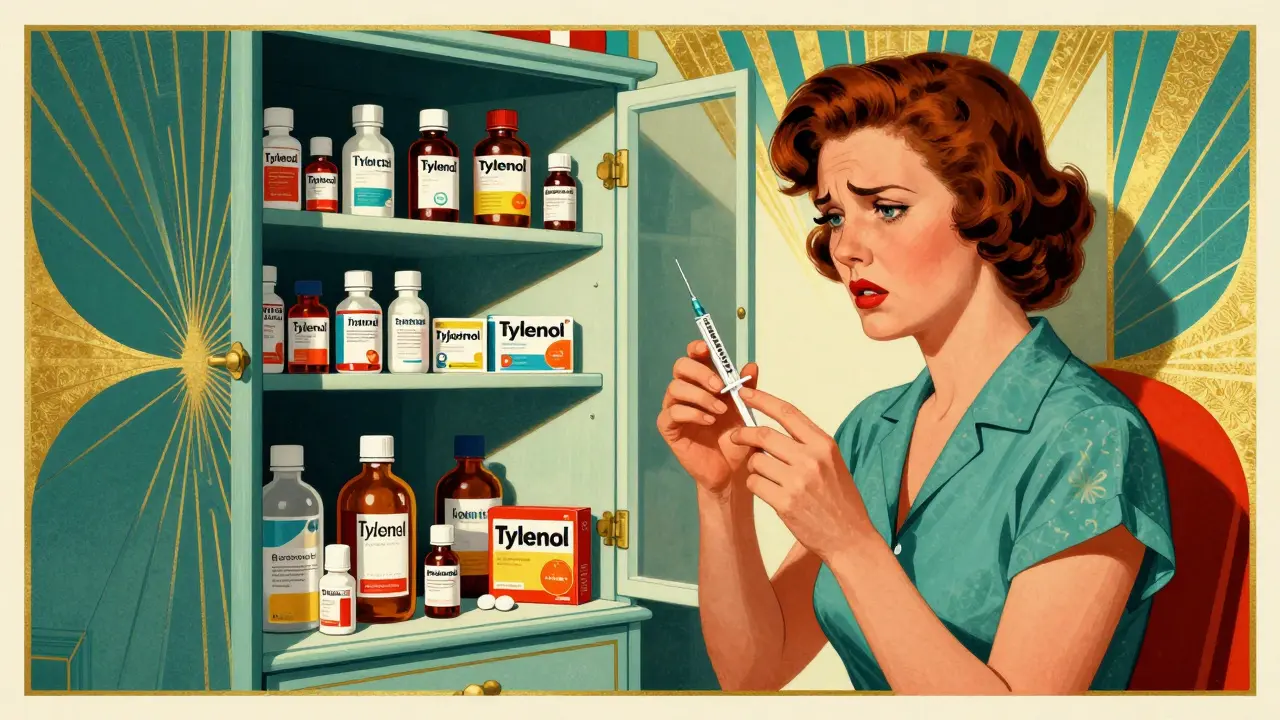
Every year, millions of people make mistakes with their medications at home-mistakes that could have been avoided. It’s not about being careless. It’s about confusion, poor communication, and the sheer complexity of managing pills, liquids, and schedules without proper support. A child gets the wrong dose of fever medicine because the parent mixed up the concentration. An elderly person takes an extra pill because they forgot if they already did. Someone skips doses because the cost is too high. These aren’t rare events. They happen more often than most people realize.
What Are the Most Common Medication Mistakes at Home?
The biggest errors aren’t always dramatic. Often, they’re quiet, unnoticed, and repeated. According to the Agency for Healthcare Research and Quality, between 2% and 33% of medications given at home are administered incorrectly. The top mistakes include:
- Wrong dose: Giving too much or too little. This is especially dangerous with children’s medicine, where liquid concentrations vary. Infant Tylenol is five times stronger than children’s Tylenol. Mixing them up can cause liver damage.
- Missing doses: Skipping pills because you’re busy, forgot, or are afraid of side effects. One study found that 92.7% of parents gave fewer antibiotic doses than prescribed for ear infections.
- Wrong medication: Taking someone else’s pill by accident, or confusing similar-looking bottles. Look-alike, sound-alike names like Hydroxyzine and Hydralazine cause real errors.
- Wrong timing: Taking medicine at the wrong time of day. Some drugs work best on an empty stomach. Others need food. Getting this wrong reduces effectiveness or causes side effects.
- Double-dosing: Taking an extra pill because you think you missed one. This is common with painkillers like acetaminophen. Taking too much can cause liver failure.
- Keeping expired or discontinued meds: Old pills in the medicine cabinet get mixed in with new ones. One in four home care patients still take drugs their doctor stopped prescribing.
For children under six, the risk is even higher. Research from UC Davis Health shows a child suffers a medication error at home every eight minutes. Parents often alternate between acetaminophen and ibuprofen for fever, not realizing this doubles the chance of giving the wrong amount. And 40% to 80% of what doctors tell patients during visits is forgotten or misunderstood by the time they get home.
Why Do These Errors Happen?
It’s not because people don’t care. It’s because the system is set up to fail.
Many patients leave the doctor’s office with unclear instructions. One nurse told a patient to take "one tablet twice a day." But was that morning and night? Or breakfast and lunch? No one asked. No one checked.
Health literacy plays a huge role. If you don’t understand medical terms like "q8h" or "take with food," you’re already at risk. Language barriers make it worse. In homes where English isn’t the first language, instructions get lost in translation.
Then there’s the clutter. A medicine cabinet with 15 different bottles, some half-empty, some expired, some labeled in a different language. A caregiver juggling three elderly parents, a toddler, and a full-time job. Interruptions happen. Phone rings. Baby cries. You forget which pill goes with which person.
Cost is another silent killer. People skip doses because they can’t afford refills. Some split pills in half to stretch them. Others stop antibiotics early because they feel better-even though that breeds drug-resistant bacteria.
And don’t forget the technology gap. Older adults may not use smartphone reminders. They rely on paper lists that get lost or smudged. Digital tools help-but only if they’re simple and accessible.
How to Prevent Medication Mistakes at Home
You don’t need to be a nurse to keep your family safe. Here’s what actually works:
1. Keep a Real-Time Medication List
Write down every medication you or your loved one takes-name, dose, time, reason. Include vitamins, supplements, and over-the-counter drugs. Update it every time something changes. Keep a copy with you at all times. Show it to every doctor, pharmacist, and emergency responder.
Use a free app like Medisafe or MyTherapy, or even a simple note on your phone. But don’t rely on memory. Memory fails. Paper doesn’t.
2. Use a Pill Organizer with Clear Labels
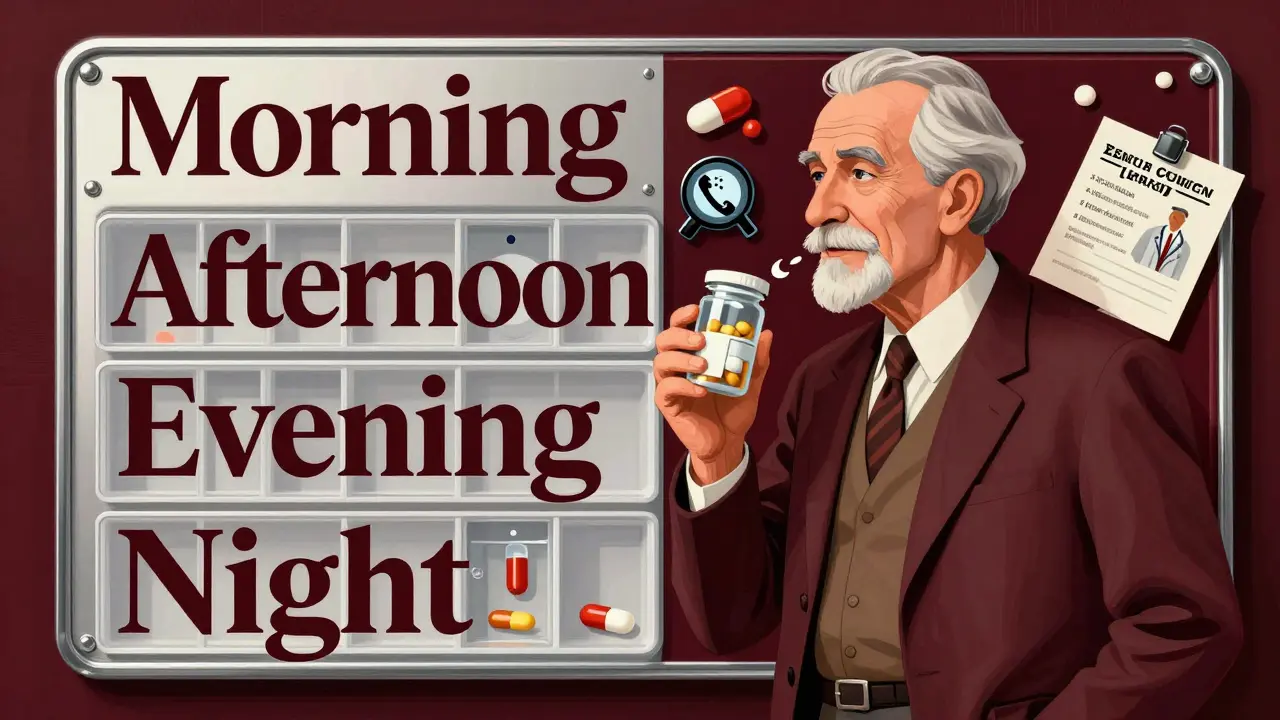
A weekly pill box with separate compartments for morning, afternoon, evening, and night makes a huge difference. But here’s the catch: label it yourself. Don’t trust the pharmacy’s tiny print. Use a marker. Write "Insulin-AM," "Blood Pressure-PM," "Antibiotic-Take with Food."
For kids, use a liquid dosing syringe-not a spoon. A teaspoon varies. A syringe gives exact amounts. Always check the concentration on the bottle. Infant Tylenol is 160 mg per 5 mL. Children’s Tylenol is 160 mg per 5 mL too-but older versions were different. Always confirm.
3. Ask the "Teach-Back" Question
When your doctor or pharmacist gives you instructions, say: "Can you please explain how I should take this again?" Then say it back in your own words. "So I take one blue pill every morning with breakfast, and the white one at night without food?"
This simple trick, called the teach-back method, cuts errors by nearly half. It’s not about testing you. It’s about making sure the message got through.
4. Never Mix Medications Without Checking
Many cold and flu medicines already contain acetaminophen. Taking Tylenol on top of that can lead to overdose. Always read the "Active Ingredients" section on the label. If two products list the same drug, don’t take both.
Same goes for ibuprofen and naproxen. Don’t alternate them unless a doctor specifically says so. For kids, alternating fever reducers increases error risk by 47%.
5. Set Reminders, But Keep Them Simple
Use alarms on your phone. Set one for each dose. Label it clearly: "AM BP Med," "Night Pain Pill." Don’t use vague names like "Pill 1."
For older adults who don’t use smartphones, use a talking pill dispenser. These devices speak the name of the pill and the time to take it. They’re affordable and easy to use.
6. Clean Out Your Medicine Cabinet Every 6 Months
Throw out expired, unused, or discontinued pills. Don’t flush them. Don’t toss them in the trash. Take them to a pharmacy drop-off box. Many pharmacies offer free disposal.
While you’re at it, check for bottles with no labels. If you can’t identify it, don’t take it. Bring it to your pharmacist. They can help you figure it out.
Special Considerations for Children and Seniors
Children under six are the most vulnerable group. Their bodies process medicine differently. A dose that’s safe for a 40-pound child can be deadly for a 20-pound baby. Always dose by weight, not age. If the label says "for 20-30 lbs," use that. Ignore "for ages 2-3."
For seniors, the risk skyrockets with each extra medication. If someone takes five or more pills daily, their chance of an error jumps 30%. If they’re over 75, it’s 38% higher.
Work with their pharmacist. Ask for a medication review. Many pharmacies offer free consultations. They can spot interactions, duplicates, or outdated prescriptions.
Also, watch for signs of confusion. Did they take their pill already? Are they repeating the same question? Don’t assume it’s just aging. It could be a side effect of a drug interaction.

What to Do If You Make a Mistake
Don’t panic. Don’t hide it. Act fast.
If you gave the wrong dose, call your pharmacist immediately. They can tell you if it’s dangerous. If you’re unsure, call Poison Control at 1-800-222-1222 (in the U.S.) or your local emergency number. Keep that number saved in your phone.
For children, if you gave too much acetaminophen, get help right away. Liver damage can happen in hours. For seniors, if you missed a blood thinner or heart medication, contact the doctor. Don’t wait until the next appointment.
Document what happened. Write down the time, the drug, the dose, and what you meant to give. This helps professionals assess risk and guide next steps.
Final Thoughts: Safety Starts With Awareness
Medication safety isn’t about perfection. It’s about reducing risk. You can’t control everything. But you can control your habits.
Keep a list. Use a pill box. Ask questions. Read labels. Clean out old pills. Talk to your pharmacist. Don’t be afraid to say, "I’m not sure."
Every year, over 1.5 million people in the U.S. alone are hurt by home medication errors. Most of these are preventable. You don’t need a medical degree to make a difference. You just need to be careful, curious, and consistent.
One small change-like using a syringe instead of a spoon, or writing down a medication list-can save a life. Not someday. Today.
Let’s be real-medication errors aren’t about laziness, they’re about a broken system. I’ve seen grandmas taking 12 different pills because no one sat down with them and said, ‘Which of these are still necessary?’ Pharmacies don’t do med reviews. Doctors don’t have time. So we’re left guessing. Start with a pill organizer. Label everything like your life depends on it-because it does.
This is so true. I used to just throw all my meds in a bag until my aunt had a bad reaction. Now I use Medisafe and it’s a game changer. No more guessing.
I love how you mentioned the teach-back method. My mom’s doctor finally started using it after I asked him to. She actually remembers what to take now. It’s not rocket science-it’s just respect for how hard this stuff is.
My cousin skipped her blood pressure meds for weeks because she couldn’t afford them. She ended up in the ER. No one talks about the cost. It’s not just about forgetting-it’s about survival.
bro i legit once gave my dog tylenol bc i thought it was for pain 😭 and now i check every label like a hawk. also why do pharmacies use micro font??
The data presented here aligns with the findings of the Agency for Healthcare Research and Quality (AHRQ) regarding home medication administration errors, which indicate a statistically significant variance between 2% and 33% depending on demographic and socioeconomic variables. The underreporting of these incidents remains a critical concern, as many families do not seek medical consultation following minor overdoses or missed doses. Furthermore, the integration of digital tools such as Medisafe has demonstrated a 41% reduction in dosing errors in longitudinal cohort studies conducted between 2020 and 2023. It is imperative that healthcare institutions institutionalize medication reconciliation protocols at the point of discharge, rather than relying on patient self-reporting, which is inherently fallible due to cognitive load and health literacy disparities.
80% forget what doctors say? That’s not a patient problem. That’s a doctor problem. They talk too fast. They don’t check understanding. End of story.
People need to stop treating medicine like it’s candy. If you can’t read a label or remember when to take a pill, maybe you shouldn’t be in charge of your own meds. It’s not the system’s fault-it’s yours.
In India, many elderly patients rely on family members to manage medications. But even then, language barriers and lack of standardized labeling cause confusion. I’ve seen prescriptions written in English, but instructions translated incorrectly by relatives. A simple multilingual pill label, printed in bold, could save countless lives.
Did you know the FDA allows drug companies to make bottles look identical? It’s not an accident. It’s corporate greed. They want you to keep buying. They don’t care if you mix up Hydroxyzine and Hydralazine. You’re just a number.
they’re watching you through your pill bottle… the pharmaceutical companies… they know when you skip doses… they’re tracking your habits… they want you dependent… 💀
My father in rural India takes his heart pills with tea because the doctor said ‘with food.’ No one told him tea isn’t food. He’s fine now, but it took three visits to figure it out. Simple things matter.
Why do we even have meds in the first place? Why not just eat turmeric and pray? I mean… think about it. The whole system is designed to keep you sick so you keep buying pills. Wake up. You’re being played. 🤡