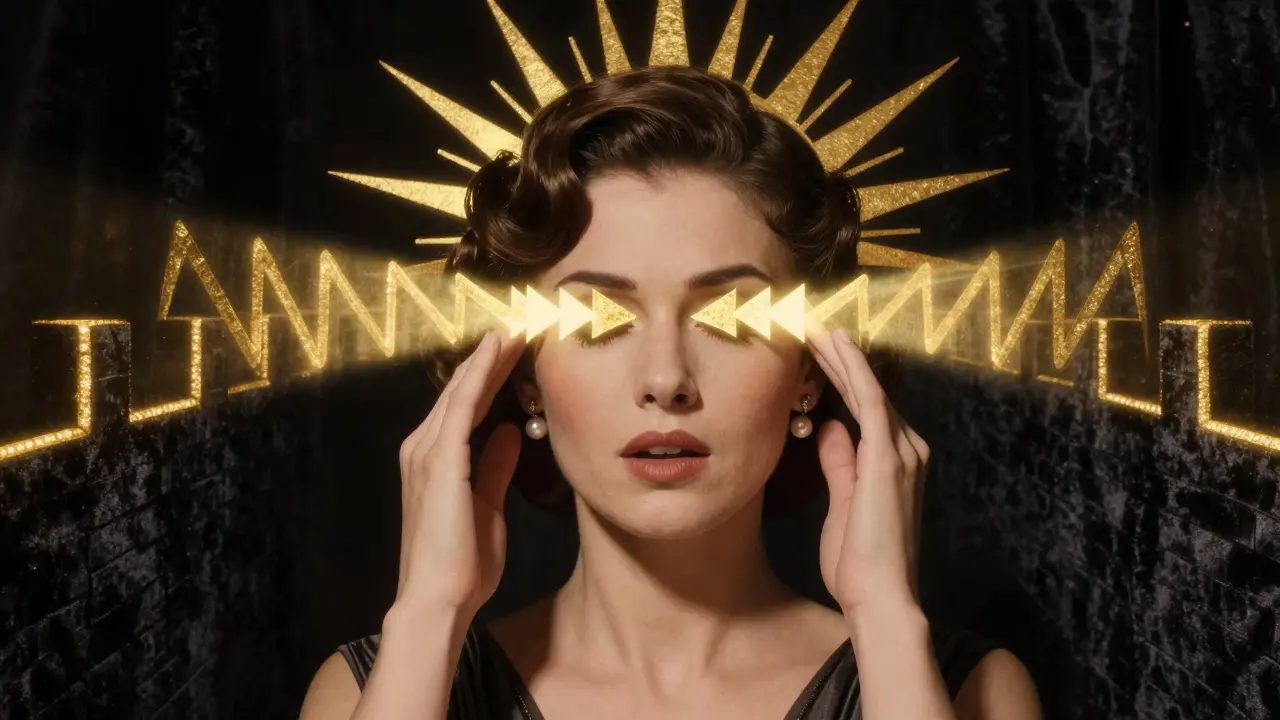
When you suddenly see zig-zag lines, flashing lights, or blind spots in your vision, it’s easy to panic. Is it a stroke? A tumor? Or just a migraine? Many people call it an ocular migraine, but that term is misleading-and dangerous if you don’t know the difference.
Two Very Different Conditions
There are two real conditions that get lumped together under the name "ocular migraine." One is rare. The other is common. Mixing them up can delay life-saving care. The first is migraine with visual aura. This affects both eyes and happens in about 25% of people who get migraines. You might see shimmering arcs, blind spots that grow like a fortress wall, or bright dots that flicker. These symptoms usually start in the corner of your vision and spread slowly over 20 to 30 minutes. Even if you close your eyes, you still see them-because they’re coming from your brain, not your eyes. The second is retinal migraine. This is rare-less than 1% of migraine cases. It affects only one eye. You might notice your vision in that eye go gray, dim, or disappear completely for a few minutes. Unlike the aura type, closing your good eye won’t make the symptoms go away-you’ll still see them in the affected eye. This one starts in the retina or optic nerve, not the brain. Most people think they have an "ocular migraine" when they’re actually having migraine with aura. That’s why so many get confused-or worse, ignored-by doctors who don’t ask the right questions.What the Visual Symptoms Actually Look Like
If you’ve had visual aura, you’ve probably seen:- Scintillating scotomas-flickering blind spots, often shaped like a crescent or zig-zag
- Fortification spectra-like the walls of a medieval castle, shimmering and expanding
- Flashing lights or stars, especially in dim lighting
- Blurred or distorted vision
- Complete or partial vision loss in one eye
- Gray or darkened vision, like a curtain falling
- Shimmering or flickering light, but only in one eye
Why the Difference Matters
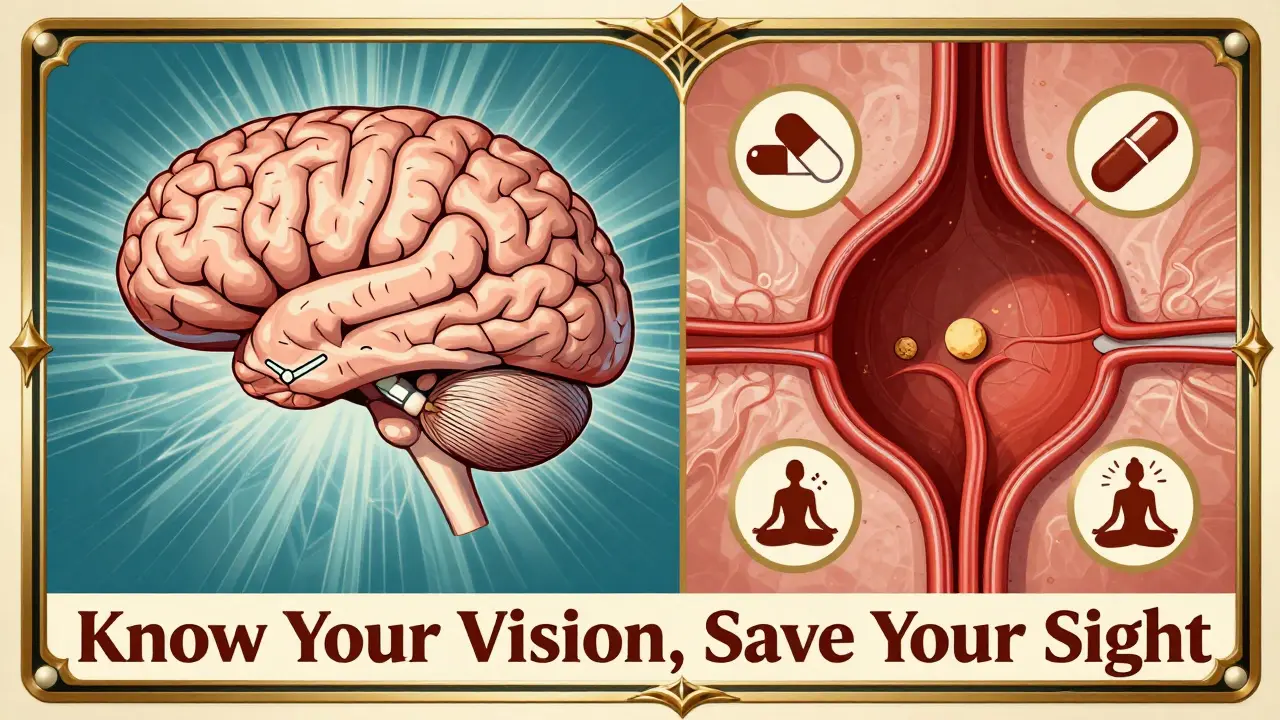
The cause of these two conditions is completely different. Migraine with aura comes from something called cortical spreading depression-a slow wave of electrical silence that moves across the back of your brain at about 3 millimeters per minute. It’s like a power outage in your visual cortex. This triggers chemicals that cause inflammation and sensitivity, which can lead to headache. Retinal migraine? It’s likely a temporary drop in blood flow to the retina. Think of it like a brief clog in the tiny artery feeding your eye. It’s not the brain-it’s the eye itself. That’s why doctors are cautious about giving certain migraine meds to people with retinal migraine. And here’s the big risk: retinal migraine can be a warning sign of something worse. About 23% of people diagnosed with retinal migraine turn out to have carotid artery narrowing-where plaque builds up in the main neck artery feeding the brain. Left untreated, that can lead to stroke.
When to Worry: The Red Flags
Most visual auras are harmless. But some symptoms are not. If you experience any of these, get medical help right away:- Visual symptoms lasting longer than 60 minutes
- First-time aura after age 50
- Weakness on one side of your body
- Difficulty speaking or understanding speech
- Visual loss that happens without any headache
- Recurrent episodes in the exact same spot of your vision
What Doctors Look For
A good neurologist or neuro-ophthalmologist won’t just take your word for it. They’ll ask:- Which eye? (Left? Right? Both?)
- Did you close your eyes? Did the vision still disappear?
- How long did it last?
- Did you have any numbness, weakness, or speech trouble?
- Have you ever had this before? At what age did it start?
- Visual field testing-mapping your peripheral vision during an episode
- ESR and CRP blood tests-to check for inflammation (giant cell arteritis)
- Carotid ultrasound-to look for artery blockage
- Brain MRI or CT-if stroke is suspected
Treatment: What Works and What Doesn’t
For migraine with aura, treatment is straightforward:- Triptans (like sumatriptan nasal spray) work fast-72% of people get relief in two hours
- Gepants (like rimegepant) are newer, non-vasoconstricting options
- Preventive meds: beta-blockers (propranolol), calcium channel blockers, or CGRP antibodies (erenumab)
- Managing underlying vascular risk: high blood pressure, cholesterol, smoking
- Low-dose aspirin (if no contraindications)
- Calcium channel blockers like verapamil to prevent spasms
- Regular sleep (cuts aura episodes by 37%)
- Magnesium supplements (600mg daily reduces aura frequency by over 40%)
- Stress reduction-mindfulness, yoga, breathing exercises
- Avoiding triggers: aged cheese, red wine, artificial sweeteners, skipping meals
What Patients Say
Online, people with these conditions are frustrated. On Reddit, 68% of respondents said they were misdiagnosed. Many were told it was "just anxiety" or "eye strain." One woman wrote: "My neuro-ophthalmologist did a visual field test while I was having an episode. He showed me the blind spot on the screen-right where I saw it. That was the first time anyone believed me. I cried." Another said: "I was told it was migraines for years. Then I had a TIA. They found 70% blockage in my carotid artery. I was 47. I thought I was too young for this. I wasn’t."What’s New in Research
Scientists are making progress:- Drugs like tonabersat are being tested to block the brain wave that causes aura-early results show 47% shorter episodes
- Blood tests for CGRP levels during aura are becoming more accurate
- Advanced retinal imaging can now spot tiny changes in blood flow before symptoms even start
The Bottom Line
If you have visual disturbances:- Don’t assume it’s harmless
- Track which eye is affected
- Note how long it lasts
- Write down every symptom-even if it seems minor
- See a specialist if it’s new, one-sided, or lasts longer than an hour
Can ocular migraines cause permanent vision loss?
True retinal migraine rarely causes permanent damage if it’s isolated. But if it’s a sign of underlying vascular disease-like carotid stenosis or giant cell arteritis-then yes, vision loss can become permanent without treatment. Migraine with aura does not cause permanent vision loss. Long-term studies show 98% of people with aura maintain full vision over decades.
Is it safe to take migraine medication if I have ocular migraines?
It depends. If you have migraine with aura, triptans and gepants are generally safe and effective. But if you have true retinal migraine, vasoconstrictors like triptans are usually avoided because they could worsen blood flow to the eye. Always get a confirmed diagnosis before starting treatment.
Can stress trigger ocular migraines?
Yes. Stress is the most commonly reported trigger, cited by 78% of patients in large studies. High-pressure work, lack of sleep, and emotional strain can set off both migraine with aura and retinal migraine. Managing stress with mindfulness, exercise, or therapy can reduce episodes by up to 32%.
Why do I only get visual symptoms without a headache?
This is called a silent or acephalgic migraine. It’s common-up to 15% of people with aura never get a headache. The brain wave causing the visual disturbance still happens, but the pain centers aren’t triggered. It’s still the same condition, just without the head pain.
Should I get an MRI if I have visual auras?
Not always. If your symptoms match classic migraine with aura and you’re under 50 with no other risk factors, an MRI isn’t needed. But if you’re over 50, have new-onset symptoms, weakness, or high blood pressure, imaging is essential to rule out stroke or other neurological conditions.
Can birth control pills make ocular migraines worse?
Yes. For women under 45 with migraine with aura, oral contraceptives increase stroke risk by more than double. Many neurologists recommend switching to non-hormonal birth control if you have aura. The American Heart Association considers this a Level A contraindication-meaning it’s a clear, strong warning.
How long do visual aura symptoms usually last?
Most last between 5 and 60 minutes. The average is about 27 minutes for migraine with aura. Retinal migraine symptoms tend to be shorter-usually 10 to 20 minutes. If symptoms last longer than an hour, seek medical help immediately.
Are ocular migraines hereditary?
Yes. If one parent has migraine with aura, you have about a 50% chance of developing it. Genetics play a strong role in both types. Family history is a key clue for doctors when making a diagnosis.
Visual aura is cortical spreading depression (CSD) propagating at ~3 mm/min across the occipital cortex, confirmed via fMRI and EEG studies. The scintillating scotoma corresponds to the wavefront of neuronal depolarization followed by suppression. Retinal migraine, by contrast, involves transient vasospasm in the central retinal artery, detectable via OCT angiography. Misclassification leads to inappropriate triptan use, which is contraindicated in retinal cases due to vasoconstrictive risk. This distinction is neurophysiologically and clinically fundamental.
Oh please. Everyone knows ocular migraines are just your brain being dramatic. I had one while driving once-thought I was dying, turned out I just hadn’t eaten. You people overmedicalize everything. Next you’ll say caffeine is a weapon of mass destruction.
Stop ignoring red flags. If your vision goes dark in one eye, see a doctor. Not a Reddit thread. A real doctor. Your eyesight isn’t a suggestion.
Let’s be honest-this whole post is just fearmongering dressed up as medicine. You’re not telling people what to do, you’re telling them they’re one misstep away from blindness. The real issue? The healthcare system that makes people wait eight months for a diagnosis. Blame the system, not the migraine.
They say ‘migraine with aura’ is benign. But when your country’s medical system can’t even test for carotid stenosis without a six-month wait, ‘benign’ is just a euphemism for ‘you’re on your own.’ We’re not talking about a headache. We’re talking about a silent stroke waiting to happen. And you’re telling me to take magnesium? Really?
🧠👁️ The government knows about this. That’s why they don’t tell you. They want you to keep taking birth control and eating cheese so your arteries clog and the insurance companies profit. 70% blockage? That’s not a coincidence. That’s a cover-up. 🌐💊 #MigraineGate
My uncle had this. Got diagnosed with retinal migraine, then found out his carotid was 90% blocked. Had surgery. Now he’s fine. But if he’d listened to his ‘holistic’ friend who said ‘it’s just stress,’ he’d be dead. This isn’t hype. This is life-or-death stuff. Don’t be a hero. Get checked.
Okay, so let me get this straight-you’re telling me that if I see a zigzag line, I might be one step away from a stroke? But my yoga teacher says it’s just my third eye opening? And my TikTok therapist says it’s my soul trying to communicate? I’ve been taking magnesium, doing breathwork, and avoiding gluten since 2019, and I still get these episodes. Meanwhile, the doctors are too busy prescribing Xanax to ask which eye it’s in. I’m not crazy. I just want someone to believe me. And now I’m supposed to trust a 27-minute average? That’s not a timeline, that’s a countdown. And I’m not even allowed to have wine anymore? My soul is crying. And my retina is too.
The distinction between migraine with aura and retinal migraine is not merely clinical-it is epistemological. The former is a neurophysiological phenomenon rooted in cortical dynamics, while the latter is a vascular event localized to the ocular perfusion system. To conflate them is to misunderstand the very nature of perception and pathology. The patient’s lived experience must be honored, but not at the expense of mechanistic precision. A diagnostic framework grounded in phenomenology and neuroanatomy is not just preferable-it is ethically imperative.
My sister in Mumbai had this. Doctor thought it was stress. Turned out she had giant cell arteritis. Lost vision in one eye before they caught it. Don’t wait. Get ESR and CRP tested. It’s a simple blood test. Save your sight.
I’ve had silent auras since I was 19. Never had a headache. People think I’m making it up. My neuro-ophthalmologist mapped my blind spot during an episode-saw it on the screen right where I described it. I cried. No one had ever believed me before. This post? It’s the first time I felt seen.
Per FDA guidelines, triptans are contraindicated in patients with retinal migraine due to potential exacerbation of ischemic events. The use of vasoconstrictive agents in the presence of ocular vascular compromise constitutes a Class I recommendation against administration. Please ensure diagnostic clarity prior to pharmacological intervention.
It is profoundly disappointing that such a nuanced neurological phenomenon is reduced to a series of bullet points and Instagram-friendly advice. The cortical spreading depression hypothesis, while widely accepted, remains incomplete without reference to the role of astrocytic calcium waves and gap junction modulation. One cannot treat a disorder of cortical excitability by recommending yoga and magnesium alone. This is not medicine-it is wellness theater.
Man, I used to think these visual weirdnesses were just my brain being extra. Then I learned they’re like little fireworks in the back of my skull-beautiful, weird, and totally normal if you’re not having a stroke. I don’t fear them anymore. I just watch them like a sunset. And yeah, I take my magnesium. And I don’t skip meals. And I breathe. And I’m still here. Vision intact. Peace out.
So you’re telling me if I’m a woman under 45, on birth control, and I see a zigzag, I’m basically playing Russian roulette with my brain? And you’re just gonna hand me a list of supplements? Bro. That’s not advice. That’s a death sentence with a side of chamomile tea.