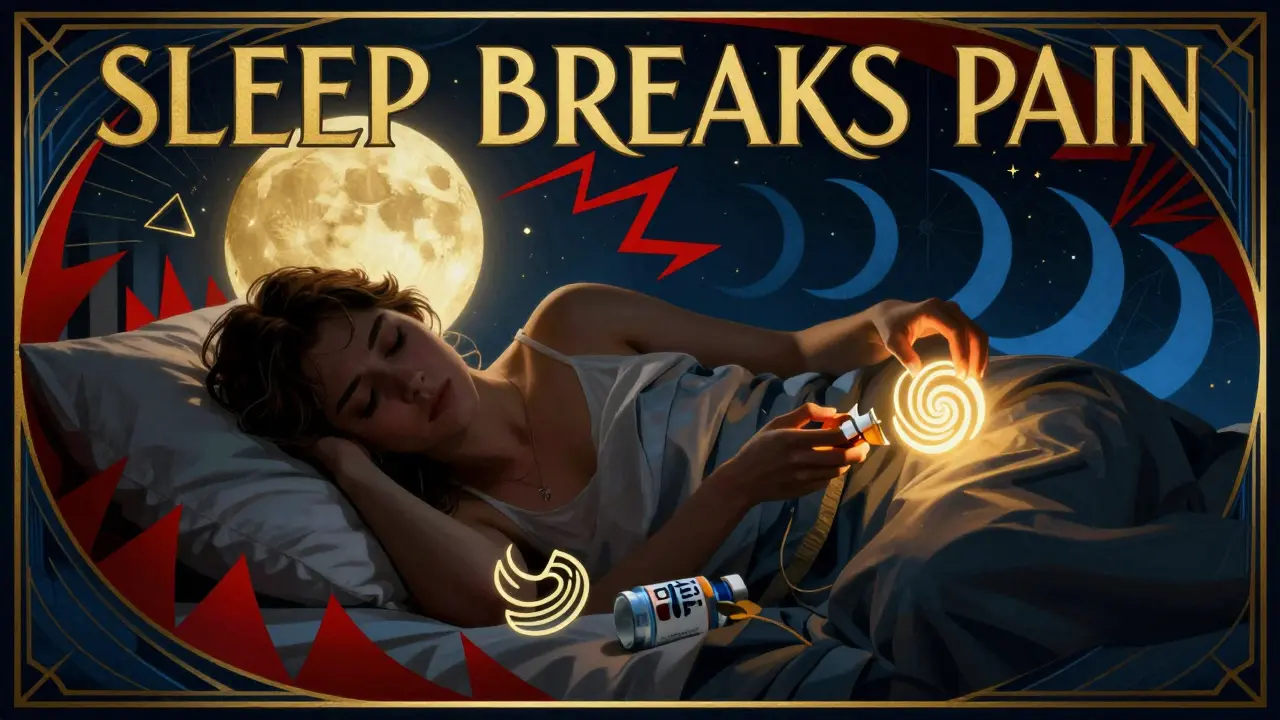
When you’re in chronic pain, falling asleep feels impossible. And when you finally do drift off, you wake up hours later with your body screaming louder than before. It’s not just bad luck-it’s a cycle. Pain keeps you awake. Poor sleep makes the pain worse. And before you know it, you’re stuck in a loop that no amount of painkillers can fix.
Why Pain and Sleep Are Locked Together
For years, doctors thought insomnia was just a side effect of pain. If your back hurt, you couldn’t sleep. Simple. But research since the late 1990s has flipped that idea. Now we know it’s bidirectional. Pain disrupts sleep-and lack of sleep makes pain feel sharper.
Studies show that people with chronic pain are 50% to 80% more likely to have serious sleep problems. And here’s the twist: even if you don’t have pain right now, poor sleep raises your risk of developing chronic pain by 56% within five years. That’s not a coincidence. It’s biology.
Your brain has a built-in pain control system, like a thermostat for discomfort. When you don’t sleep, that thermostat goes haywire. The brain’s natural painkillers-like endogenous opioids-drop by 30% to 40%. At the same time, inflammation spikes. Cytokines like IL-6 rise by 25% to 35%, making your nerves more sensitive. Dopamine, the chemical that helps you feel calm and motivated, also dips. That’s why you feel more anxious, more tired, and more in pain after a bad night.
What Happens When You Don’t Sleep
Let’s say you have arthritis or fibromyalgia. You lie down at 11 p.m. But your body won’t shut down. Your muscles tense. Your nerves buzz. You toss and turn. By 2 a.m., you’re wide awake. You finally drift off at 4 a.m.-only to wake up again at 5:30 a.m. for no reason. You get six hours of broken sleep. Not rest.
That’s the reality for most chronic pain patients. Compared to people without pain:
- You take 25 to 30 minutes longer to fall asleep.
- You wake up 40% to 50% more often, spending over an hour awake during the night.
- You lose 45 to 60 minutes of total sleep each night.
- Your sleep efficiency drops to 80% or lower (healthy adults average 85%+).
- Your Pittsburgh Sleep Quality Index score hits 10.5-way above the 5.2 threshold for good sleep.
And the result? Pain intensity jumps 35% to 45%. Your pain lasts longer. Your mood crashes. Anxiety and depression spike. You feel less able to move, work, or even enjoy time with family.
One patient in the r/ChronicPain Reddit community put it plainly: “After four nights of bad sleep, my fibromyalgia goes from a 4/10 to an 8/10. It takes two weeks to recover-even when I finally sleep.”
The Real Problem With Painkillers
Most people turn to medication first. Opioids. NSAIDs. Muscle relaxers. Sleep aids like melatonin or diphenhydramine.
But here’s the catch: many pain meds make sleep worse. Opioids suppress deep sleep. NSAIDs can disrupt circadian rhythms. Even over-the-counter sleep pills cause next-day grogginess-which makes your brain more sensitive to pain the next day. A 2023 Arthritis Foundation survey found that 72% of chronic pain patients tried OTC sleep aids. Only 35% saw lasting benefit. 42% said the grogginess made their pain worse.
And opioids? They don’t fix the root problem. They mask pain temporarily but reduce your body’s own pain-killing chemicals over time. That’s why long-term opioid users often end up needing higher doses-and still can’t sleep.
It’s like trying to fix a leaky roof by putting a bucket under it. The water keeps coming. The bucket overflows. And the floor rots.
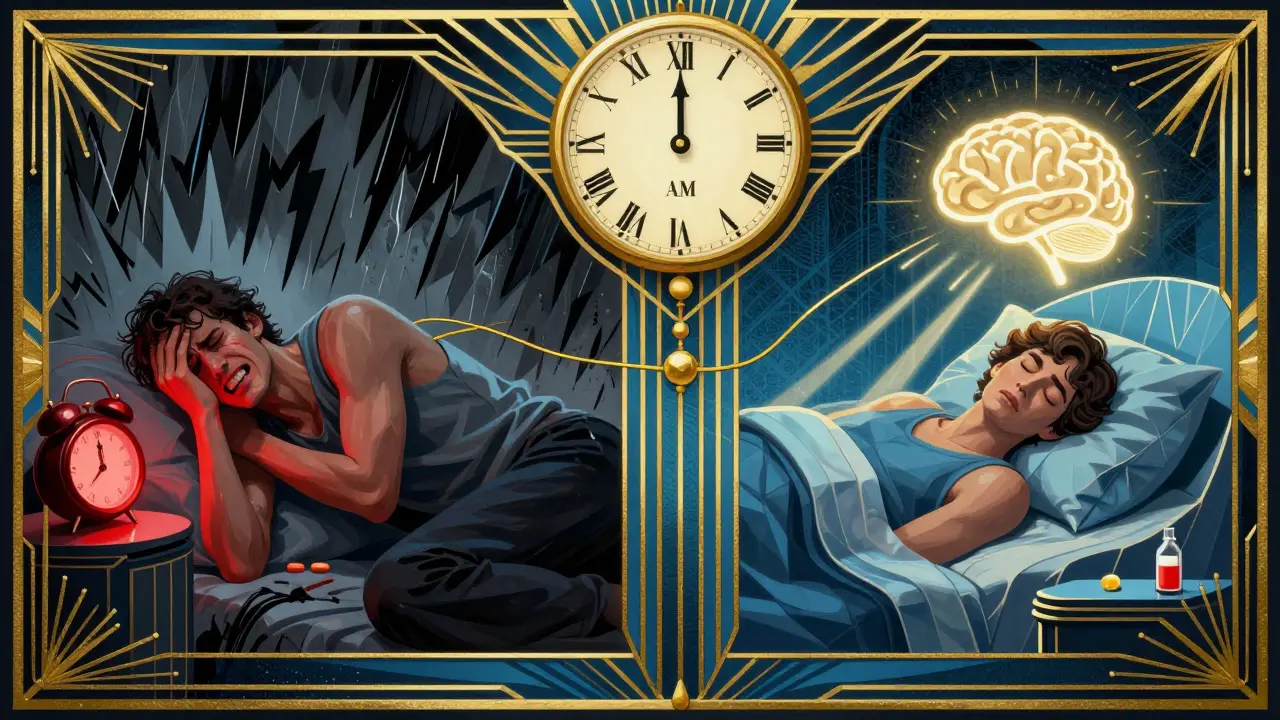
The Only Treatment That Actually Breaks the Cycle
There’s one intervention that’s been proven again and again to break the pain-sleep loop: Cognitive Behavioral Therapy for Insomnia (CBT-I).
CBT-I isn’t about pills. It’s about rewiring your brain’s relationship with sleep. It teaches you how to:
- Stop associating your bed with pain and wakefulness.
- Reset your internal clock with consistent sleep timing.
- Reduce the anxiety that keeps you scanning for pain at night.
- Use relaxation techniques that calm your nervous system.
Studies show CBT-I reduces insomnia symptoms by 65% to 75% in chronic pain patients. And here’s the kicker: it also cuts pain intensity by 30% to 40%. That’s not a side effect. It’s the point.
After 8 to 10 weekly sessions with a certified therapist, patients gain:
- 12% to 15% higher sleep efficiency.
- 25 to 30 minutes less time to fall asleep.
- 35 to 40 minutes less time awake during the night.
And it works long-term. Unlike pills, the benefits stick. One patient told me: “I used to rely on sleeping pills. Now I just lie down, breathe, and trust that my body knows how to sleep. My pain hasn’t disappeared-but I don’t feel like I’m drowning in it anymore.”
What About New Drugs?
There’s exciting research happening on drugs that target the pain-sleep cycle directly. Scientists at the University of Arizona found that kappa opioid receptors play a key role in both pain and sleep disruption. When they targeted these receptors in lab models, sleep quality improved by 40% to 60%.
Phase 2 trials of kappa opioid modulators showed 30% to 35% better sleep and 25% to 30% less pain in patients with neuropathic pain. The FDA has given these drugs Fast Track status, meaning they could be available by 2026.
But here’s the truth: even the best new drug won’t work if you’re still lying in bed for hours staring at the ceiling, thinking about your pain. Medication can help-but it’s not the solution. CBT-I is.
How to Start Breaking the Cycle Today
You don’t need to wait for a new drug or a specialist appointment. You can start right now.
Step 1: Track your sleep and pain. For two weeks, write down:
- What time you got into bed.
- How long it took to fall asleep.
- How many times you woke up.
- How long you were awake.
- How much sleep you got.
- Your pain level on a scale of 1 to 10.
This isn’t just for your doctor. It helps you see patterns. Maybe your pain spikes after nights with less than 5 hours. Or maybe your sleep is worst after days you spent sitting still.
Step 2: Make your bed a sleep-only zone. No watching TV. No scrolling. No lying there worrying about tomorrow. If you’re not asleep in 20 minutes, get up. Go to another room. Read a book under dim light. Come back only when you feel sleepy.
Step 3: Build a wind-down routine. Start 60 minutes before bed. Dim the lights. Take a warm bath. Do 5 minutes of diaphragmatic breathing: inhale for 4 counts, hold for 4, exhale for 6. Repeat. This tells your nervous system: “It’s safe to rest.”
Step 4: Avoid caffeine after 2 p.m. Even if you think you “don’t feel it,” caffeine blocks sleep-promoting chemicals for up to 10 hours.
Step 5: Find a CBT-I therapist. Look for someone certified by the American Academy of Sleep Medicine. If in-person therapy isn’t available, try digital programs like Sleepio-but know that completion rates drop in chronic pain patients. You’ll need extra support.

What Clinics Get Right (and What They Don’t)
Patients who get care from clinics that treat pain and sleep together rate their satisfaction at 4.7 out of 5. Those who only get pain treatment? 3.2 out of 5.
The difference? Integrated clinics use the Insomnia Severity Index (ISI) to screen every patient. If your score is above 15, you get CBT-I-not just another prescription.
Since 2023, 92% of pain clinics now screen for insomnia. That’s up from 35% in 2018. Progress. But many still treat sleep as an afterthought. Don’t let that be you.
If your doctor doesn’t ask about your sleep, ask them. Say: “I know my pain is bad, but I think my sleep is making it worse. Can we talk about CBT-I?”
It’s Not About Fixing Everything-It’s About Breaking the Loop
You don’t need to sleep 8 hours perfectly every night. You don’t need to be pain-free. You just need to break the cycle.
One night of better sleep doesn’t erase years of pain. But it gives your body a chance to heal. It lowers inflammation. It restores your brain’s natural pain control. It makes the next night easier.
And that’s how the cycle ends-not with a miracle drug, but with small, consistent steps. You stop fighting sleep. You stop fearing pain. You start trusting your body again.
It’s not easy. But it’s possible. And it’s the only way forward.
Can poor sleep cause chronic pain even if I didn’t have it before?
Yes. Research shows people with long-term sleep problems have a 56% higher risk of developing chronic pain within five years, even if they had no prior pain. Poor sleep lowers your body’s natural pain threshold and increases inflammation, making nerves more sensitive over time.
Why don’t painkillers help me sleep better?
Most painkillers, including opioids and NSAIDs, interfere with deep sleep stages and disrupt your body’s natural sleep-wake rhythm. Some even suppress the brain’s own pain-relieving chemicals, making you more sensitive to pain over time. They treat the symptom, not the root cause.
Is CBT-I effective for people with severe pain?
Yes. Studies show CBT-I works even for people with fibromyalgia, arthritis, and neuropathic pain. It doesn’t eliminate pain, but it reduces how much it affects your sleep and your mood. Patients report 30-40% less pain intensity after completing CBT-I, simply because better sleep resets their nervous system.
How long does it take for CBT-I to work?
Most people see improvements in sleep within 2 to 4 weeks. Pain reduction usually follows after 6 to 8 weeks. The full 8- to 10-week program gives the best long-term results. Consistency matters more than speed.
Can I do CBT-I online?
Yes. Programs like Sleepio have shown 60-65% effectiveness in chronic pain patients. But completion rates are lower than in-person therapy-only 55% finish. If you choose online, pair it with weekly check-ins with a counselor or support group to stay on track.
What’s the best way to track my progress?
Keep a simple sleep and pain diary for at least two weeks. Note bedtime, wake time, how long it took to fall asleep, how many times you woke up, total sleep time, and your pain level each morning. Use this to spot patterns and show your doctor real data-not just how you “feel.”
Are sleep aids like melatonin safe for chronic pain?
Melatonin can help reset your internal clock, especially if your sleep schedule is irregular. But it doesn’t fix insomnia caused by pain. OTC sleep aids like diphenhydramine often cause next-day grogginess, which can worsen pain perception. Use them only short-term, and never as a long-term solution.
What if I can’t find a CBT-I therapist near me?
Look for telehealth options through certified sleep clinics or platforms like the American Academy of Sleep Medicine’s directory. Some insurance plans cover online CBT-I. You can also join patient support groups-many share free resources and guided CBT-I exercises. The key is finding structured, evidence-based support, not just random tips.
What Comes Next
The future of pain management isn’t just stronger drugs. It’s smarter care. Researchers are now studying genetic markers that predict who responds best to CBT-I versus medication. In five years, we may have personalized sleep-pain plans based on your biology.
But right now, the best tool you have is already here: understanding the cycle, and choosing to break it-one night at a time.
bro i tried everything. meditation, melatonin, weighted blankets, even that dumb cryo-pain pad. nothing worked until i started sleeping in the damn bathtub. no joke. the cold kept my nerves from screaming. i sleep 5 hours now instead of 2. it’s not perfect, but it’s something.
also i’m not sleeping in the tub forever. just until my landlord stops asking why there’s a towel rack in the kitchen.
CBT-I? lol. they don’t want you to sleep better. they want you to stop complaining. the real solution? stop eating gluten. and turn off the 5G towers in your bedroom. i’ve seen it in my sleep tracker-when the EMF spikes, so does my pain. also, your mattress is probably laced with fluoride. check the label. it says ‘memory foam’ but it’s really ‘mind control foam.’
ps. melatonin is a CIA experiment. they gave it to soldiers in the 80s to make them docile. don’t be a lab rat.
🫠
Y’ALL ARE MISSING THE POINT. LET ME BREAK THIS DOWN IN 140 CHARACTERS OR LESS (I’LL MAKE IT EASY FOR YOU):
THE BODY IS A MACHINE. SLEEP IS THE REBOOT. PAIN IS THE ERROR MESSAGE. YOU DON’T FIX A BLUE SCREEN BY BUYING A NEW KEYBOARD. YOU FIX THE OS.
CBT-I? YES. BUT ONLY IF YOU’RE WILLING TO STOP BEING A SLEEP VICTIM AND START BEING A SLEEP ARCHITECT. I’VE BEEN DOING THIS SINCE 2017. I USED TO CRY IN THE BATHROOM AT 3AM. NOW I’M DOING YOGA IN MY PJs AT 10:30PM. I’M NOT A HERO. I’M JUST NOT A FOOL.
also, if you’re still using diphenhydramine, you’re basically giving your liver a handjob with a chainsaw. stop it. pls.
ps. i typed this on my phone with one hand because my back is fine now. you can too.
This is so important. I was skeptical at first, but after 6 weeks of CBT-I, I actually slept through the night for the first time in 3 years. Not because the pain disappeared, but because I stopped fighting it. My brain finally stopped treating bedtime like a battlefield.
And yes, the 20-minute rule? Life-changing. If I’m not asleep, I get up. I read a book. I drink chamomile tea. I don’t stress. And guess what? I fall asleep faster.
You’re not broken. You’re just stuck in a loop. And loops can be broken. I believe in you. 💛
There is a deeper truth here, beyond sleep and pain. We have forgotten how to rest. Not sleep-rest. The body doesn’t need more pills. It needs stillness. Not forced silence, but the quiet surrender of the nervous system.
Our culture worships productivity. We measure worth by output. But the body? It only heals in stillness. In the absence of urgency. In the space between breaths.
CBT-I works because it doesn’t try to control sleep. It lets it come. Like a wild animal returning to its den-not because you chased it, but because you stopped making noise.
Be gentle. You are not failing. You are remembering.
i’ve been trying to follow the sleep diary thing but i keep forgetting to write it down. i’ll remember in the morning and then it’s too late. also i think i misspelled ‘diaphragmatic’ in my notes. again. sorry.
but i did try the 20-minute rule last night. got up, read a chapter of a novel, came back. fell asleep in like 8 minutes. felt weirdly proud.
still not sleeping 8 hours, but… it’s a start? maybe?
Just started CBT-I last week. Day 3. Didn’t sleep great. But I didn’t cry. That’s new.
Progress isn’t perfect. It’s just not the same as before.
Wow. So the solution to chronic pain is… reading a book in another room? And breathing? I’m shocked. I thought we’d need a quantum healing crystal or a Tesla coil strapped to my spine.
Meanwhile, my doctor just prescribed me another round of opioids and said ‘maybe try yoga.’
Thanks for the 2024 equivalent of ‘just relax, dear.’