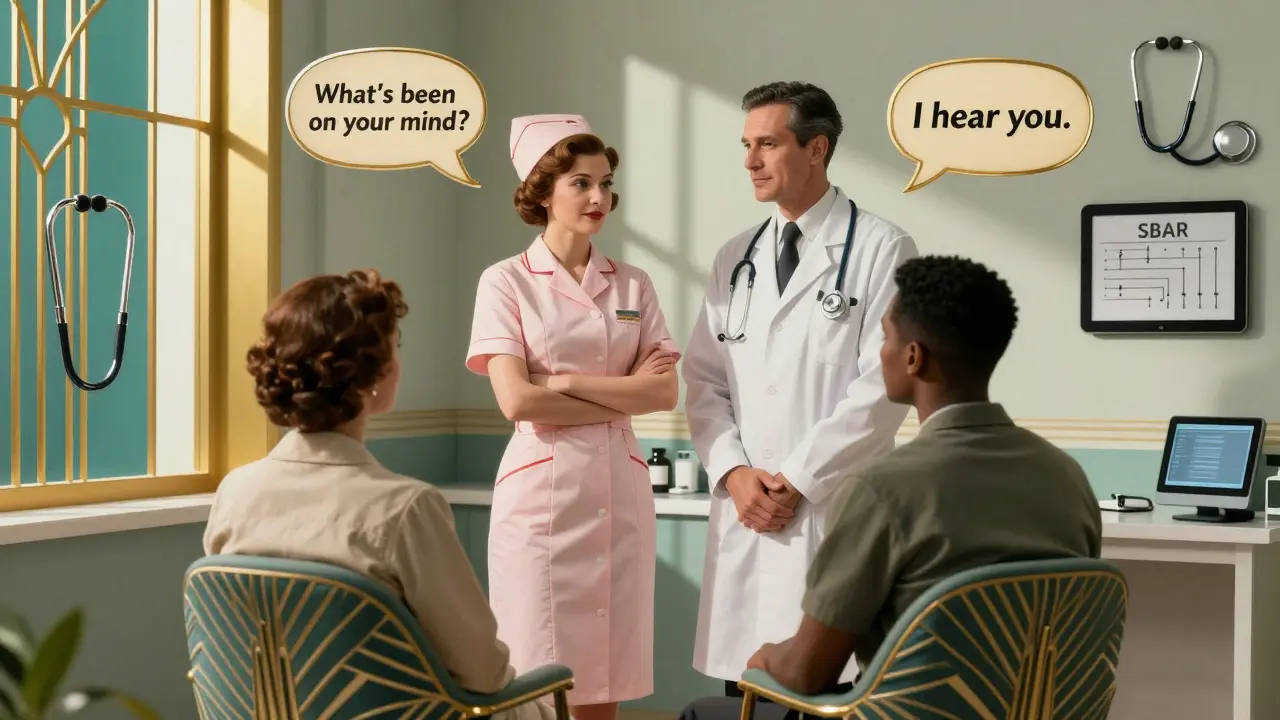
When a patient walks into a clinic, they don’t just need a diagnosis. They need to understand it. They need to trust the person giving it. And they need to feel heard. Too often, that doesn’t happen. In fact, healthcare communication failures are linked to 80% of serious medical errors, according to The Joint Commission’s 2012 analysis. This isn’t about bad people-it’s about broken systems. That’s why hospitals and health systems are turning to structured, institutional education programs to fix communication at its root.
Why Communication Training Isn’t Optional Anymore
It’s easy to think communication is something you’re born with. Either you’re a good talker, or you’re not. But research shows that’s not true. Communication is a skill-and like any skill, it can be taught, measured, and improved. The data is clear. Physicians who complete formal communication training see 30% fewer malpractice claims, according to a 2019 Johns Hopkins study. Patient satisfaction scores rise by nearly 80% when providers use empathy-based techniques like asking, “What’s been on your mind lately?” instead of jumping straight to questions about symptoms. And in emergency settings, clear communication during outbreaks has been shown to cut response delays by up to 40%, based on CDC after-action reports from the pandemic. These aren’t soft benefits. They’re financial, legal, and clinical necessities. Medicare now ties 30% of hospital reimbursements to patient satisfaction scores from the HCAHPS survey-most of which measure how well staff explained things, listened, and treated patients with respect. If you’re not training your team, you’re not just risking patient safety-you’re risking your funding.What These Programs Actually Teach
Not all communication training is the same. Some programs focus on patient conversations. Others train staff to speak to the media or handle social media backlash. Here’s what the most effective ones cover:- Eliciting the patient’s story: Instead of interrupting within 13 seconds (the average time doctors wait before cutting patients off), trained providers learn to pause, listen, and ask open-ended questions. This reduces missed diagnoses and builds trust.
- Responding with empathy: Saying “I can see this is really hard for you” isn’t just nice-it changes how patients remember their care. Studies show this simple phrase lowers anxiety and increases adherence to treatment plans.
- Setting boundaries: Nurses and providers often burn out because they say yes to everything. Training helps them say no respectfully, without guilt. One nurse practitioner reported a 40% drop in burnout after learning how to set limits during Mayo Clinic’s course.
- Managing difficult conversations: Breaking bad news, dealing with angry families, or explaining why a treatment isn’t covered-all of these are practiced using standardized patients and role-play.
- Interprofessional communication: When a nurse, pharmacist, and doctor don’t speak the same language, errors happen. Programs now train teams to use structured handoff tools like SBAR (Situation, Background, Assessment, Recommendation) to prevent miscommunication.
Top Programs and How They Differ
There’s no one-size-fits-all solution. Different programs serve different roles:- University of Maryland’s PEP Program: Focused entirely on patient-provider communication. Uses real patient feedback to shape lessons. Shows 23% higher satisfaction gains than generic training.
- SHEA’s Online Course: Built for infection control specialists. Teaches how to explain complex public health messages to the media and social media audiences. One user corrected vaccine misinformation reaching 50,000 people monthly.
- Mayo Clinic’s CNE Course: 3.5 credits, 12 real-life video scenarios. Covers boundary setting, non-verbal cues, and managing emotional patients. Popular among nurses and mid-level providers.
- Northwestern’s Mastery Learning Program: Medical students must hit 85% proficiency on simulated encounters before moving on. Results show 37% better skill retention after six months compared to lecture-based training.
- UT Austin’s HCTS: Free, self-paced courses for public health workers. Their pandemic preparedness module was created after CDC found communication delays cost lives during early outbreaks.
- Johns Hopkins MA in Health Communication: A full master’s degree for those who want to lead change. Covers theory, policy, and research. Costs $1,870 per credit, but opens doors to leadership roles.

Why So Many Programs Fail to Stick
Training alone doesn’t change behavior. If you send a doctor to a one-day workshop and then put them back into a 15-minute appointment with 20 charting tasks, they’ll fall back into old habits. The biggest reason communication training fails? Lack of integration. Only 12% of programs track whether skills are actually used beyond six months, according to a 2021 JAMA review. Successful programs follow a four-step model:- Assess: Use patient surveys to find the top 3 communication gaps. Is it explaining medications? Listening to concerns? Handling language barriers?
- Prioritize: Pick 3-5 behaviors to focus on. Don’t try to fix everything at once.
- Embed: Add prompts into the EHR. For example, a pop-up that says, “Did you ask the patient what matters most to them today?”
- Reinforce: Have team leads model the behavior. At Mayo Clinic, senior physicians lead 60% of training sessions. Peer influence beats PowerPoint.
The Equity Gap in Communication Training
One of the biggest blind spots in healthcare communication? Health disparities. A 2023 AHRQ report found a 28% gap in communication satisfaction between white patients and Black, Hispanic, and Indigenous patients. Why? Because most training materials use examples based on middle-class, English-speaking patients. They don’t teach providers how to navigate cultural differences, mistrust of the system, or the impact of implicit bias. The good news? 74% of new programs now include cultural humility training. That means learning how to ask, “What do you call your illness?” instead of assuming medical terms. It means understanding that in some cultures, saying “no” to a doctor is seen as disrespectful-so patients say yes even when they don’t understand. Programs like UT Austin’s 2024 health equity modules are starting to fix this. They teach providers to adapt language, pace, and even body language to match the patient’s cultural context. This isn’t optional anymore. It’s part of safe, ethical care.
What’s Next for Healthcare Communication
The field is evolving fast. In 2024, the American College of Physicians and the National Academy of Medicine both called for mandatory communication training for all clinicians. That could soon become policy. New tools are emerging too:- AI feedback systems: ACH is testing AI that listens to patient visits and gives real-time coaching on tone, pacing, and empathy. Pilot data shows 22% faster skill gain.
- Telehealth-specific modules: 35% of new programs now include training on how to build rapport over video-something many providers struggle with.
- EHR-driven tracking: Hospitals are starting to analyze clinician notes for communication patterns. Are they using open-ended questions? Are they documenting patient concerns?
What You Can Do Today
You don’t need to wait for your hospital to launch a program. Start small:- Ask one patient per shift: “What’s the one thing you want me to know about your health?”
- Watch a free HCTS video on pandemic communication-it’s only 20 minutes.
- Use the SBAR method during handoffs. Write it down. Don’t just say it.
- Notice how often you interrupt. Count to three before responding.
What is the main goal of institutional healthcare communication programs?
The main goal is to reduce medical errors and improve patient outcomes by teaching healthcare staff proven communication skills. These include listening deeply, explaining clearly, responding with empathy, and working effectively as a team. The focus is on turning communication from an assumed skill into a trained, measurable competency.
Are these programs only for doctors?
No. While many programs target physicians, communication training is designed for everyone in the care team: nurses, pharmacists, social workers, receptionists, and even administrative staff. A miscommunication between a nurse and a pharmacist can be just as dangerous as one between a doctor and patient. Programs like SHEA and UT Austin’s HCTS specifically train non-clinical roles in public health messaging and policy advocacy.
How long does it take to see results from communication training?
You’ll see small changes within weeks-like fewer interruptions or more patient questions being written down. But real behavioral change takes 3 to 6 months. That’s when skills become automatic. Programs that include ongoing reinforcement, like peer coaching or EHR prompts, see the best long-term results. Without follow-up, skills fade in about 6 months.
Do these programs work in rural or underfunded clinics?
Yes-but they need to be adapted. Rural clinics often lack simulation labs or dedicated training staff. That’s why free, self-paced options like UT Austin’s HCTS are so valuable. The key is starting small: use one technique per week, like asking open-ended questions. Partner with nearby hospitals for shared training. Even a 10-minute team huddle to review one communication tip can make a difference. The goal isn’t perfection-it’s progress.
Is communication training covered by insurance or reimbursement?
Not directly. But better communication leads to higher HCAHPS scores, and Medicare ties 30% of hospital payments to those scores. So while the training itself isn’t billed, the improved patient satisfaction it creates directly impacts revenue. Some institutions use grant funding or professional development budgets to cover costs. For individuals, many courses offer free or low-cost options, like those from UT Austin or ACH.
What’s the biggest mistake clinics make with communication training?
Treating it like a one-time event. Sending staff to a single workshop and then forgetting about it is the most common failure. Communication isn’t a topic you learn and move on from-it’s a practice. Without ongoing feedback, peer modeling, and integration into daily workflows, skills disappear. The most successful programs treat communication like hand hygiene: something you check, reinforce, and improve every single day.