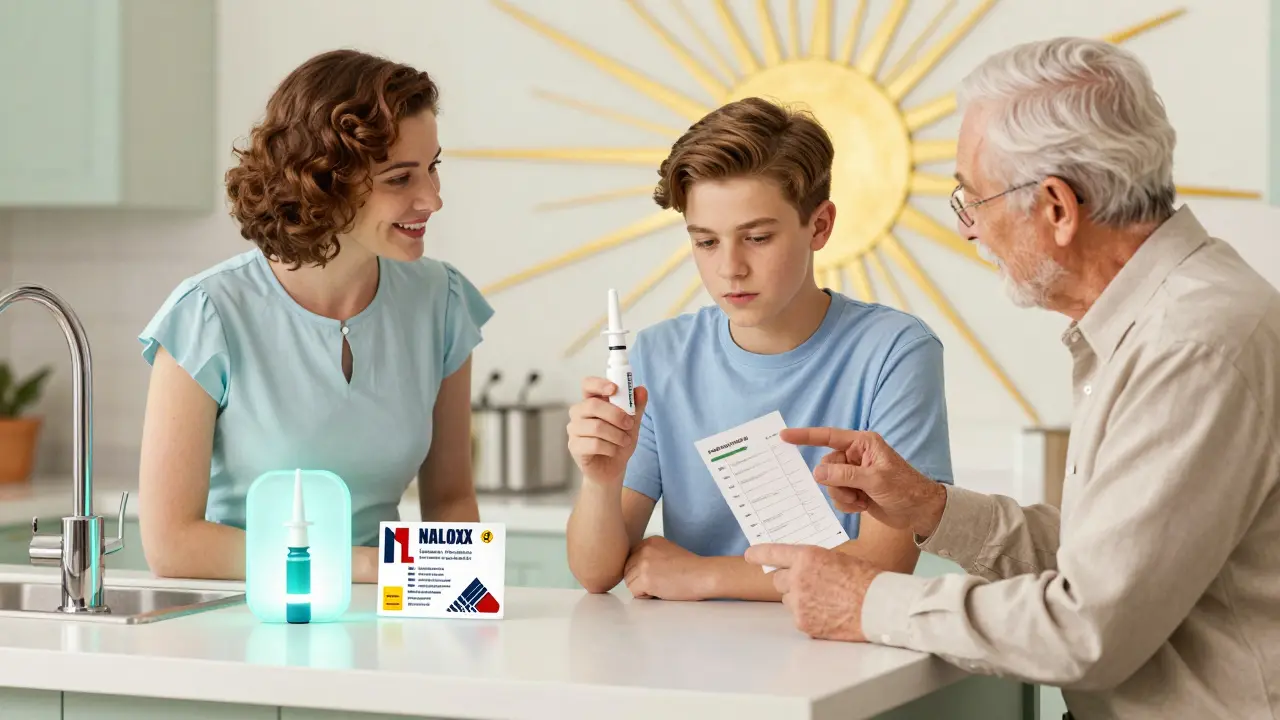
Every year, over 100,000 people in the U.S. die from drug overdoses. Most of those deaths involve opioids-especially powerful synthetic ones like fentanyl. And here’s the hard truth: overdose doesn’t always happen to strangers. It can happen in your home, to someone you love, in minutes. The difference between life and death often comes down to what happens in the first few minutes before 911 arrives. That’s why having a clear, practiced Family Overdose Emergency Plan isn’t just smart-it’s essential.
Why Your Family Needs This Plan
If someone in your home takes prescription pain medication, even just once a week, you need this plan. The CDC reports that over 51 million U.S. adults received opioid prescriptions in 2022. Many of those are for chronic pain, arthritis, or post-surgery recovery. But opioids don’t just affect people with addiction. They can accidentally be taken in the wrong dose, mixed with alcohol or sleep aids, or become dangerous if tolerance changes. Fentanyl is so strong that even a tiny amount can stop breathing. And when that happens, time is measured in seconds, not minutes. Studies show that if naloxone-the overdose-reversal drug-is given within 2 to 5 minutes, it works 93% of the time. But most families don’t know how to use it. They wait. They panic. They call 911 and then wait some more. By then, it’s too late. A family plan turns you from a helpless observer into a life-saving first responder.Step 1: Know the Signs of an Overdose
You can’t respond to something you don’t recognize. An overdose doesn’t always look like someone passed out on the couch. Look for these three key signs:- Unresponsive: Shake their shoulder hard. Shout their name. If they don’t wake up at all, that’s a red flag.
- Abnormal breathing: Are they breathing less than 12 times a minute? Or are their breaths shallow, gurgling, or silent? This is the most dangerous sign.
- Pinpoint pupils: Shine a light on their eyes. If the black part of the eye looks like tiny dots, it’s a strong indicator of opioid overdose.
Step 2: Get Naloxone in the House
Naloxone (brand names like Narcan or Kloxxado) is the only medication that can reverse an opioid overdose. It’s safe, non-addictive, and works even if you’re not sure what drug was taken. You don’t need a prescription in 46 states. It’s available over the counter at most pharmacies-CVS, Walgreens, Rite Aid-and often for $25 or less with insurance. Some pharmacies give it away free. Get two or three doses. Fentanyl is so strong that one dose of naloxone might not be enough. The Washington State Department of Health recommends keeping at least two doses on hand. Keep them in a cool, dry place-room temperature is fine. Don’t store them in the bathroom or near sunlight. Check expiration dates every 18 months. Most naloxone lasts 18-24 months, but don’t wait until it expires to replace it.Step 3: Store It Where Everyone Can Find It
Naloxone doesn’t help if no one can find it in an emergency. Don’t lock it in a medicine cabinet. Don’t hide it under the bed. Pick one spot everyone knows:- Next to the first aid kit
- On the kitchen counter near the phone
- In a small pouch taped to the fridge
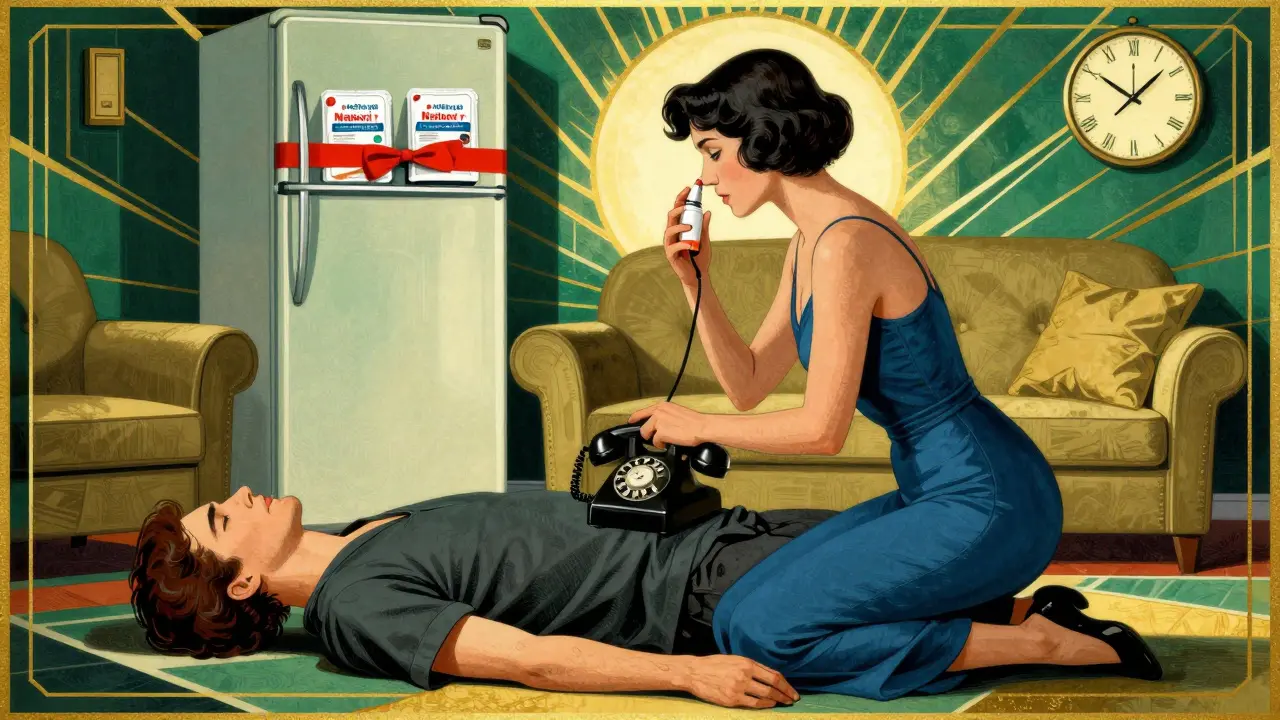
Step 4: Learn How to Use It
There are two main types: nasal spray and injectable. Most families use the nasal spray-it’s easier and safer. For nasal spray (like Narcan):- Call 911 immediately.
- Place the person on their back.
- Remove the device from its package.
- Tilt their head back slightly.
- Insert the nozzle into one nostril.
- Press the plunger firmly to deliver the full dose.
- Wait 2-5 minutes. If no response, give a second dose in the other nostril.
Step 5: Build a Simple Emergency Card
Create a laminated card with:- Emergency contacts (911, poison control, family doctor)
- Names and doses of all opioids in the home
- Who prescribed them and when
- Location of naloxone kits
- Step-by-step instructions in large print
Step 6: Practice the Plan
This isn’t a one-time task. Run a 10-minute drill every month. Gather everyone. Say: “Imagine your sibling is not waking up. What do you do?” Practice:- Finding the naloxone
- Calling 911 clearly (“My family member is not breathing. We have naloxone.”)
- Administering the spray on a training kit (many pharmacies give these out for free)
- Putting someone in the recovery position (on their side, one leg bent, head tilted back)
What This Plan Won’t Do
This plan is for opioid overdoses. It won’t help with alcohol poisoning, benzodiazepine overdoses, or mixing drugs with antidepressants. If someone overdoses on something else, call 911 anyway. Naloxone won’t hurt them-it just won’t work. But calling for help still saves lives. Also, this plan doesn’t replace treatment. If someone has a substance use disorder, naloxone is a rescue tool-not a cure. But here’s the good news: 89% of people who survive an overdose with naloxone go on to seek help. That’s the real win.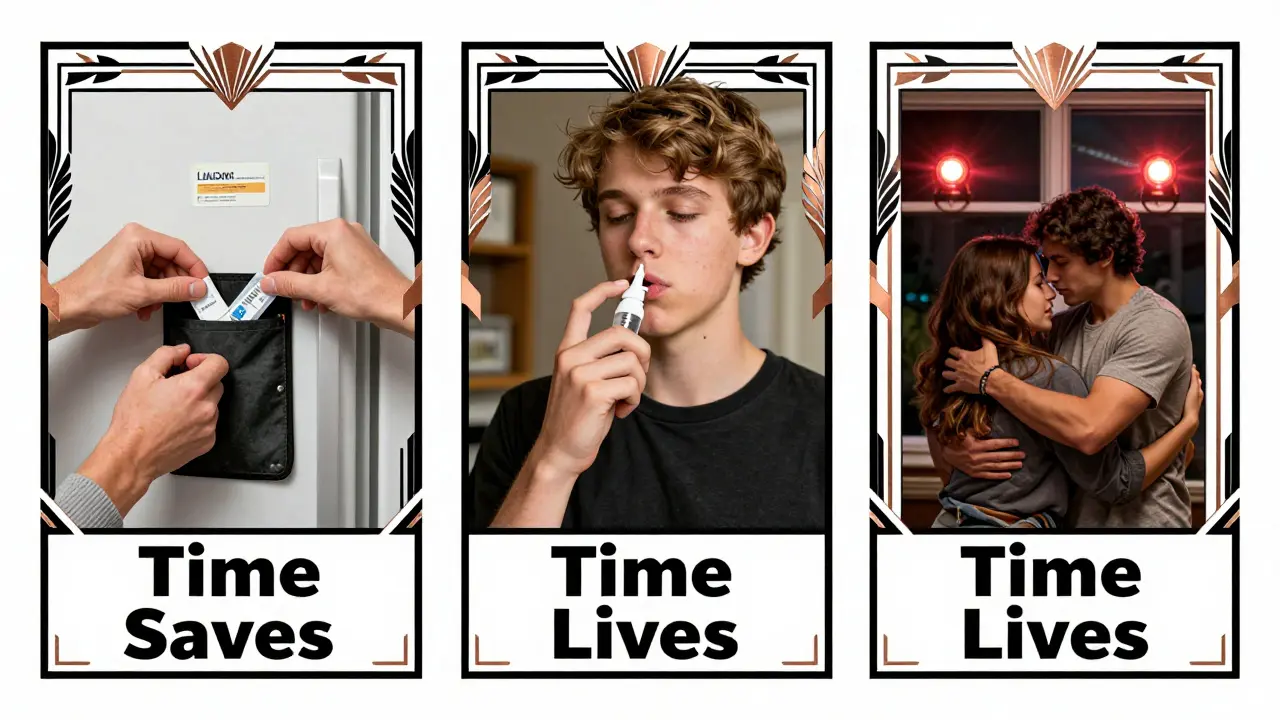
Common Mistakes Families Make
- Waiting to call 911. Don’t wait to see if they wake up. Call first, then give naloxone.
- Thinking it’s just sleeping. If they’re unresponsive and breathing oddly, it’s not sleep. It’s overdose.
- Using expired naloxone. Test your kit. If it’s been over 18 months, replace it.
- Only one person knows where it is. Everyone in the house must know.
- Not keeping a second dose ready. One dose often isn’t enough for fentanyl.
What to Do After the Emergency
After EMS arrives and the person is stable:- Stay calm. The person may be confused, angry, or scared. Don’t lecture.
- Ask if they want help. Don’t force it.
- Keep the naloxone kit ready. The risk of another overdose is highest in the first week.
- Consider connecting with a local support group. Many hospitals offer free counseling for families.
Resources You Can Use Today
- Free naloxone: Many pharmacies and health departments give it away. Call your local health office.
- Training: The American Red Cross has a free 15-minute video course online.
- Apps: The “Overdose Guardian” app (released Jan 2024) sends alerts if there’s an overdose in your ZIP code.
- Insurance: Thanks to the 2024 Inflation Reduction Act, Medicare Part D covers naloxone with $0 copay. Private insurers? 41% still charge $25-$50. Ask your pharmacist for the cheapest option.
Final Thought
You don’t need to be a doctor to save a life. You just need to know what to do-and have the tools ready. A family overdose plan isn’t about fear. It’s about love. It’s about saying, “I won’t let you die because no one knew how to help.”Can I get naloxone without a prescription?
Yes. In 46 U.S. states, you can buy naloxone over the counter at pharmacies like CVS, Walgreens, and Rite Aid without a prescription. Many pharmacies also offer it for free through public health programs. Check with your local health department or call ahead to confirm availability.
Is naloxone safe to use if I’m not sure it’s an opioid overdose?
Absolutely. Naloxone only works on opioids. If the person didn’t take opioids, it won’t hurt them-it just won’t do anything. It’s safe to use even if you’re unsure. Better to give it and find out it wasn’t needed than to wait and lose precious time.
What if I’m afraid to call 911 because of legal trouble?
All 50 states have Good Samaritan laws that protect people who call 911 during an overdose. You won’t get arrested for calling for help, even if drugs are present. These laws exist to save lives. Calling 911 is the most important step you can take.
How often should I check my naloxone kit?
Check the expiration date every 18 months. Store it at room temperature, away from direct sunlight and moisture. If the liquid looks cloudy or discolored, replace it immediately. Keep a backup dose on hand-fentanyl overdoses often need more than one dose.
Can children or teens use naloxone?
Yes. Teens as young as 14 have successfully used naloxone in emergencies. The nasal spray is simple to use-no needles, no training needed. Make sure your teen knows where it’s stored and how to call 911. Practice with them. They might be the one who saves a life.
What if the person wakes up after naloxone but seems fine?
Don’t let them go to sleep. Even if they seem okay, the effects of opioids can return after naloxone wears off-this is called renarcotization. Stay with them for at least 2 hours. Call 911 anyway. They need medical evaluation, even if they feel fine.
Is this plan only for people with addiction?
No. Most overdoses happen to people who take prescribed medications as directed. Accidents happen-mixing pills, forgetting a dose, or taking a higher dose by mistake. This plan protects anyone who uses opioids, whether for pain, injury, or illness.
This is the kind of practical, life-saving info we need more of. I kept thinking, 'This should be taught in high school,' and then I realized it should be in every household. I just ordered two Narcan kits today and posted the steps on our fridge. No more pretending this won't happen to us.
People still don't get it. This isn't about 'addicts.' It's about your uncle who takes oxycodone for his back, your sister who got prescribed painkillers after wisdom teeth removal, your roommate who uses them for anxiety. This plan isn't optional-it's basic human responsibility. If you don't have naloxone in your house, you're just waiting for a tragedy to happen.
My mom used to keep all meds locked up. I get it. But I put my naloxone right next to the coffee maker. If I can find my morning cup, I can find the spray. Took me 8 seconds to grab it during practice. That’s the goal.
Let me be clear: this isn’t just about saving lives-it’s about confronting the quiet horror of modern medicine. We’ve turned pain into a commodity, and now we’re handing out death warrants in pill form. Naloxone isn’t a Band-Aid-it’s a scream into the void. And yet, we still act like this is someone else’s problem. Wake up. Your child could be next. Your parent. Your partner. This isn’t fearmongering. It’s fact.
While the intent of this document is commendable, it lacks empirical grounding in pharmacokinetic variability. The assumption that two doses of naloxone suffice for fentanyl exposure is statistically unsupported in populations with high body mass index or polypharmacy. Furthermore, the recommendation to store naloxone at room temperature ignores regional climatic extremes, particularly in the American Southwest, where ambient temperatures routinely exceed 40°C, potentially degrading the drug’s stability. A more rigorous protocol should be adopted.
Just got back from the pharmacy-they gave me two Narcan kits free with no questions asked. Also picked up a training spray. I showed my 16-year-old how to use it. She said, 'So if someone's not breathing, I just push this?' Yep. That's it. No drama. No fear. Just action. We did a drill after dinner. Took 12 seconds to find it. Good enough.
THIS. IS. NON-NEGOTIABLE. 🚨 I just launched a #NaloxoneInEveryHome campaign in my neighborhood. We’re handing out kits at the library, PTA meetings, even the dog park. If you’re not ready to save a life, you’re part of the problem. Get. Two. Doses. NOW. And teach your teens. They’re the ones who’ll be there when it happens. Stop waiting for someone else to fix this. YOU are the fix.
I live in India, and we don’t have easy access to naloxone here. But I shared this with my cousin who works in a rural clinic. She’s now working with local health workers to train families on recognizing overdose signs. Even without the drug, knowing what to do-calling for help, keeping airways open, not panicking-can buy critical minutes. This guide is universal.
I used to think this was for other people. Then my brother overdosed. We didn’t have naloxone. We waited for EMS. He survived-but barely. I keep two kits in the kitchen now. I made a laminated card. I practice with my kids every month. It’s not morbid. It’s love in action. You don’t have to be brave. You just have to be prepared.
I’m not gonna lie-I cried reading this. My dad passed last year from an accidental overdose. He was on meds for sciatica. We didn’t know. We didn’t have a plan. Now I keep naloxone in my glovebox. I tell everyone I know. I don’t care if they think I’m dramatic. I’d rather be the weirdo who saved a life than the one who did nothing.
My mom’s from Mexico. She didn’t believe naloxone was real until I showed her the package. Now she keeps one in her purse. She says, 'In my country, we pray. Here, we act.' Simple. Powerful.
My sister is on long-term opioids for MS. I didn’t want to make her feel judged, so I just left the Narcan on her nightstand with a sticky note: 'In case I’m not around.' She didn’t say anything. But last week she texted me: 'Thanks. I feel safer.' Sometimes love doesn’t need words.
Are you SERIOUS?! This is just a cover-up for Big Pharma! They want you to think naloxone is the solution so they can keep pushing opioids! They’re poisoning us and then selling us the antidote! And don’t even get me started on the government-they’re letting this happen on purpose to control the population! I saw a video of a guy who got naloxone and then went right back to using-it’s a trap! Don’t fall for it!
They say fentanyl is everywhere now-laced in weed, in Adderall, in fake Xanax… they’re turning our kids into walking time bombs. And the cops? They don’t care. They’re too busy chasing petty crimes. But you? You can save a life. Just by having this spray. That’s the real rebellion. Don’t wait for the system to fix this. Be the fix.
Just got a text from my neighbor. Her 17-year-old used Narcan on her boyfriend last night. He’s okay. She said she found the kit because of this post. That’s why we do this.