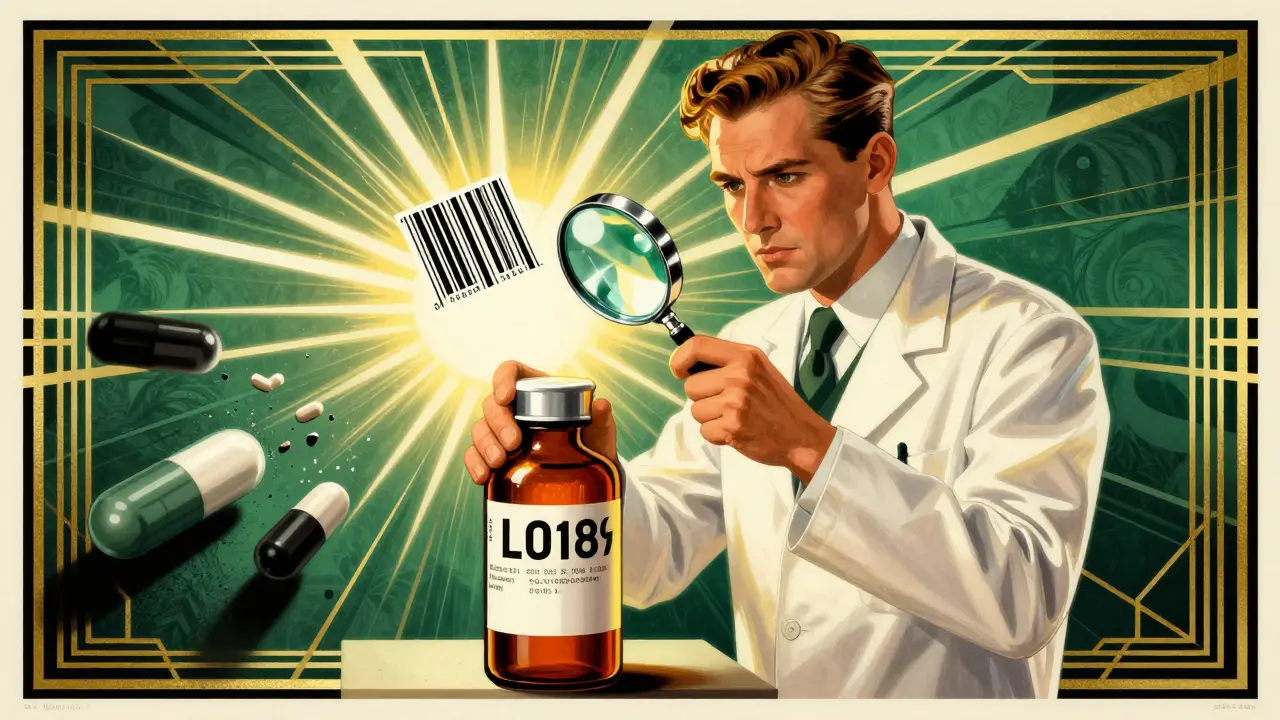
Every pill, vial, or syringe you take should be traceable. If it isn’t, you’re at risk. In 2025, the FDA reported over 12,000 cases of counterfeit medications entering the U.S. supply chain - many of them deadly. Fake cancer drugs, fake insulin, fake COVID treatments. These aren’t just stories from overseas. They’re showing up in local pharmacies, online stores, and even hospital stockrooms. The only thing standing between you and a dangerous fake drug? Lot numbers and serial codes.
What Are Lot Numbers and Serial Codes?
A lot number is a code assigned to a group of products made at the same time, under the same conditions. Think of it like a batch of cookies baked in one oven on Tuesday morning. All those cookies share the same lot number. In drug manufacturing, that lot number ties together the raw ingredients, the machine settings, the shift workers, and the date and time of production. If something goes wrong - say, a batch was contaminated - regulators can pull just that one lot, not every version of the drug ever made.
Serial codes are different. They’re unique to each individual unit. Every single bottle of insulin has its own serial code, like a fingerprint. That’s how pharmacies know exactly which bottle was sold to which patient. It’s how hospitals track which vial was used in which surgery. And it’s how investigators trace a fake drug back to its source.
These aren’t just labels. They’re lifelines.
Why This Matters for Fake Drugs
Counterfeiters don’t just copy the label. They copy the packaging, the logo, even the color of the pill. But they can’t copy the lot number system. Why? Because it’s tied to the manufacturer’s internal records - and those records are locked down.
When a fake drug shows up, the first thing regulators do is scan the lot number. If it doesn’t match the manufacturer’s database, it’s fake. If the lot number is real but the drug still looks wrong - maybe the pills are too soft, or the liquid is cloudy - they check the serial codes. Did this bottle leave the factory? Was it shipped to the pharmacy that sold it? Was it ever in transit?
In 2023, a major U.S. hospital chain caught 47 fake opioid vials because the serial codes didn’t match their delivery logs. The fake vials had been swapped in transit. Without serial tracking, they’d have never known. Patients could have been given placebos - or worse, toxic chemicals.
Track-and-trace systems cut recall costs by 63% and reduce investigation time by 72%. That’s not just money saved. It’s lives saved.
How the System Works in Real Life
Here’s how it plays out in a real pharmacy:
- A shipment of antibiotics arrives. The pharmacist scans the master carton’s QR code - it contains the lot number.
- Each box inside has its own barcode. The system checks: Is this lot approved? Is it expired? Is it on recall?
- When a patient picks up their prescription, the pharmacist scans the bottle’s serial code. The system logs: Patient ID, date, time, location.
- If a recall is issued later - say, because a batch was exposed to heat - the pharmacy pulls up every bottle with that lot number. They don’t have to guess. They don’t have to open every box. They know exactly which ones to pull.
It sounds simple. But it only works if everyone plays by the rules.
What Happens When the System Breaks
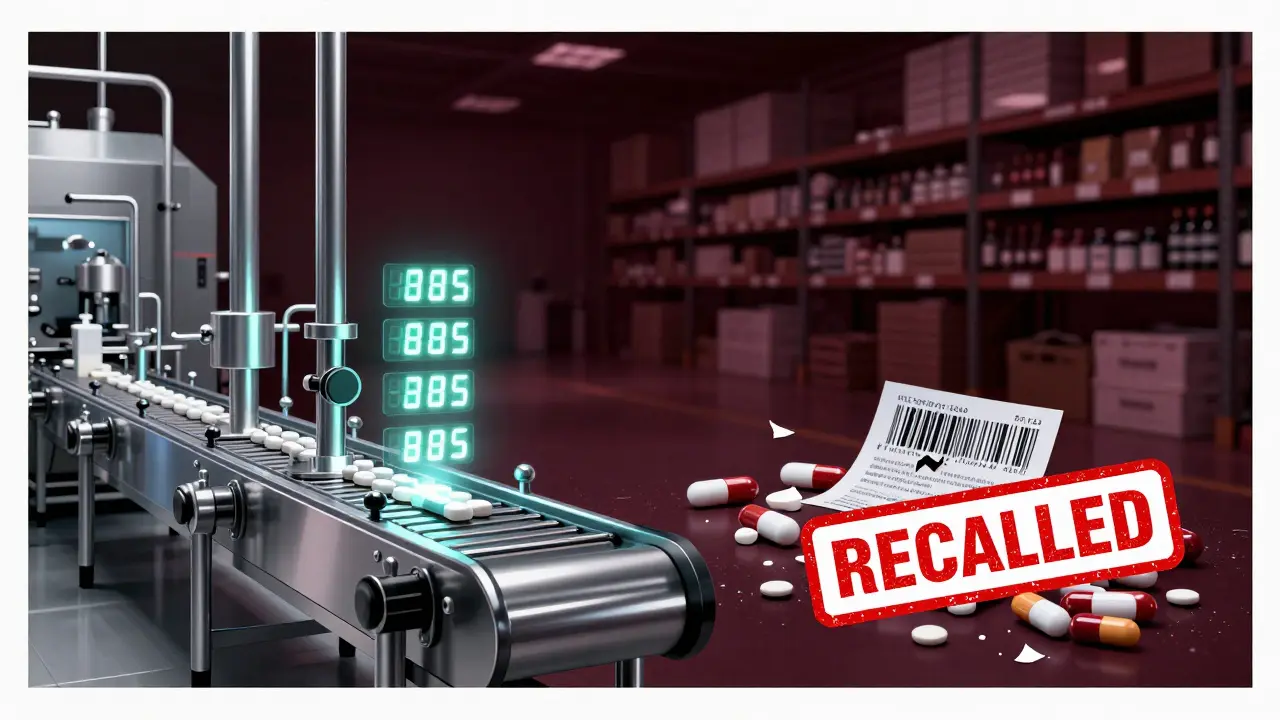
In 2022, a small compounding pharmacy in Ohio failed to record lot numbers properly. They wrote them down by hand. One entry was smudged. Another was misread. When a patient had a severe reaction, investigators couldn’t trace the source. The drug was linked to a contaminated ingredient - but because the lot number wasn’t recorded, the entire supply chain had to be shut down. Over 300,000 doses were destroyed. Two patients died.
That’s not an outlier. A 2023 FDA audit found that 38% of small manufacturers still use manual logs. That’s a recipe for disaster. Human error rates drop from 13% to under 0.5% when barcode scanning is mandatory. That’s not a suggestion. It’s a safety standard.
Even big companies mess up. In 2024, a major insulin maker had a system glitch. Serial codes weren’t syncing between their warehouse and their sales database. For three weeks, 14,000 bottles couldn’t be tracked. The FDA issued a warning. Sales dropped 40%. Brand trust took years to rebuild.
Regulations Are Getting Tighter
The U.S. Drug Supply Chain Security Act (DSCSA) requires full traceability by 2025. That means every drug package must have a unique serial code. Every lot must be digitally recorded. No exceptions.
It’s not just the U.S. The EU’s Digital Product Passport (2027) will require serialized tracking for all medicines. India, Brazil, and China have rolled out similar rules. If you’re making or selling drugs, you’re being watched.
And it’s working. Since 2019, counterfeit drug seizures at U.S. borders have increased by 217%. Why? Because the system is catching them. Lot numbers and serial codes are the fingerprints of the drug supply chain. And now, the cops are armed with scanners.

What You Can Do
If you’re a patient: Check the packaging. Is there a barcode? Is the lot number printed clearly? If it’s handwritten, faded, or missing - ask your pharmacist. Don’t take it home.
If you’re a pharmacist or nurse: Scan everything. Don’t rely on visual checks. If the system says the lot is expired or recalled - trust it. Even if the pills look fine.
If you’re a manufacturer: Invest in barcode scanning. Don’t use paper logs. Don’t skip integration with your ERP system. Cloud-based platforms like QR Inventory or Microsoft Business Central now cost less than $2,000 a year for small operations. That’s cheaper than one lawsuit.
The Future Is Real-Time
Next, we’ll see lot tracking linked to IoT sensors. Imagine a vaccine vial that tells you if it was exposed to freezing temperatures during shipping. Or a cancer drug that logs its entire journey - from lab to patient - on a blockchain. That’s already being tested in pilot programs by Pfizer and Merck.
AI is coming too. Systems will soon flag anomalies before they become problems. If a lot number appears in a country that doesn’t sell that drug? The system will alert authorities. If a serial code is duplicated? It’s fake.
By 2027, 65% of drug tracking systems will use AI to predict risks. That’s not science fiction. It’s the next step.
Bottom Line
Lot numbers and serial codes aren’t just paperwork. They’re your protection. Every time you see a barcode on a medicine bottle, know this: it’s there because someone died - or almost died - from a fake drug. The system works. But only if we use it right.
Don’t ignore it. Don’t skip it. Scan it.
Lot numbers save lives. Saw a friend get a fake insulin vial last year. Scanned it, system flagged it. Saved her. Simple as that.
I work at a small clinic. We went digital last year. Paper logs were a nightmare. Now we catch mismatches before meds even leave the shelf. No more guessing.
It’s wild how much we take this for granted. That barcode? It’s not just for inventory. It’s a lifeline. If you’re a patient, always scan. If you’re a provider, never skip it. This isn’t bureaucracy - it’s basic safety.
The DSCSA mandate isn’t regulatory overreach - it’s epistemic hygiene. Serialization creates verifiable provenance, which is the necessary precondition for trust in distributed systems. When you eliminate ambiguity in supply chain provenance, you collapse the attack surface for adversarial actors. This is systems-level resilience, not compliance theater.
My hospital implemented this two years ago. We had a recall last winter - 14,000 units. We pulled 12. The rest? Never left the warehouse. No one got hurt. It’s not glamorous, but this is how healthcare should work.
As someone who works in pharmaceutical compliance, I can say this: the systems work - but only if they’re implemented correctly. I’ve seen pharmacies ignore alerts because "the pills look right." That’s how tragedies happen. Trust the data. Always.
Let’s be clear: manual logs are a death sentence. In Nigeria, we lost 3 patients last year to fake antimalarials because the lot number was smudged. No one traced it. No one cared. This isn’t just an American issue - it’s global. And the fix? It’s cheap. It’s simple. It’s non-negotiable.
Wait - so you’re telling me that if I scan my insulin and it says "expired," I shouldn’t just use it anyway because "it looks fine"? Are you serious? I’ve been doing this for 12 years and I’ve never had a problem! This is just Big Pharma pushing $$$ tech on us!
HAHAHAHA. So you're telling me... that the government, the FDA, the drug companies, and the barcode scanners... are ALL working together... to save my life? RIGHT. And next they'll tell me the moon landing was real. Serial codes? Please. That's just a tracking mechanism for the surveillance state. Next thing you know, they'll scan your pill and send your data to the CIA. "Patient 789: took insulin. Suspicious. Flagged."