
Fluoroquinolone Tendon Risk Calculator
Risk Factors Assessment
This calculator estimates your risk of tendon damage when taking fluoroquinolone antibiotics based on factors discussed in the article.
Your Risk Assessment
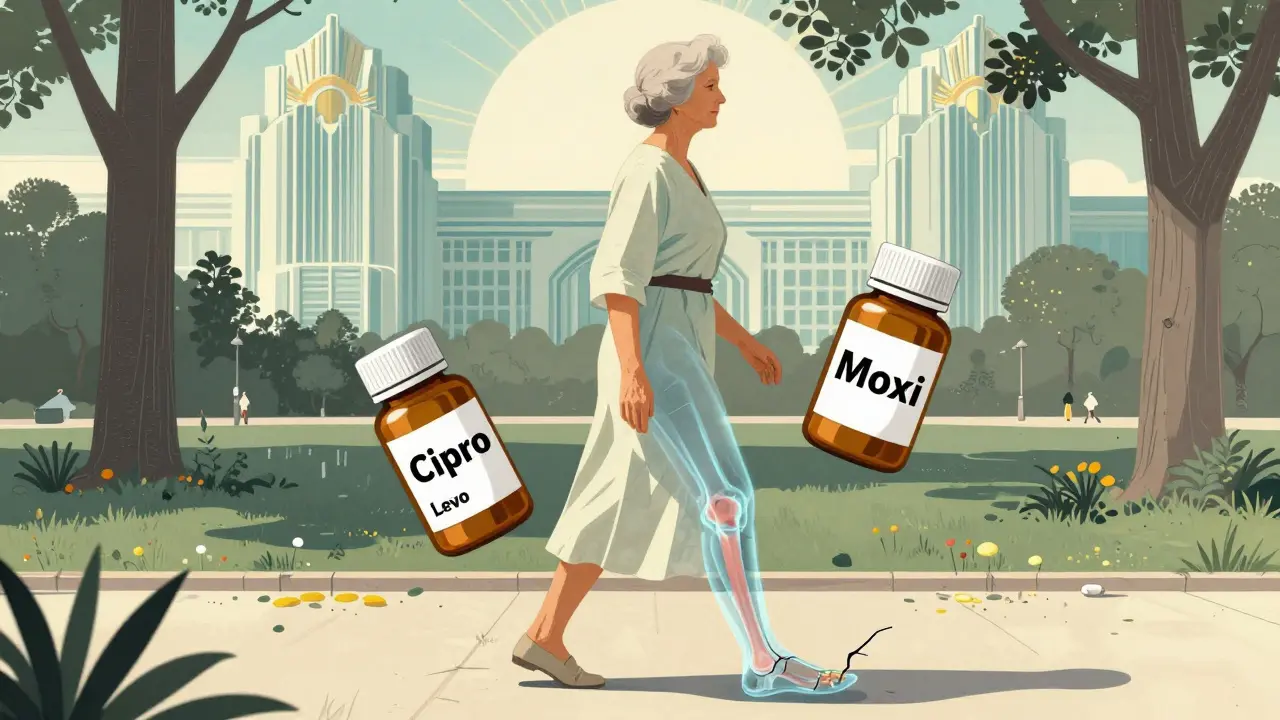
Imagine taking a common antibiotic for a urinary infection, only to wake up a few days later with sharp pain in your heel - so bad you can’t stand on your foot. This isn’t rare. It’s a real, documented risk tied to a class of antibiotics called fluoroquinolones. These drugs, including ciprofloxacin, levofloxacin, and moxifloxacin, are powerful. They treat serious infections like pneumonia, complicated UTIs, and even anthrax. But for some people, they can quietly wreck tendons - especially the Achilles - sometimes without warning.
Why Fluoroquinolones Are Different
Fluoroquinolones aren’t your average antibiotic. They were developed in the 1960s and became widely used in the 1980s because they worked against so many types of bacteria. But by the 2000s, doctors started noticing a pattern: patients on these drugs were showing up with sudden tendon pain, swelling, and even complete ruptures. The U.S. Food and Drug Administration (FDA) responded in 2008 by adding a black-box warning - the strongest possible alert - for tendon rupture. That warning was strengthened in 2013 and again in 2018 to include warnings about disabling, long-term side effects.The UK’s Medicines and Healthcare products Regulatory Agency (MHRA) went even further in 2019. They now say fluoroquinolones should only be used when no other antibiotic will work. In South Africa, where these drugs are still commonly prescribed, patients rarely know the full risk. Many assume an antibiotic is safe because it’s widely available. It’s not that simple.
Who’s Most at Risk?
Not everyone who takes fluoroquinolones will have tendon problems. But certain people are far more likely to. The biggest risk factors aren’t hidden - they’re well-documented in studies across the world.- Age over 60: The risk jumps dramatically. People aged 60-79 are over six times more likely to rupture a tendon. For those over 80, the risk is more than 20 times higher.
- Corticosteroids: Taking prednisone or other steroid pills or injections while on a fluoroquinolone increases rupture risk by 46 times. This combo is dangerous - and still happens too often.
- Diabetes or kidney disease: These conditions affect how the body repairs tissue. Fluoroquinolones interfere with tendon healing, and if your body is already struggling, the damage can be worse.
- Previous tendon injury: If you’ve had a torn tendon before, you’re at higher risk of it happening again.
- Female gender: Some studies show women report tendon pain more often than men after taking these drugs, though why isn’t fully understood.
Even if you don’t have any of these, don’t assume you’re safe. One study found that half of all tendon ruptures happened within a week of starting the antibiotic. In one case, pain started just two hours after the first pill.
Which Tendons Are Affected?
The Achilles tendon - the thick cord at the back of your ankle - is the most common site. Studies show it’s involved in nearly 90% of fluoroquinolone-related tendon injuries. But it’s not the only one. Shoulders, hands, and even the rotator cuff can be affected. About half of all cases involve both sides of the body at once.Why the Achilles? It’s not just because it’s large. This tendon has poor blood supply, which means it heals slowly. Fluoroquinolones seem to disrupt the cells that repair connective tissue, and they may also trigger inflammation and oxidative stress right where the tendon is weakest. The result? A tendon that’s weakening from the inside out.
When Does the Damage Happen?
Many people think side effects happen while you’re still taking the drug. That’s true - but not the whole story. The median time for symptoms to start is just six days after beginning treatment. About 85% of cases show up within the first month.But here’s what scares doctors: symptoms can appear months after you’ve stopped the antibiotic. One patient in a UK case report developed a ruptured Achilles tendon three months after finishing a course of ciprofloxacin. That means if you’re active and feel sudden pain in your heel or shoulder weeks after finishing your pills, don’t brush it off. It could still be linked.
The Science Behind the Damage
Fluoroquinolones don’t just kill bacteria. They also interfere with human cells. They bind to an enzyme called topoisomerase II, which helps manage DNA during cell repair. In tendon cells, this interference leads to mitochondrial damage - the energy factories inside cells - causing them to die off. This triggers inflammation and the release of harmful chemicals like nitric oxide, which break down collagen, the main protein in tendons.They also bind to magnesium and calcium, which are needed for tendons to stay strong and flexible. Without enough of these minerals, the tendon structure weakens. Think of it like rust forming inside a steel cable - you don’t see it until it snaps.
Some researchers in Japan questioned whether this risk is real at all, based on their small study. But their findings contradict dozens of larger studies involving millions of patients worldwide. The FDA, EMA, and MHRA all agree: the signal is strong, consistent, and dangerous.
What to Do If You’re Prescribed Fluoroquinolones
If your doctor says you need one of these antibiotics, ask: Is this absolutely necessary? Are there safer alternatives? For most common infections - like sinusitis, bronchitis, or uncomplicated UTIs - fluoroquinolones are not the first choice anymore. The Infectious Diseases Society of America now recommends them only as a last resort.If you’re prescribed one:
- Check if you’re taking steroids - if yes, ask for a different antibiotic.
- Don’t start intense exercise or heavy lifting while on the drug.
- Pay attention to any new pain, swelling, or stiffness in your tendons - especially in your heels, shoulders, or wrists.
- If you feel sudden pain, stop the medication immediately and call your doctor. Don’t wait.
- Don’t ignore mild discomfort. Tendonitis often comes before rupture - sometimes up to two weeks before.
Early action can prevent a full rupture. If caught early, rest, ice, and physical therapy can help. Once a tendon snaps, you’re looking at surgery and months of rehab - if you ever fully recover.

The Bigger Picture
Despite the risks, fluoroquinolones are still among the most prescribed antibiotics in the U.S. - about 25 million prescriptions a year. In many places, they’re overused because they’re convenient. But convenience shouldn’t outweigh safety.Regulators are trying to change that. The European Medicines Agency and the UK’s MHRA have cut back use. The FDA has tightened warnings. But patient awareness lags behind. Too many people still think, “It’s just an antibiotic.” It’s not. It’s a powerful drug with a hidden cost.
Doctors need to be better at screening. Patients need to be better at asking questions. And if you’re over 60, on steroids, or have diabetes - don’t take fluoroquinolones unless there’s no other option. Your tendons won’t thank you later.
What Happens After a Rupture?
A ruptured Achilles tendon is a major injury. You might hear a pop, feel like you’ve been kicked in the heel, and suddenly can’t push off your foot. Surgery is often needed, followed by months of physical therapy. Even then, many people never regain full strength or mobility. Some end up with chronic pain or weakness.And it’s not just physical. The emotional toll is real. You might miss work, lose independence, or be unable to walk your dog, play with your kids, or go hiking. Recovery takes time - and it’s not guaranteed.
That’s why prevention matters more than treatment.
Can fluoroquinolones cause tendon damage even after you stop taking them?
Yes. While most tendon problems start within the first month of use, symptoms can appear weeks or even months after stopping the medication. The FDA and MHRA both warn that tendon damage can be delayed. If you develop sudden pain in your heel, shoulder, or wrist after finishing a course of ciprofloxacin, levofloxacin, or another fluoroquinolone, seek medical advice immediately.
Are all fluoroquinolones equally risky?
No. Levofloxacin and ciprofloxacin are the most commonly linked to tendon issues, making up nearly 90% of reported cases. Moxifloxacin is less common but still carries risk. All drugs in this class have the same black-box warning from the FDA. No fluoroquinolone is considered safe for tendons.
What should I do if I feel tendon pain while on fluoroquinolones?
Stop taking the medication immediately and contact your doctor. Do not wait for the pain to get worse. Avoid putting weight on the affected area. Rest, ice, and elevation can help, but you need professional evaluation. Early intervention can prevent a full rupture.
Can I take fluoroquinolones if I have a history of tendon problems?
No. If you’ve had a previous tendon rupture or chronic tendinitis, fluoroquinolones are strongly discouraged. The risk of recurrence is very high. Your doctor should choose a different antibiotic. Always mention your medical history before starting any new medication.
Are there safer antibiotics for treating infections?
Yes. For most common infections - like urinary tract infections, sinus infections, or bronchitis - antibiotics like amoxicillin, trimethoprim-sulfamethoxazole, or nitrofurantoin are just as effective and carry no tendon risk. Fluoroquinolones should only be used for serious infections where other options have failed or aren’t suitable.
I had a friend who went on cipro for a UTI and ended up in a wheelchair for three months. No one warned her. She’s 52, healthy, no steroids - just took the pill like it was Advil. Now she walks with a limp. This isn’t hype. It’s real. Please, if you’re reading this and your doc pushes fluoroquinolones, say no. Ask for amoxicillin instead. Your tendons will thank you.
So I just finished a 10-day course of levaquin for pneumonia. Didn’t feel a thing. But now I’m nervously stretching my calves every morning like I’m preparing for the Olympics. 😅 Maybe I’m just paranoid. Or maybe I’m the 1 in 10,000 who gets lucky.
Oh wow, another ‘antibiotics are dangerous’ post. Let me guess - you also think vaccines cause autism and gluten gives you cancer? This is the kind of fearmongering that makes real doctors roll their eyes. If you’re over 60 and on prednisone, sure, be cautious. But don’t scare healthy people into refusing life-saving meds because some guy on Reddit had a bad day.
Katie, you’re missing the point. This isn’t fearmongering - it’s harm reduction. I’m a physical therapist. I’ve seen 17 tendon ruptures from these drugs in the last 5 years. Most patients are shocked. They thought it was just ‘a bad muscle pull.’ They didn’t know the drug was the culprit. The FDA’s black-box warning exists for a reason. If your doc prescribes this without explaining the risk, they’re not doing their job. Period.
And no, this isn’t anti-antibiotic. It’s pro-informed consent. We’re not asking people to avoid all meds. We’re asking them to ask: ‘Is this really necessary?’
As a healthcare professional with over two decades of clinical experience, I must emphasize that the evidence linking fluoroquinolones to tendon rupture is both statistically significant and clinically reproducible across multiple continents. The risk-benefit calculus must be individually assessed, particularly in populations with comorbidities such as diabetes, renal impairment, or concurrent corticosteroid use. Patient autonomy is best served through transparent, evidence-based counseling - not anecdotal narratives or alarmist social media discourse.
LOL y’all in US be scared of antibiotics like they be witchcraft 😂 In Nigeria, we use cipro for everything - fever, cough, even ‘bad vibes’. My uncle took it for 3 weeks straight and still danced at his daughter’s wedding. You people think your bodies are glass? 😭 We don’t have time to be fragile. Maybe your doctors overprescribe, but don’t blame the drug - blame the system. 🤷🏽♀️ #AfricanStrength #FluoroquinoloneWarrior
Of course the FDA issued warnings. But let’s be real - if you’re not a biochemistry PhD, you have no business questioning pharma’s clinical trials. I’ve read the original papers. The signal is weak. The studies are observational. Correlation ≠ causation. You’re letting fear override science. And honestly? If you can’t handle a little tendon discomfort, maybe you shouldn’t be running marathons. 🧠💊
My dad got cipro for a UTI at 72. Two weeks later - snap. Achilles. Surgery. 8 months of PT. He still can’t climb stairs without pain. He didn’t even know it was a risk. No one told him. If this post saves one person from that - it’s worth it.