
Traveling abroad with prescription meds isn’t just about packing your bottle. It’s about making sure the pharmacist in Tokyo, Berlin, or Mexico City understands exactly what you need - and that you get the right drug, in the right dose, at the right time. One wrong translation can mean taking ten times too much - or nothing at all.
Why Medication Names Vary So Much Between Countries
The same pill can have five different names depending on where you are. In the U.S., you might know it as Advil. In France, it’s Ibuprofène. In Poland, it’s Abfen. All are ibuprofen. But if you walk into a pharmacy in Rome with a bottle labeled "Advil," they won’t recognize it. They’ll ask for the active ingredient: ibuprofene. This isn’t just confusing - it’s dangerous. In the UK, Ambyen treats irregular heartbeat. In the U.S., Ambien is a sleep aid. Mix them up, and you could overdose on a sedative thinking it’s a heart medication. The World Health Organization created the International Nonproprietary Name (INN) system to fix this. Every drug has a global generic name. But brand names? Those are local. Pharmacies outside the U.S. rarely stock American brands. They stock generics.What You Need to Translate - And What Happens If You Don’t
A prescription isn’t just a drug name. It’s a full set of instructions:- Drug name (brand and generic)
- Dosage (e.g., 500 mg, 1 tablet)
- Frequency (e.g., "take twice daily")
- Duration (e.g., "for 14 days")
- Special instructions (e.g., "take with food," "avoid alcohol")
How to Prepare Before You Travel
Don’t wait until you’re out of pills in a foreign city. Start weeks before you leave.- Write down the generic name of each drug. Use Drugs.com or the NIH’s MedlinePlus to find it. For example: "Lisinopril," not "Zestril."
- Write the dose and frequency in plain numbers: "10 mg once daily," not "take one pill in the morning."
- Print or save a copy of the package insert or patient leaflet that came with your bottle. It lists active ingredients, warnings, and side effects in clear language.
- Bring at least a 30-day supply. Many countries won’t fill a foreign prescription unless you have proof you were taking it before you arrived.
- Carry a letter from your doctor. It should state your name, condition, medication names (generic), doses, and why you need them. Translation isn’t required - but it helps.
What Foreign Pharmacies Actually Need
When you walk into a pharmacy abroad, they need three things:- Active ingredient - the chemical name. This is the key.
- Dosage form and strength - tablet? capsule? 5 mg? 10 mg?
- Prescribing doctor’s details - name, clinic, contact info. Some countries require this to verify legitimacy.

Translation Tools: Use Them Wisely
Google Translate? It’s better than nothing - but dangerous if you rely on it. A 2023 analysis by ASAP Translate found that AI tools like Google Translate and DeepL get the active ingredient right 85% of the time - but mess up dosage instructions in 32% of cases. They’ll translate "take one tablet every 8 hours" as "take one tablet every eight hours," which sounds fine - until you realize they turned "every 8 hours" into "eight tablets a day" because they didn’t understand the context. Professional medical translation services like RxTran or Stepes use databases built from WHO INN standards, FDA labels, and EU pharmacopeia. They don’t just translate words - they map drug names across 26+ languages, flag dangerous look-alike names, and convert dosages correctly (e.g., "1 g" = "1000 mg").Real-Life Translation Failures (And How to Avoid Them)
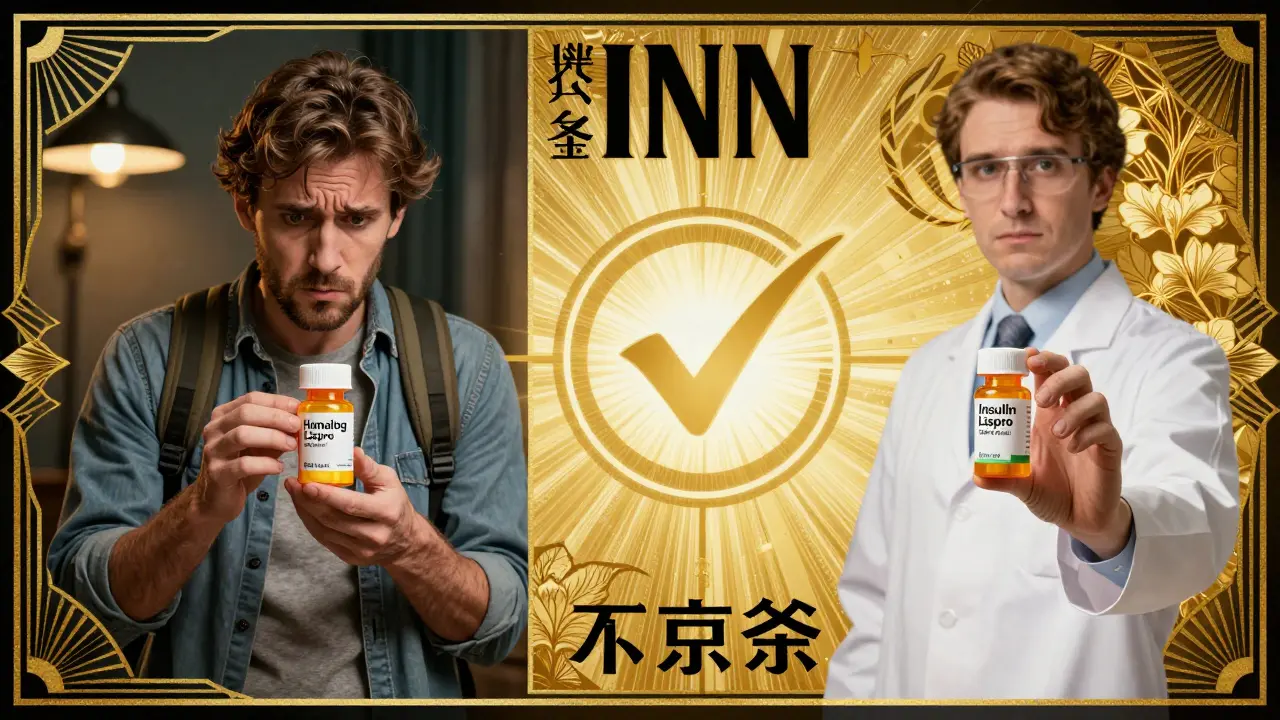
Reddit user PharmTech2020 shared a near-disaster: A patient brought in a Spanish prescription for "1g" of a painkiller. The pharmacist assumed it meant "1 gram" - which is 1000 mg. But in Spain, "1g" on a prescription often means "1 tablet" of a 1000 mg strength. The patient thought they were getting a weaker dose. The pharmacist almost gave them four times the intended amount. Another case: A traveler in Brazil needed insulin. The U.S. prescription said "Humalog 100 units/mL." The Brazilian pharmacy didn’t carry Humalog. They offered "Insulina Lispro 100 UI/mL." The patient didn’t know "UI" meant "units." They thought it was a different strength. They took half the dose - and ended up in the ER with high blood sugar. The fix? Always ask: "Is this the same active ingredient?" and "What’s the strength in mg or units?" Write it down.When You Can’t Find the Exact Drug
Sometimes, the drug you need isn’t sold in the country you’re visiting. That’s when you need an equivalent. For example:- U.S.: Metformin → UK: Glucophage → Germany: Metformin Hexal → All the same.
- U.S.: Levothyroxine → Canada: Synthroid → France: Euthyrox → Same drug, different brand.
Regulations Vary - Know the Rules
Some countries require translated labels. New York state mandates translations in Chinese, Italian, Russian, and Spanish. California now requires them in the top 15 languages spoken by residents. Other countries, like Australia or Japan, have strict rules about importing medications - even if you have a prescription. Never ship pills internationally unless you’re sure it’s legal. Many countries consider prescription meds without a local prescription to be controlled substances. You could be fined or detained.What Pharmacies Should Do - If You’re a Provider
If you run a pharmacy serving international patients:- Use certified medical translation services, not general ones.
- Integrate translation tools directly into your dispensing system - RxTran and Stepes offer this.
- Train staff to check WHO INN names, not brand names.
- Keep a printed list of common equivalents: "Advil = Ibuprofen," "Tylenol = Acetaminophen," etc.
- Offer phone interpreting for urgent cases. Don’t rely on bilingual staff without medical training.
Final Checklist Before You Travel
- [ ] Generic drug names written down - [ ] Dosage in mg or units, not "one pill" - [ ] Package insert or leaflet printed - [ ] 30+ day supply packed - [ ] Doctor’s letter with diagnosis and meds - [ ] Equivalents researched for your destination - [ ] Translation app downloaded (but not trusted as final) - [ ] Emergency contact for your pharmacy back homeWhat Happens If You Get It Wrong?
A 2023 study from Johns Hopkins found that misreading a single dosage instruction due to poor translation led to adverse reactions in 22% of cases among elderly travelers. In vulnerable populations, mortality rates rose over 20%. This isn’t hypothetical. It’s happening every day. The fix isn’t fancy tech. It’s simple: know your drug’s real name. Know the dose. Ask questions. Write it down. Don’t assume.Can I just use Google Translate for my prescription?
No. Google Translate and similar tools often misinterpret dosage instructions, confuse similar-sounding drug names, and miss critical context. For example, they might turn "take 1 tablet every 8 hours" into "take 8 tablets per day." These errors can lead to overdose or underdose. Always verify translations with a certified medical translator or pharmacist.
Do foreign pharmacies accept U.S. prescriptions?
Most don’t. Many countries require a local prescription to dispense medication. Some may fill your U.S. prescription if you have the original bottle, a doctor’s letter, and the generic drug name clearly written. Always call ahead or check local laws before you travel.
What if my medication isn’t available abroad?
Find the active ingredient (generic name) and ask the pharmacist for an equivalent. Use trusted resources like Drugs.com’s international database or the WHO’s INN list. Never substitute without confirming the dose and use are identical. For example, Metformin in the U.S. is the same as Glucophage in the UK - but only if the strength matches.
How do I know if a foreign drug is the same as mine?
Compare the active ingredient, strength, and dosage form. Brand names vary, but the generic name (like "ibuprofen" or "lisinopril") is universal. If the foreign drug lists the same generic name and strength, it’s the same. Ask the pharmacist: "Is this the same as [your drug] in the U.S.?" Show them the label.
Are there apps that help translate medication names?
Yes. Drugs.com has an international drug lookup tool that shows equivalents in over 40 countries. The WHO also publishes the International Nonproprietary Names list online. These are reliable. Avoid general translation apps for dosage instructions - they’re not designed for medical accuracy.
Just carry a laminated card with your meds: generic name, dose, frequency. I did this in Japan and the pharmacist nodded like it was no big deal. No translation needed, just facts.
Simple. Safe. Works every time.
So let me get this straight - we’re supposed to trust a pharmacist in Bangkok who’s never heard of Lipitor but somehow knows what ‘atorvastatin’ means? Sure. And I’m sure they also know how to pronounce ‘Zyrtec’ without laughing.
Meanwhile, my grandma in Ohio still calls it ‘that blue pill for the heart’ and she’s got it right.
Let’s not overlook the systemic failure here. The U.S. pharmaceutical industry’s reliance on proprietary branding creates unnecessary fragmentation in global pharmacovigilance systems. The WHO INN framework exists for a reason - standardization reduces error rates by 68% according to WHO 2022 data.
Pharmacists abroad aren’t being difficult; they’re following national formularies built on evidence-based naming conventions. Your Zestril? It’s lisinopril. Period.
Stop expecting foreign systems to accommodate American branding inertia. Educate yourself. Carry the INN. It’s not complicated.
I’ve been to over 20 countries with my thyroid med, and I’ve learned this: no one cares about the brand. They care about the molecule.
In Mexico City, I showed the pharmacist the little leaflet from my bottle - the one with ‘levothyroxine sodium 75 mcg’ printed in tiny font. He smiled, grabbed a box of Euthyrox, and said, ‘Same.’
It’s not magic. It’s just knowing what to say. And sometimes, showing the paper.
Also - always ask for the packaging insert. The small print has the real answer.
Did you know the FDA and Big Pharma secretly collude with WHO to make you think ‘ibuprofen’ is real? It’s all a cover. The actual drug is called ‘PainKiller-7’ and they hide it under fake Latin names so you can’t track the corporate control.
Plus, your doctor’s letter? Probably bugged. They’re watching your pill intake. I’ve seen it.
Bring your own pills. Always. And never trust a pharmacy with more than three shelves.
As someone who’s worked in a pharmacy in Cape Town and now lives in the States, I’ve seen both sides.
It’s not about language - it’s about context. A patient once came in with a script for ‘500mg of Tylenol twice a day.’ We had to explain that Tylenol isn’t a drug - it’s a brand. The active ingredient is acetaminophen, and in South Africa, we call it ‘paracetamol.’
They didn’t know. I didn’t judge. I just showed them the bottle and wrote it down.
Empathy + clarity > translation apps.
Critical point missed in the article: dosage form ambiguity. ‘Tablet’ vs. ‘capsule’ vs. ‘suspension’ can trigger different bioequivalence thresholds in foreign pharmacopeias. A 500mg ibuprofen tablet in the U.S. may not be considered therapeutically equivalent to a 500mg capsule in Germany due to dissolution profile differences.
Always specify the dosage form. Don’t just say ‘pill.’ Say ‘tablet.’
And for god’s sake, never write ‘take one’ - write ‘1 tablet.’
I used to panic every time I traveled with my diabetes meds. Then I started carrying a QR code on a keychain that links to a simple page with: generic name, dose, frequency, doctor’s contact, and a photo of the pill.
Pharmacists in Italy, Thailand, and even rural Peru scanned it and said, ‘Ah, yes. Same.’
It’s not fancy. But it works. And it’s way better than hoping Google Translate doesn’t turn ‘every 12 hours’ into ‘twelve times a day.’
Bro i was in delhi last year n my doctor wrote ‘metformin 500mg 2x a day’ but the pharmacy gave me ‘glucophage’ and i was like wtf?
Then i showed them the bottle n they were like ‘ohhh same thing’ and i was like damn i should’ve just brought the box.
Also - ‘UI’ means units? I thought it was ‘ul’ for microliter lol.
TL;DR: bring the bottle, write the generic, don’t trust apps.
Why the hell are we letting foreign countries dictate what our pills are called? We invented modern medicine. We don’t need their ‘ibuprofene’ nonsense.
They should learn English. Or at least stop making up weird names like ‘Abfen’ - that sounds like a typo.
And if they won’t fill our scripts? Fine. We’ll just stop exporting our meds. Let them suffer with their ‘Euthyrox’ and ‘Insulina Lispro’ nonsense.
OMG I JUST REALIZED WHY MY PILL BOTTLE WASN’T WORKING IN SPAIN 😱
They were like ‘where’s the brand?’ and I was like ‘but it says Advil’ and they were like ‘nope, we only have Ibuprofeno’
So I cried a little and bought the blue one and now I’m fine 😅
But seriously - print the generic name on your bottle with a Sharpie. Game changer. 🙏💊
It’s worth noting that the 2023 Johns Hopkins study referenced in the article did not control for patient literacy levels or access to bilingual pharmacy staff. The 22% adverse reaction rate may be conflated with socioeconomic barriers rather than purely linguistic ones.
Additionally, the assumption that pharmacists are uniformly untrained in INN systems is overstated - in EU nations, pharmacists are required to pass INN competency exams.
Context matters. The problem isn’t translation - it’s systemic under-resourcing in global healthcare infrastructure.