Why Your Cheese Could Be Dangerous With MAO Inhibitors
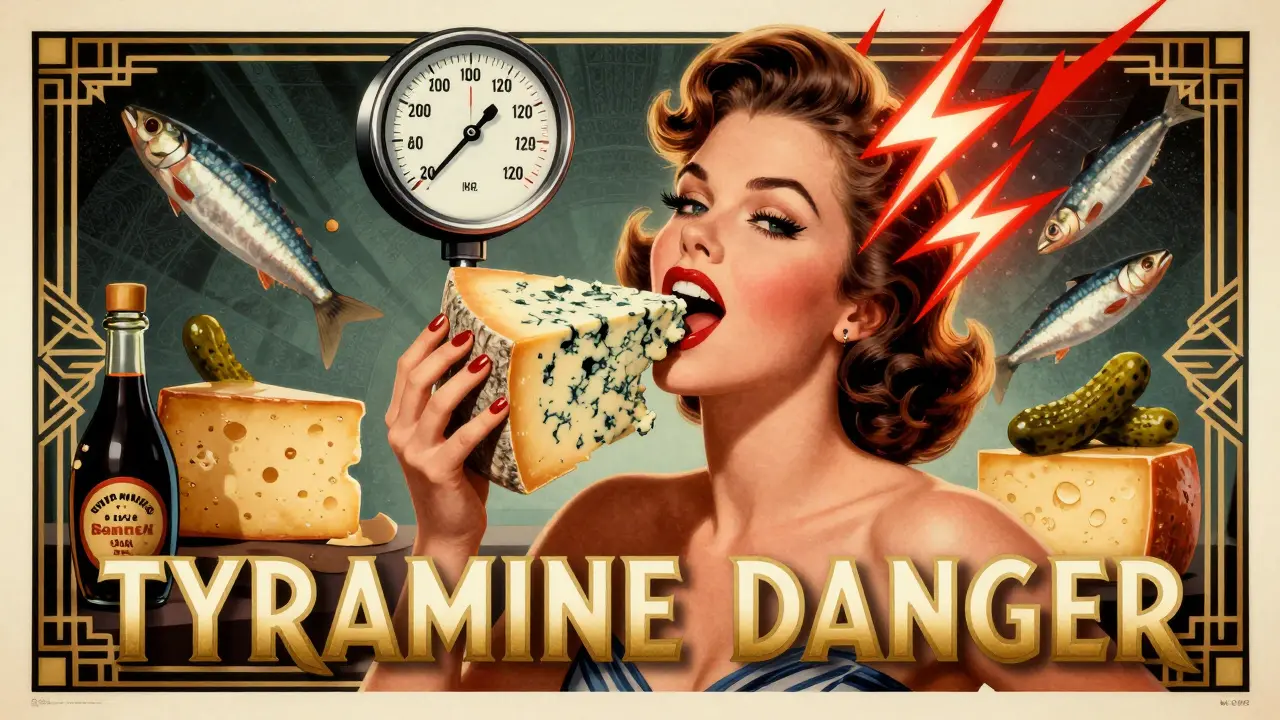
If you're taking an MAO inhibitor for depression, your food choices aren't just about nutrition-they could save your life. A single bite of aged cheddar, blue cheese, or pickled herring can send your blood pressure skyrocketing in minutes. This isn't a myth. It's a real, documented risk called a hypertensive crisis, and it happens because of how your body handles tyramine when MAOIs are in your system.
MAO inhibitors block the enzyme that normally breaks down tyramine, a natural compound found in aged, fermented, or spoiled foods. Without this enzyme, tyramine builds up and triggers a massive release of norepinephrine. That causes your blood vessels to constrict, your heart to race, and your blood pressure to spike-sometimes to dangerous levels. Studies show that as little as 5-10 mg of tyramine can cause a 30-50 mmHg rise in systolic pressure. At 10-25 mg, you're in crisis territory.
Which Foods Contain Dangerous Levels of Tyramine?
Not all aged foods are equal. Some pack a serious punch. Here’s what you need to avoid:
- Aged cheeses: Blue cheese (9-41 mg per 100g), cheddar, parmesan, gouda, and Swiss can contain over 20 mg per ounce. A single slice of strong blue cheese can hit 30 mg.
- Fermented soy products: Soy sauce (20-70 mg per 100ml), miso, and tempeh. Even a tablespoon of soy sauce can contain 15-20 mg.
- Cured or smoked meats: Pepperoni, salami, pastrami, and corned beef. These are preserved with fermentation and aging.
- Pickled or fermented fish: Pickled herring (110-230 mg per 100g), smoked salmon, and surströmming (Swedish fermented herring).
- Alcohol: Chianti wine (4-15 mg per 100ml), tap beer, and liqueurs like Chambord. Draft beer is riskier than bottled.
- Overripe or spoiled foods: Any fruit or vegetable left too long-bananas, avocados, or even leftovers stored past their prime-can develop tyramine as they break down.
Here’s the catch: fresh versions of these foods are usually safe. Fresh mozzarella, plain yogurt, and unaged cheese have less than 5 mg per 100g. Fresh chicken, beef, or fish that’s been cooked and eaten the same day is fine. The danger comes from aging, fermentation, or spoilage.
Not All MAO Inhibitors Are the Same
There are three main types of MAOIs, and they carry very different risks.
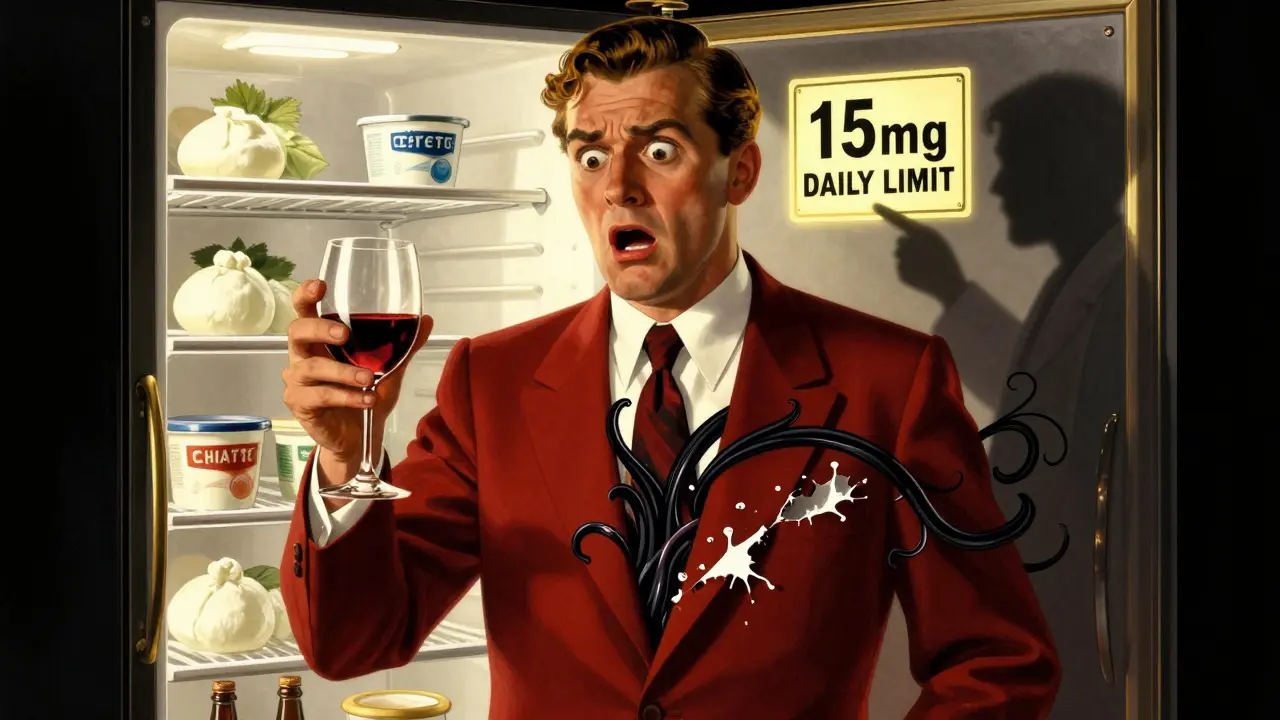
Traditional irreversible MAOIs like phenelzine (Nardil) and tranylcypromine (Parnate) are the most dangerous. They permanently disable the MAO-A enzyme in your gut and liver. If you’re on these, you must strictly limit tyramine to under 15 mg per day. That’s less than two ounces of aged cheese.
Reversible MAO-A inhibitors like moclobemide (used in Europe and Canada) work differently. They bind temporarily and let tyramine displace them. That means you can eat moderate amounts of tyramine without a crisis. Studies show no dangerous spikes even with 100 mg of tyramine.
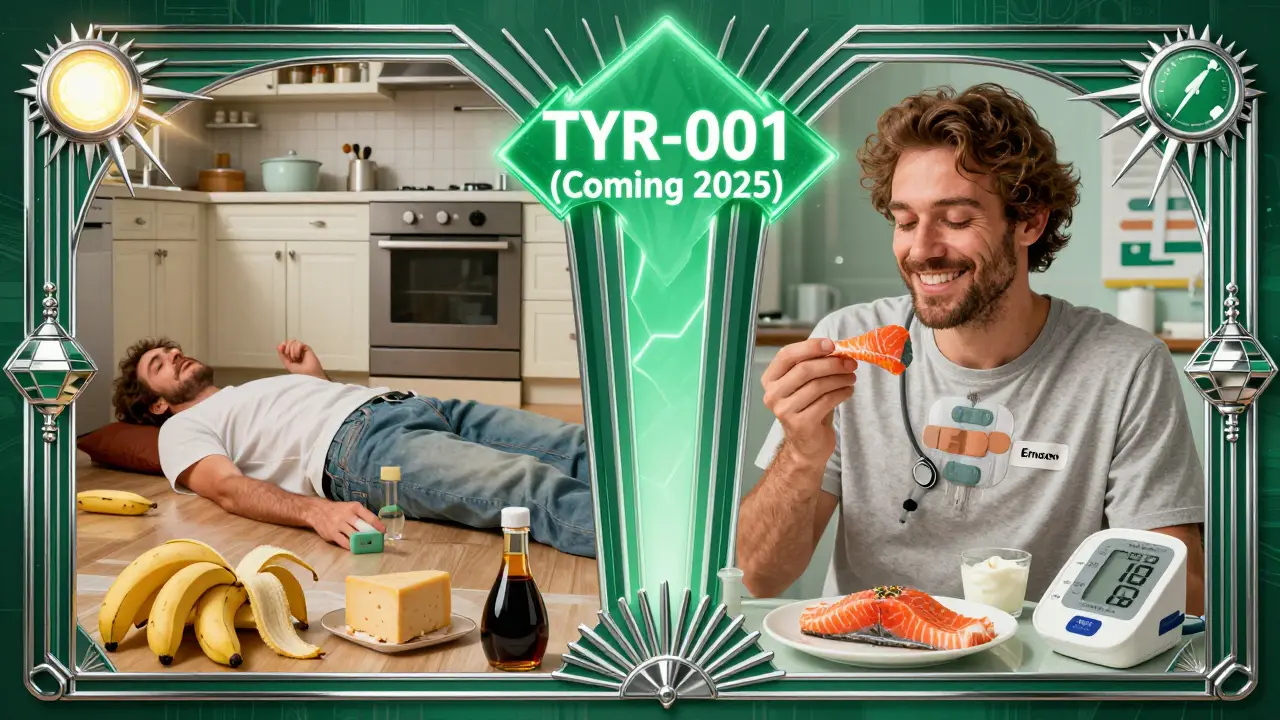
Transdermal selegiline (Emsam patch) is the safest option. At the lowest dose (6 mg/24 hours), it only blocks MAO-B in the gut, leaving MAO-A free to handle tyramine. The FDA says you don’t need dietary restrictions at this dose. At higher doses (9 mg and 12 mg), you still need to be careful, but the risk is much lower than with pills.
According to a 2020 review, 87% of people on traditional MAOIs found diet restrictions unbearable. Only 22% felt that way on low-dose Emsam. That’s why new prescriptions are shifting toward the patch.
What Happens During a Hypertensive Crisis?
A hypertensive crisis isn’t just a headache. It’s a medical emergency. Your blood pressure can jump from 120/80 to 200/120 in under 30 minutes. Symptoms include:
- Severe headache, often at the back of your head (occipital)
- Blurred vision
- Palpitations or chest tightness
- Sweating, nausea, or vomiting
- Confusion or anxiety
These symptoms can mimic a stroke or heart attack. In fact, about 0.3% of all hypertensive emergencies in U.S. ERs are linked to MAOI-tyramine interactions. The good news? Fatalities are rare-fewer than five per year in the U.S. since 2010. The bad news? You won’t know you’re at risk until it happens.
One study found that 1 in 200 people on standard-dose MAOIs will have a significant blood pressure spike requiring emergency care within five years. That’s why monitoring your blood pressure at home is now a standard recommendation.
Real People, Real Struggles
Patients don’t just struggle with the science-they struggle with life.
A 2022 analysis of online forums showed 68% of people stopped MAOIs because of diet restrictions. One woman in the UK said she couldn’t go to dinner with friends because she didn’t know if the restaurant used aged cheese in their pasta. Another man in Canada gave up his favorite smoked salmon breakfast because he couldn’t tell if it was fresh enough.
On Reddit, 74% of MAOI users admitted they accidentally ate something risky at least once. Most had mild symptoms-flushing, headache, fast heartbeat. Only 2% needed ER care. But even that small number is enough to terrify people.
Yet, those who stick with it often say it’s worth it. In a 2022 study, 61% of long-term users reported "life-changing" improvement in depression. For people who didn’t respond to SSRIs or other meds, MAOIs are often the only thing that works.
How to Stay Safe: Practical Tips
Here’s what actually works:
- Use a food list, not guesses. Don’t rely on "I think this is okay." Use a printed or digital list from your doctor or the Massachusetts General Hospital protocol.
- Portion matters. A small slice of aged cheese (under 1 ounce) might be safe. A whole wedge? Not even close.
- Check expiration dates. If it’s been sitting in the fridge for a week, toss it. Tyramine builds up as food spoils.
- Buy fresh, cook fresh. Eat meat and fish the day you buy them. Avoid deli counters where products sit under lights for days.
- Test your blood pressure. Buy a home monitor. Log readings daily. If your systolic pressure hits 180 or higher, call your doctor immediately.
- Know your emergency plan. Keep nitroglycerin or other prescribed meds on hand. Tell someone in your household what to do if you collapse.
Some hospitals now offer 45-minute training sessions with nurses. One trial showed that after this training, diet violations dropped from 32% to just 8% in six months.
The Future: New Hope on the Horizon
There’s good news coming. In March 2024, the FDA gave breakthrough status to a new supplement called TYR-001, developed by Sage Therapeutics. Early trials showed it lets people eat tyramine-rich foods without triggering blood pressure spikes-even at doses up to 50 mg. If Phase III trials succeed, this could eliminate dietary restrictions entirely for MAOI users.
Also, emergency treatment has improved. Doctors now use nicardipine to slowly lower blood pressure, avoiding dangerous drops that can cause strokes. This is a big step forward.
Even with these advances, MAOIs will likely remain a niche treatment. Only 2-3% of antidepressant prescriptions in the U.S. are for MAOIs, and that’s expected to hold steady through 2030. But for the people who need them, they’re irreplaceable.
Final Thoughts: Knowledge Is Your Shield
You don’t have to give up food to stay alive-you just have to know what to avoid. The days of vague warnings like "avoid cheese and wine" are over. Today, we have precise data: tyramine levels, safe portions, and safer medications.
If you’re on an MAOI, talk to your doctor about your specific drug. Ask if you’re on a low-dose patch. Get a printed food list. Buy a blood pressure monitor. Learn the warning signs. You’re not being paranoid-you’re being smart.
MAOIs can change your life. But only if you protect yourself from the hidden dangers in your kitchen.
Can I eat blue cheese if I’m on an MAOI?
No. Blue cheese contains 9-41 mg of tyramine per 100g. A single ounce (about 28g) can deliver 30 mg or more-well above the safe limit of 15 mg per day for traditional MAOIs. Even small amounts can trigger a dangerous blood pressure spike. Stick to fresh cheeses like mozzarella, ricotta, or cottage cheese.
Is soy sauce safe on MAOIs?
Most soy sauce contains 20-70 mg of tyramine per 100ml. One tablespoon (15ml) can have 3-10 mg. That’s too much if you’re on phenelzine or tranylcypromine. Use tamari labeled "low-sodium" and check the label for tyramine content. Some brands now list it. If unsure, skip it or use fresh lemon juice and salt instead.
Can I drink wine on MAOIs?
Chianti and other red wines contain 4-15 mg of tyramine per 100ml. A standard glass (150ml) could deliver 6-22 mg. That’s risky if you’re on a traditional MAOI. White wines and sparkling wines are lower, but still not risk-free. The safest approach is to avoid alcohol entirely. If you must drink, limit to one small glass of white wine and check your blood pressure afterward.
What’s the difference between MAO-A and MAO-B?
MAO-A breaks down tyramine and serotonin in the gut and liver. MAO-B breaks down dopamine and phenethylamine in the brain. Traditional MAOIs block both, which is why tyramine builds up. Newer drugs like the Emsam patch at low doses only block MAO-B, leaving MAO-A free to handle tyramine. That’s why you don’t need diet restrictions at the 6 mg dose.
Do I need to avoid all fermented foods?
Not all. Yogurt, kefir, and fresh sauerkraut (unpasteurized but not aged) have minimal tyramine. The danger is in aging and fermentation over weeks or months. Avoid kimchi, aged pickles, kombucha, and fermented meats. Stick to fresh, unaged, and unspoiled versions. When in doubt, choose fresh over fermented.
Can I take over-the-counter cold meds with MAOIs?
No. Many decongestants like pseudoephedrine and phenylephrine can cause dangerous interactions with MAOIs, leading to high blood pressure or serotonin syndrome. Always check labels for these ingredients. Use saline sprays, humidifiers, or ask your doctor for safe alternatives like guaifenesin.
How long do I need to follow the diet?
As long as you’re taking the MAOI. Even after you stop, wait at least two weeks before eating high-tyramine foods. Some MAOIs stay active in your body for weeks. For irreversible inhibitors like phenelzine, the enzyme needs time to regenerate. Always follow your doctor’s advice on tapering and diet clearance.
Is there a test to know if I’m sensitive to tyramine?
No. Sensitivity varies widely between people. Some react to 5 mg, others tolerate 20 mg. There’s no blood test or genetic marker. The only way to know is to avoid high-tyramine foods entirely until you’re sure your medication and body can handle small amounts-under medical supervision.
I can't believe people still take these drugs. One bite of blue cheese and you're in the ER? That's not treatment, that's a death sentence with a side of parmesan. I'd rather be depressed than live like a food Nazi.
This is such an important post... Seriously. I've been on Emsam for two years now, and I can't tell you how many people I've saved just by telling them, 'Hey, don't eat that fermented herring.' I keep a laminated list in my wallet. I even carry a blood pressure cuff in my purse. It's not paranoia-it's preparedness. And yes, I'm that guy who checks the expiration date on your yogurt at the party.
I was on phenelzine for six months. I lost three friends because I couldn't go out to eat with them. One night, I cried in a grocery store because I couldn't find a cheese that wasn't 'aged.' But... it worked. My depression lifted like a fog. I still avoid blue cheese, but now I eat fresh mozzarella with basil and tomato like it's a ritual. It’s not perfect, but it’s mine.
So... I'm supposed to avoid wine, cheese, soy sauce, and smoked salmon... but I can still drink kombucha? 😂 That's like saying 'don't eat the cake, but go ahead and lick the frosting off the wall.' What's next? 'Avoid all food that has ever been near a fermentation jar'? 🤦♂️
You people treat this like a religious doctrine. 'Thou shalt not eat aged cheese.' But what is 'aged'? Is it 7 days? 14? 30? Who decided this? A monk in a lab coat? The truth is, your body adapts. Evolution doesn't care about your MAOI prescription. If your system can't handle 20mg of tyramine, maybe you're not meant to be alive in the first place. Or maybe... the real problem is the drug, not the food.
I mean... I'm on Emsam 6mg and I just had a slice of gouda with my morning coffee. 🧀☕️ I also had soy sauce on my sushi. And I'm still alive. And no, I didn't have a stroke. So yeah, I'm gonna keep doing that. The FDA says it's fine. Your fear is not my rule. #MAOILife #FridgeFreedom
I used to think this was just another boring medical warning... until I saw my best friend go from laughing at dinner to screaming in the ER because she ate a sandwich with provolone. She’s okay now. But she hasn’t touched cheese since. I started making her fresh mozzarella salads every Sunday. It’s our thing now. We call it ‘The Cheese Rebellion.’ We eat the safe stuff... and we eat it loud.
It's fascinating how we assign moral weight to food when it comes to mental health. We don't say 'don't eat sugar if you're diabetic' with the same horror. But MAOIs? Suddenly it's a spiritual test. Is it the tyramine we fear... or the loss of control? The food is just food. The fear is human.
You all sound like you're trying to justify your laziness. If you can't follow a simple diet, maybe you shouldn't be on a drug that requires you to read a 10-page food guide. This isn't hard. It's not about being perfect. It's about being responsible. And if you're too weak to avoid pickled herring, maybe you're too weak to handle depression.
i just wanna say thx for this post. i was on parnate and i had no idea soy sauce was so bad. i thought it was just wine and cheese. now i check every label. its kinda annoying but... worth it. i feel better than i have in 10 years. so yeah. thanks.
Oh sweetie. You listed 'overripe bananas' as dangerous? That's adorable. I'm pretty sure if you're on MAOIs and you're eating bananas that are brown enough to be considered compost, you've got bigger problems than tyramine. Maybe try not being a food hoarder who lets everything sit in the fridge for three months? Just a thought.
I just had to tell someone-my mom found out I was on MAOIs and she made me a whole meal of fresh grilled salmon, plain rice, and steamed broccoli. No salt. No sauce. No flavor. I cried. She didn’t understand. She just wanted me to live. But I miss taste. I miss life. I miss... food.
The science here is solid, but the cultural context is missing. In India, we ferment everything-dosa batter, idli, kanji, even milk. Yet, MAOI users in India rarely report crises. Is it because we consume smaller portions? Or because our fermentation is microbial-different? Or maybe Western medicine is overestimating risk? We need global data, not just American grocery lists.
I've been on moclobemide for a year. I eat soy sauce, I drink Chianti, I even had a slice of blue cheese last week. No crisis. No headache. No panic. My doctor says it's fine. My blood pressure monitor says it's fine. So if you're scared, that's your thing. But don't scare the rest of us with your horror stories. We're not all on Nardil.