
The Real Risks of Untreated Sleep Apnea
Ignoring a loud snore or chronic daytime fatigue isn't just about being tired. There's a direct link between Obstructive Sleep Apnea (OSA) and serious pregnancy complications. Research shows that women with untreated OSA have a 2.3-fold higher risk of developing preeclampsia (a dangerous spike in blood pressure) and a 1.7-fold increase in the risk of gestational diabetes. There is also a higher likelihood of needing a C-section. If you're feeling exhausted despite "sleeping" eight hours, or if your partner notices you stop breathing for a few seconds, it's time to talk to your doctor. Most clinics now use tools like the Berlin Questionnaire or the Epworth Sleepiness Scale to see if you need a formal sleep study.How to Treat Sleep Apnea While Pregnant
If you're diagnosed with moderate to severe apnea, the gold standard is CPAP therapy is a treatment that uses a machine to deliver a constant stream of air through a mask, keeping your airway open. Starting CPAP between 24 and 28 weeks is the sweet spot. Data suggests this window can slash the risk of gestational hypertension by 35%. However, CPAP isn't always a walk in the park. Many women struggle with mask leaks because pregnancy causes facial edema (swelling). To fix this, try nasal pillows instead of full-face masks and keep your humidifier set to 37°C to fight off that annoying pregnancy nasal congestion. For those with mild cases, positional therapy is a great starting point. This simply means training your body to stay off your back. Using a dedicated pregnancy pillow can reduce your apnea-hypopnea index (AHI) by about 22%, which is a significant win for mild symptoms.| Treatment | Efficacy (AHI Reduction) | Adherence Rate | Best For... |
|---|---|---|---|
| CPAP Therapy | ~78% | 62% | Moderate to Severe OSA |
| Positional Therapy | ~23% | 85% | Mild OSA |
| Lifestyle Changes | Variable | High | Weight & Diet Support |

Taming the Fire: Managing Gestational Reflux
Heartburn during pregnancy isn't just annoying; it can keep you awake and actually worsen your apnea. When stomach acid travels up your esophagus, it can irritate the throat and make airway obstruction more likely. To stop the burn, stop eating at least three hours before your head hits the pillow. Instead of just stacking three fluffy pillows under your head-which can actually kink your airway and make apnea worse-use a wedge pillow. Aim for a 15-30 degree incline, or about 7-8 inches of elevation. This uses gravity to keep acid down and helps your lungs expand better. If lifestyle changes aren't enough, ask your doctor about alginate-based antacids. These create a physical foam barrier on top of your stomach contents, preventing acid from splashing up into your throat without absorbing systemic drugs into your bloodstream.The Art of Pregnancy Positioning
Where you put your body matters. The left lateral position (lying on your left side) is the gold standard for a reason. It takes the weight of the uterus off the vena cava, the large vein that carries blood back to the heart, improving blood flow to the placenta and baby. To make this sustainable, don't just rely on one pillow. Use a full-body pregnancy pillow to support your hips and back, and place a small pillow between your knees to keep your pelvis aligned. If you find yourself rolling onto your back in your sleep, a wedge pillow tucked slightly behind you can act as a gentle barrier to keep you on your side.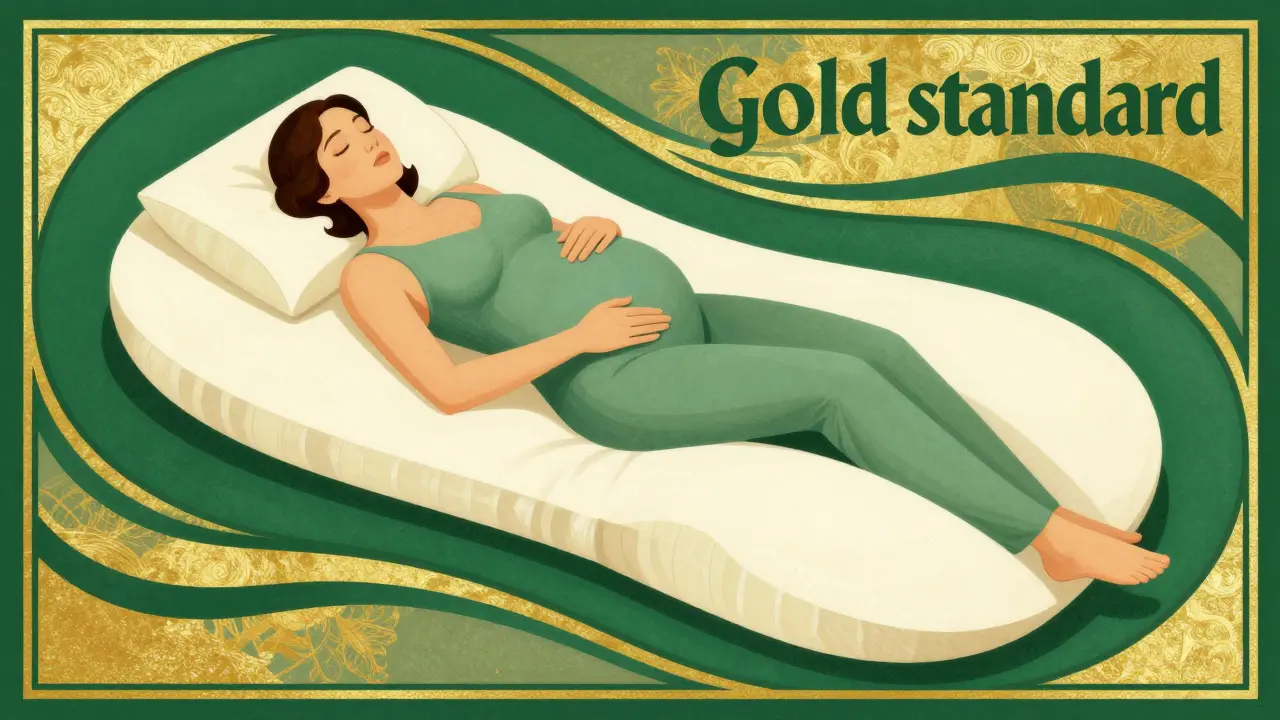
What Happens After the Baby Arrives?
Many women find that their sleep apnea vanishes almost immediately after delivery. Once the pressure on the diaphragm is gone and the hormonal swelling drops, the airway opens up. However, you shouldn't just assume it's gone. Some experts suggest a follow-up sleep study at 12 weeks postpartum, especially if you had severe symptoms. This is crucial because there's evidence that women who develop pregnancy-onset OSA are more likely to develop chronic hypertension later in life, even if the snoring stops after birth. Staying proactive about your cardiovascular health now protects you for the next decade.Is it safe to use a CPAP machine while pregnant?
Yes, CPAP is considered the first-line, safe treatment for obstructive sleep apnea during pregnancy. Not only is it safe, but it can actually reduce the risk of preeclampsia and gestational hypertension by improving oxygen saturation and reducing stress on the cardiovascular system.
Why is sleeping on my left side better?
Sleeping on the left side prevents the heavy uterus from compressing the inferior vena cava. This ensures maximum blood flow and oxygen delivery to the fetus and helps the kidneys clear waste more efficiently, reducing swelling in your legs.
Can I use an over-the-counter antacid for reflux?
Many are safe, but you should always check with your OB-GYN first. Alginate-based antacids are often recommended because they form a physical barrier to block acid from rising, rather than just neutralizing the acid with chemicals.
How do I know if my snoring is actually sleep apnea?
Snoring alone doesn't always mean apnea, but if you wake up gasping for air, feel excessively sleepy during the day despite a full night's sleep, or have high blood pressure, it's a red flag. A formal diagnosis requires a sleep study (polysomnography) or a home sleep test.
Will a pregnancy pillow really help me breathe better?
For mild cases, yes. By keeping you in a side-sleeping position, a pillow prevents the tongue and soft tissues from collapsing into the airway, which happens most often when sleeping on the back (supine position).
Wedge pillows are a total game-changer for gestational reflux. I always recommend looking for ones with high-density memory foam so they don't flatten out over time, as that's where most people run into trouble. If you're struggling with the CPAP mask, definitely try the nasal pillows as mentioned; they provide a much more secure seal when you're dealing with pregnancy-related swelling. It's also helpful to keep a glass of water on the nightstand since the constant airflow can dry out your nasal passages quite quickly. Consistent use is the key to seeing those improvements in blood pressure and overall energy levels.
Everyone knows the left side is better because of the vena cava. It's basic anatomy.
Sure, just "follow the gold standard" and plug a machine into your face!! Ever wonder why these "medical conditions" suddenly spike during pregnancy now more than fifty years ago? It's all about the chemicals they're putting in the water and the food to make us dependent on these expensive machines. They just want you hooked on CPAP therapy for the rest of your life so the insurance companies can keep billing. Wake up people, this is just another way to control women's bodies through "healthcare"!
I feel for all the moms out there who just can't get a break. It sounds so hard to deal with all that while growing a human. Just keep hanging in there, you're doing a great job!
These machines are tools of the state. Disgusting.
Let's just try to be kind to everyone here!!! 🌸 Maybe we can all find a middle ground between medical advice and natural intuition? 🌿 I think it's beautiful how many ways there are to support a mother's body! ✨ Just breathe and stay positive everyone!!! ❤️
It is simply tragic that some of you cannot manage your weight before conceiving... resulting in these "surprises." I suppose some people just enjoy the drama of a medical crisis during labor, don't they? My own pregnancy was a masterpiece of discipline, though I'm sure some of you find that "intimidating." Truly, the lack of self-control in modern society is just... breathtaking.
I remember feeling so overwhelmed during my second trimester, and it's really important to remember that everyone's journey is different, so if you're feeling a bit sluggish or can't quite get comfortable on your left side, please don't beat yourself up about it because your body is doing something absolutely miraculous and it's okay to just observe how you feel day by day without putting too much pressure on yourself to be a perfect patient. Sometimes the best thing you can do is just lean into the pillows and let yourself be supported in whatever way feels most natural for you and your baby, and if that means trying three different types of pregnancy pillows before finding the one that works, then that's exactly what you should do.
sleep is such a strange state of vulnerability. we trust these tools to fix our breath but the mind still wanders in the dark. perhaps the discomfort is just the body reminding us we are not alone in our own skin
You can do this!!! Just keep pushing through the tough nights!!! Everything is going to be absolutely perfect once that baby is here!!! Believe in yourself!!!