
You’ve likely heard that ACA plans are health insurance policies sold through the federal or state-based Health Insurance Marketplaces under the Patient Protection and Affordable Care Act. But what does that actually mean for your wallet when you need a prescription? Specifically, how do these plans handle generic drugs, and why does the structure of an insurance formulary matter so much right now?
If you are looking at coverage options for 2026, the landscape has shifted. The enhanced premium tax credits that kept costs low for millions of people are set to expire at the end of 2025. This isn’t just political noise; it’s a financial reality check. For many enrollees, the difference between staying insured and going without could come down to understanding how insurance formularies work and how they interact with your plan’s metal tier.
The Basics of ACA Plan Tiers and Cost Sharing
To understand generic drug coverage, you first need to understand the plan itself. ACA Marketplace plans are categorized by "metal tiers": Bronze, Silver, Gold, and Platinum. These names refer to the actuarial value-the percentage of total average expenses for covered benefits that the plan pays.
- Bronze (60%): The insurer pays 60% of costs; you pay 40%. Lowest premiums, highest out-of-pocket costs.
- Silver (70%): The insurer pays 70%; you pay 30%. Moderate premiums and costs.
- Gold (80%): The insurer pays 80%; you pay 20%. Higher premiums, lower out-of-pocket costs.
- Platinum (90%): The insurer pays 90%; you pay 10%. Highest premiums, lowest out-of-pocket costs.
Here is where it gets tricky for medication users. If you have a chronic condition requiring daily medication, a Bronze plan might look cheap on paper because of the low monthly premium. However, if you fall ill, you are responsible for a larger share of the bill. Conversely, a Platinum plan has high monthly costs but protects you from catastrophic bills if you need frequent doctor visits or expensive prescriptions.
For most people taking standard generic medications, Silver plans often strike the best balance, especially if you qualify for Cost-Sharing Reductions (CSRs). CSRs lower your deductibles and copays specifically for Silver plans if your income is between 100% and 250% of the Federal Poverty Level (FPL).
Understanding Insurance Formularies and Generic Drugs
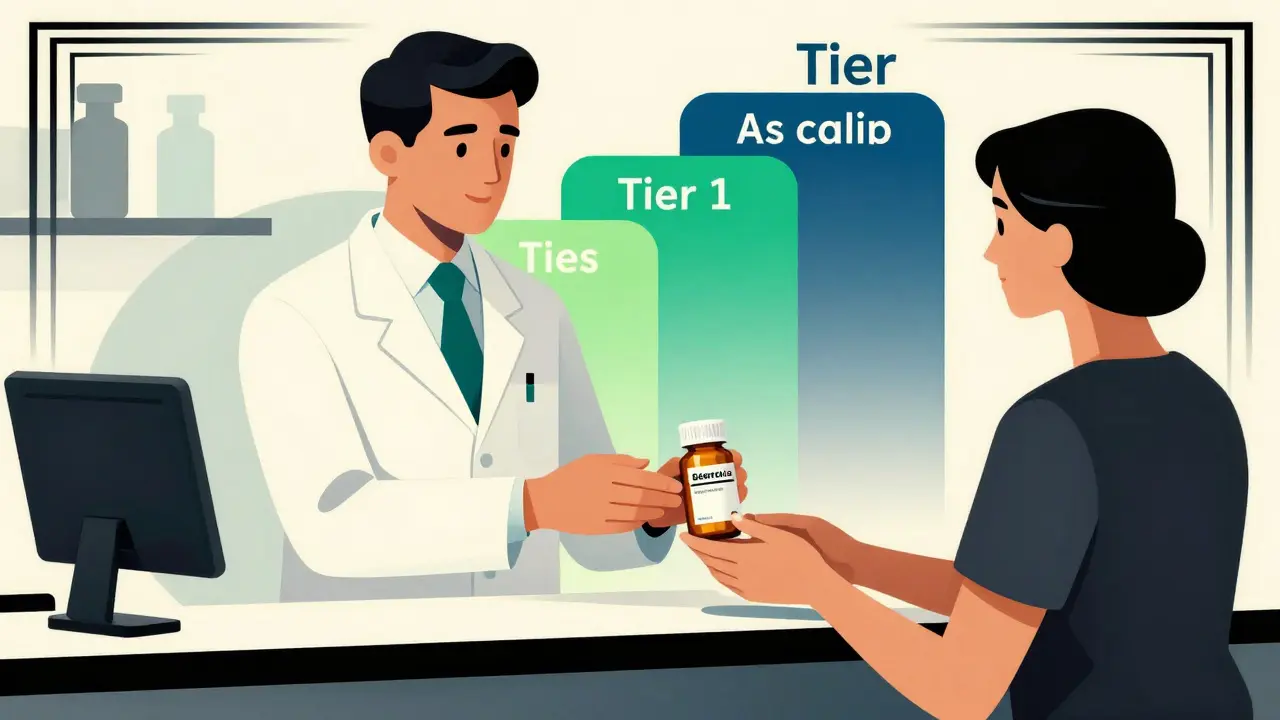
Every ACA plan includes an insurance formulary, which is a list of prescription drugs covered by the health plan, organized into tiers based on cost-sharing amounts. Think of the formulary as a menu. Not every dish is available, and some dishes cost more than others depending on the ingredients.
Formularies typically use a tiered system:
- Tier 1: Preferred Generics. These are usually the cheapest. You might pay a flat copay of $5 to $15. Most common generics like metformin (for diabetes) or lisinopril (for blood pressure) fall here.
- Tier 2: Non-Preferred Generics. Still generics, but perhaps not the specific brand the pharmacy stocks by default, or ones the insurer wants to discourage slightly. Copays might be higher, or you might hit a percentage coinsurance (e.g., 20% of the cost).
- Tier 3: Preferred Brand Names. Brand-name drugs that the insurer has negotiated good rates for.
- Tier 4: Non-Preferred Brand Names / Specialty Drugs. Expensive biologics or newer treatments. These often require prior authorization and have high deductibles.
Generic coverage is generally robust across all ACA plans because the law requires coverage for essential health benefits, including prescription drugs. However, "coverage" doesn’t mean "free." Even Tier 1 generics can add up if you take multiple medications. A patient on three Tier 1 generics with a $10 copay each pays $30 a month. That’s manageable. But if one of those drugs moves to Tier 2 due to a formulary change, that cost could jump significantly.
The 2026 Shift: Tax Credits and Affordability
Why is 2026 a critical year? The American Rescue Plan Act of 2021 and the Inflation Reduction Act of 2022 enhanced premium tax credits, making them available to households earning above 400% of the FPL and capping premiums at a certain percentage of income. These enhancements are scheduled to expire at the end of 2025.
According to data from the Kaiser Family Foundation (KFF), the expiration of these enhanced credits would increase average premium payments for Marketplace coverage by approximately 114%-that’s over $1,000 more annually for the average enrollee. For a 60-year-old, premiums could rise by up to 192% in some states.
This creates a direct pressure point for generic drug users. If your premium doubles, you might be tempted to drop coverage or switch to a bare-bones Bronze plan. But dropping coverage risks leaving you exposed to high costs if your health declines. Switching to a lower-tier plan might save on premiums but increase your out-of-pocket costs for those same generic drugs.
The Centers for Medicare & Medicaid Services (CMS) implemented the 2025 Marketplace Integrity and Affordability Final Rule, which changes how eligibility is verified. Starting in 2026, issuers must adopt net percentage-based thresholds for payment verification. This means the system will be stricter about confirming your income. If your income fluctuates, you may face reconciliation issues during tax season, potentially leading to unexpected liabilities if you received subsidies you weren’t eligible for.
| Plan Tier | Premium Cost | Deductible | Generic Copay (Est.) | Best For |
|---|---|---|---|---|
| Bronze | Lowest | Highest ($4,000-$8,000) | $10-$20 (after deductible) | Healthy individuals, minimal meds |
| Silver | Moderate | Moderate ($2,000-$4,000) | $5-$15 (with CSR) | Income 100-250% FPL, regular meds |
| Gold | High | Low ($500-$1,500) | $10-$25 | Frequent doctor visits, stable meds |
| Platinum | Highest | Lowest ($0-$500) | $15-$30 | High medical utilization, budget flexibility |
Navigating Formulary Changes and Prior Authorization
Insurance companies update their formularies annually. A generic drug that was Tier 1 in 2025 might move to Tier 2 in 2026. Why? Often, it’s due to patent expirations, new competitors entering the market, or negotiations with pharmaceutical manufacturers.
If your medication moves up a tier, your cost goes up. Here is what you should do:
- Check the 2026 Formulary Early. Don’t wait until open enrollment ends. Log in to HealthCare.gov or your state marketplace and compare the drug lists for each plan option.
- Talk to Your Doctor. If your current generic is moving to a higher tier, ask if there is a therapeutic alternative that remains on Tier 1. Often, there are multiple generic versions of the same active ingredient.
- Understand Prior Authorization. Some plans require your doctor to get permission before covering certain drugs. While this is less common for basic generics, it can happen if the plan considers a specific formulation non-preferred. Keep your doctor informed of any formulary changes so they can submit requests proactively.
User experiences from HealthCare.gov forums highlight this pain point. One user noted, "I qualified for a $0 premium Silver plan but had to file 3 corrected tax returns to reconcile my Advanced Premium Tax Credit (APTC)." Another shared, "My income dropped 30% mid-year, but I couldn't adjust subsidies until tax filing, causing thousands in unexpected medical bills." These stories underscore the importance of accurate income reporting and choosing a plan that aligns with your actual usage patterns, not just the headline premium.

Practical Steps for Enrolling in 2026
As you prepare for the 2026 plan year, keep these steps in mind:
- Gather Documentation. You will need Social Security numbers, proof of income (W-2s, recent pay stubs), and immigration status verification if applicable. The CMS 2025 Final Rule mandates improved income verification systems, so expect stricter checks.
- Calculate Your MAGI. Modified Adjusted Gross Income determines your subsidy eligibility. Self-employed individuals often struggle here. If your income fluctuates, consider using a conservative estimate to avoid owing money back at tax time, even if it means paying slightly more upfront.
- Compare Total Costs, Not Just Premiums. Use the plan comparison tools on HealthCare.gov. Input your medications to see the estimated annual cost for each plan. A $50 cheaper premium might cost you $200 more in drug copays.
- Watch for Special Enrollment Periods (SEPs). Life events like marriage, birth, or loss of other coverage trigger SEPs. Note that the monthly SEP for those below 150% FPL was eliminated in the 2025 rule, so timing is crucial.
The competitive landscape is also shifting. UnitedHealthcare, Elevance Health, and Molina Healthcare dominate the Marketplace. Ensure your preferred doctors and pharmacies are in-network. Out-of-network care can result in significant balance billing, which ACA plans do not cover fully.
Conclusion: Staying Informed is Your Best Defense
Affordable Care Act plans provide a safety net for millions, but that net has holes if you don’t know how to navigate it. Generic drug coverage is generally strong, but it is subject to the rules of the formulary and the financial realities of your plan tier. With the expiration of enhanced tax credits looming, the margin for error shrinks. Take the time to read the fine print, compare formularies, and choose a plan that fits your health needs and financial situation. Your health is too important to leave to chance.
Do ACA plans cover generic drugs?
Yes, all ACA Marketplace plans must cover prescription drugs as part of the ten Essential Health Benefits. Generic drugs are typically placed in the lowest cost-sharing tier (Tier 1), meaning you pay the least amount out-of-pocket for them compared to brand-name medications.
What happens to ACA premium tax credits in 2026?
The enhanced premium tax credits established by the American Rescue Plan Act and extended by the Inflation Reduction Act are set to expire at the end of 2025. Unless Congress acts to extend them, subsidies will revert to pre-2021 levels, potentially increasing premiums by over 100% for many enrollees, particularly those earning above 400% of the Federal Poverty Level.
How do I find my plan's formulary?
You can find the formulary on the insurance company’s website or through the HealthCare.gov plan comparison tool. Look for the "Drug List" or "Formulary" section. You can search for specific medications to see which tier they fall into and what your estimated copay or coinsurance will be.
Can I change my ACA plan mid-year?
Generally, no. You can only change plans during Open Enrollment (November 1 - January 15) or if you qualify for a Special Enrollment Period (SEP) due to a qualifying life event such as marriage, birth of a child, or loss of other health coverage. The elimination of the monthly SEP for low-income earners in 2025 makes timing even more critical.
What is a Cost-Sharing Reduction (CSR)?
Cost-Sharing Reductions are additional subsidies that lower your deductibles, copays, and coinsurance. They are only available if you enroll in a Silver plan and have an income between 100% and 250% of the Federal Poverty Level. If you qualify, a Silver plan is almost always the most cost-effective choice for medication coverage.