
Supplement Timing & Interaction Checker
Select What You Take
Check the supplements or medications you take regularly.
Recommended Daily Schedule
Select your items to see a safe schedule
We will calculate the best times to separate your doses for maximum absorption.
You swallow your morning pill. You take your calcium for bone health. You pop an iron tablet to boost your energy. It sounds like a routine day of self-care, but inside your body, a silent battle is raging. These minerals aren't just sitting there; they are fighting for space in your digestive tract. If you’re taking calcium and iron supplements alongside medications, you might be throwing away most of their benefits without even knowing it.
It’s not just about feeling tired or having weak bones. The real issue is absorption problems. When certain minerals meet specific drugs-or even each other-they bind together and block each other from entering your bloodstream. This means the medicine doesn’t work as well, and your body doesn’t get the nutrients it needs. Let’s break down exactly what happens when these common supplements collide with your meds and how to fix it.
The Calcium-Iron Clash: Why They Don’t Mix
Calcium and iron are two of the most popular supplements on the market. But they are also natural rivals. Both minerals carry a positive electrical charge (they are cations) and use the same transport systems in your intestines to get into your blood. Think of it like two cars trying to drive through a single-lane tunnel at the same time. One has to wait, or worse, both get stuck.
Research backs this up hard. A landmark study published in the American Journal of Clinical Nutrition in 1991 by researchers at Kansas University Medical Center showed that calcium significantly blocks iron absorption. In one test, taking 600 mg of calcium with 18 mg of iron reduced iron absorption by nearly half. Even more concerning, later research in ACS Omega (2022) confirmed that adding calcium to a meal can slash iron absorption from 10.2% down to just 4.8%.
This is especially tricky for women, who often need higher amounts of iron due to menstruation. If you’re taking calcium with every meal to protect your bones, you might inadvertently be preventing your body from absorbing the iron it desperately needs. The result? Persistent fatigue, pale skin, and shortness of breath-the classic signs of iron-deficiency anemia.
| Scenario | Iron Absorption Rate | Impact Level |
|---|---|---|
| Iron alone (empty stomach) | ~10-15% | High |
| Iron + Calcium (same time) | ~4-5% | Severe Reduction |
| Iron + Vitamin C | Up to 300% increase | Enhanced |
Antibiotics Under Attack: The Silent Blockade
If you’ve ever been prescribed antibiotics for an infection, you know you need them to work fast. But if you’re also taking mineral supplements, you might be neutralizing the drug before it even starts fighting the bacteria. Calcium, aluminum, and iron all have a nasty habit of binding to certain classes of antibiotics, rendering them useless.
The two main groups of antibiotics affected are:
- Fluoroquinolones: This includes common drugs like ciprofloxacin (Cipro) and ofloxacin.
- Tetracyclines: This includes drugs like demeclocycline and newer variants like omadacycline.
Pharmacist Alesiani explains it simply: “If a patient’s taking antibiotics for an infection, but they’re taking it in conjunction with calcium supplements, it can block the absorption of those antibiotics.” The minerals form a complex with the drug in your gut, creating a substance too large to pass through your intestinal wall. So, the antibiotic stays in your stomach, gets excreted, and the infection keeps spreading.
This isn’t a minor inconvenience. It can lead to treatment failure, requiring a second round of stronger antibiotics, which increases the risk of side effects and antibiotic resistance. Always check your prescription label for warnings about dairy products and antacids.
Thyroid Medication: The Morning Mistake
Millions of people take levothyroxine (Synthroid, Levoxyl) to manage hypothyroidism. This hormone replacement therapy is delicate. It requires a very specific environment in your stomach to be absorbed correctly. Enter calcium and iron again.
Dr. Wolf from University Hospitals Cleveland Medical Center warns that calcium, magnesium, and iron can block thyroid hormone absorption. Many patients make the mistake of taking their thyroid pill in the morning along with their multivitamin or calcium supplement. Because levothyroxine is sensitive to pH changes and competitive binding, these minerals can reduce its effectiveness by up to 30-50%.
The consequence? Your TSH levels stay high, your metabolism remains sluggish, and you feel like nothing is working. The solution is strict timing. Thyroid medication should be taken on an empty stomach, ideally 30-60 minutes before breakfast. Then, wait at least 4 hours before taking any calcium or iron supplements. This gap ensures your thyroid hormone enters your system before the minerals arrive to cause trouble.
Stomach Acid Matters: PPIs and Antacids
Iron needs acid to dissolve. Specifically, non-heme iron (the type found in plants and most supplements) requires a low-pH environment in your stomach to become soluble enough for your body to absorb it. If you take medications that reduce stomach acid, you’re essentially locking the door on iron absorption.
Medications that raise stomach pH include:
- Proton Pump Inhibitors (PPIs): Such as omeprazole (Prilosec) and pantoprazole (Protonix).
- H2 Blockers: Such as famotidine (Pepcid).
- Antacids: Like Tums (calcium carbonate), which directly neutralize acid.
Long-term use of PPIs is linked to a higher risk of iron deficiency because they chronically lower the acid needed for iron solubility. If you’re on these medications and also need iron, talk to your doctor. You might need a different form of iron (like ferrous bisglycinate, which is less dependent on stomach acid) or a higher dose to compensate for the reduced absorption.
The Timing Protocol: How to Fix It
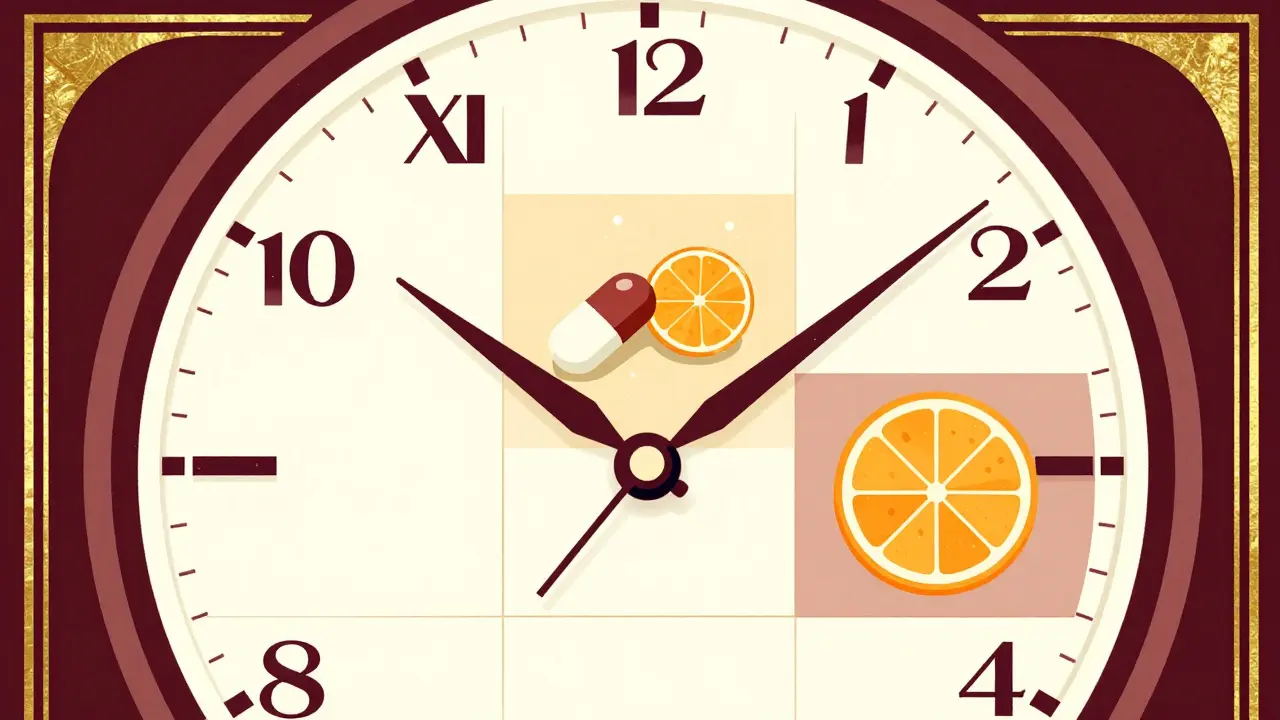
You don’t have to stop taking these essential supplements or medications. You just need to schedule them like appointments. Here is a practical guide to spacing out your doses to maximize absorption and minimize interactions.
- Morning (Empty Stomach): Take thyroid medication (levothyroxine). Wait 30-60 minutes before eating.
- Breakfast/Lunch: Take iron supplements with vitamin C (or orange juice) to boost absorption. Avoid coffee, tea, and dairy during this window, as tannins and calcium block iron.
- Mid-Day Gap: Wait at least 2-4 hours after iron before taking calcium or antacids.
- Dinner/Evening: Take calcium supplements with food. Calcium absorbs better with meals and won’t interfere with your morning iron.
- Antibiotics: If prescribed fluoroquinolones or tetracyclines, take them at least 2 hours before or 4-6 hours after any mineral supplement. Set a phone alarm if you have to.
This separation creates a buffer zone. By the time the calcium reaches your intestine, the iron has already been absorbed, and vice versa. It takes discipline, but it’s the only way to ensure you’re getting the full benefit of both.
Safety First: Side Effects and Red Flags
While optimizing absorption is key, safety matters too. Iron supplements can cause gastrointestinal distress-nausea, cramps, and constipation-affecting 30-50% of users. Taking iron on an empty stomach helps absorption but worsens these symptoms. If you can’t tolerate it, try taking it with a small amount of food, though be aware this may slightly reduce absorption.
Also, watch for warning signs. Black stools are normal with iron supplements, but tarry stools or red streaks could indicate bleeding. Seek medical attention immediately. For families with children, keep iron pills locked away. Iron poisoning is a leading cause of fatal childhood poisoning in the US. Accidental ingestion requires immediate contact with poison control.
Can I take calcium and iron at the same time?
No, you should not take calcium and iron at the same time. Calcium inhibits iron absorption by competing for the same transporters in the intestine. Studies show this can reduce iron absorption by up to 60%. To avoid this, separate your doses by at least 2 to 4 hours.
Which antibiotics interact with calcium and iron?
Fluoroquinolone antibiotics (like ciprofloxacin) and tetracycline-class antibiotics (like doxycycline) bind strongly with calcium, iron, and magnesium. This binding prevents the antibiotic from being absorbed into your bloodstream, making the treatment ineffective. Always wait at least 2 hours before or 4-6 hours after taking these antibiotics to consume mineral supplements.
Does vitamin C help with iron absorption?
Yes, vitamin C significantly enhances iron absorption. It converts iron into a form that is easier for the body to absorb. Research indicates that taking vitamin C with iron can increase absorption by up to 300%. Drinking orange juice or taking a vitamin C tablet with your iron supplement is highly recommended.
How does thyroid medication interact with supplements?
Levothyroxine (thyroid medication) is easily blocked by calcium, iron, and magnesium. These minerals can bind to the hormone in the gut, preventing it from entering your system. You must take thyroid medication on an empty stomach and wait at least 4 hours before taking any mineral supplements to ensure proper absorption.
Do antacids affect iron absorption?
Yes, antacids and acid-reducing drugs like proton pump inhibitors (PPIs) and H2 blockers raise stomach pH. Since iron needs an acidic environment to dissolve and be absorbed, these medications can significantly reduce iron uptake. Long-term users of PPIs are at higher risk for iron deficiency.