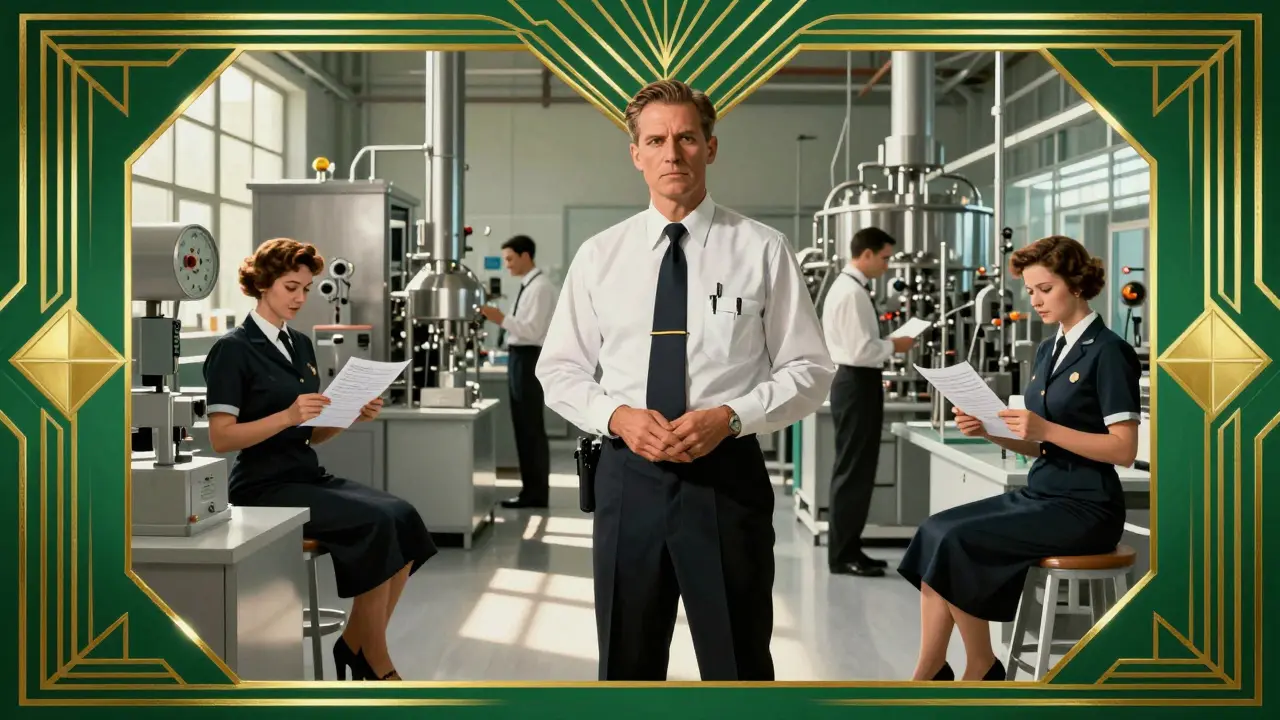
When the FDA shows up at your generic drug manufacturing facility, it’s not a surprise visit you can brush off. It’s a full-scope audit that can make or break your product’s path to the U.S. market. If you’re preparing for one, you need to know what’s coming-not just the checklist, but the mindset behind it. The FDA isn’t looking for perfect paperwork. They’re looking for a state of control-a culture where quality isn’t an afterthought, but built into every step.
Why the FDA Shows Up
The FDA doesn’t pick facilities randomly. Their inspection schedule is driven by a risk-based model that weighs everything from past compliance history to the type of drug being made. A facility producing high-risk injectables or drugs with narrow therapeutic windows gets more attention than one making low-risk oral solids. If there’s a spike in consumer complaints, a whistleblower tip, or a pattern of failed tests, that facility jumps to the top of the list. Unannounced inspections are common, especially for sites with previous findings. You can’t wait until you get a letter to get ready. You need to be ready every day.The Six Systems They’ll Probe
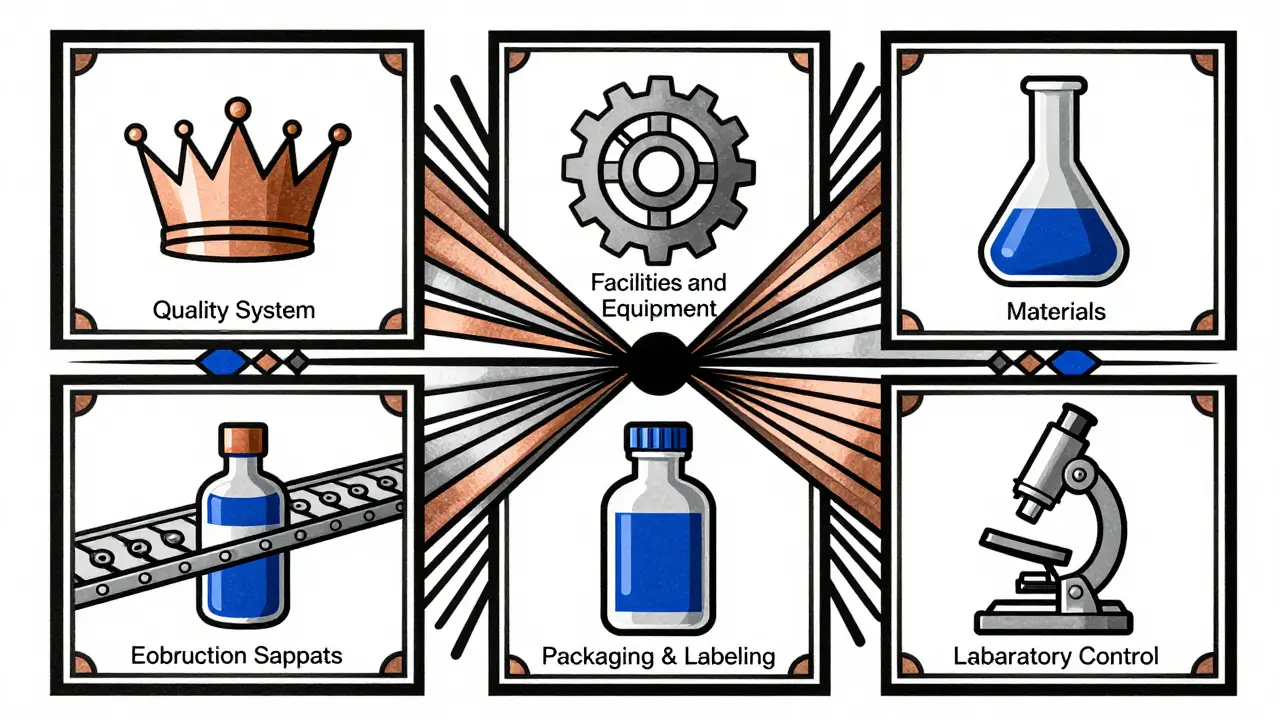
FDA investigators use a structured 6-system approach to evaluate your facility. They start with the Quality System-always-and then pick two or three others to dive into. Here’s what each one covers:- Quality System: This is the backbone. They’ll check if your Quality Unit is independent, empowered, and actively involved in every decision-from approving raw materials to rejecting batches. They’ll ask for evidence of 21 CFR 211.22(a) compliance: a clear organizational chart, documented responsibilities, and proof that quality has veto power over production.
- Facilities & Equipment: Is your plant clean? Are your equipment logs up to date? Do your cleaning procedures actually work? They’ll inspect calibration records, maintenance schedules, and whether equipment is qualified for its intended use. A dirty floor or a broken HVAC sensor can trigger a major finding.
- Materials: Every ingredient must be tested and approved before it touches your product. They’ll pull your supplier qualification records, incoming inspection logs, and storage conditions. If you’re using a vendor without a documented audit trail, that’s a red flag.
- Production: They’ll follow a batch from start to finish. Did your process validation still hold up? Are your operators following SOPs? Are you documenting deviations? If a batch was reworked without proper approval, they’ll find it.
- Packaging & Labeling: One wrong label can lead to a recall. They’ll check your label control system, verify that the right batch number is on the right bottle, and confirm that expiration dates are accurate and properly validated.
- Laboratory Control: This is where many facilities stumble. They’ll review your analytical methods, calibration of instruments, data integrity of your LIMS system, and whether stability studies are being conducted correctly. If your chromatograms look altered or your records are backdated, you’re in trouble.
What Happens During a Pre-Approval Inspection (PAI)
If you’re applying for FDA approval of a new generic drug, you’ll face a Pre-Approval Inspection. This isn’t a routine check-it’s your last chance to prove you can make the product exactly as described in your application. The team will verify three things:- Is your facility ready for commercial-scale production?
- Does what’s in your application match what’s happening on the floor?
- Is your data complete and truthful?
The FDA 483: What It Means and How to Respond
If they find issues, they’ll hand you a Form FDA 483. It’s not a warning letter. It’s a list of observations-usually 3 to 15 items-ranked by severity. The first item is the most serious. Each one references a specific regulation, like 21 CFR 211.194(a) for missing test records or 21 CFR 211.166 for inadequate validation. You have 15 business days to respond. Don’t delay. Don’t write vague answers like “we’ll improve.” Be specific. Show them the revised SOP, the training record, the re-validation protocol. Include dates. Attach evidence. A weak response can turn a 483 into a warning letter.What Happens After the Inspection
After the inspection, the team writes an Establishment Inspection Report (EIR). This is the official record of what they saw. It goes to the review division handling your application. If everything’s clean, your drug moves forward. If they found issues, they’ll assess whether it’s an “acceptable” or “unacceptable” state of compliance. Unacceptable means your application is delayed or denied. If you get a warning letter, you’ll need to submit a detailed corrective action plan. The FDA may come back for a follow-up inspection. In 2025, they finalized guidance on Post-Warning Letter Meetings (PWLMs), giving you a formal channel to discuss your plan and get feedback before the next audit.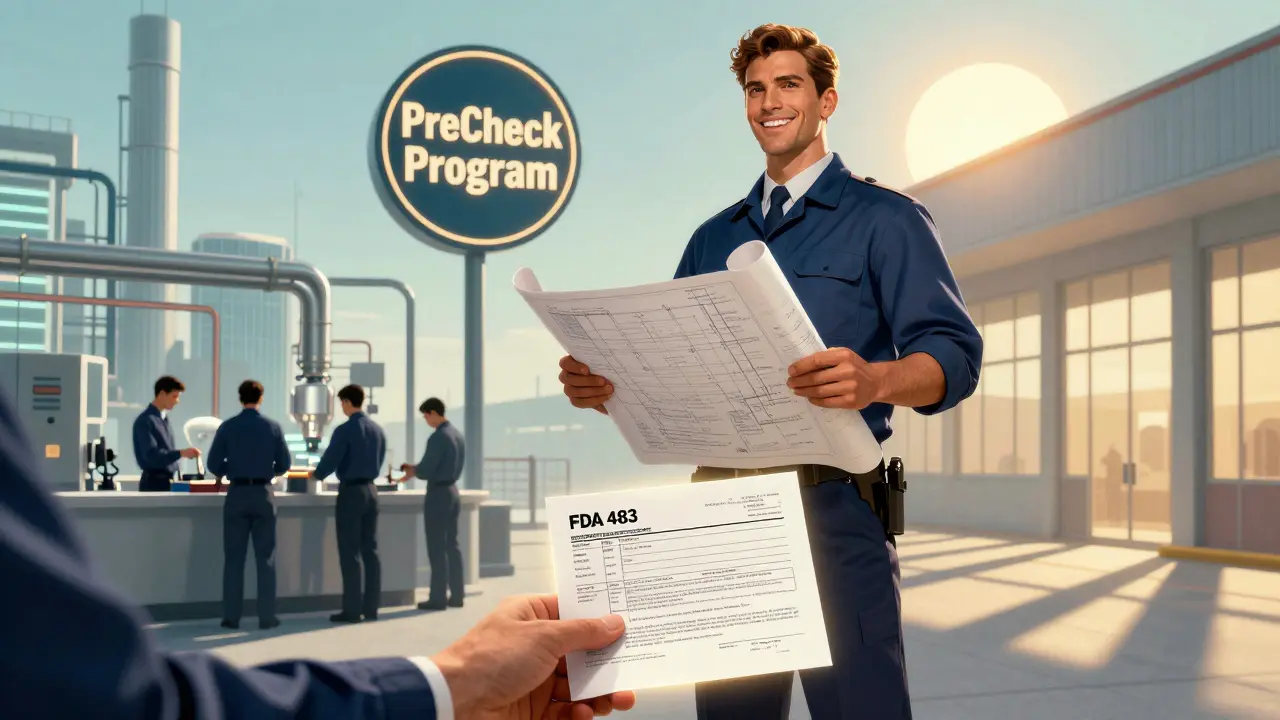
How to Prepare-Really Prepare
Stop thinking about “prepping for an inspection.” Start thinking about “being ready every day.” Here’s what works:- Run mock inspections quarterly. Bring in an outside auditor to play FDA. Don’t tell your team it’s a drill-see how they react.
- Keep your SOPs alive. Outdated procedures are worse than no procedures. Review them every six months. If no one’s used a procedure in a year, archive it.
- Train your staff to speak up. If someone notices a deviation, they should know how to report it without fear. A culture of silence is a red flag.
- Document everything. Not just results-why you did things. If you changed a filter, note the reason. If you skipped a step, document why and get approval.
- Use the FDA’s PreCheck program. Launched in 2024, it lets you submit detailed facility plans early-before you even start building. You get feedback on design, layout, and quality systems before you invest millions. It’s not mandatory, but it’s the smartest way to avoid a nasty surprise later.
Why Most Facilities Pass
More than 90% of FDA inspections find acceptable CGMP compliance. That’s not because the rules are easy. It’s because the companies that pass treat quality like a core value, not a compliance task. They don’t have perfect systems-they have systems that are consistently applied, well-documented, and actively managed. The FDA doesn’t expect perfection. They expect control. And control is something you build daily, not the day before they arrive.What’s New in 2026
The FDA’s focus has shifted from checking boxes to evaluating quality culture. They’re now trained to spot data manipulation-backdated entries, deleted files, unexplained outliers. They’re looking for signs that quality is owned by leadership, not just the QA department. The PreCheck program is expanding, with more facilities participating in the Facility Readiness Phase. If you’re building a new plant or upgrading an old one, now’s the time to engage with the FDA early. The earlier you talk to them, the fewer surprises you’ll have.Can the FDA inspect without notice?
Yes. The FDA can conduct unannounced inspections at any time, especially for facilities with higher risk profiles or past compliance issues. There is no legal requirement for advance notice. Facilities should maintain a state of continuous readiness, not prepare only when they expect an inspection.
What happens if I ignore an FDA 483?
Ignoring an FDA 483 is a serious mistake. Failure to respond within 15 business days will trigger a compliance review that may lead to a warning letter, import alerts, or even product seizure. The FDA treats silence as non-cooperation, which significantly increases the risk of regulatory action.
Is a warning letter permanent?
No. A warning letter is not permanent, but it stays on your facility’s record. If you submit a strong corrective action plan and demonstrate sustained compliance, the FDA may close the letter after a successful follow-up inspection. However, future inspections will be more frequent and more detailed.
Do I need a dedicated Quality Unit?
Yes. 21 CFR 211.22(a) requires a qualified quality unit that is independent of production and has the authority to approve or reject all components, packaging, labeling, and finished products. This unit must be staffed with trained personnel and have direct access to top management. You cannot outsource this function.
Can I use the same equipment for multiple products?
Yes, but only if you have validated cleaning procedures that prevent cross-contamination. You must document cleaning validation studies, including swab tests and rinse water analysis, and show that residue levels are below safe limits. The FDA will scrutinize your cleaning protocols, especially if the products have different therapeutic classes or potencies.
What’s the biggest mistake facilities make before an inspection?
Trying to clean up only for the inspection. The FDA sees through it. They look for consistency over time. If your records suddenly become perfect the week before they arrive, or if staff are nervous or coached to give scripted answers, it raises red flags. The best preparation is living by the rules every day.
Man, I've seen facilities go from zero to hero just by treating QA like their firstborn. Not just checking boxes, but actually caring. I worked at a plant in Pune where the night shift crew started leaving little sticky notes on machines: 'Cleaned. Tested. Trusted.' No one told them to. They just did it. That’s the culture the FDA wants - not perfect records, but people who give a damn.
And yeah, PreCheck? Game changer. We submitted our layout for a new lyophilizer line last year and got feedback that saved us $2M in rework. FDA folks aren’t monsters - they just want you to not kill someone with a contaminated vial.
the biggest lie is that you need to be perfect the day they show up
you need to be consistent every damn day
if your records look too clean the week before inspection you’re already dead
they’ve seen it a thousand times
and they know
PreCheck is the smart play. Do it early. Save your sanity.
Oh please. You think the FDA actually cares about culture? They’re just scared of lawsuits. If you’re making insulin or heparin, they’ll inspect you twice a year no matter what. It’s not about quality - it’s about liability. And don’t get me started on how they cherry-pick data from Indian plants while letting US facilities slide. Double standards everywhere.
What does 'state of control' even mean when the system is built on fear and compliance rather than trust and learning?
Are we optimizing for inspection readiness or for patient safety?
And if the latter, why do we punish transparency so hard?
Let’s be clear: if your cleaning validation lacks statistical rigor, your LIMS lacks audit trails, and your QA unit reports to production - you’re not just non-compliant, you’re criminally negligent. 21 CFR 211.22(a) isn’t a suggestion. It’s the law. And the FDA will use 21 USC 331 to shut you down if you ignore it. No sugarcoating. No excuses.
I’ve been on the other side - FDA reviewer. I’ve seen the 483s that made me cry. Not because they were bad companies, but because they waited until the last minute to fix things.
The best responses? They’re not fancy. They’re honest. 'We missed this because we were short-staffed. Here’s the new hire’s training log. Here’s the revised SOP. Here’s how we’re preventing it.'
That’s all they want. Just don’t lie.
That mock inspection idea? Brilliant. We did one last month and our lab tech almost quit because she thought we were getting raided. Turned out she’d been backdating entries for months. We fixed it. No one got fired. We just… got better.
Turns out, people don’t hate rules. They hate being lied to.
Let’s be real - the whole system is rigged. Big pharma owns the FDA. They push PreCheck so smaller Indian and Chinese plants get crushed under paperwork while the big guys get sweetheart deals. You think that ‘90% pass rate’ is real? Half those are owned by the same 5 corporations. The rest? They’re just buying time before the next shutdown.
And don’t even get me started on how they use whistleblower tips to scare small operators into selling out.
This isn’t about safety. It’s about control.
❤️❤️❤️ The culture thing? YES. We started a ‘Quality Hero’ board last month - anyone who catches a deviation gets a coffee gift card and their photo on the wall. Last week, a new operator spotted a mislabeled batch before it left QC. No bonus, no praise - just a quiet nod from the supervisor. That’s the moment you win.
FDA doesn’t need perfect logs. They need people who care.
And yes, I cried when I saw my name on that board 😭