Every year, over 1.5 million people in the U.S. are harmed by medication errors - and most of them happen at home, not in hospitals. If you’re caring for an aging parent, a child with special needs, or someone with chronic illness, you’re likely managing multiple pills, liquids, patches, and injections. One wrong dose, one missed schedule, one confusing label - and it can lead to a hospital trip, a fall, or worse. The good news? Most of these errors are preventable. You don’t need to be a nurse. You just need a system.
Start with a Complete Medication List
Before you do anything else, write down every medication your loved one takes. Not just the prescriptions. Include over-the-counter pills like ibuprofen, sleep aids, vitamins, and herbal supplements. Many caregivers forget these - but they’re often the cause of dangerous interactions.For each medication, list:
- Brand name and generic name (e.g., Lisinopril = Zestril)
- Exact dosage (e.g., 10 mg tablet, not just "one pill")
- Time of day it’s taken (e.g., "7 AM with food," "9 PM at bedtime")
- Why it’s prescribed (e.g., "for blood pressure," "for joint pain")
- Any side effects you’ve noticed (dizziness, nausea, confusion)
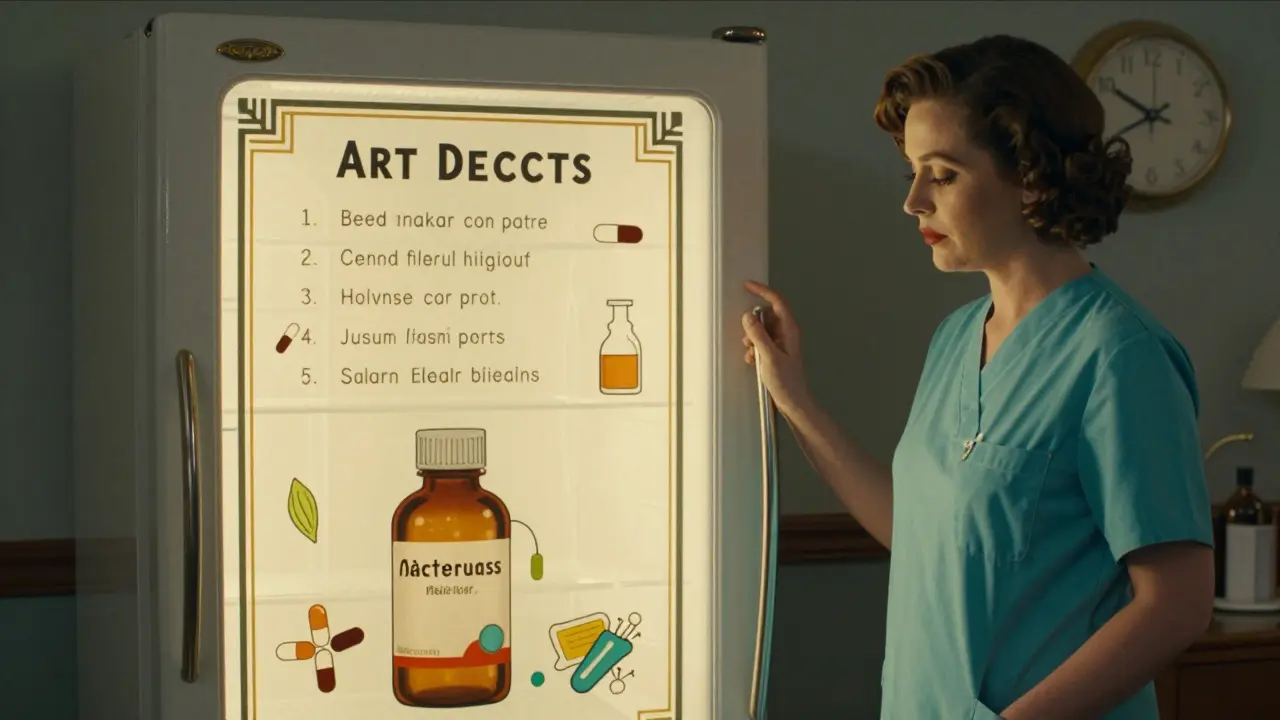
This list should be kept in your wallet, on your phone, and posted on the fridge. Update it every time a doctor changes something - even if it’s just a new bottle from the pharmacy. A 2021 Mayo Clinic study found that caregivers who kept a full, updated list reduced medication errors by 52%.
Use a Pill Organizer - But Not Just Any One
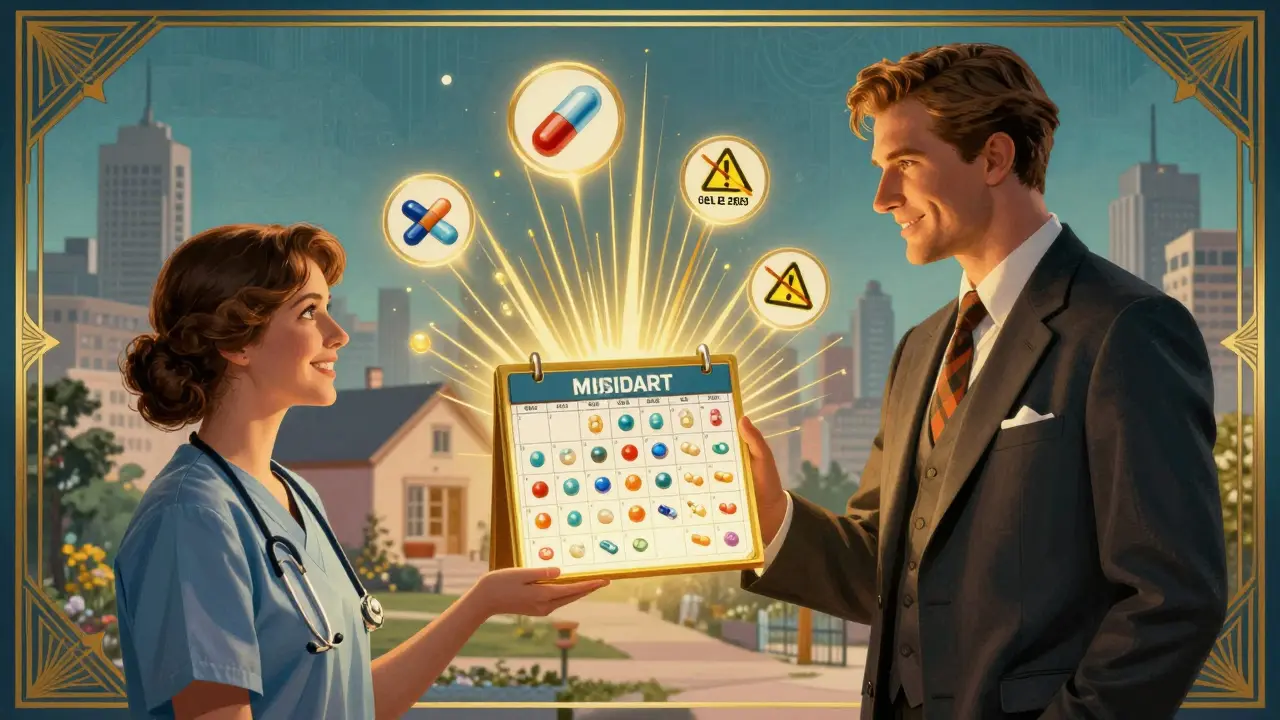
If your loved one takes more than three medications daily, a pill organizer isn’t optional - it’s essential. But not all organizers work the same.Look for a seven-day organizer with separate compartments for morning and evening doses. For someone with memory issues, choose one with an alarm. On ALZConnected forums, 63% of caregivers said alarms made the biggest difference in adherence.
Don’t use the little plastic trays that come with prescriptions. They’re not designed for daily use and often get mixed up. And never dump pills from multiple bottles into one container without labeling it. A 2022 study found that 18% of medication errors in seniors happened because pills were stored incorrectly.
Measure Liquids Right - No Spoons Allowed
Giving liquid medicine with a kitchen spoon is one of the most common mistakes. A teaspoon from your drawer can hold anywhere from 3 to 7 milliliters. That’s a 40% error range. For a child or elderly person, that’s dangerous.Always use the syringe or cup that came with the medicine. If it’s missing, ask the pharmacist for a calibrated oral syringe - they’ll give you one for free. The CDC says this simple step cuts dosing errors by more than half. And if the medicine comes with a dropper, never guess. Count the drops. One drop = 0.05 mL. Write it down if you have to.
Know the High-Risk Drugs
Not all medications are safe for older adults. The Beers Criteria - updated every few years by experts - lists 30 drugs that should be avoided or used with extreme caution in people over 65.Two of the most common offenders:
- Benzodiazepines (like diazepam or lorazepam) - used for anxiety or sleep, but they cause dizziness, falls, and confusion. They’re often prescribed longer than needed.
- Proton pump inhibitors (like omeprazole) - used for heartburn, but long-term use increases risk of bone fractures, kidney damage, and infections.
Dr. Michael Steinman’s 2021 study in the New England Journal of Medicine found nearly half of older adults take at least one drug that does more harm than good. If your loved one is on one of these, ask the doctor: "Is this still necessary?" Don’t assume it’s fine just because it’s been prescribed for years.
Watch for Look-Alike, Sound-Alike Drugs
Hydroxyzine (for allergies) vs. hydrocortisone (for skin rashes). Glipizide (for diabetes) vs. glyburide (also for diabetes). These names sound almost identical. But they do completely different things.The Institute for Safe Medication Practices says these mix-ups cause 15% of all reported medication errors. To avoid them:
- Ask the pharmacist to write the reason for each drug on the label.
- Use a highlighter to circle the drug name on the bottle.
- Never assume - if it looks unfamiliar, call the pharmacy.
One caregiver in Florida told FamilyCaregiver.org: "I almost gave my mom hydroxyzine thinking it was hydrocortisone. The pharmacist caught it when I asked her to double-check. I still get chills thinking about it."
Sync Refills and Talk to the Pharmacist
Managing five or six different refill dates is a nightmare. CVS and Walgreens now offer free medication synchronization programs. You pick one day each week - say, Thursday - and all prescriptions are filled to be ready then.This simple change cut missed doses by 39% in a 2023 University of Pittsburgh study. No more scrambling when one bottle runs out two days before the others.
Also, use your pharmacist. They’re not just the person who hands out pills. They’re trained to catch interactions. Ask for a Medication Therapy Management (MTM) review - it’s free if your loved one is on Medicare Part D. During a 45-minute session, the pharmacist reviews every pill, checks for duplicates, and finds risky combinations. A 2022 study showed this reduces adverse events by 28%.
Prepare for Transitions
The biggest spike in medication errors happens when someone comes home from the hospital. A 2022 study in the Journal of the American Medical Association found that 30% of hospital readmissions within 30 days are due to medication mistakes - and caregivers are often the ones left to fix them.The CARE Act, now law in 47 states, requires hospitals to give caregivers clear instructions before discharge. But don’t wait. Before your loved one leaves:
- Get a written list of all changes: what was added, stopped, or changed in dose.
- Ask: "What’s different from what they were taking before?"
- Call the pharmacy to confirm the new prescriptions match the hospital’s orders.
One caregiver in Minnesota said: "The hospital gave me a list with three new meds. I didn’t realize one was a blood thinner until I called the pharmacist. They said it could’ve caused a bleed if taken with her other pills."
Check Expiration Dates - Weekly
Medications lose potency over time. Some - like insulin or liquid antibiotics - can become dangerous if used past their date. The FDA says 90% of caregivers don’t regularly check expiration dates.Set a weekly reminder - maybe Sunday night - to look at all bottles. Throw out anything expired. If you’re unsure, call the pharmacy. Don’t guess. A 2022 audit at St. Jude Together Medical Care Center found that this 10-minute weekly check prevented 18% of potential errors in pediatric care. The same applies to adults.
Use Technology - But Only If It Fits
Apps like Medisafe and CareZone send reminders, track doses, and even alert you if a drug interaction is detected. Caregiver Action Network data shows users report 32% fewer missed doses.But if your loved one (or you) are over 65 and not tech-savvy, don’t force it. A paper calendar with checkmarks works just as well. The National Institute on Aging found 27% of older caregivers get frustrated with apps and stop using them.
Instead, try a simple solution: a large-print weekly chart taped to the fridge. Mark each dose with a dry-erase pen. It’s low-tech, visible, and hard to ignore.
Know the Big Picture
Medication safety isn’t just about pills. It’s about communication, routine, and vigilance. The World Health Organization’s global campaign, "Medication Without Harm," aims to cut serious medication errors by half by 2025. That’s not a distant goal - it’s something you can help achieve every day.You’re not alone. There are 53 million family caregivers in the U.S. alone. And a new certification program from the Caregiver Action Network and the American Pharmacists Association will launch in November 2024 to train caregivers in safe medication practices. Until then, stick to the basics: know the list, measure right, check dates, talk to the pharmacist, and never be afraid to ask, "Is this really necessary?"
One small step today - like writing down the right dosage or calling the pharmacy - can keep your loved one out of the hospital tomorrow.
What should I do if I think my loved one is taking too many medications?
Start by making a complete list of all medications - including vitamins and OTC drugs. Then schedule a Medication Therapy Management (MTM) review with their pharmacist. Pharmacists are trained to spot unnecessary, duplicate, or risky prescriptions. You can also ask the doctor: "Which of these are still needed?" Many older adults take drugs that were prescribed years ago and no longer serve a purpose. A 2021 study found nearly half of seniors take at least one medication with more risks than benefits.
Can I use a kitchen spoon to give liquid medicine?
No. Kitchen spoons vary in size by up to 40%, which means you could give too much or too little. Always use the syringe, dropper, or dosing cup that came with the medicine. If it’s missing, ask the pharmacy for a calibrated oral syringe - they’ll give it to you for free. The CDC says this simple step reduces dosing errors by more than half, especially in children and older adults.
How often should I check expiration dates on medications?
Set a weekly reminder - even just 10 minutes on Sunday night. Look at every bottle, patch, and liquid. Throw out anything expired. Some medicines, like insulin or eye drops, can become harmful after their date. A 2022 medical center audit found that this routine check prevented 18% of potential errors in pediatric care. The same applies to adults. When in doubt, call the pharmacy. Don’t guess.
What are the most dangerous drug interactions for seniors?
The most common dangerous combinations involve blood thinners (like warfarin), sedatives (like benzodiazepines), and painkillers (like NSAIDs). Mixing these with other drugs - even common ones like antacids or supplements - can cause bleeding, falls, or kidney damage. The Beers Criteria lists 30 drugs that should be avoided in older adults. Always ask the pharmacist: "Could this interact with anything else my loved one is taking?" A 2023 study showed that pharmacist-led reviews catch 35% of potential interactions during routine consultations.
Is it safe to keep all medications in one place?
Only if they’re properly labeled and organized. Never mix pills from different bottles into one container without clearly labeling it with the drug name, dosage, and purpose. Many errors happen because caregivers assume a pill is something it’s not. Store medications in a cool, dry place away from heat and moisture - not the bathroom. Keep them out of reach of children and pets. If your loved one has dementia, use a locked cabinet or a pill organizer with a lock.
What should I do when my loved one is discharged from the hospital?
Before they leave, ask for a written list of all medication changes - what was added, stopped, or changed in dose. Compare it to their home medication list. Call the pharmacy to confirm the new prescriptions match the hospital’s orders. Many errors happen because hospital and home records don’t align. The CARE Act, now law in 47 states, requires hospitals to educate caregivers before discharge - but don’t wait. Be the one to double-check.
Man, I almost gave my grandma her blood pressure pill at bedtime last week because I was tired and didn't check the label. Thank god I caught it before she swallowed it. This post is a lifesaver.
Write it down. Always. Simple, but 90% of errors come from memory, not malice.
The pill organizer with alarms is the single best investment I’ve made as a caregiver. My dad used to forget half his meds. Now he gets a beep at 7 AM and 7 PM. No more panic calls to the pharmacy. Worth every penny.
Just saying... if you're not using an app, are you even trying? 🤔
Oh wow, so the hospital gave you a list and you believed it? Cute. I had to call three pharmacies and cross-reference with my mom’s old bottles just to figure out if she was still taking the blood thinner or not. The system is broken, folks.
Of course you need a system. But let’s be real - if your loved one can’t remember to take their pills, maybe they shouldn’t be living alone. You’re not a nurse. Stop pretending you can be one.
Medication safety is not merely a logistical exercise; it is an ethical imperative woven into the fabric of care. To mismanage a regimen is to violate the implicit trust between the vulnerable and their guardian. The list, the organizer, the pharmacist - these are not tools, but sacraments of responsibility. One must approach them with reverence, not convenience.
Every tablet, every drop, every label carries the weight of a life. To treat them casually is to court moral entropy. The Beers Criteria is not a suggestion - it is a moral compass. To ignore it is to prioritize autonomy over accountability.
Technology may aid, but it cannot absolve. A calendar taped to the fridge, handwritten in ink, is more sacred than any algorithm. The human hand, the human eye, the human mind - these remain the final arbiters of safety.
Let us not confuse efficiency with wisdom. The pharmacy’s MTM review is not a service - it is a covenant. And when we ask, "Is this still necessary?" - we are not merely inquiring about pharmacology. We are asking whether love still guides our hands.
There is no shortcut. There is only vigilance. And vigilance, like compassion, is a daily practice. Not a task. Not a checkbox. A way of being.
As someone who’s cared for elders across three cultures, I can say this: the ritual of medication management is universal. In Nigeria, families gather around the pillbox like a prayer circle. In India, elders keep handwritten notes tucked in their saris. Here in the U.S., we rely on apps - but the heart of it is the same: someone is paying attention. That’s the real medicine.
Just started using the fridge calendar thing. My mom actually looks forward to checking it off now. It’s weird, but it’s bonding. Like a little game. She even draws smiley faces next to the ones she takes on time. 🤗
They say the FDA says this, the CDC says that - but who’s really behind all these guidelines? Big Pharma. They want you to take more pills, not fewer. I’ve seen it. They push these drugs, then sell you the antidotes. The whole system is rigged.
My uncle took 14 pills a day. I weaned him off 9 of them with turmeric and sunlight. He’s walking better now. No one talks about this because it doesn’t make money.
You think you’re safe? Wait until you get the new prescription from the new doctor who doesn’t know what the old doctor prescribed. Then you’ll see. They don’t talk to each other. They don’t care. Your loved one is just a number. I’ve seen it happen. And no one listens until it’s too late.
This is the kind of practical, life-saving guidance that deserves to be shared in every senior center, every church basement, every community health fair. Thank you for distilling such critical knowledge into something actionable - not just for caregivers, but for all of us who will one day need care ourselves.
lol i just realized i’ve been using a kitchen spoon for my dad’s liquid antibiotics for 3 months… i’m gonna run to the pharmacy right now. thanks for the wake up call 😅
You Americans think you invented caregiving. In India, we’ve been managing 8 pills a day for our grandparents since the 1980s - no apps, no alarms, just memory and discipline. You’re late to the game. Also, why do you need a certification program? We didn’t wait for a badge to love our parents.
Did you know the FDA allows pharmacies to refill prescriptions without verifying if the patient is still alive? I read it on a forum. Someone’s mom died in 2021 and they’re still getting her blood thinner delivered every month. The system is a surveillance state disguised as healthcare.