That sudden bump on your lip or near your mouth is stressful. You panic, grab a spot treatment, and hope it disappears by morning. But here’s the catch: if you treat a cold sore like a pimple, you might make things worse. In fact, applying acne medication to a viral outbreak can spread the infection or delay healing significantly.
Distinguishing between these two common skin issues isn't just about vanity; it's about using the right medical approach. One is caused by a virus that stays in your body forever. The other is a clogged pore that clears up with exfoliation. Getting this wrong leads to frustration, longer recovery times, and potentially spreading the herpes simplex virus to someone else.
What is the main difference between a cold sore and a pimple?
The main difference lies in their cause and appearance. A cold sore is caused by the herpes simplex virus type 1 (HSV-1) and appears as a cluster of fluid-filled blisters, usually on the lip border. A pimple is an inflammatory lesion caused by clogged pores and bacteria, appearing as a single red bump, often with a white head.
The Root Cause: Virus vs. Clogged Pore
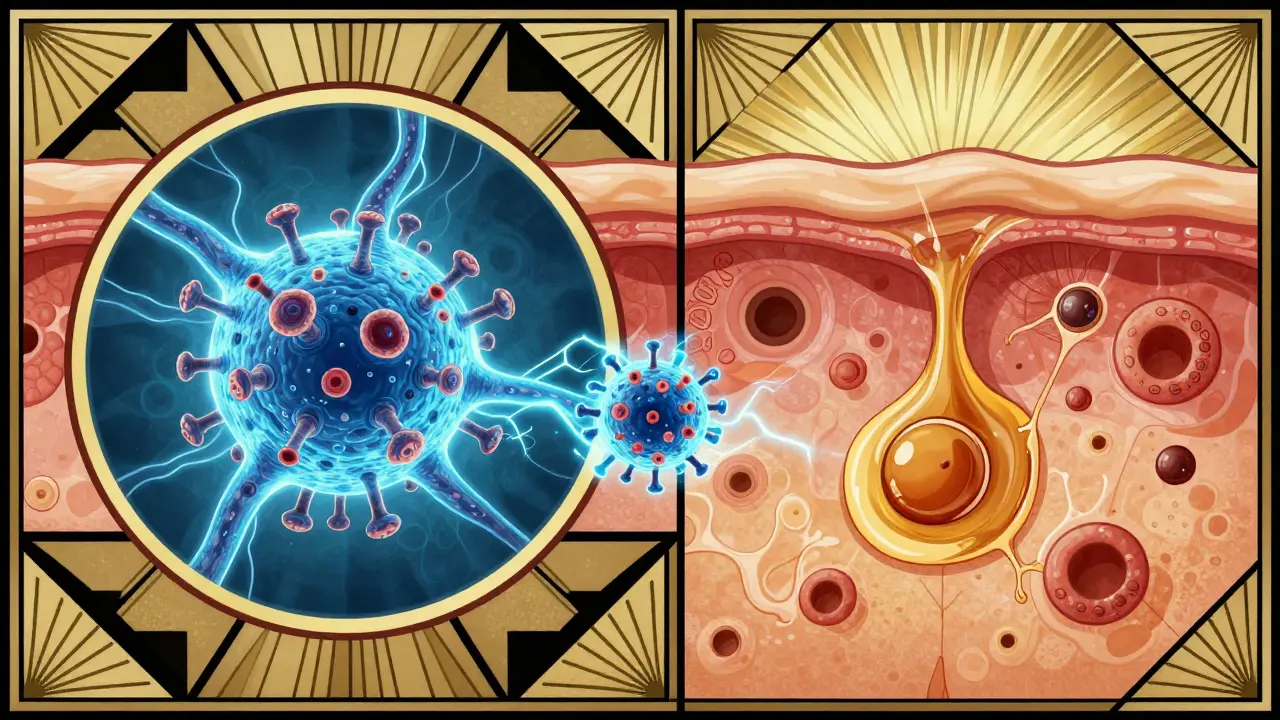
To treat the problem, you first need to understand what’s happening under the skin. These two conditions operate on completely different biological mechanisms.
A cold sore, medically known as herpes labialis, is a viral infection. It is triggered by Herpes Simplex Virus Type 1 (HSV-1). According to the World Health Organization, approximately 67% of the global population under age 50 carries this virus. Once infected, the virus hides in your nerve cells and can reactivate due to stress, sunlight, or illness. This means cold sores are contagious and part of a lifelong condition for many people.
In contrast, a pimple is a form of acne. It happens when hair follicles get clogged with excess oil (sebum), dead skin cells, and bacteria called Cutibacterium acnes. Unlike the herpes virus, acne is not contagious. You cannot catch a pimple from touching someone else’s face. It is a localized reaction within your own skin structure.
Visual and Sensory Clues: What Does It Look and Feel Like?
If you’re staring in the mirror trying to figure out which one you have, look closely at these specific markers. Dermatologists rely on these distinctions to diagnose patients quickly.
Location Matters
Cold sores are picky about where they show up. They almost always appear on the vermilion border-the edge where your pink lip meets the facial skin. Occasionally, they might appear on the nose or chin, but the lip line is the classic hotspot. Pimples, however, can pop up anywhere on your face, including directly on the soft tissue of your lips, your cheeks, forehead, or jawline. If the bump is strictly on the outer edge of your lip, lean toward cold sore.
Appearance: Clusters vs. Singles
Look at the shape. Cold sores typically start as tiny, fluid-filled blisters that group together in clusters. You might see two, three, or five small bubbles huddled next to each other. As they heal, they burst and form a yellowish crust or scab. Pimples usually stand alone. They present as a single raised red bump, sometimes with a visible white or yellow pus-filled center. While you can have multiple pimples near each other, they rarely merge into a tight cluster of fluid-filled vesicles like a cold sore does.
The Warning Signs: Tingling vs. Pain
This is often the most reliable indicator. Before a cold sore becomes visible, you usually feel a prodrome phase. This involves a distinct tingling, burning, itching, or tightness sensation on your lip. This warning sign can appear 12 to 48 hours before any blister shows up. Pimples don’t give you a heads-up. They simply appear, and if you touch them, they feel tender or painful. There is no preceding itch or burn associated with a standard pimple.
| Feature | Cold Sore (HSV-1) | Pimple (Acne) |
|---|---|---|
| Cause | Viral infection (HSV-1) | Clogged pore + Bacteria |
| Contagious? | Yes, highly contagious | No |
| Appearance | Cluster of fluid-filled blisters | Single red bump, possibly with whitehead |
| Location | Lip border (vermilion zone) | Anywhere on face/body |
| Sensation | Tingling/burning before outbreak | Tenderness/pain upon touch |
| Healing Time | 7-14 days (untreated) | 3-7 days (minor), weeks (cystic) |
Treatment Strategies: Do Not Mix Them Up
Using the wrong product is the biggest mistake people make. Applying acne treatments to a cold sore can rupture the blisters prematurely, releasing the virus onto surrounding skin and increasing the risk of spreading it to others. Conversely, antiviral creams do nothing for a clogged pore.
Treating Cold Sores
The goal with cold sores is to stop the virus from replicating. Timing is everything. The most effective window for treatment is during the prodrome phase-that initial tingling stage.
- Antiviral Creams: Over-the-counter options containing docosanol (like Abreva) can reduce healing time if applied frequently (every few hours) at the first sign of tingling. Prescription antivirals like acyclovir (Zovirax) or valacyclovir (Valtrex) are more potent and can shorten the outbreak by 1-2 days if taken early.
- Pain Relief: Keep the area clean and dry. Avoid picking at the scab, as this can lead to bacterial superinfection and scarring.
- Prevention: Since UV exposure triggers outbreaks in 32% of cases, use a lip balm with SPF 30+ daily. Manage stress, which accounts for 28% of triggers.
Treating Pimples
For pimples, the strategy is to unclog the pore and kill the bacteria causing inflammation.
- Benzoyl Peroxide: Available in concentrations from 2.5% to 10%, this ingredient kills Cutibacterium acnes bacteria. Studies show 2.5% is often just as effective as higher strengths but with less irritation. Apply once or twice daily.
- Salicylic Acid: This beta-hydroxy acid exfoliates inside the pore, breaking down dead skin cells and oil. Concentrations between 0.5% and 2% help clear comedones over 6-8 weeks.
- Hydrocolloid Patches: These sticky patches absorb fluid from whiteheads and protect the pimple from being touched or picked, speeding up healing.
Common Mistakes That Worsen Both Conditions
We’ve all been there-trying home remedies that sound good in theory but fail in practice. Here are the pitfalls to avoid based on clinical observations and patient reports.
Popping the Lesion: If it’s a pimple, popping it might squeeze out some pus, but it also pushes bacteria deeper, leading to more inflammation and potential scarring. If it’s a cold sore, popping it releases viral fluid. This fluid is highly infectious. Touching your eyes after popping a cold sore can cause herpetic keratitis, a serious eye infection. Never pop either.
Using Toothpaste or Baking Soda: Internet folklore suggests these dry out bumps. In reality, they are highly irritating. On a cold sore, they cause stinging and can damage the delicate skin, prolonging healing by several days. On a pimple, they disrupt the skin’s pH balance, potentially triggering more breakouts.
Sharing Lip Products: If you suspect a cold sore, throw away your current lipstick or lip balm. The virus can survive on surfaces. Sharing these items spreads HSV-1 to partners or family members. Pimples don’t spread this way, so sharing makeup isn’t a viral risk, though it can transfer bacteria mechanically.
When to See a Doctor
Most cold sores and pimples resolve on their own with proper care. However, certain situations require professional medical attention.
See a dermatologist or primary care provider if:
- Your cold sore lasts longer than two weeks without improvement.
- You experience frequent outbreaks (more than six per year), which may indicate a need for suppressive antiviral therapy.
- The lesion spreads to your eyes, genitals, or other parts of the body.
- You have signs of bacterial infection, such as increased redness, warmth, swelling, or pus discharge around a pimple or cold sore.
- You are unsure of the diagnosis, especially if the lesion is painful, unusual in shape, or doesn’t respond to standard treatments.
Prevention Tips for Long-Term Skin Health
Managing these conditions isn’t just about reacting when they appear; it’s about building habits that prevent them.
For cold sore prevention, identify your triggers. Keep a log of when outbreaks occur. Is it after a stressful week? After sunbathing? During your menstrual cycle? Addressing these factors-through stress management, sunscreen use, and hormonal health-can reduce frequency. Also, maintain a strong immune system with balanced nutrition and adequate sleep.
For pimple prevention, consistency is key. Use a gentle cleanser twice daily to remove excess oil and dirt. Incorporate non-comedogenic moisturizers to keep your skin barrier healthy. Avoid heavy, oily makeup that can clog pores. Change your pillowcases regularly to reduce bacterial buildup. If you struggle with persistent acne, consult a dermatologist for prescription options like retinoids or oral antibiotics.
Can you get a cold sore from kissing someone with a pimple?
No. Pimples are not contagious. They are caused by clogged pores and bacteria within your own skin. You cannot transmit acne through kissing or physical contact. However, if the person has an active cold sore (even if it looks like a pimple initially), kissing can transmit the HSV-1 virus.
How long does it take for a cold sore to heal?
Without treatment, a cold sore typically takes 7 to 14 days to heal completely. With early intervention using antiviral medications or creams, the healing time can be reduced to 5 to 7 days. The stages include tingling, blistering, ulceration, crusting, and finally healing.
Is it safe to apply benzoyl peroxide to a cold sore?
No. Benzoyl peroxide is designed to treat acne by killing bacteria and drying out pores. It does not affect viruses. Applying it to a cold sore can irritate the sensitive skin, cause stinging, and potentially rupture the blisters, which increases the risk of spreading the HSV-1 virus to other areas of your face or to other people.
Why do I get cold sores only on one side of my lip?
Cold sores often recur in the same location because the HSV-1 virus remains dormant in the nerve ganglia near that area. When reactivated, the virus travels along the same nerve pathway to the skin surface, causing the outbreak to appear in the familiar spot. This is why many people notice their cold sores always forming on the left or right corner of their mouth.
Can stress cause both cold sores and pimples?
Yes. Stress is a major trigger for both conditions. For cold sores, stress weakens the immune system, allowing the dormant HSV-1 virus to reactivate. For pimples, stress increases cortisol levels, which stimulates oil production in the skin, leading to clogged pores and breakouts. Managing stress through relaxation techniques can help reduce the frequency of both.