
When you pick up a new prescription, the pills might look completely different from the last time. Maybe they’re a different color, shape, or size. You might even see a new company name on the bottle. This isn’t a mistake-it’s normal. But it’s also one of the most common causes of medication errors. If you don’t check your new label against your old one, you could end up taking the wrong dose, the wrong drug, or even double-dosing without realizing it.
Why This Matters
In the U.S., about 90% of prescriptions are filled with generic drugs. That means the same medication you’ve been taking for years might come from a different manufacturer every time you refill. The FDA allows this because generics must contain the same active ingredient, strength, and dosage form as the brand-name version. But here’s the catch: generic drugs don’t have to look the same. They can be a different color, shape, or size. And while the active ingredient is identical, some people react differently to fillers or coatings used by different manufacturers-especially with drugs like warfarin, seizure medications, or thyroid pills.A 2021 study in the Journal of Patient Safety found that nearly 1 in 5 patients who switched generic manufacturers accidentally took the wrong dose because they didn’t notice the change. The problem isn’t the pharmacy-it’s that most people don’t know what to look for. That’s why comparing your new label to your old one isn’t optional. It’s a safety habit.
What to Check on Every New Label
Don’t just grab the bottle and go. Take five minutes. Here’s exactly what to compare:- Your full name - Double-check spelling. A mismatch could mean you got someone else’s medicine.
- Prescription number (Rx#) - This number is unique to your prescription. If it’s completely different from your last fill, ask why. It might mean a new prescription was written.
- Medication name - Look for both the brand name (like “Lipitor”) and the generic name (like “atorvastatin”). Make sure both match your old label. If the generic name changed, that’s a red flag.
- Dosage strength - Is it still 10 mg? 5 mg? 25 mg? A small change here can be dangerous. Never assume “it’s the same.”
- Manufacturer - You’ll see something like “Mfg: ACCORD HEALTHCARE” or “Made by Teva.” If this changed from your last bottle, that’s normal-but note it. If you’re on a narrow-therapeutic-index drug (like blood thinners or epilepsy meds), you might want to stick with the same maker.
- Quantity and refills - Did you get 30 pills again? Or did they give you 90? Are there still two refills left? A mismatch here could mean your doctor changed your plan.
- Date prescribed and last dispensed - This helps you track how long you’ve had the medication. If the last dispensed date is older than expected, it could mean you’re getting an old stock.
- “Brand substitution not permitted” - If your doctor checked this box, the pharmacy is legally required to give you the brand name. If you got a generic anyway, call the pharmacy immediately.
What to Do When the Pills Look Different
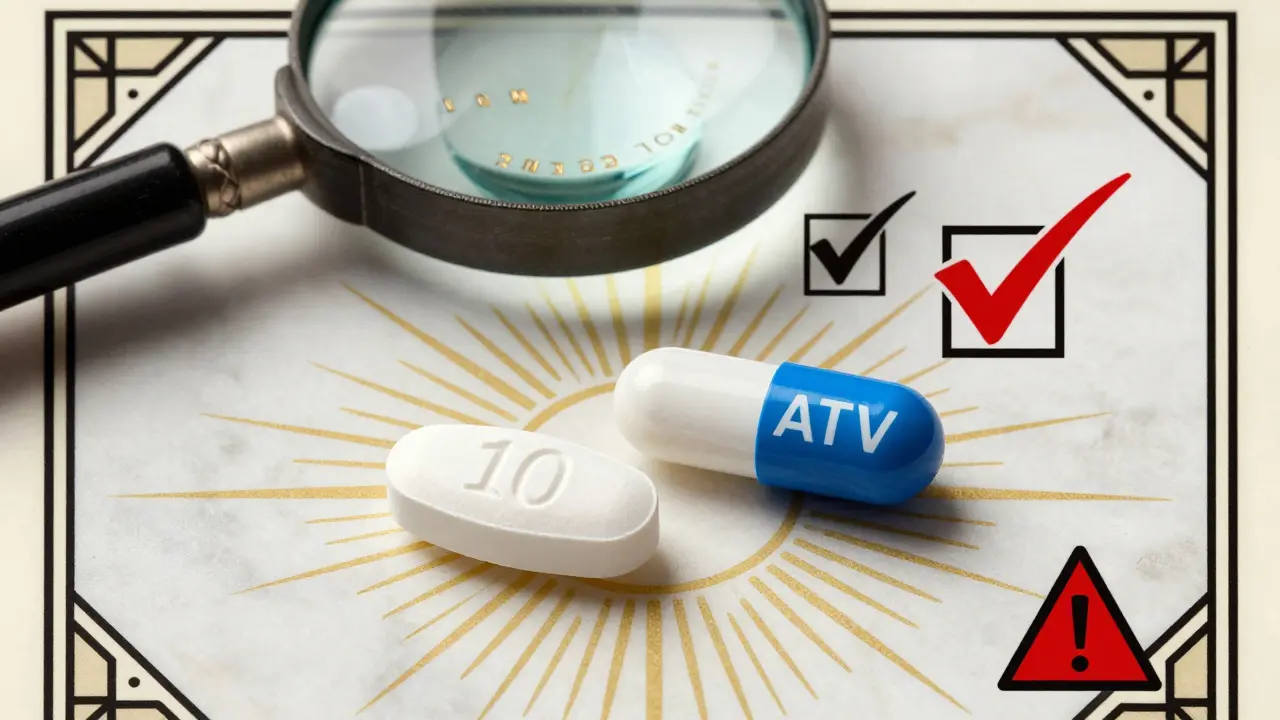
It’s normal for generic pills to look different. But if you’re unsure, don’t guess. Here’s how to be sure:- Check the imprint - Most pills have letters or numbers stamped on them. Use the Drugs.com Pill Identifier to search by shape, color, and imprint. You’ll find the exact match, including the manufacturer.
- Call your pharmacist - Ask: “Is this the same medication I was taking before? Even though it looks different?” Pharmacists are trained to explain these changes. They’ll confirm if the active ingredient and strength are unchanged.
- Take a photo - Snap a picture of your old pill bottle and the new one. Keep them side by side on your phone. This helps you spot changes over time. One Reddit user, u/MedicareMom, says this saved her from a mix-up when her new pills were twice as large but had the same dosage.
- Don’t mix pills - Never dump pills from different bottles into one container. You’ll lose track of what’s what. Keep each bottle separate, even if they’re the same drug.
Red Flags That Mean STOP
Some changes aren’t normal. If you see any of these, call your pharmacy or doctor before taking the pills:- The active ingredient changed (e.g., from “atorvastatin” to “rosuvastatin”).
- The dosage strength is different (e.g., 10 mg instead of 5 mg).
- The pill shape or imprint doesn’t match any known drug in the FDA database.
- You’re on a narrow-therapeutic-index drug (like warfarin, levothyroxine, or phenytoin) and the manufacturer changed-especially if you’ve noticed side effects before.
- The label says “brand substitution not permitted” but you got a generic.
How Technology Is Helping
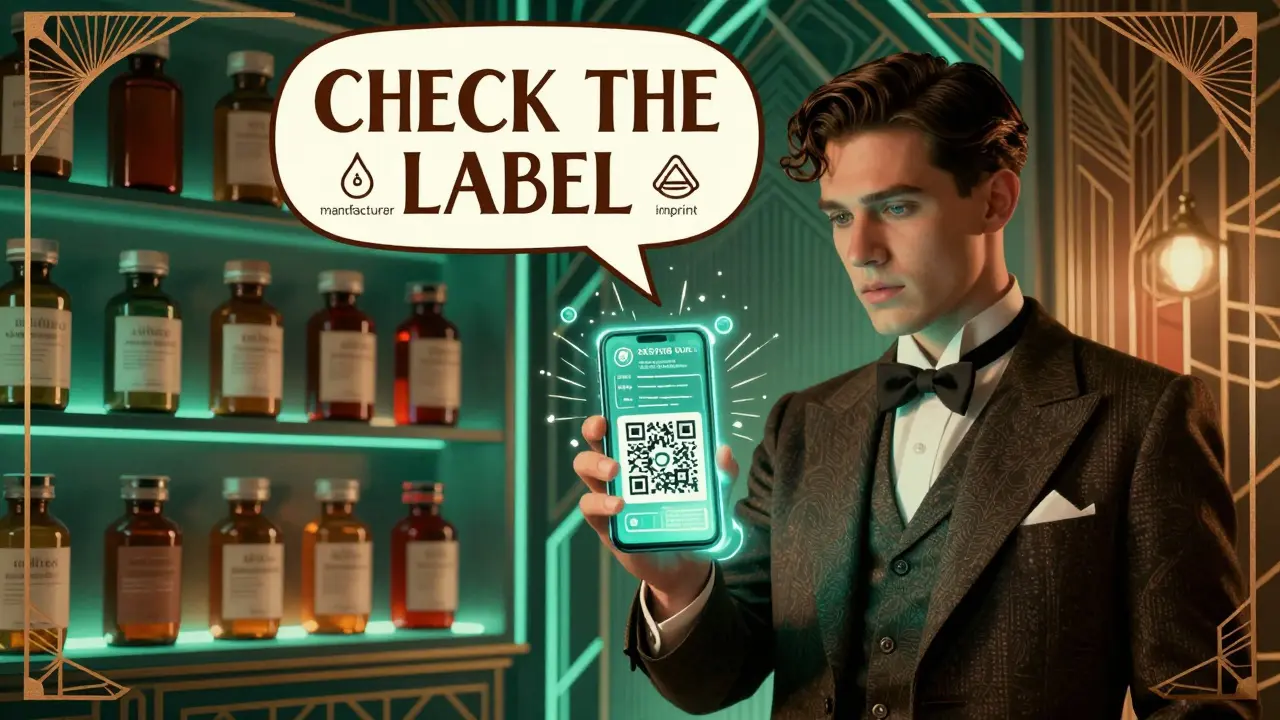
Most pharmacies now use electronic prescriptions. These are far less error-prone than handwritten ones. In fact, only 1% of electronic prescriptions contain confusing Latin abbreviations like “q.d.” or “t.i.d.” compared to 61% of handwritten ones. Barcode scanning at the pharmacy counter now matches your prescription to your profile, reducing mix-ups.Some pharmacies are starting to include QR codes on labels. Scan one, and you’ll get a video or text explanation of your medication. Kaiser Permanente piloted this in 2022. In the next few years, apps like MedSnap (used by over 1.2 million people) will let you take a photo of your pill and instantly identify it-no more guessing.
What You Can Do Today
You don’t need to be a medical expert to stay safe. Just make this part of your routine:- When you get a new prescription, lay the old bottle and the new one side by side.
- Compare the label line by line.
- Use the Drugs.com Pill Identifier if the shape or color changed.
- Call your pharmacist if anything feels off-even if it’s just a gut feeling.
- Keep a list of your medications, including the manufacturer and pill appearance, in your phone or wallet.
Medication safety isn’t about trusting the system. It’s about checking it yourself. Your life depends on it.
Why do my pills look different even though it’s the same medication?
Generic drug manufacturers aren’t allowed to copy the exact shape, color, or size of brand-name pills. Even though the active ingredient is the same, different companies use different fillers, coatings, and manufacturing processes. That’s why your 10 mg atorvastatin might be a white oval today and a blue capsule next time. It’s still the same medicine-but it looks different.
Is it safe to switch between different generic manufacturers?
For most medications, yes. But for drugs with a narrow therapeutic index-like blood thinners (warfarin), anti-seizure meds (phenytoin), or thyroid hormone (levothyroxine)-small differences in how the body absorbs the drug can cause problems. If you’re on one of these, ask your doctor if you should stick with the same manufacturer. Some people notice side effects when switching, even if lab tests look normal.
What should I do if I think I got the wrong medication?
Don’t take it. Call your pharmacy immediately. Have your old prescription bottle handy so you can compare the name, strength, and manufacturer. If the pharmacy says it’s correct but you’re still unsure, ask to speak with the pharmacist on duty. They can check the original prescription and confirm the fill. If you’re still not sure, contact your doctor.
Can I rely on the color or shape of the pill to know what it is?
No. While many people use color and shape to identify pills, this is risky. The same drug from different manufacturers can look completely different. Even the same manufacturer might change the appearance over time. Always check the label and use a pill identifier tool like Drugs.com to confirm what you’re taking.
What’s the best way to keep track of my medications?
Keep a simple list: drug name (generic and brand), dosage, how often you take it, and the manufacturer. Take a photo of each bottle when you get it. Store this list in your phone, wallet, or a notebook. Update it every time you get a new prescription. Many pharmacies also offer free medication lists through their apps-ask yours if they have one.
So let me get this straight-we’re supposed to become pill detectives just to avoid getting poisoned by a generic? Cool. I’ll add it to my daily routine right after checking if my toaster is plotting against me.
Also, the fact that the FDA lets this happen but won’t force consistent pill aesthetics is either genius or terrifying. I’m leaning toward ‘terrifying.’
And don’t even get me started on how pharmacies don’t even *warn* you. It’s like buying a new iPhone and getting a Samsung that says ‘same battery life’ but looks like a brick with a logo.
This whole thing is dumb. Pills look different? So what. You take the pill. You don’t die. You live. Simple. Why you need all this check? Just swallow and chill.
As someone who’s been on a cocktail of narrow-therapeutic-index meds for over a decade, I can’t stress this enough: the manufacturer change isn’t just a ‘huh, weird’ moment-it’s a physiological event.
My TSH levels didn’t change on paper after switching from Teva to Mylan levothyroxine, but my brain? My sleep? My energy? It was like someone swapped my neurotransmitters for a knockoff version.
Pharmacists say ‘bioequivalence’ like it’s a magic spell. But bioequivalence ≠ clinical equivalence. And until the FDA forces manufacturers to maintain consistent core formulations-not just active ingredients-we’re all playing Russian roulette with our endocrine systems.
I appreciate the thoroughness of this guide. It’s both practical and necessary. I’ve worked in healthcare for over twenty years, and I still see patients who assume their medication is identical because the name hasn’t changed. The disconnect between clinical reality and patient expectation is staggering.
That said, I’m curious if there’s a standardized visual reference system being developed-perhaps a QR code linked to a photo of the pill’s appearance, manufacturer, and batch. It would reduce anxiety and improve adherence. Just a thought.
It’s fascinating how we’ve outsourced vigilance to institutions-pharmacies, regulators, doctors-only to be left with a system that expects us to become amateur forensic pharmacologists just to survive.
The fact that a pill’s appearance is legally allowed to vary, despite its profound psychological and physiological impact on patients, speaks to a deeper failure in how we conceptualize ‘safety’-as a binary, rather than a layered, human experience.
Perhaps what we need isn’t better labeling, but better trust. And until then, yes-I’ll photograph my pills. And I’ll keep a list. And I’ll call the pharmacist. Because no algorithm can replace a human who cares enough to ask.
So… you’re telling me I need to… compare… labels… like… a… detective… with… a… magnifying… glass…?
And… if… I… don’t… I… might… die…?
Okay… I’ll… do… it…
Also… I… took… a… picture… of… my… pills…
And… I… wrote… down… the… name…
And… I… called… the… pharmacy…
And… I… cried…
Because… I’m… tired…
But… I’m… alive…
So… thank… you…
While I commend the effort to educate the public, this entire framework feels alarmist. The FDA has rigorous bioequivalence standards. To suggest that pill appearance correlates with safety is to misunderstand pharmacology. The real issue is patient non-adherence due to cognitive dissonance, not pharmaceutical variability. Perhaps we should focus on behavioral psychology rather than visual checklists.
Also, your suggestion to photograph pills is redundant. Your pharmacy’s portal already contains this data. Why not use it?
Yessss this is so important!! 🙌 I used to panic every time my pills changed color-like, ‘did they give me poison??’ 😱
Now I just open Drugs.com, snap a pic, and boom-‘Ah, it’s the same 10mg atorvastatin from Accord. Chill.’
Also, I keep a Google Doc with all my meds, doses, and pill pics. It’s saved me twice. One time, my mom thought her new blue pill was a different drug-turns out it was just a different batch. We both laughed, cried, and hugged. 💙
PS: Pharmacist? They’re angels. Always ask. They love it. I promise.
Yo, I used to think my pills were haunted. One day, my 5mg lisinopril went from white oval to lilac hexagon. I called my doc, I called my mom, I called the moon.
Turns out? Same drug. Different filler. Like, imagine if your coffee suddenly switched from Dunkin’ to Starbucks but still had caffeine. You’d still drink it, right?
But now? I got a little notebook. Scribbled ‘Lisinopril 5mg - lilac hexagon - Mfg: Teva’. I’m basically a pill whisperer now. 🌿💊
They’re lying to us.
They say generics are the same.
But they’re not.
I lost my job because my seizure meds changed.
My neurologist said ‘it’s bioequivalent.’
My EEG said otherwise.
My therapist said ‘it’s psychological.’
My wife said ‘you’re paranoid.’
I’m not paranoid.
I’m awake.
And now I know.
And now you know.
And soon… they’ll have to listen.
As a pharmacogenomics researcher, I’d like to add that inter-individual variability in drug absorption is significantly influenced by polymorphisms in CYP enzymes, particularly CYP2C9 and CYP2C19.
When a manufacturer alters excipients (e.g., microcrystalline cellulose vs. lactose monohydrate), the dissolution profile can shift, altering bioavailability in genetically susceptible populations.
For patients on warfarin or clopidogrel, this isn’t anecdotal-it’s a measurable, clinically significant phenomenon. The FDA’s current guidelines fail to account for pharmacogenetic subpopulations. Standardization of excipients is not just ideal-it’s ethically imperative.
OMG I LOVE this guide!! 🎉💖
I started doing the side-by-side photo thing after my grandma almost took someone else’s blood pressure pill (same shape, different color). SCARY.
Now I have a whole folder on my phone called ‘Pill Army’-each bottle with a pic, date, and manufacturer. I even color-coded them!
And guess what? My pharmacist asked if I was a nurse. I said ‘nope, just a daughter who loves her mom.’ She gave me a free lollipop. 🍭
You’re all doing amazing. Keep checking. Keep caring. You’re saving lives. 💪❤️
This is all staged. The pharmaceutical industry wants you paranoid. Why? So you’ll keep buying brand-name drugs. The FDA? Controlled by lobbyists. The pharmacist? Paid to push generics. The pill identifier app? Owned by a Big Pharma subsidiary.
They want you to think you need to check every bottle. But what if the real danger is the system itself?
Don’t check the label.
Check the source.
And ask: who profits when you’re afraid of your own medicine?