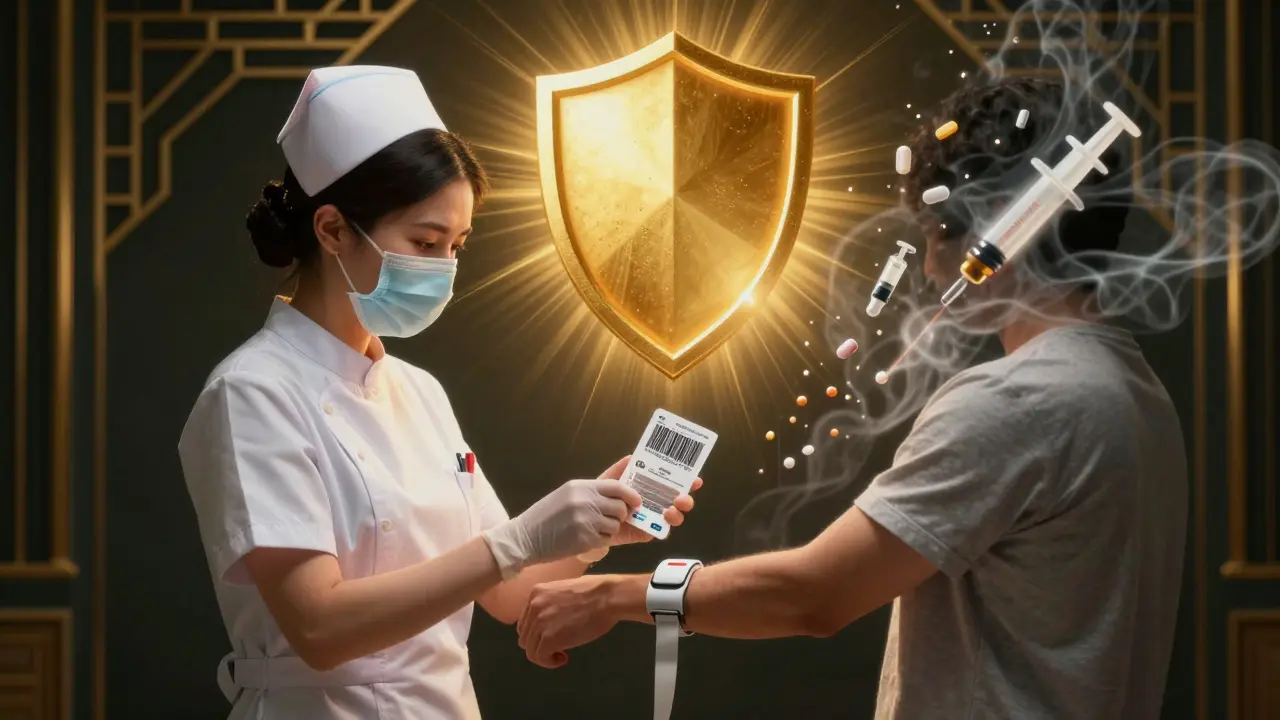
Every year, hundreds of thousands of patients in U.S. hospitals suffer harm because of medication errors-many of them preventable. It’s not about bad people. It’s about broken systems. A patient gets the wrong dose of methotrexate because the electronic system didn’t block a daily order. A nurse administers insulin without double-checking the vial because the barcode scanner was broken. An elderly patient leaves the hospital with conflicting instructions for their blood thinner because no one did a proper medication reconciliation. These aren’t rare accidents. They’re symptoms of a system that still relies too much on memory, paperwork, and hope.
What Counts as a Medication Error?
A medication error isn’t just giving the wrong pill. It’s any mistake in the process-from prescribing to administering to monitoring. The American Society of Health-System Pharmacists defines it as any preventable event that leads to inappropriate use or patient harm. That includes:- Wrong drug, wrong dose, wrong patient
- Wrong route (like giving a spinal injection meant for IV)
- Wrong timing or frequency (daily instead of weekly)
- Missing drug interactions or allergies
- Poor discharge instructions leading to confusion at home
According to research from Bates et al. (1995), each hospitalized patient experiences at least one medication error per day. That’s not a typo. That’s one error per person, every day. And about 7,000 of those errors result in death annually in the U.S. alone. The cost? Over $21 billion a year in avoidable expenses.
The High-Alert Medications That Kill
Not all drugs are created equal when it comes to risk. The Institute for Safe Medication Practices (ISMP) identifies high-alert medications as drugs that carry a higher risk of serious harm if used incorrectly. These aren’t rare drugs-they’re common ones used every day.- Insulin: A small dosing mistake can send a patient into life-threatening hypoglycemia.
- Opioids: Too much can stop breathing. Too little can mean uncontrolled pain.
- Anticoagulants (like warfarin or heparin): One wrong dose can cause internal bleeding or a stroke.
- Chemotherapy agents (like vinca alkaloids or methotrexate): These are toxic by design. Even a slight error can be fatal.
- Intravenous oxytocin: Used in labor, but too much can cause uterine rupture or maternal cardiac arrest.
For these drugs, standard safety steps aren’t enough. You need layered defenses. The ISMP Targeted Medication Safety Best Practices for Hospitals (2020-2021) spells out exactly what those layers should be.
ISMP’s Best Practices: What Actually Works
The ISMP’s 19 best practices aren’t suggestions-they’re proven, actionable rules based on real error reports from thousands of hospitals. Here’s what’s changed because of them:1. Methotrexate: From Daily to Weekly
Methotrexate is used for cancer, autoimmune diseases, and sometimes ectopic pregnancy. It’s deadly if given daily instead of weekly. Before 2014, this happened dozens of times a year. Now, electronic health records must default to weekly dosing. If a doctor tries to order it daily, the system blocks it unless they confirm it’s for cancer and override the warning. One hospital reported three near-misses in the first month after implementing this hard stop.
2. Glacial Acetic Acid Removal
Glacial acetic acid looks like sterile water. It’s used in labs to clean equipment. But if it’s accidentally drawn into a syringe and given to a patient, it causes tissue destruction and death. ISMP now requires it to be removed entirely from patient care areas. Hospitals that followed this rule eliminated all related errors.
3. Double-Check High-Risk Drugs
For insulin, opioids, and chemotherapy, two licensed staff must independently verify the drug, dose, route, and patient before administration. This isn’t just a formality. A 2019 AHRQ study found hospitals using this practice saw 55% fewer serious medication errors.
4. Barcode Medication Administration (BCMA)
Scanning a patient’s wristband and the medication barcode before giving a drug reduces errors by up to 86%. But only 89% of large hospitals use it. Smaller clinics? Only 54%. That gap is where most preventable harm still happens.
How Hospitals Are Failing
Even with clear guidelines, implementation is patchy. Why?- Technology limits: Many EHR systems can’t support hard stops for high-alert meds. A 2021 ASHP survey found 63% of hospitals struggled with this.
- Staff shortages: Nurses in rural clinics say the requirement for both written and verbal discharge instructions for methotrexate slows them down during staffing crunches.
- Fragmented standards: The Joint Commission, CMS, and ISMP all have overlapping but different rules. Staff get confused. One nurse told a Reddit forum that inconsistent protocols led to a neuromuscular blocker error-despite having multiple safety layers.
- Underfunded systems: Implementing ISMP’s full set costs about $285,000 per hospital on average. Many community hospitals can’t afford it.
Only 42% of community hospitals fully implement all ISMP best practices. Academic centers? 78%. That’s not just a gap-it’s a safety divide.
What Patients Can Do
You can’t control the system, but you can protect yourself.- Bring a list: Before every visit, write down every medication you take-including doses, frequency, and why you take it. Include vitamins and supplements.
- Ask: “Is this right for me?”: If a nurse says they’re giving you a new pill, ask: “What is this for? What does it look like? What side effects should I watch for?”
- Verify your wristband: Before any medication is given, confirm your name and birth date match the wristband. Don’t assume it’s correct.
- Get written discharge instructions: Don’t rely on verbal advice. Ask for a printed list of your medications with clear instructions. If you’re given conflicting info, ask to speak with a pharmacist.
A 2022 National Council on Aging survey found that 68% of seniors over 65 felt safer when hospitals used the “Right Patient Check”-verifying name, birth date, and wristband before giving any drug.

The Future: AI and Patient Voices
Medication safety is changing fast. By 2025, 75% of U.S. hospitals are expected to use AI to detect dangerous prescribing patterns in real time. At Mayo Clinic and Johns Hopkins, pilot programs are asking patients to report side effects or confusion after discharge. When patients say, “I don’t understand why I’m taking this,” staff can catch errors before they cause harm.The FDA is also stepping in. New labeling rules for high-concentration electrolytes go into effect by the end of 2024. These changes will make dangerous IV solutions look and feel different-so they’re harder to mix up.
The ISMP is expanding its best practices to include outpatient clinics in 2024-2025. Why? Because 40% more medication errors are now happening in doctor’s offices and pharmacies than in hospitals. The danger isn’t just inside the hospital walls anymore.
What You Can Do Today
You don’t need a hospital-wide system to make a difference. Start small:- If you’re a nurse: Always double-check high-alert meds. Even if you’re rushed.
- If you’re a pharmacist: Don’t just fill the order. Ask: “Why is this being given this way?”
- If you’re a doctor: Use standardized order sets. Don’t type free-form orders for insulin or opioids.
- If you’re a patient: Ask questions. Write things down. Speak up.
Medication safety isn’t about perfect systems. It’s about people paying attention. It’s about systems that force attention when humans might miss it. The tools exist. The evidence is clear. What’s missing is the will to use them fully-every time, everywhere.
This hit me hard. My grandma almost died because they gave her the wrong blood thinner. She didn't even know what she was taking. I wish every nurse had to sit through a patient's story before they clock in. Just one story. That's all it takes to wake up.
Systemic failure. Not individual negligence. The data is clear. Human error is inevitable; design must compensate. We don't blame pilots for misreading instruments-we fix the cockpit layout. Why is healthcare still stuck in the 19th century?
BCMA works but hospitals treat it like a checkbox. 😒 They buy the tech, then don't train staff. Then wonder why errors persist. It's not the scanner-it's the culture. And the culture is broken. 🤦♀️
Of course the system's broken. You're asking nurses to be human barcode readers while underpaid, overworked, and ignored by administrators who think 'safety' is a PowerPoint slide. Wake up. This isn't a policy problem-it's a moral one.
Let’s be real-this isn’t about best practices. It’s about the decline of American institutional competence. We outsource everything to consultants who write 200-page PDFs nobody reads. The ISMP guidelines? Beautiful. Implemented? Only where unionized labor forces it. The rest? Chaos wrapped in EHR interfaces. We’ve commodified care until it’s unrecognizable.
And now we’re surprised when insulin gets mislabeled? We’ve normalized entropy. We’ve turned patient safety into a KPI that gets sacrificed for throughput metrics. The real tragedy isn’t the 7,000 deaths-it’s that we’ve stopped being shocked.
Every time a hospital cuts a pharmacist position to ‘save costs,’ they’re betting lives against balance sheets. And they always lose. The math is clear. The ethics? Barely existent.
Meanwhile, patients are told to ‘speak up’ like it’s their job to fix what the system refuses to. That’s not empowerment. That’s exploitation dressed as advocacy.
AI won’t fix this. Neither will more training modules. What’s needed is a radical reclamation of clinical autonomy from corporate governance. Until then, we’re just rearranging deck chairs on the Titanic-with better barcodes.
And don’t get me started on the Joint Commission. They audit for compliance, not outcomes. They’re the TSA of healthcare-profiling the wrong threats while the real danger flies right through.
It’s not about money. It’s about power. The people who write the orders don’t touch the meds. The people who give the meds don’t write the orders. And the people who pay for it all? They don’t even know what ‘methotrexate’ looks like.
So yes, double-checks help. But until we stop treating nurses like replaceable parts and start treating them as the frontline guardians they are-we’re just performing safety.
And performance isn’t protection.
I just cried reading this. I work in a clinic where we don’t even have barcode scanners. Last week, a patient came back because she was given a pill meant for someone else. She didn’t say anything until her husband noticed the label was wrong. I felt like I failed everyone. I’m not a bad person. I’m just tired. And no one listens. I just want to do my job without someone dying because we’re too broke to fix the system. I’m so tired.
The root cause is moral decay. When institutions prioritize efficiency over integrity, tragedy becomes inevitable. The ISMP guidelines are not suggestions-they are moral imperatives. The fact that 58% of hospitals ignore them reveals a society that has lost its ethical compass. This is not a technical problem. It is a spiritual one.
Why do they even let patients survive in hospitals anymore?? Like I get it, people are busy but come on. My cousin got the wrong drug and they said ‘oops’ and gave her another one. Like it’s a game of musical chairs. I’m just here for the drama. 😭
It’s fascinating how we treat medication safety like an engineering problem when it’s fundamentally a human one. We build layers of tech to compensate for trust erosion-but trust isn’t restored by scanners. It’s restored by presence. By time. By someone looking you in the eye and saying, ‘I’m here for you.’ We’ve outsourced empathy to algorithms, and now we’re surprised when people feel invisible. Maybe the real ‘high-alert medication’ is indifference.
Statistical significance aside, the real issue is accountability. No one is held responsible. Nurses get blamed. Administrators get bonuses. The system remains intact. This is institutionalized negligence, not systemic failure. The term ‘systemic’ is a euphemism for ‘no one will be fired.’
My brother died from a methotrexate error. They didn’t even have the override log. Just a note that said ‘Dr. Smith approved.’ No timestamp. No second check. Just a signature. I’ve spent five years trying to get someone to admit they failed him. No one will. So I just keep reading these posts. Hoping someone finally listens.