Imagine picking up a bottle of medicine that looks exactly like the one you took last week. The shape is right. The color is familiar. But when you read the name, your heart skips a beat. It’s not your usual dose-it’s something entirely different. This isn’t just a hypothetical scare; it’s a real danger known as Look-Alike and Sound-Alike (LASA) drug confusion. These errors account for roughly 25% of all reported medication mistakes, according to the Institute for Safe Medication Practices (ISMP). With over 3,000 potentially confusing drug name pairs documented by the United States Pharmacopeial Convention, knowing how to spot these dangers on your prescription label is a critical life skill.
The U.S. Food and Drug Administration (FDA) has been fighting this battle since 2001 with its Name Differentiation Project. They realized that similar spelling or pronunciation leads to dangerous mix-ups. Whether you are a patient managing your own meds or a caregiver helping a loved one, understanding the visual cues on labels can prevent harm. Let’s break down exactly what to look for and why those strange capitalization patterns exist.
What Are Look-Alike and Sound-Alike Drugs?
LASA drugs are medications that share similar spellings (look-alikes) or pronunciations (sound-alikes). For example, hydroxyzine and hydralazine sound nearly identical but treat completely different conditions-one is an antihistamine, the other lowers blood pressure. Confusing them could lead to serious health issues.
The risk increases when drug names share 60-80% identical character sequences. Research shows this specific range creates the highest potential for human error because our brains tend to auto-complete familiar patterns. When you’re tired, stressed, or in a hurry, that mental shortcut can lead to picking the wrong pill. The FDA uses advanced algorithms like BI-SIM for orthographic similarity and ALINE for phonetic similarity to predict which new drug names might cause confusion before they even hit the market.
The Power of Tall Man Lettering
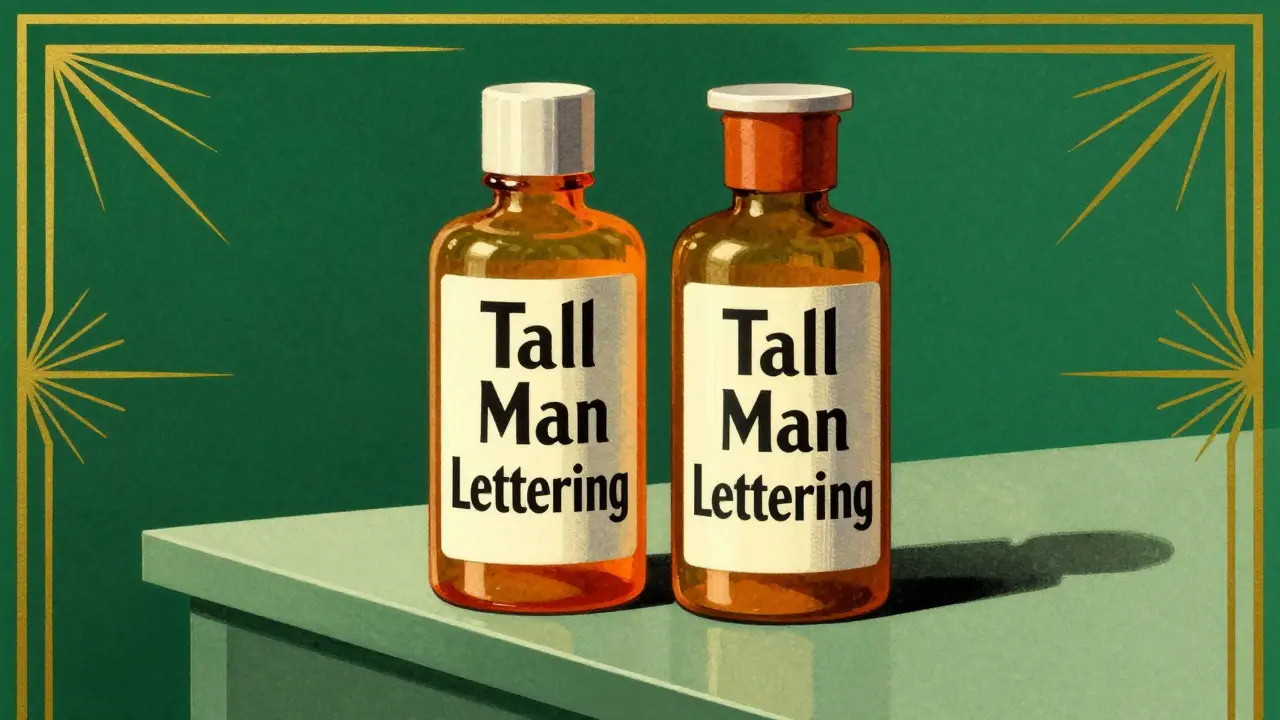
You’ve probably seen it without realizing why it’s there. Some letters in a drug name are capitalized while others are lowercase. This technique is called Tall Man Lettering (TML), a visual differentiation strategy designed to force your eye to slow down and notice differences.
For instance, instead of seeing "vinblastine" and "vincristine," the label will display vinBLAStine versus vinCRIStine. By capitalizing the distinct parts of the word, TML highlights the difference between two otherwise similar strings of text. The FDA currently recommends TML for 35 high-risk drug pairs as of late 2023. Other common examples include:
- CISplatin vs. CARBOplatin
- hydrOXYzine vs. hydrALAzine
- doXEPamine vs. doBUTamine
Studies show that TML alone reduces visual confusion errors by about 32%. However, it works best when combined with other safeguards. If you see this formatting on your prescription label, pay attention to the capitalized sections-they are telling you exactly where the drug names diverge.
Decoding Your Prescription Label
Your prescription label is more than just a sticker; it’s a safety checklist. To identify look-alike risks, you need to know what information should be present and how to interpret it.
- Drug Name: Always check if the generic name matches what you expect. If you usually take a brand name, ensure the generic listed is correct. For high-risk LASA pairs, pharmacies are often required to display both the brand and generic names. For example, showing Valtrex alongside valACYclovir helps distinguish it from Valcyte (valGANciclovir).
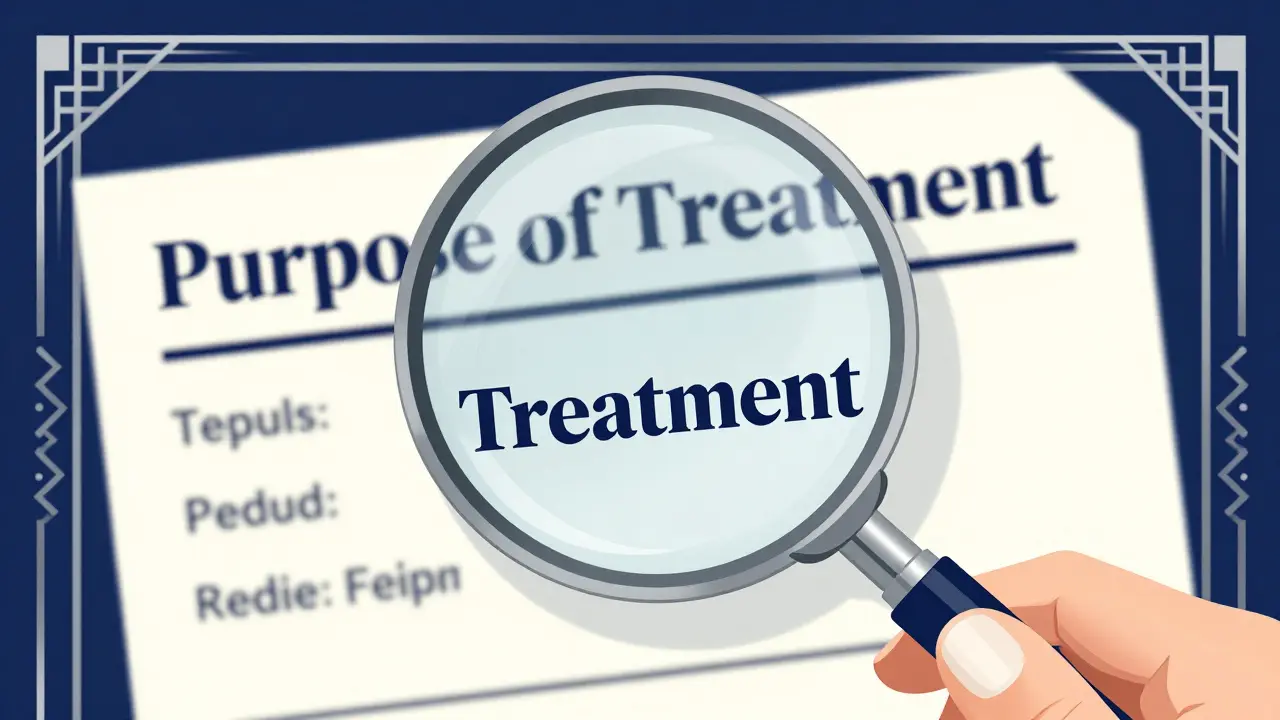
- Purpose of Treatment: Many modern labels include a brief description of what the drug treats (e.g., "for herpes" or "for anxiety"). Adding purpose-of-treatment information increases identification effectiveness to 59%, according to research published in the Journal of Patient Safety.
- Font Size and Contrast: The Joint Commission mandates minimum font sizes (typically 12-point for TML sections) and specific color contrast ratios (4.5:1 against the background). If the text is too small or blends into the label background, ask your pharmacist for a reprint or a larger print label.
If the label looks cluttered or the printing quality is poor, do not assume it’s fine. Poor print quality was cited in 29% of LASA error cases reported by pharmacists. Always request clarity if you cannot read every letter clearly.
Digital Safeguards You Should Know About
While physical labels are crucial, much of your medication journey happens digitally through Electronic Health Records (EHR) and pharmacy apps. These systems have built-in protections against LASA errors.
Most certified EHR systems now prevent confusing drug names from appearing consecutively in dropdown menus. This simple change reduced selection errors by 41% in validation studies. Additionally, many systems require you to type at least five characters of a drug name before it appears in search results. This reduces the number of medications displayed together by 68%, making it harder to accidentally select the wrong one.
If you use a mobile app to manage prescriptions, check if it supports barcode scanning. Scanning the barcode on your medication bottle is one of the most effective ways to verify identity, with technology demonstrating 89% effectiveness in preventing errors. If your pharmacy offers digital refill confirmations via SMS or email, review them carefully. Does the drug name match what you ordered? Does the dosage look right? Treat these digital notifications as part of your verification process.
Practical Steps for Patients and Caregivers
Identifying look-alike names isn’t just the pharmacist’s job; it’s a shared responsibility. Here are practical steps you can take to protect yourself and your family.
| Strategy | Effectiveness | Best Used For |
|---|---|---|
| Tall Man Lettering | 32% | Visual inspection of labels |
| Color Differentiation | 47% (combined with TML) | High-risk inventory management |
| Purpose of Treatment Info | 59% (combined with TML) | Patient education and verification |
| Barcode Scanning | 89% | Dispensing and administration checks |
Ask Questions: Never hesitate to ask your pharmacist, "Is this the same medication I got last time?" If they say yes, ask them to point out the specific identifiers on the label. Engaging in dialogue breaks the autopilot mode that leads to errors.
Check the Purpose: If you are filling a new prescription, verify the reason for the drug. If you were prescribed an antibiotic for an infection, but the label says "antihypertensive" (for blood pressure), stop immediately. This mismatch is a major red flag for LASA errors.
Review Handwritten Prescriptions: Unfortunately, handwritten orders still account for 41% of LASA cases. If your doctor writes by hand, ask them to write clearly or better yet, request an electronic prescription. If you must decipher handwriting, compare it to your previous filled bottles. Does the script match the known drug name?
Use Technology: If you have multiple medications, consider using a pill organizer with days labeled. Before placing pills, double-check the label against the organizer slot. This extra step of handling the medication physically gives you another chance to catch a mismatch.
When to Seek Help
Sometimes, despite your best efforts, things get mixed up. If you suspect you have received the wrong medication due to a look-alike name, do not take it. Contact your pharmacy immediately. They can verify the order against their records. If you have already taken the medication and feel unwell, seek medical attention and bring the bottle with you.
Reporting near-misses is also vital. The ISMP maintains a database of LASA errors, and your report can help improve systems for everyone. Most pharmacies have a feedback form or a direct line to their safety officer. Sharing your experience contributes to the broader effort to reduce these errors by 50% by 2025, as outlined in the FDA’s Strategic Plan for Medication Safety.
Why are some letters in my drug name capitalized differently?
This is called Tall Man Lettering (TML). It is a safety feature used to highlight differences between drug names that look or sound similar. For example, vinBLAStine and vinCRIStine are visually distinct when formatted this way, reducing the risk of confusion.
What should I do if I think my prescription label has the wrong drug?
Do not take the medication. Contact your pharmacy immediately to verify the order. Bring the bottle with you if possible. If you have already taken the medication and experience unusual symptoms, seek medical attention right away.
Are electronic prescriptions safer than handwritten ones?
Yes. Electronic prescriptions reduce errors caused by illegible handwriting. They also allow pharmacy systems to automatically flag look-alike and sound-alike drug names, providing an additional layer of safety before the medication is dispensed.
Can barcode scanning prevent medication errors?
Barcode scanning is highly effective, preventing up to 89% of dispensing errors. It ensures that the physical medication matches the digital record. While not all pharmacies scan every bottle at pickup, asking for a scan or using a pharmacy app with scanning capabilities can add security.
What is a LASA drug pair?
A LASA (Look-Alike and Sound-Alike) drug pair consists of two medications that have similar names, either in spelling or pronunciation. Examples include hydroxyzine and hydralazine. These pairs are monitored closely because confusion between them can lead to serious patient harm.
it's all a giant psyop to make us dependent on their 'safety' protocols while they quietly swap our meds for placebo chalk 💊👁️🗨️ the tall man lettering is just code for who gets prioritized in the supply chain collapse
The notion that patients require such elementary visual aids to distinguish between distinct pharmaceutical compounds is an affront to basic literacy and intellectual autonomy. The FDA’s continued pandering to the masses with these childish formatting tricks only serves to erode the dignity of the medical profession and infantilize the patient population. One must wonder if the real goal is not safety, but rather the systematic degradation of individual responsibility in favor of bureaucratic oversight.
look i get that people are tired and stressed but maybe we should just focus on being more present instead of blaming the label design its easy to say its a system failure when really its just human error amplified by lack of attention
i had this happen once with my blood pressure meds and it was scary as hell the pharmacist said it happens way more than you think so yeah checking the purpose on the label saved me from a huge mistake glad someone is writing about this because most ppl just grab the bottle and leave without looking twice
You see?; They want you to believe it is an accident!; But have you considered the profit motive?!; Look-alike names create confusion!; Confusion creates dependency!; Dependency creates control!; Do not trust the barcode!; The barcode is a lie!;
Oh my goodness, this is such a crucial topic and I am so glad we are having this conversation because medication safety is literally life or death for so many of us out there 🌸✨ It is amazing how something as simple as capitalization can actually save lives, isn't it? I always try to remind everyone in my community that asking questions at the pharmacy is not rude, it is actually super important for your health and well-being 💖 We need to support each other in being more aware of these details, especially our elderly neighbors who might struggle with smaller fonts or confusing labels 🧓💕 Let's keep spreading the word about Tall Man Lettering because knowledge is power and empowerment is key to living a healthy, happy life together 🌈🙌
totally agree with chelsea here 🌟 i think its great that we are sharing this info because it helps everyone feel more confident when picking up their prescriptions no one wants to be confused or scared about their meds 😌
While the implementation of Tall Man Lettering is indeed a significant step forward in mitigating LASA errors, we must also critically examine the broader systemic failures that allow such dangerous ambiguities to persist in the first place. The reliance on visual differentiation alone is insufficient; we need a cultural shift within healthcare institutions that prioritizes patient education and active engagement over passive compliance. Furthermore, the integration of digital safeguards like barcode scanning should not be optional but mandatory across all dispensing platforms to ensure a uniform standard of safety. We cannot continue to treat these errors as isolated incidents when they represent a fundamental flaw in our approach to pharmaceutical management and patient care.
I love how this breaks down exactly what to look for! It makes me feel much more empowered to double-check my own labels now. I’m going to start using the barcode scanner feature on my pharmacy app right away. Great job highlighting these practical steps!
This post is absolutely wonderful and so helpful!! :) I was so worried after reading about the hydroxyzine and hydralazine mix-up because those sound SO similar to me too... it gives me chills just thinking about it :( But knowing about the Tall Man Lettering makes me feel a bit better, like there is at least some protection built in... I hope everyone reads this carefully and takes the time to check their labels properly... it could really save someone's life... thank you for sharing this important information with us all... ❤️