Have you ever opened a medicine cabinet or a clinic drawer and found bottles of pills that have already passed their expiration date? It is frustrating. For patients, it means wasted money. For clinics and hospitals, it adds up to billions in lost revenue every year. In the United States alone, medication waste costs the healthcare system approximately $20 billion annually. But here is the good news: most of this waste is preventable.
You do not need a massive budget or complex technology to stop throwing away good drugs. Whether you are managing your own home supply or running a small practice in Durban or anywhere else, simple changes in how you store, track, and dispense medications can keep them within their valid dates. Let’s look at exactly how to do this without overcomplicating your life.
The Basics: Storage Conditions That Matter
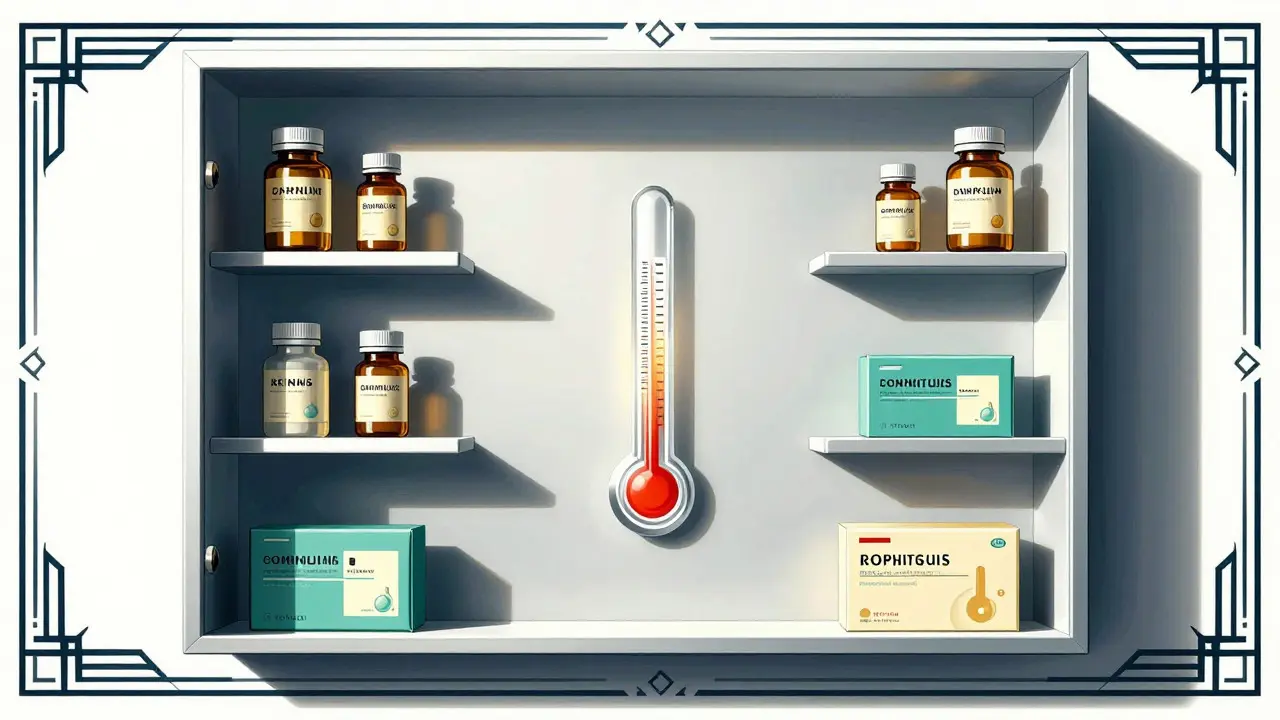
Before we talk about tracking dates, we need to talk about where you put your meds. A medication might be technically "within date" on the label, but if it has been stored incorrectly, it could be ineffective or even unsafe. This is a hidden form of waste because you end up discarding it anyway.
Different drugs have different needs. According to standards set by the United States Pharmacopeia (USP), specifically Chapter <797>, room temperature medications must be kept between 68-77°F (20-25°C). Refrigerated items, like certain insulin types or biologics, need a steady 36-46°F (2-8°C). If your fridge fluctuates wildly or sits next to a hot stove, those drugs degrade faster than the manufacturer expects.
- Check your environment: Avoid storing meds in bathrooms. The humidity from showers can break down tablets and capsules long before the expiry date.
- Monitor temperatures: For clinics, use digital loggers. One undetected power outage can ruin thousands of dollars worth of stock. Dr. Mark Reynolds reported a case where a rural clinic lost $8,200 in refrigerated biologics due to just one unnoticed temperature spike.
- Keep it dry and dark: Light and moisture are enemies of chemical stability. Keep original packaging intact as long as possible.
Mastering Inventory Rotation with FIFO
If there is one rule that saves more money than any other, it is FIFO. This stands for First-In, First-Out. It sounds obvious, but in the rush of daily care, it is easy to grab the bottle at the front of the shelf even if a newer one was placed behind it weeks ago.
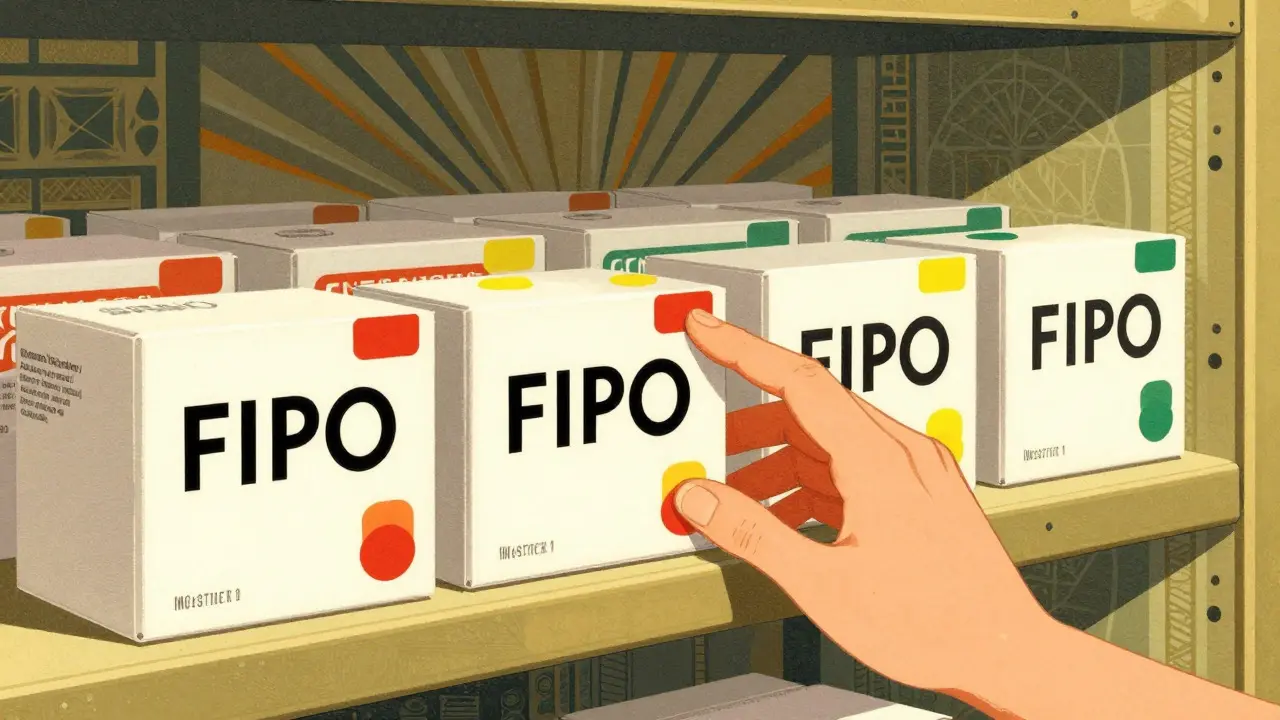
Implementing FIFO requires a physical shift in how you organize your space. When you receive new stock, move the older boxes to the front and place the new ones at the back. This ensures the oldest medication is used first, maximizing its lifespan before it expires.
For home users, this means checking your cabinet once a month. Pull everything out. Look at the dates. Move the soonest-expiring items to eye level. If you are a pharmacy manager, consider color-coding. Some teams use red stickers for items expiring within 30 days, yellow for 60 days, and green for longer. This visual cue stops waste before it happens.
| Method | Best For | Waste Reduction Potential | Cost/Complexity |
|---|---|---|---|
| Manual FIFO | Home users, small clinics (<10 providers) | 15-20% | Low cost, high effort |
| Barcode Scanning | Medium to large facilities | 25-30% | High initial cost, low ongoing effort |
| Dose-Dispensing Systems | Pharmacies, chronic care management | Up to 34% patient-level waste reduction | Very high cost ($12k-$20k setup) |
Leveraging Technology Without Breaking the Bank
You might think you need an expensive enterprise system to manage expiration dates. That is not always true. For large hospitals, systems like Epic Pharmacist Dashboard or Omnicell XT Series provide real-time alerts. These tools scan barcodes and automatically flag items expiring within 30 days. Studies show these systems can achieve 99.8% inventory accuracy and reduce waste by nearly a third.
However, if you run a small practice with a budget under $5,000 for inventory management, cloud-based giants might be overkill. Instead, focus on free or low-cost digital tools. Simple spreadsheet templates that track purchase date, expiry date, and quantity can work wonders if updated weekly. The key is consistency. A 2021 University of Michigan study highlighted that regular checks matter more than the sophistication of the tool.
Consider using predictive analytics if available in your electronic prescribing system. These features can help avoid duplicate prescriptions and optimize dosages, preventing waste at the source. For example, reducing duplicate orders by 27% directly translates to less unused medication sitting on shelves.
Smart Dispensing: Right Size, Right Time
One of the biggest sources of waste is dispensing too much medication for the actual treatment duration. Dr. Sarah Thompson, Director of Pharmacy at Mayo Clinic, notes that aligning dispensed quantities with actual treatment needs reduces waste by up to 37% in chronic scenarios.
This approach, often called "split-filling," involves giving a patient a smaller supply initially-say, two weeks instead of three months-to ensure adherence and assess side effects. If the patient does well, they get a refill. If they don’t, you haven’t wasted a full quarter’s supply on a drug they won’t take.
While some clinicians worry about the administrative burden, surveys indicate that 65% report improved patient adherence with this method. It keeps the medication fresh because it is being used actively rather than gathering dust in a bathroom cabinet until it expires.
Proper Disposal: The Last Line of Defense
Even with the best efforts, some medications will expire. How you dispose of them matters. Throwing pills in the trash or flushing them down the toilet harms the environment. The Environmental Protection Agency (EPA) emphasizes that incineration is the only environmentally safe disposal method for hazardous pharmaceuticals.
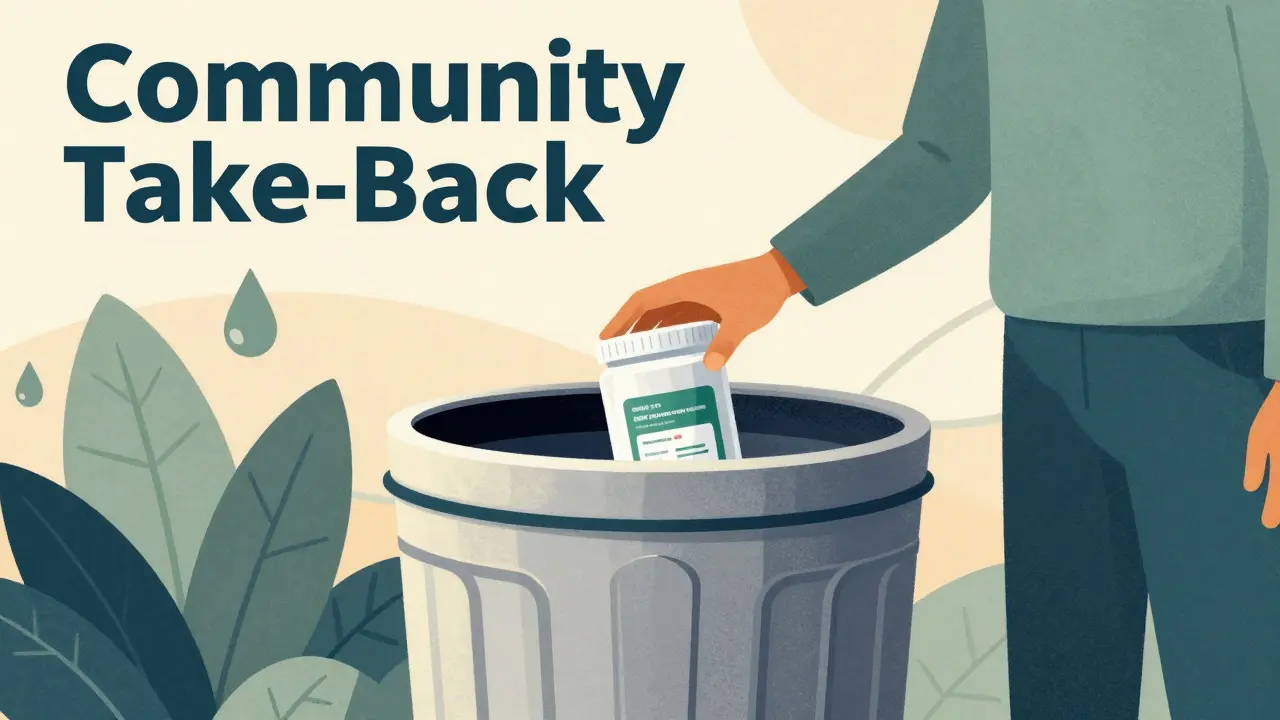
For most people, the gold standard is take-back programs. As of early 2023, there were over 11,000 registered collection sites in the U.S. alone. Check with local pharmacies or law enforcement agencies for drop-off locations. In many regions, including parts of South Africa, community health centers also offer disposal bins.
If no take-back program is available, follow FDA guidelines: mix the pills with an unappealing substance like dirt or cat litter, seal them in a container, and throw them in the household trash. Remove personal information from the prescription labels first.
Training and Culture: The Human Element
Technology fails if people don’t use it. The World Health Organization highlights staff training as the foundational element of waste reduction. Facilities with comprehensive training see 28% less waste. This doesn’t mean long seminars; it means clear, concise protocols.
Create a culture where waste reduction is valued. Incentivize teams by linking waste metrics to performance reviews. Encourage staff to speak up when they notice near-expiry items. A weekly "Friday Morning Audit" can become a ritual, ensuring no item slips through the cracks. Remember, every pill saved is money back in your pocket and less harm to the planet.
What is the most effective way to prevent medication waste at home?
The most effective strategy is practicing FIFO (First-In, First-Out) and conducting monthly audits. Organize your cabinet so that medications with the nearest expiration dates are at the front. Additionally, only purchase what you need for the immediate treatment period to avoid buying excess stock that may expire before use.
How should I store refrigerated medications correctly?
Refrigerated medications should be stored between 36-46°F (2-8°C). Use a dedicated refrigerator if possible, avoiding the door where temperatures fluctuate. Never freeze medications unless instructed. Consider using a thermometer with an alarm to alert you if the temperature rises above the safe range during power outages.
Is it safe to use medications past their expiration date?
Generally, it is not recommended. While some studies suggest certain drugs remain stable beyond their labeled dates, potency cannot be guaranteed. Using expired medications risks treatment failure. For critical conditions like heart disease or epilepsy, always use fresh stock. Consult a pharmacist before using any expired item.
What are the best methods for disposing of expired medications?
The best method is using official take-back programs offered by pharmacies or law enforcement. If unavailable, mix non-flushable pills with an unappealing substance like coffee grounds, seal them in a bag, and dispose of them in household trash. Only flush medications explicitly listed on the FDA's flush list, typically potent opioids, to prevent accidental ingestion.
Can small clinics afford advanced inventory management systems?
Not always, and they may not need them. For clinics with fewer than 10 providers, manual FIFO systems combined with weekly audits are cost-effective and sufficient. Advanced barcode systems cost $8,000-$15,000 annually plus implementation fees. Small practices should focus on process discipline rather than expensive software until volume justifies the investment.