
Imagine this: It’s 3 a.m. in the intensive care unit. A ventilated patient needs their next dose of a neuromuscular blocking agent, but you check the bin and realize the vials expired yesterday. The supply chain hasn’t delivered fresh stock yet. Panic sets in? Not if you have a plan. Expired critical medications are more than just inventory errors; they are immediate threats to patient stability. When standard drugs vanish due to expiration, the chaos that follows can lead to dangerous substitution errors, prolonged sedation, or even early unplanned hospital readmissions.
You don't need to guess which drug to swap in. You need a structured, evidence-based framework. This guide breaks down exactly how to prioritize replacements using protocols established by the American Society of Health-System Pharmacists (ASHP) and current critical care standards. We will walk through the tiered replacement systems, the role of pharmacists, and the specific steps to keep your patients safe when the clock runs out on essential meds.
The Stakes: Why Expiration Triggers a Crisis
In the ICU, medication is the most common intervention patients receive. But here is the problem: complex regimens require precise timing. When a critical medication expires, it creates a vacuum similar to a national shortage. According to data from the FDA, systemic availability challenges are rampant, with hundreds of medications facing shortages at any given time. While expiration is different from a manufacturing halt, the clinical impact is identical-the drug isn't there.
Without a protocol, teams resort to ad hoc solutions. Some hospitals might use a "first come, first served" approach, while others rely on random lotteries. These methods create inequities. More dangerously, they lead to problematic polypharmacy. For instance, clinicians might accidentally continue acute medications that are no longer indicated or fail to restart chronic ones. Studies show that these transfer errors contribute to early unplanned hospital readmissions, which occur in 11-12% of cases within 30 days. Your goal is to prevent those errors before they happen.
The Tiered Framework: Choosing the Right Substitute
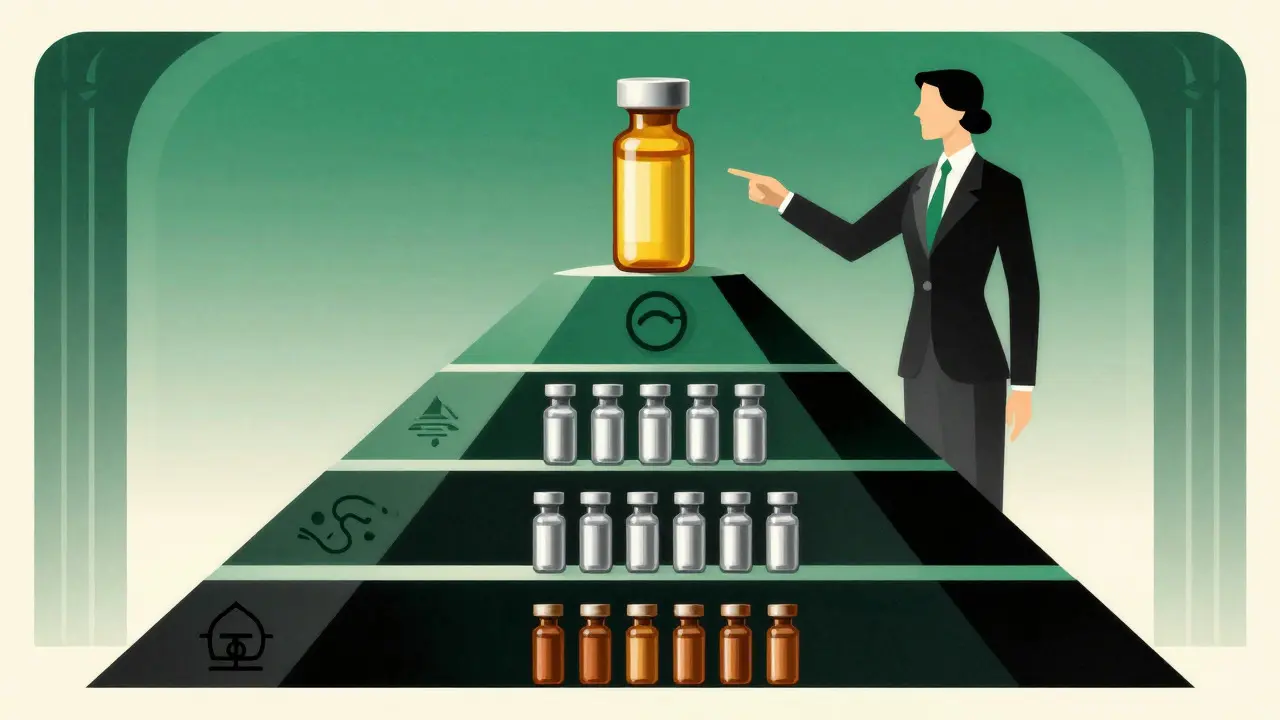
How do you decide what to give instead? You stop guessing and start tiering. The American Society of Health-System Pharmacists (ASHP) provides a clear three-tier system for prioritizing alternatives. This framework, originally designed for shortages, applies directly to expired stock scenarios.
| Priority Level | Medication Option | Clinical Consideration |
|---|---|---|
| 1st Line (Preferred) | Cisatracurium | Hemodynamically stable; organ-independent metabolism. |
| 2nd Line (Alternative) | Rocuronium / Vecuronium | Requires monitoring for duration of action differences. |
| 3rd Line (Last Resort) | Atracurium / Pancuronium | Higher risk of side effects; use only if others unavailable. |
Here is how it works in practice. If your cisatracurium expires, you immediately look to rocuronium as the second-line option. You do not jump straight to pancuronium unless necessary. Each tier requires an assessment of the individual patient. Doses must be adjusted based on the new agent's pharmacokinetics. For example, switching from cisatracurium to rocuronium might require different dosing intervals to maintain the same level of muscle relaxation. This tiered approach prevents therapeutic inequivalence, ensuring the patient gets the closest possible match to their original therapy.
The Human Factor: The Role of Critical Care Pharmacists
Can a nurse or physician handle this alone? Technically yes, but practically, it’s risky. The consensus among experts is that Critical Care Pharmacists are essential for this process. Dr. Sikora from CU Anschutz notes that pharmacist-led comprehensive medication management (CMM) reduces mortality rates by 18.7% and shortens ICU stays by an average of 2.3 days. That is a massive difference driven by cognitive services like evaluating alternatives.
Pharmacists bring specific expertise that generalists often lack. They possess deep knowledge of pharmacokinetics-92.4% of critical care pharmacists have this expertise compared to only 37.8% of general pharmacists. When a medication expires, a pharmacist doesn't just pick a substitute; they analyze 147 patient-specific variables in advanced AI-assisted models or manually assess renal function, liver status, and hemodynamic stability. In community hospitals where dedicated critical care pharmacists are scarce, the risk spikes. Data shows that without them, institutions face more medication-related complications, extending patient stays by over 11 days on average.
Seven Steps to Execute a Safe Swap
When you discover an expiration event, follow this seven-step workflow derived from ASHP guidelines. Do not skip steps. Speed is important, but accuracy saves lives.
- Validate Expiration Details: Confirm the exact quantity expired and the criticality of the drug. Is it a one-vial issue or a full bin?
- Determine Remaining Stock: Check all storage locations, including satellite pharmacies and emergency crash carts.
- Identify Affected Patients: List every patient currently receiving the expired medication. Who is ventilated? Who is sedated?
- Select Therapeutic Alternatives: Use the tiered system (1st, 2nd, 3rd line) to identify substitutes. Consult the pharmacist.
- Analyze Financial Impact: Calculate the cost difference. Newer alternatives may be more expensive, affecting the hospital's budget.
- Update Information Systems: Change order sets in the Electronic Health Record (EHR). Alert nurses via barcoding technology to prevent administration errors.
- Establish Monitoring Protocols: Define what parameters to watch. For sedatives, monitor Richmond Agitation-Sedation Scale (RASS) scores closely.
This process typically takes 8-12 hours of interdisciplinary team time for critical scenarios. Pharmacists spend about 45 minutes per patient evaluating these alternatives. It feels slow, but rushing leads to errors. Communication breakdowns between care teams account for nearly 40% of medication safety issues, so document every decision clearly.

Preventing Future Expirations
Fixing the problem once is good; preventing it is better. How do you stop critical meds from expiring unnoticed? Automation is key. High-performing institutions use automated inventory tracking systems that provide 30-day expiration alerts. These systems are used by 68.2% of hospitals with less than 5% expired medication incidents.
Additionally, daily interdisciplinary medication review teams are implemented in 76.4% of top-quartile hospitals. These teams proactively review stock levels and usage patterns. They also leverage pre-established alternative therapy pathways. By having these pathways ready before a crisis hits, you reduce decision fatigue during emergencies. The Joint Commission cites medication management in over two-thirds of sentinel events, making proactive inventory management a regulatory necessity, not just a best practice.
Looking Ahead: Regulatory Changes and AI
The landscape is shifting. The FDA released draft guidance in April 2025 on optimizing medication expiration dating, proposing standardized stability testing that could reduce waste by 18-22%. Meanwhile, the ASHP is finalizing updated guidelines specifically for expired medication scenarios, distinct from general shortages, expected in Q1 2026.
Technology is also stepping up. Researchers at CU Anschutz are piloting AI-driven substitution systems that show 94.7% concordance with expert pharmacist recommendations. As we move toward 2027, expect greater standardization across healthcare systems. However, the biggest hurdle remains the pharmacist workforce shortage, projected to reach 112,000 vacancies by 2027. Until then, relying on robust, written protocols and existing staff expertise is your best defense against the chaos of expired critical medications.
What should I do if my first-line alternative is also unavailable?
Move immediately to your second-line option as defined by your institution's tiered protocol. For example, if cisatracurium is expired and rocuronium is also out of stock, switch to vecuronium. Document the rationale clearly and consult a pharmacist to adjust dosing based on the new agent's pharmacokinetic profile.
How quickly must I replace an expired critical medication?
Replacement should occur before the next scheduled dose to avoid gaps in therapy. In critical care, delays can lead to withdrawal symptoms or loss of sedation control. Aim to validate the issue and implement the swap within hours, utilizing rapid response teams if available.
Do expired medications lose potency gradually?
Yes, degradation varies by drug formulation. However, for critical care medications, relying on partial potency is dangerous. Always treat expired stock as unusable to ensure consistent therapeutic effect and patient safety.
Is it legal to use expired medications in emergencies?
Generally, no. Using expired medications outside of specific military or disaster protocols carries significant liability risks. Always seek approved therapeutic alternatives rather than administering expired stock, even in urgent situations.
How can small hospitals manage this without dedicated pharmacists?
Small hospitals should establish tele-pharmacy partnerships or pre-approved standing orders for common substitutions. Implementing automated inventory alerts is crucial to prevent expiration before it happens, reducing the need for last-minute swaps.