
It’s easy to think of thyroid medication like a simple pill you take once a day-something that just fixes your energy, weight, or mood. But when it’s taken wrong, on purpose, or without monitoring, it can turn deadly. Thyroid medication misuse isn’t rare. It’s hiding in plain sight-in gym bags, online forums, and doctor’s offices where patients are too afraid to admit they’re taking extra pills.
How a Common Prescription Can Turn Toxic
Levothyroxine, the synthetic version of the thyroid hormone T4, is one of the most prescribed drugs in the U.S., with over 120 million prescriptions filled in 2023. For people with hypothyroidism, it’s life-changing. But for others? It’s a weight-loss shortcut, a performance booster, or a way to chase a faster metabolism.
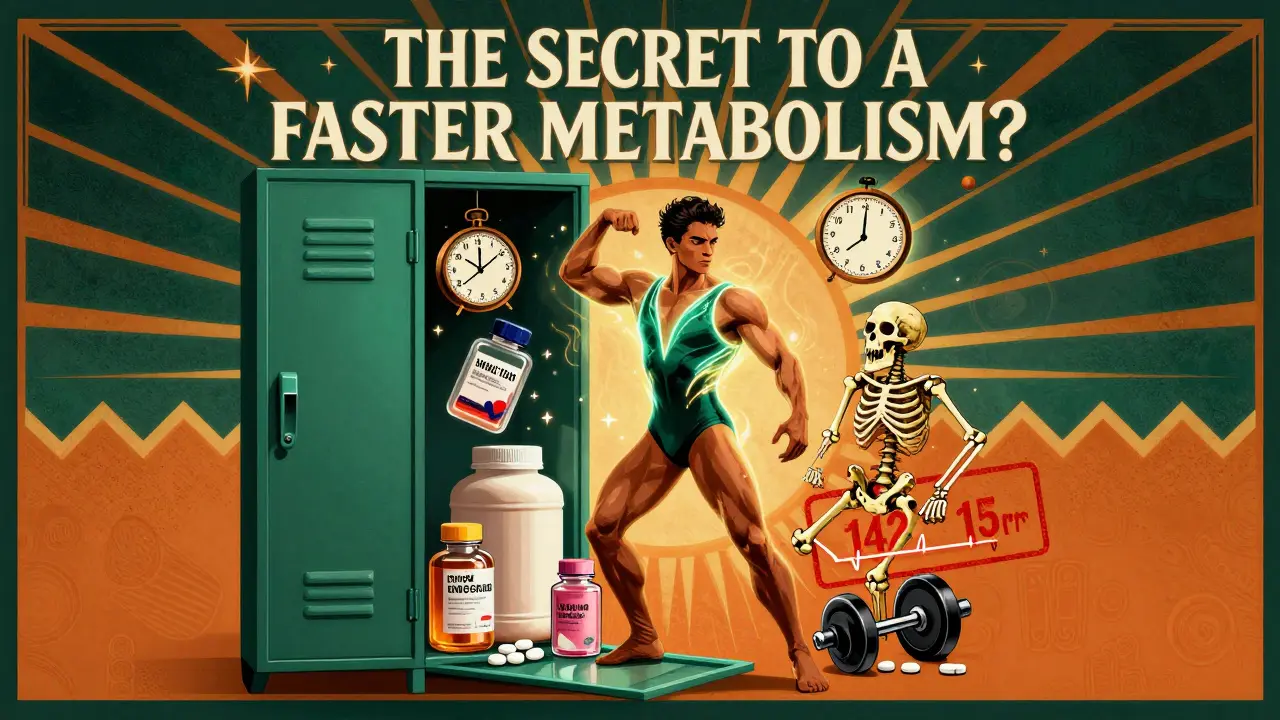
When someone takes more than prescribed, their body gets flooded with thyroid hormone. This isn’t just feeling “too wired.” It’s a medical emergency. Symptoms show up fast: heart racing at 140 beats per minute, chest pain, trembling hands, night sweats, and insomnia. One Reddit user shared that after taking 200 mcg daily for three months to lose weight, they ended up in the ER with a heart rate of 142 bpm. Doctors told them they were lucky to be alive.
What makes this especially dangerous is that the symptoms look like stress, anxiety, or overtraining. Many people don’t connect the dots until their body crashes. And unlike autoimmune hyperthyroidism (like Graves’ disease), which builds slowly over months, medication-induced hyperthyroidism hits hard and fast-often within 30 days.
The Hidden Causes Beyond Intentional Abuse
Not everyone who develops thyroid problems from medication is trying to lose weight. Sometimes, it’s accidental.
- Someone skips doses for weeks, then takes a double dose before a doctor’s visit to “look better” on bloodwork. This tricks the test-T4 spikes, but TSH stays low because the body hasn’t had time to respond. Doctors misread it as under-treated hypothyroidism and up the dose. The cycle continues.
- A patient takes calcium supplements or iron at the same time as their thyroid pill. That cuts absorption by up to 50%. They feel worse, so they take more pills. Now they’re overdosing.
- People switch between brand-name Synthroid and generic levothyroxine without realizing the formulations aren’t identical. Even small differences in absorption can throw hormone levels off.
Then there are the drugs you wouldn’t expect. Amiodarone, a heart medication, is 37.3% iodine by weight. That’s enough to trigger both hyperthyroidism and hypothyroidism. Iodine-based contrast dyes used in CT scans can cause thyrotoxicosis weeks later. Even cancer drugs like checkpoint inhibitors can attack the thyroid-up to 8% of patients on combined PD-1 and anti-CTLA-4 therapy develop thyroid dysfunction.
What Hypothyroidism Looks Like When It’s Drug-Induced
People assume hypothyroidism only happens when the thyroid breaks down. But drugs can shut it down too.
Lithium, used for bipolar disorder, causes hypothyroidism in 15-20% of long-term users. Interferon-alpha, used for hepatitis and some cancers, does the same. These aren’t side effects you can ignore-they’re direct hits to thyroid function.
Symptoms? Fatigue (89% of cases), cold intolerance (76%), weight gain (68%), depression (55%), dry skin (47%). They’re identical to Hashimoto’s. But here’s the difference: if you stop the drug, your thyroid often recovers. In 3-6 months, hormone levels bounce back. That’s not true for autoimmune disease. With drug-induced hypothyroidism, the fix might be simpler than you think-just stop the culprit.
Why People Risk It: The Weight Loss Trap
Why would someone take a prescription drug with known cardiac risks? Because they believe it works.
A 2021 study found that 12% of patients presenting with hyperthyroid symptoms were abusing thyroid medication. Two-thirds were women, average age 34.7. Many were fitness enthusiasts. One study of gym-goers found nearly 9% admitted to using thyroid pills without a prescription.
They see the numbers: 92% of abusers lose weight. 78% get tremors. 65% get nausea. They think, “I can handle the side effects.” But they don’t realize the long-term cost: bone density drops 2-4% per year. That’s osteoporosis waiting to happen. Or worse-heart rhythm problems that can lead to sudden cardiac arrest.
One HealthUnlocked forum user, SarahM, said her doctor kept increasing her dose because she kept losing weight. She was secretly taking extra pills. It took six months to stabilize after she confessed.
How Doctors Miss It-and How You Can Protect Yourself
Thyroid labs don’t lie. But they can be misread.
In factitious hyperthyroidism (the medical term for self-induced overdose), T3 and T4 are high, TSH is low-and here’s the key: radioactive iodine uptake is low. That’s because your thyroid isn’t making the hormone. You’re injecting it. In Graves’ disease, uptake is high. That’s how doctors tell the difference.
But not all doctors check this. And many patients won’t admit to misuse. So the cycle continues: wrong diagnosis → higher dose → worse symptoms.
Here’s what you can do:
- If you’re on levothyroxine, get TSH and free T4 tested every 6-8 weeks when starting or changing doses. Don’t wait six months.
- Take your pill on an empty stomach, at least 30-60 minutes before food or supplements. Calcium, iron, and even coffee can block absorption.
- Never skip doses and then double up. It’s not a reset. It’s a risk.
- If you’re using supplements labeled “thyroid support,” check the ingredients. The FDA found 217 websites selling unregulated thyroid hormone pills in 2022. Many contain actual T3 or T4 without listing it.

The New Tools Fighting Misuse
There’s progress. In June 2023, the FDA approved the first digital pill version of levothyroxine-with a tiny sensor that tells your doctor when you took it. Early studies show a 52% drop in dosing errors.
Point-of-care TSH tests are now available in some clinics, giving results in minutes instead of days. That means faster adjustments and fewer mistakes.
And research is getting smarter. Scientists have found genetic markers that predict who’s at risk for amiodarone-induced thyroid problems. Soon, doctors might test your DNA before prescribing it.
But the biggest tool? Education. Studies show patients who get detailed counseling on how to take their medication have a 63% lower chance of messing up.
What Recovery Looks Like
If you’ve been misusing thyroid medication, the good news is: your body can heal.
For mild cases, stopping the drug for 2-3 weeks-under medical supervision-lets your thyroid reset. Symptoms like tremors, sweating, and rapid heartbeat usually vanish within days. One 2009 case showed a movement disorder called choreoathetosis (involuntary twitching) disappeared in just one week after stopping levothyroxine.
But severe cases? Those need cardiac monitoring. Heart damage doesn’t always reverse. And if you’ve had bone loss, you may need long-term treatment to rebuild density.
One Reddit user, ThyroidWarrior87, shared: “After my doctor adjusted my dose based on proper testing, my energy returned and I stopped losing hair within two months.” That’s the goal-not more pills, but the right dose.
Final Warning: This Isn’t a Shortcut
Thyroid medication isn’t a diet pill. It’s not a performance enhancer. It’s a hormone replacement that needs careful calibration. Your heart, bones, and brain depend on balance.
If you’re taking it and feel “too good”-too much energy, too much weight loss, too little sleep-that’s not a sign it’s working. It’s a sign it’s dangerous.
The numbers don’t lie: 20% of hyperthyroidism cases are medication-induced. 12% of patients with these symptoms are abusing it. And the hospital bills? Over $427 million a year in the U.S. alone.
You don’t need more thyroid hormone. You need the right amount. And that only comes from testing, not trial and error.
Can you really get hyperthyroidism from taking too much levothyroxine?
Yes. Taking more than prescribed, especially over time, floods your body with thyroid hormone. This causes factitious hyperthyroidism, which has the same symptoms as Graves’ disease-racing heart, weight loss, tremors-but is caused by external hormone intake, not an overactive thyroid gland. Blood tests show high T3/T4 and low TSH, with low radioactive iodine uptake, which distinguishes it from autoimmune causes.
How do you know if your thyroid symptoms are from medication or your own thyroid?
Doctors look at three things: your TSH and free T4 levels, your radioactive iodine uptake (RAIU), and your thyroglobulin level. In autoimmune hyperthyroidism like Graves’, RAIU is high because your thyroid is making extra hormone. In medication-induced cases, RAIU is low because your thyroid is suppressed. Thyroglobulin is also low, since your thyroid isn’t active. If your symptoms started after changing your dose or adding a new drug, that’s a red flag.
Can you get hypothyroidism from medications you didn’t know affected your thyroid?
Absolutely. Amiodarone, lithium, interferon, and even some cancer immunotherapies can shut down thyroid function. These aren’t side effects you’ll see on a weight-loss pill label-they’re hidden in heart, mental health, and cancer meds. If you’re on any of these and feel unusually tired, cold, or gained weight, ask for a TSH test. It’s simple, quick, and could catch a problem before it gets serious.
Is it safe to take thyroid medication for weight loss if I don’t have hypothyroidism?
No. It’s not safe, and it’s not legal without a prescription. Taking thyroid hormone when you don’t need it forces your body into a high-metabolism state. That leads to muscle loss, heart strain, bone thinning, and possibly heart attack or stroke. Studies show 92% of abusers lose weight-but at the cost of long-term health. The weight comes back, and your body may never fully recover.
What should I do if I think I’m taking too much thyroid medication?
Don’t stop suddenly. Go to your doctor and be honest. Ask for a full thyroid panel: TSH, free T4, and free T3. If you’ve been taking extra pills, your doctor may recommend a 2-3 week washout period with heart monitoring. Most mild symptoms resolve on their own. But if you have chest pain, dizziness, or a heart rate over 120, go to the ER. This isn’t something to manage alone.
Are over-the-counter thyroid supplements safe?
Many aren’t. The FDA has documented 217 websites selling unregulated thyroid hormone products online in 2022. These supplements often contain real T3 or T4 without listing it on the label. Taking them can cause sudden hyperthyroidism. If a supplement claims to “boost metabolism” or “burn fat,” it’s likely dangerous. Stick to FDA-approved prescriptions only.
How long does it take for thyroid levels to stabilize after stopping misuse?
It varies. Mild cases often improve in 1-2 weeks. Symptoms like tremors and rapid heartbeat fade quickly. But TSH levels can take 6-8 weeks to reflect the true state of your thyroid. That’s why doctors wait before adjusting doses. Full recovery of bone density or heart function may take months or years, especially if misuse lasted over a year.
Can thyroid medication misuse cause permanent damage?
Yes. Chronic misuse can lead to permanent heart rhythm problems, osteoporosis, and even thyroid gland shutdown. If your thyroid was suppressed for too long, it may never restart on its own, requiring lifelong replacement. The earlier you stop and get help, the better your chances of full recovery.
If you’re on thyroid medication, don’t guess. Test. Talk. Track. Your body isn’t a machine you can tune with extra pills. It’s a delicate system-and it’s worth protecting.
The FDA approved a digital pill? That’s just the beginning. Soon they’ll be microchipping us to track every pill we swallow. This isn’t medicine-it’s social control disguised as safety. They want you dependent on their system, not your own body. Wake up.
This is such an important post. I’ve seen so many people in my gym group secretly popping thyroid pills thinking it’s a shortcut. One guy ended up in the ER last year. I’m so glad someone’s talking about this without judgment. You’re not alone if you’ve done this-just reach out. Help is real. 💙
Oh so now we’re policing hormones? Next they’ll be scanning your urine at the gym to check your TSH levels. Classic. You want people to stop abusing meds? Then stop making them feel like garbage for being ‘lazy’ or ‘out of shape.’ The real problem isn’t the pills-it’s the culture that tells you your body isn’t enough. And yes, I’ve seen the 9% gym bros on levothyroxine. But let’s be real-they’re not the ones getting the real help. They’re just the easiest scapegoat.
Take thyroid meds on an empty stomach. Wait 30-60 minutes before food or coffee. Don’t double dose. These are simple rules. Most misuse comes from ignorance, not malice. If you’re unsure, ask your pharmacist. It’s free advice that could save your heart.
I’m a nurse and I’ve seen this over and over. Women, especially, get told ‘you’re just tired’ or ‘you’re not trying hard enough’-so they turn to pills. Please, if you’re reading this and you’re scared to tell your doctor you took extra-do it. You won’t be judged. We’ve heard it all. Your body deserves care, not shame. 🤍
You people are so naive. If you’re not on thyroid meds, you shouldn’t even be talking about this. You don’t know what it’s like to live with a broken thyroid. The fact that you think someone taking a pill to feel normal is ‘abusing’ it proves you’ve never been sick. Stop moralizing. Start listening.
That guy in the ER with the 142 bpm? He’s lucky. I know someone who didn’t make it. It wasn’t a drug overdose-it was a slow burn. No one noticed until his heart just… stopped. This isn’t a meme. This is real. And the worst part? The system lets it happen because no one wants to admit how broken our healthcare is.
I used to take extra pills because my doctor kept saying I was ‘undermedicated’-but I wasn’t. I was just losing weight too fast. He never asked if I was taking more. No one ever asks. We’re trained to trust the script. But maybe we need to question it more. My thyroid finally stabilized after I stopped trusting the numbers and started listening to my body. Took six months. Worth it.
The erosion of personal responsibility in American healthcare is alarming. The proliferation of unregulated supplements and the normalization of pharmaceutical self-medication represent a systemic failure of civic maturity. The United States must enforce stricter controls on endocrine pharmaceuticals and mandate physician-led titration protocols. This is not a lifestyle choice-it is a public health crisis requiring federal intervention.
I took a pill once out of curiosity. Felt like I’d drunk three espressos. Didn't sleep for 36 hours. Never again.