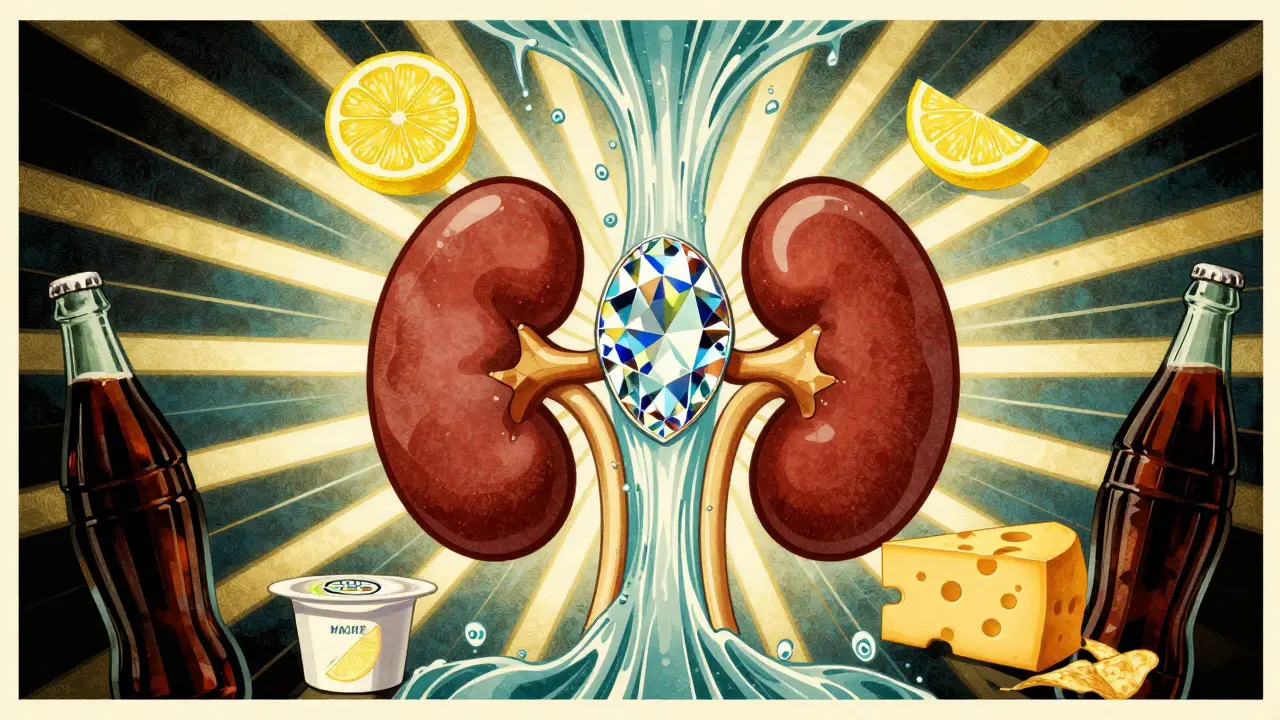
When you’ve had one kidney stone, you’re not done with them. About 30% to 50% of people who pass a stone will get another within just three to five years. That’s not bad luck-it’s a chronic condition. Kidney stones aren’t a one-time glitch in your body. They’re a sign your urine chemistry is out of balance, and unless you fix that, they’ll keep coming back.
Why Kidney Stones Keep Coming Back
Most kidney stones are made of calcium oxalate-about 80% of them. But the problem isn’t just eating too much oxalate. It’s how your body handles fluids, minerals, and waste. If your urine is too concentrated, minerals clump together and form stones. If your urine is too acidic or too alkaline, different types of stones form. And if you’re not drinking enough water, your body can’t flush out the stuff that causes stones. The real issue? Most people think they’re done after the pain passes. They stop paying attention. But the risk doesn’t disappear. Studies show that without changes, 70% of people will get another stone within five years. And each new stone increases the chance of long-term kidney damage. About 19% of people who keep getting stones develop chronic kidney disease over time.Fluid Intake: The Single Most Important Thing
Every major medical group-European Association of Urology, National Kidney Foundation, American Academy of Family Physicians-agrees on one thing: drink more water. You need to make at least 2.5 to 3 liters of urine per day. That means drinking 3 liters of fluid daily, even if you don’t feel thirsty. Why? Because your body loses water through sweat, breathing, and even your skin. Thirst is a late signal. By the time you feel it, you’re already dehydrated. Water is best. But tea and coffee count too. Yes, caffeine is a mild diuretic, but studies show it doesn’t hurt your overall hydration when you’re drinking enough. Avoid sugary sodas, especially colas. They contain phosphoric acid and high fructose corn syrup, both linked to higher stone risk. A simple trick? Use a marked water bottle. Fill it up three times a day. That’s your goal. If you’re sweating a lot-exercise, hot weather-add extra. One patient I spoke with started keeping a 1-liter bottle on her desk. She drank it by noon, refilled it, and did it again. Within two months, her stone-free streak hit 18 months. She hadn’t had one in five years before that.Don’t Cut Out Calcium-Add It
This is the biggest myth. People think if calcium causes stones, they should avoid dairy. Wrong. Cutting calcium makes stones more likely. Here’s why: Calcium binds to oxalate in your gut. If you don’t have enough calcium in your meals, oxalate floats freely into your kidneys and forms stones. So eating calcium-rich foods with meals actually helps block oxalate absorption. The goal? 1,000 to 1,200 mg of calcium daily from food. That’s about three servings: a cup of yogurt, a slice of cheddar cheese, and a cup of fortified plant milk. Don’t rely on supplements unless your doctor says so. Food sources are safer and more effective.Sodium Is the Hidden Enemy
Salt is the silent stone-maker. It makes your kidneys dump more calcium into your urine. The average American eats 3,400 mg of sodium a day. The target? 2,000 mg per day-that’s just 5 grams of salt. Where’s all that sodium hiding? Processed foods. Bread, canned soup, deli meats, frozen meals, even breakfast cereal. Read labels. If a food has more than 200 mg of sodium per serving, think twice. One woman I worked with cut out packaged snacks and started cooking meals from scratch. In six weeks, her 24-hour urine calcium dropped by 35%. She hadn’t had a stone in 14 months.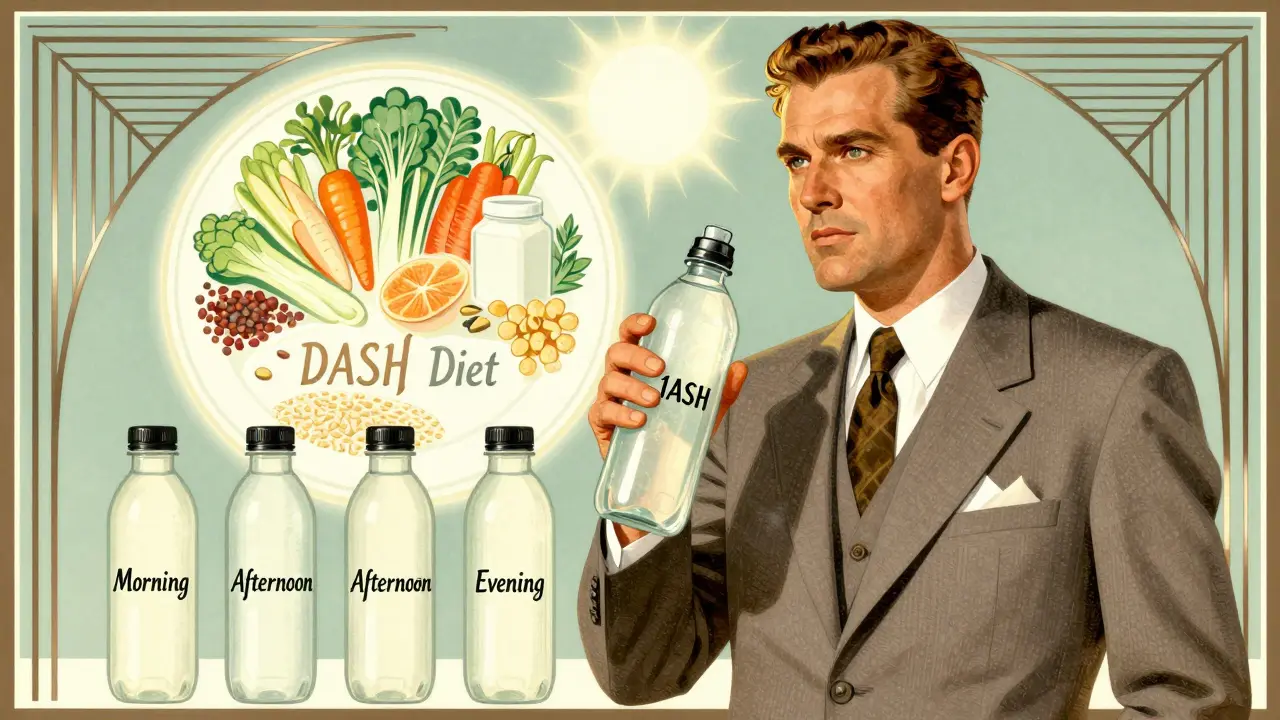
Protein and Oxalate: Balance, Not Avoidance
Animal protein-beef, chicken, pork, fish-increases uric acid and lowers citrate, both of which promote stones. Limit it to 8 ounces per day. That’s about the size of a deck of cards. Oxalate gets a bad rap. Yes, spinach, nuts, beets, and chocolate are high in it. But you don’t need to eliminate them. Eat them with calcium-rich foods. Have spinach with yogurt. Have almonds with milk. That way, oxalate binds to calcium in your gut instead of your kidneys. And here’s the twist: People who eat more fruits, vegetables, whole grains, and plant proteins actually have fewer stones. The DASH diet-designed for high blood pressure-has been shown to reduce stone risk by 40% to 50%. It’s not about restricting. It’s about shifting toward whole, unprocessed foods.Citrate: Nature’s Stone Blocker
Citrate is a mineral that stops crystals from forming. Low citrate levels are a major reason stones keep coming back. Normal levels should be above 320 mg per day. How do you boost it? Lemon juice. Fresh lemon juice. Two to three tablespoons a day, squeezed into water. It’s rich in natural citrate. The NHS specifically recommends this. Orange juice works too, but it’s higher in sugar, so stick with lemon. Some doctors prescribe potassium citrate pills. But for most people, lemon water is enough-and it’s free.What to Avoid
- Fizzy drinks-especially colas. They’re linked to higher stone risk.
- Excess vitamin C supplements-over 1,000 mg a day can turn into oxalate in your body.
- High-dose vitamin D-unless you have a diagnosed deficiency. Too much raises calcium levels in urine.
- Crash diets or fasting-they increase uric acid and concentrate your urine.

Monitoring and Follow-Up
This isn’t a one-time fix. Kidney stone prevention is lifelong. You need to track your progress. After starting dietary changes, get a 24-hour urine test in 8 to 12 weeks. It shows if your citrate is up, your sodium is down, your urine volume is where it needs to be. If you’re on medication, you’ll need this test again every 6 to 12 months. Some people think, “I haven’t had a stone in a year-I’m good.” But stones can form silently. The goal isn’t just to avoid pain. It’s to protect your kidneys.Real-Life Success: A 5-Year No-Stone Streak
Mark, 48, had his first stone at 39. By 45, he’d had five. He was tired of ER visits and surgeries. He started working with a dietitian. He switched to a DASH-style diet: more vegetables, less salt, three servings of dairy daily, two liters of water with lemon juice. He stopped eating processed snacks. He tracked his fluid intake with a marked bottle. Two years later, his 24-hour urine showed citrate up, sodium down, volume over 3 liters. He hasn’t had a stone in five years. He says, “I didn’t change my life. I just changed what I put in my body.”It’s Not About Perfection
You don’t have to be flawless. Miss a day of lemon water? Skip the salt on your fries once? That’s okay. The goal is consistency over time. One study found that people who stuck with fluid and dietary changes for five years cut their recurrence risk by 80%. Kidney stones are a chronic condition. That means you manage them like you manage high blood pressure or diabetes. Not with a quick fix. With daily habits. With small, smart choices. With the understanding that what you drink and eat today affects your kidneys for years to come. If you’ve had one stone, you’re not alone. And you’re not doomed. You just need to know what to do-and then keep doing it.Can drinking lemon water really prevent kidney stones?
Yes. Lemon juice is rich in natural citrate, which binds to calcium in urine and stops crystals from forming. Adding two to three tablespoons of fresh lemon juice to water daily can raise citrate levels enough to reduce stone risk. It’s a simple, low-cost tool backed by guidelines from the NHS and supported by clinical studies.
Should I avoid calcium if I have kidney stones?
No. Avoiding calcium increases your risk. Calcium in food binds to oxalate in your gut, preventing it from reaching your kidneys. Aim for 1,000-1,200 mg daily from dairy, fortified plant milks, or leafy greens. Don’t take calcium supplements unless your doctor recommends them-food sources are safer and more effective.
Is coffee bad for kidney stones?
No. Coffee counts toward your daily fluid goal. While caffeine is a mild diuretic, studies show it doesn’t lead to dehydration when you’re drinking enough fluids. In fact, some research suggests coffee drinkers may have a slightly lower risk of stones. Stick to black or lightly sweetened versions-skip the sugary lattes.
How much water should I drink each day to prevent stones?
Drink enough to make at least 2.5 to 3 liters of urine per day. That usually means consuming 3 liters of fluid total, including water, tea, and coffee. If you’re active or in hot weather, add more. Use a marked water bottle to track intake. Thirst isn’t a reliable guide-you need to drink before you feel thirsty.
Do I need to avoid spinach and nuts because they’re high in oxalate?
Not if you eat them with calcium. Pair spinach with yogurt, nuts with milk, or beet salad with cheese. The calcium binds to oxalate in your gut, so it doesn’t reach your kidneys. Cutting out healthy plant foods actually increases your risk. Focus on balance, not elimination.
What foods should I avoid to prevent kidney stones?
Avoid sugary sodas (especially colas), excessive salt (processed foods), high-dose vitamin C supplements (over 1,000 mg/day), and very high doses of vitamin D. Also limit animal protein to 8 ounces a day. These are the top triggers linked to stone formation in clinical studies.
Can kidney stones cause permanent kidney damage?
Yes. Repeated stones can lead to scarring, infection, and chronic kidney disease. About 19% of people who keep getting stones develop reduced kidney function over time. That’s why prevention isn’t just about avoiding pain-it’s about protecting your long-term health.
Do I need medication to prevent kidney stones?
Not always. For many people, diet and fluids alone are enough. But if you have high urine calcium, low citrate, or recurrent stones despite lifestyle changes, your doctor may prescribe medication like potassium citrate or thiazide diuretics. Always start with diet first-medication is an add-on, not a replacement.
How often should I get tested after starting prevention?
Get a 24-hour urine test 8 to 12 weeks after starting changes. This tells you if your urine chemistry is improving. If you’re on medication, repeat the test every 6 to 12 months. Tracking your numbers helps you adjust your plan before stones return.
Is the DASH diet effective for kidney stone prevention?
Yes. The DASH diet-rich in fruits, vegetables, whole grains, and low-fat dairy, and low in sodium and red meat-has been shown to reduce kidney stone risk by 40% to 50% in clinical studies. It’s not just for blood pressure. It’s one of the most proven dietary plans for preventing stones long-term.
This is the most practical guide I've ever read on kidney stones. I've had three in five years and finally started drinking 3 liters of water with lemon daily. No stones in 11 months. It's not magic, it's just consistency.
I'm sorry, but I have to push back on the lemon water advice. The NHS? Really? That's the gold standard? Have you looked at the funding behind those guidelines? The citrate theory is oversimplified. Urine pH is dynamic, not static, and citrate's buffering capacity is negligible without alkalizing agents like potassium bicarbonate. Also, lemon juice is acidic-how does that help when you need alkaline urine? This is why people get misled by wellness blogs masquerading as medical advice.
The citrate argument is structurally sound, but the operationalization of lemon juice as a therapeutic agent is functionally inadequate. Citrate bioavailability is modulated by gastric transit time, intestinal absorption kinetics, and renal excretion thresholds. Lemon juice contains approximately 1.5g citrate per 100mL. To achieve therapeutic urinary citrate levels (>320mg/day), one would need to consume >200mL daily-assuming 100% bioavailability, which is physiologically implausible. Potassium citrate remains the pharmacologically superior intervention. The DASH diet, however, is a valid systemic approach-low sodium, high potassium, adequate calcium-this is evidence-based systems medicine.
I'm from Texas and I used to drink 4 energy drinks a day. Had 4 stones by 32. Started drinking water with lemon like the article said, stopped the soda, started cooking. Lost 30 lbs without trying. No stones in 3 years. My doctor was shocked. You don't need fancy pills. Just drink water. And stop eating junk.
This is the kind of info that changes lives. I’ve been telling my patients this for years and they always say ‘I’ll try.’ Then they don’t. But if you actually do this-drink the water, eat the yogurt, skip the processed stuff-you will see results. It’s not about being perfect. It’s about being consistent. One day at a time.
I find it astonishing that this article casually recommends lemon juice as a therapeutic agent without referencing randomized controlled trials with primary endpoints of stone recurrence. The evidence base for dietary interventions in nephrolithiasis remains largely observational. Moreover, the conflation of association with causation-particularly regarding the DASH diet-is methodologically unsound. One must also consider confounding variables: socioeconomic status, access to healthcare, and baseline renal function. This is not medicine. It is nutritional anecdotalism dressed in clinical garb.
I was skeptical at first but I started drinking my water with lemon every morning and honestly it became a ritual. I feel better overall too. I don't get those awful cramps anymore and I sleep better. I think it's the hydration but also the routine. I don't need to be perfect. I just need to keep showing up for myself
Ditch the soda. Drink water. Eat cheese with your spinach. That's it.
I hate to say it but I think this whole thing is a scam. I read online that kidney stones are caused by fluoride in the water. And they're testing us. They want us to drink lemon water so they can track our urine. And the DASH diet? That's just a cover for Big Pharma pushing potassium citrate pills. I've had stones since 2018 and I stopped drinking tap water. I only drink filtered spring water. No stones since. Coincidence? I think not.
I don't believe any of this. I had a stone last year and I didn't change a thing. Still fine. You people are just scared of your own bodies. Stop overcomplicating everything. Just live your life.
You all are missing the point. In India, we have been using lemon water for centuries. But you need to add black salt and ginger. That’s the real traditional wisdom. Western medicine just repackages old remedies and calls it science. Also, 3 liters of water? In Delhi heat, you’ll die from hyponatremia. Drink when thirsty. Your body knows better than any article.
Let me ask you something. Who profits from you drinking lemon water? Who sells potassium citrate? Who markets the DASH diet? The same corporations that sell you processed food in the first place. This isn't prevention. It's distraction. You think changing your diet will fix what's broken? The real issue is environmental toxins, endocrine disruptors, and glyphosate in your food chain. Fix that first. Otherwise, you're just rearranging deck chairs on the Titanic.
I'm not buying the calcium myth. I cut out dairy completely after my third stone and haven't had one in 7 years. My bones are fine. My kidneys are fine. I get calcium from kale and almonds. You're being manipulated by the dairy industry. Don't trust them.
I read this whole thing and just cried. I’ve had 12 stones in 8 years. I thought I was broken. But this… this is the first time I felt like someone actually understood. I’m going to start tomorrow. One lemon. One water bottle. One day at a time.