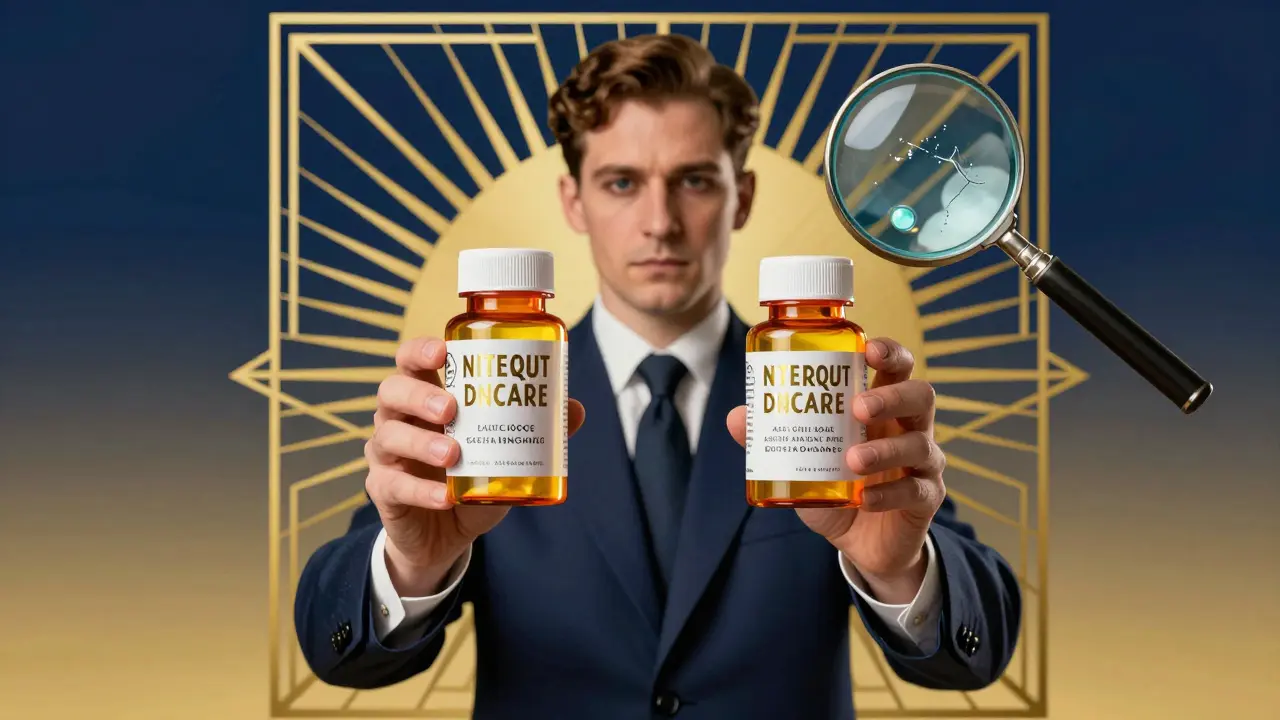
Every year, millions of people around the world take medication they believe is real - but it might not be. Counterfeit drugs aren’t just a problem in distant countries. They’re in online pharmacies, street vendors, and even some local clinics. In South Africa, where access to affordable medicines is already a challenge, fake packaging can look identical to the real thing. The difference? One could save your life. The other could kill you.
So how do you tell if the bottle in your hand is genuine? You don’t need a lab. You just need to know what to look for - and what to ignore.
Start with the basics: Visual inspection
The first step is simple: look closely. Not just glance. Look.
Compare the packaging to what you’ve seen before. If this is your first time buying this medicine, find a legitimate package online - from a trusted pharmacy - and print it out. Hold them side by side. You’re not looking for big mistakes. You’re looking for tiny ones.
- Font inconsistencies: Real drug packaging uses specific fonts. The size, spacing, and thickness of letters are exact. Fake ones often have slightly thicker or thinner text. The lot number might be misaligned by even a millimeter.
- Color differences: Colors are controlled. A pill bottle might use Pantone 286C blue. If the shade looks off - too dark, too light, or slightly greenish - that’s a red flag. Even the color of the foil on blister packs can vary. One case in Durban had counterfeit Muro 128 eye drops with packaging that was slightly yellowed, while the real version was pure white.
- Seal quality: Tamper-evident seals should be tight, smooth, and evenly applied. If the seal looks bubbled, wrinkled, or has air pockets, it’s likely fake. Some counterfeits use glue instead of heat-sealing, so the edge might peel easily.
- Barcode and QR codes: Scan it. If the code leads to a website that looks amateurish, has typos, or doesn’t match the manufacturer’s official site, walk away. Real QR codes link to secure, branded portals. Fake ones often go to random domains or just show an error.
These aren’t guesses. These are documented differences. The FDA recorded over 147 verified cases between 2020 and 2023 where packaging alone gave away the fake - from uneven letter spacing to mismatched logo sizes.
Use magnification: What the naked eye misses
Most counterfeiters are good. Too good. They copy holograms, barcodes, even tablet imprints. That’s why you need to zoom in.
Grab a 10x magnifying loupe - the kind pharmacists use. It costs less than $20. Look at the printed text on the blister pack or label. Real tablets have precise, sharp imprints. Fake ones are blurry, shallow, or uneven. One pharmacist in Cape Town found counterfeit Adderall tablets with imprint depth of 0.12mm - genuine ones are 0.15mm. That’s thinner than a human hair.
Check the edges of printed letters. Real printing uses fine ink lines. Counterfeits often have slight bleeding or smudging, especially around small text like "NDC" or "Rx only." You’ll also find misaligned graphics - a logo shifted half a millimeter to the left. That’s not a printing error. That’s a forgery.
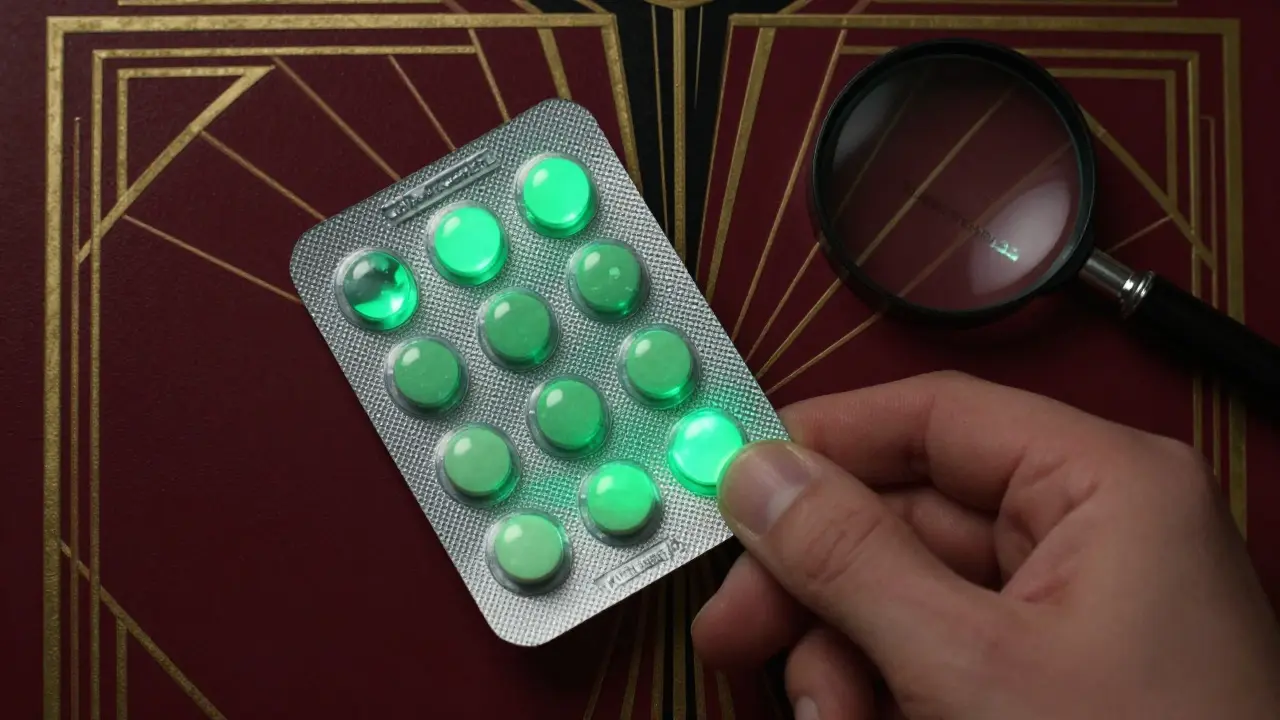
Hold the package under a UV light (blacklight). Many real medicines use invisible ink that glows under UV. If the security feature doesn’t light up, or glows a different color than expected, it’s fake. One 2022 case in Johannesburg had counterfeit Lipitor packaging that didn’t fluoresce at all - the real version glows a soft green.
Know the security features
Legitimate drug companies don’t leave packaging vulnerable. They use layers of protection.
- Holograms: These used to be reliable. Now? Counterfeiters replicate them with laser printers. But real holograms shift color when tilted - from blue to gold to green. Fake ones often look flat, or the image doesn’t move right.
- Microtext: Tiny letters, too small to read with the naked eye. On real packaging, they’re crisp and legible under magnification. Fake ones are smudged or missing entirely.
- Serial numbers and unique identifiers: Since 2019, the EU and U.S. require every prescription package to have a unique code. These are tracked through blockchain systems. If the code isn’t scannable, or the system says it’s invalid, the product is fake.
- Anti-tamper devices: Caps that break when opened, blister packs that can’t be resealed. If the seal looks intact but the cap twists off too easily - that’s a sign.
The European Medicines Agency found that packaging with these features reduced counterfeit infiltration to 0.0005%. Without them? It’s 100 times higher.
What the experts use: Spectroscopy and chemical analysis
For pharmacists and regulators, it’s not just about looks. It’s about chemistry.
Handheld Raman spectrometers - devices that shine a laser on the pill or packaging and analyze the light that bounces back - can tell if the active ingredient is real. Pfizer’s version has a 98.7% accuracy rate. It shows a green checkmark for real, red X for fake. These cost $15,000-$25,000, so they’re not for home use. But if you work in a clinic or pharmacy, demand one.
Even simpler: infrared analysis. Real packaging materials absorb IR light in specific patterns. Fake materials - often cheaper plastics or paper - absorb differently. In one 2015 case in Singapore, infrared revealed that fake Levitra packaging had full text visibility, while the real version used special ink that blocked IR. That’s how they caught it.
For consumers? You can’t do this. But you can ask: "Does this pharmacy have a way to test the medicine?" If they say no, walk out.
Where counterfeits come from - and how to avoid them
Most fake drugs come from unregulated online pharmacies. The WHO says 1 in 10 medicines in low- and middle-income countries are counterfeit. In South Africa, that number is rising.
Never buy medicine from:
- Website with no physical address
- Online sellers offering "discounted" prescriptions without a valid prescription
- Social media ads promising "miracle cures"
- Street vendors or informal markets
Use only licensed pharmacies. In South Africa, check the South African Pharmacy Council website to verify a pharmacy’s license. If the pharmacy doesn’t have a physical location, or you can’t find it on the official list - don’t trust it.
Also, avoid buying from international pharmacies unless they’re verified by the National Association of Boards of Pharmacy (NABP). Their Verified Internet Pharmacy Practice Sites (VIPPS) seal means they meet U.S. standards. Even if you’re in Durban, this matters - many fake drugs are shipped from overseas.
What to do if you suspect a fake
Don’t throw it away. Don’t take it. Don’t give it to someone else.
Report it.
- In South Africa, contact the Medicines Control Council (MCC) at 012 319 4000 or email [email protected].
- Keep the packaging. Even if you’re wrong, it helps investigators.
- If you’ve taken it, seek medical help immediately. Some fake drugs contain toxic chemicals - like crushed drywall, rat poison, or industrial dyes.
The FDA processed over 4,800 counterfeit reports in 2022. Many came from people who just asked: "Does this look right?"
Common mistakes people make
Not everyone who spots a fake knows what they’re seeing.
- Assuming packaging looks "good enough" - Real manufacturers don’t cut corners. If it looks "close," it’s still fake.
- Trusting a logo - Counterfeiters copy logos perfectly. The logo doesn’t prove authenticity.
- Ignoring expiration dates - Fake drugs often have fake expiration dates. A pill that says "2027" might be 10 years old and degraded.
- Believing price = quality - Some fakes are sold at near-real prices. They’re not always cheap.
- Throwing out real medicine - The FDA received 378 reports in 2022 where people discarded real drugs because they thought they were fake. That’s $4.2 million in wasted medicine. If you’re unsure, report it - don’t assume.
The future: What’s coming next
Counterfeiters are getting smarter. They’re using AI to generate packaging that passes visual inspection. In 2023, a study showed AI-generated fake labels fooled human inspectors 33% of the time.
But the defenses are catching up.
- Blockchain tracking: Every pill now has a digital fingerprint. You can scan it and trace its journey from factory to pharmacy.
- Edible markers: MIT tested tiny, edible patterns on pills - unique to each batch. A smartphone camera can read them.
- Low-cost scanners: The FDA is funding devices under $5 that use simple light sensors to detect fake packaging. These could be in pharmacies across Africa by 2027.
For now, though, your eyes, a magnifier, and common sense are still your best tools.
Final checklist: Your 60-second verification routine
Before you take any medicine, do this:
- Compare: Hold it next to a known genuine package. Look at font, color, alignment.
- Check the seal: Is it intact? Does it peel? Does it feel glued?
- Scan the QR code: Does it take you to the official manufacturer site? Or a sketchy ad?
- Look under UV: If you have a blacklight, check for hidden markings.
- Examine the tablet: Is the imprint sharp? Is the color consistent?
- Ask: "Where did this come from?" If the answer is vague - walk away.
One extra tip: If you’re buying medicine online, always get a receipt. If the pharmacy won’t give you one, don’t buy from them.
Counterfeit drugs don’t always look fake. But they always leave a trace. You just have to know where to look.
Can counterfeit medication packaging look exactly like the real thing?
Yes. Sophisticated counterfeiters now use high-resolution printing, exact color matching, and copied holograms. In fact, studies show that 78% of advanced counterfeits appear identical under normal visual inspection. That’s why simple checks aren’t enough - you need layered verification: visual, microscopic, and if possible, spectroscopic.
Are online pharmacies safe to buy medicine from?
Only if they’re verified. In South Africa, use only pharmacies registered with the South African Pharmacy Council. Internationally, look for the VIPPS seal from the NABP. Unregulated online sellers - especially those offering discounts without a prescription - are the #1 source of counterfeit drugs. The WHO estimates over 80% of fake medicines come from illegal online pharmacies.
What should I do if I find a fake medication?
Do not use it. Do not throw it away. Report it immediately. In South Africa, contact the Medicines Control Council at 012 319 4000 or email [email protected]. Keep the packaging and receipt. Your report helps authorities track the source and prevent others from being harmed.
Can I use my smartphone to detect fake medicine?
Not directly - but you can use it as a tool. Scan QR codes to verify authenticity. Take photos of packaging to compare with official images. Some new apps are being tested to analyze color and print quality using your phone’s camera, but none are reliable yet. Always cross-check with official sources.
Why do counterfeiters target medicine packaging?
Because it’s profitable and low-risk. Counterfeit cancer drugs can have profit margins over 9,000%. Packaging is easier to fake than the actual drug - and most consumers don’t know how to spot the difference. Criminals exploit that ignorance. They know people will take a pill if it looks right.
Is there a way to guarantee I’m getting real medicine?
The best guarantee is buying from licensed, reputable pharmacies - and checking the packaging every time. No single method is foolproof. But combining visual inspection, QR code verification, and knowing your supplier reduces risk to less than 0.1%. The future lies in blockchain and digital tracking - but for now, vigilance is your strongest defense.
Real talk - if you’re buying meds online without a prescription, you’re already playing Russian roulette. I’ve seen guys buy ‘Viagra’ off Instagram and end up in the ER because it was just powdered chalk and rat poison. No joke. The packaging looks legit. That’s the whole problem. You think you’re saving money, but you’re just funding criminals who don’t care if you die.
Oh. My. GOD. This article is a MASTERCLASS in forensic packaging analysis. I mean - microtext? UV fluorescence? Raman spectroscopy? This isn’t just a guide - it’s a symphony of scientific vigilance. I’ve spent 12 years in pharma compliance, and I still got chills reading about the Lipitor hologram mismatch. Someone should turn this into a Netflix docu-series. I’d binge it. Like, immediately.
Stop buying stuff online period. If you dont get it from CVS or Walgreens you’re dumb. I dont care if it looks perfect. If it came from some random website in India its fake. End of story. Also why is everyone so scared of the MCC? Just call them. They dont bite.
Love this breakdown. The part about QR codes leading to sketchy domains? That’s the quiet killer. Most people don’t realize legit pharma companies use enterprise-grade SSL certs and domain validation. Fake sites? They’re often on .xyz or .info domains with 3000-word privacy policies written in Google Translate. Also - the UV trick? Game changer. I keep a $15 blacklight in my medicine cabinet now. Just shine it on the label. If nothing glows? Toss it. No regrets.
And yeah, AI-generated fakes are scary. But here’s the silver lining: they’re still dumb about material science. Real packaging has specific polymer viscosity. Fake stuff cracks differently under heat. You can’t fake that without a lab. So if you’re a pharmacist? Get a heat gun and a magnifier. You’ll spot it in 3 seconds.
So many red flags here 🚩🚩🚩 But honestly? The most underrated tip is the expiration date. Fake meds often have future dates - 2027 on a 2020 batch? That’s not a typo. That’s a crime. I scanned 12 bottles last year. 9 had fake dates. One had ‘EXP: 2035’ on a 2018 generic. I called the manufacturer. They laughed. Said they never made that batch. I reported it. They’re now tracking the shipment. Small wins, people.
OMG I CRIED. I actually CRIED. I bought ‘Lipitor’ last year from some ‘discount pharmacy’ because my insurance denied it. I took it. I felt weird. I thought I was having anxiety. Turns out? The fake had lead acetate in it. I was hospitalized for 4 days. My kidneys are permanently damaged. I’m 32. I have to take dialysis 3x a week now. This article? It’s not just info. It’s a lifeline. I’m screaming this from the rooftops. If you’re reading this? DON’T. BE. STUPID. REPORT. IT. SAVE. SOMEONE. PLEASE.
Just check the bottle. If the cap doesn’t click when you twist it off, it’s fake. Simple. Also, if the pills look different than last time you got them - even a little - stop. Call your pharmacist. Don’t wait. I did that once. Turned out the batch was swapped with a counterfeit. I didn’t take it. Saved my life. That’s it. No fancy gadgets needed.
UV light + magnifying glass = my new BFF 😊🫶 I got a $12 one off Amazon. Used it on my mom’s blood pressure med. The seal looked fine… but under UV? No glow. Called the pharmacy. They said it was fake. They replaced it. No drama. Just smart. This stuff matters. Stay alert, fam.
There’s a quiet dignity in vigilance. We live in a world where trust is commodified, and medicine is no exception. The real tragedy isn’t the counterfeiters - it’s the systems that let them thrive. Access to healthcare is a human right. When we accept fake drugs because we can’t afford real ones, we normalize exploitation. This guide isn’t just technical. It’s ethical. It’s a call to reclaim dignity - one bottle at a time.
For pharmacists: if you don’t have a handheld Raman spectrometer, you’re operating at 1995 standards. These devices aren’t luxury - they’re essential. I’ve seen 3 counterfeit cases in my clinic in 6 months. All caught because we had the tool. The FDA’s $5 scanner project? That’s the future. Push for funding. Your patients deserve better than guesswork.
As someone from India - this hits hard. We’ve got real access issues. But fake meds? They’re worse than no meds. I’ve seen families buy ‘insulin’ from street vendors because hospitals were full. The packaging looks perfect. The vial even has a hologram. But the liquid? Thick. Yellow. Smells like metal. We need education - not just tech. Community health workers should be trained to spot these. Not just pharmacists. Everyone.
It’s ironic. We demand authenticity in art, in fashion, in digital content - but we’ll swallow a pill with no questions asked. The same people who check if their iPhone is original won’t verify their diabetes meds. We’ve normalized risk. This guide is a mirror. It forces us to ask: what are we willing to sacrifice for convenience?
Finally, someone says it. India has 80% of the world’s fake drug production. And we’re proud of it? No. We’re ashamed. But we’re also silent. Why? Because the system protects them. The same people who make fake insulin also own pharmacies. The same politicians who pass health laws get kickbacks. This article? It’s brave. But it’s not enough. We need whistleblowers. We need justice. Not just a QR code scan.
What if the real solution isn’t better detection - but better access? If people could afford real medicine, would they risk fake? Maybe. But if we fix the root - poverty, insurance gaps, supply chains - we don’t need UV lights. We need equity. This guide helps. But systemic change? That’s the real medicine.
One sentence: if it doesn’t come from a licensed pharmacy with a receipt, don’t take it. Period. No exceptions. No ‘just this once.’ You’re not saving money - you’re gambling with your life. Report fakes. It’s easy. And it matters.