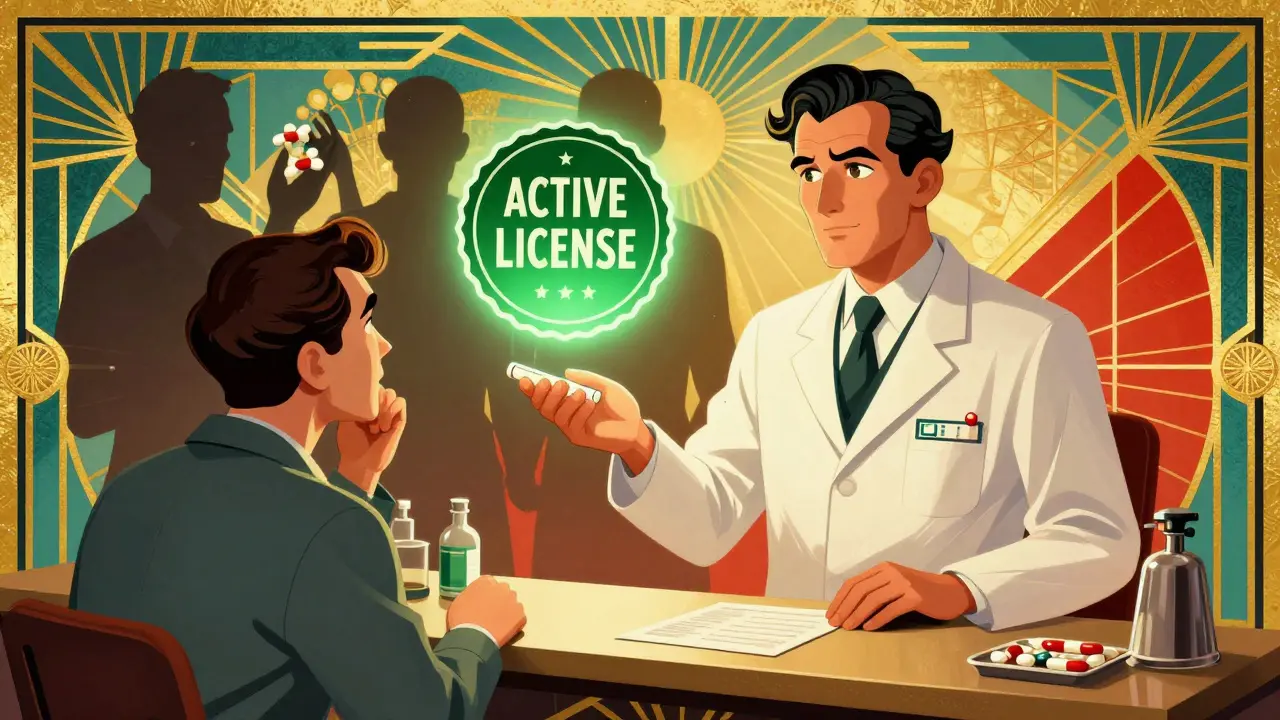
When you walk into a pharmacy, you expect the person behind the counter to be licensed, trained, and accountable. But what if they’re not? In 2023, 47% of disciplinary actions against pharmacists involved practicing with an expired, suspended, or fake license. That’s not just a paperwork issue-it’s a direct threat to your health. Counterfeit drugs, mislabeled prescriptions, and unqualified technicians are real risks when pharmacy licenses aren’t properly verified. State pharmacy boards exist to stop this. And if you’re hiring a pharmacist, running a clinic, or even just picking up medication for a loved one, knowing how to verify a license isn’t optional-it’s essential.
What Are State Pharmacy Boards?
Every U.S. state, plus D.C., Puerto Rico, Guam, and the U.S. Virgin Islands, has its own pharmacy board. These aren’t advisory groups-they’re legal authorities with the power to issue, suspend, or revoke licenses. The first one started in Massachusetts back in 1878. Today, 56 boards oversee about 350,000 pharmacists and 300,000 pharmacy technicians nationwide. Their job? Make sure only qualified, ethical professionals handle your medicine.These boards don’t just approve applications. They track continuing education, investigate complaints, and enforce disciplinary actions. If a pharmacist is caught selling fake drugs, altering prescriptions, or working without a valid license, the board can shut them down. That’s why checking a license isn’t a formality-it’s your first line of defense against dangerous care.
How to Verify a Pharmacy License Online
Every state board has a free online license verification system. You don’t need to pay, call, or mail anything-just go to the official website and search. Here’s how it works:- Go to your state’s pharmacy board website. For example, Maryland’s is mdboardofpharmacy.org, and D.C.’s is dc.gov/health/pharmacy.
- Find the “License Verification” or “Verify a License” link-usually in the top menu or footer.
- Enter at least one identifier: full name, license number, or city. Some states allow you to filter by license type (pharmacist, technician, intern).
- Click search. Results will show the person’s name, license number, issue date, expiration date, and current status.
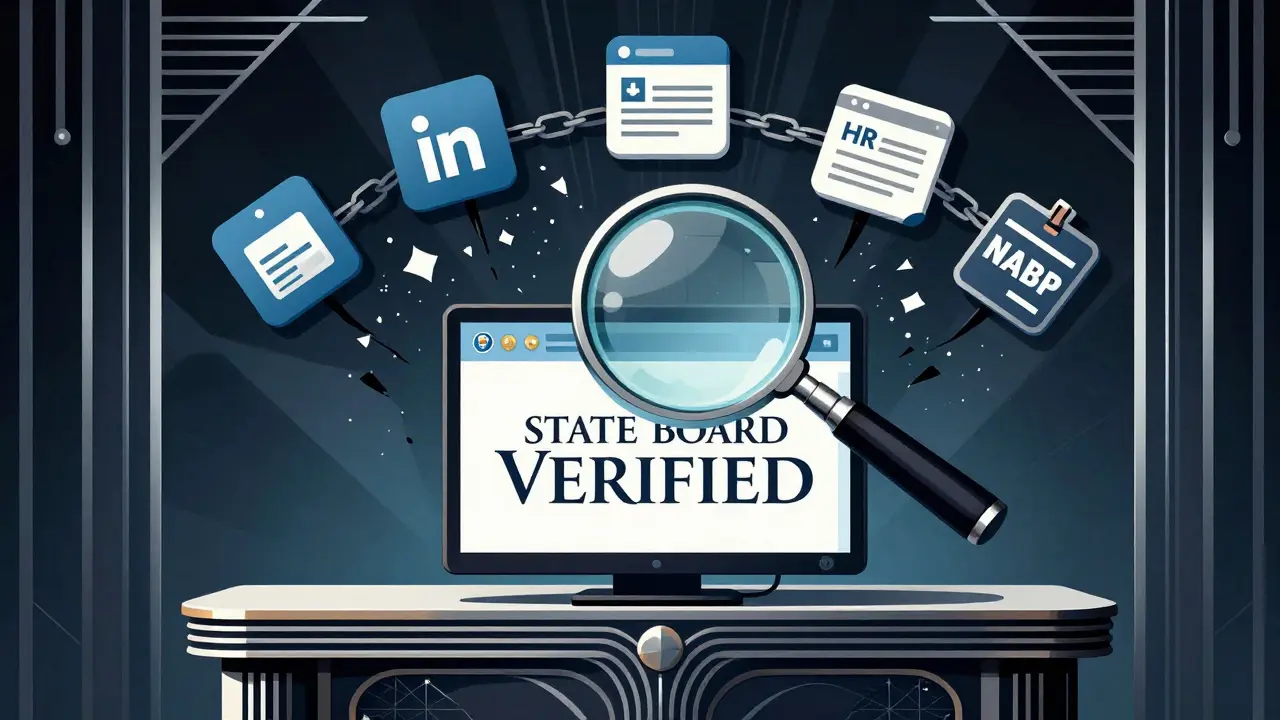
Important: Don’t use third-party sites like LinkedIn, Glassdoor, or even your employer’s HR portal. Only the state board’s official system is legally recognized as the primary source of truth.
What to Look for in License Status
The status tells you everything. Here’s what each one means:- Active - Licensed and in good standing. Safe to work with.
- Suspended - License is paused due to an investigation or violation. Do not trust.
- Revoked - License permanently canceled. This person is no longer allowed to practice pharmacy.
- Probation - Still practicing, but under strict supervision. Ask why.
- Retired - Not practicing. No longer authorized.
- Deceased - License is inactive because the person has passed away.
Some states also show “Inactive” or “Lapsed.” These aren’t necessarily illegal-but they mean the person hasn’t renewed. If they’re still working, that’s a red flag. A license that’s expired for more than 30 days should not be accepted.
Why State Boards Are Better Than Third-Party Services
You might see companies offering “license verification” for a fee. Some even claim to check multiple states at once. But here’s the truth: only state boards have the legal authority to issue and revoke licenses. Third-party services are just aggregators-they pull data from state boards, but they don’t control it.NABP Verify is the most common third-party tool. It costs $59 a year and gives you a digital badge to show your license is current. It’s useful for pharmacists who work across state lines. But even NABP says: “This service does not replace primary source verification.”
Here’s why state boards win:
- Real authority - Only the board can revoke a license. No third party can.
- Up-to-date discipline - If someone was suspended last week, the state board knows before any private service does.
- Free - No hidden fees. No subscriptions. Just direct access.
Employers, hospitals, and insurers now require primary source verification. A 2023 survey found that 78% of hospitals reject credentials unless they’re verified directly through the state board.
Common Problems and How to Fix Them
Even official systems have glitches. Here’s what users run into-and how to handle it:- Name mismatch - “Jennifer Smith” vs. “J. Smith” or “Jennifer Smith-Jones.” Try variations. Use only first and last name. Don’t add middle initials unless you’re sure.
- License still shows as expired - Renewals take time. Maryland says it can take up to three weeks after payment to update. Wait a few days, then check again.
- Website crashes or says “no results” - Try a different browser. Clear your cache. Some states have outdated systems. If it’s been over a week and you’re sure the license is valid, call the board directly.
- Multiple licenses - If a pharmacist works in two states, you need to check both boards. NABP Verify helps here, but don’t rely on it alone.
Pro tip: Always save a screenshot of the verification page. If something goes wrong later, you’ll have proof you checked.
What Happens If You Don’t Verify?
The consequences aren’t just legal-they’re life-threatening.In 2022, a pharmacy in Ohio was shut down after an unlicensed technician filled prescriptions for opioid painkillers. Five patients were hospitalized. One died. The technician had been practicing for 18 months. No one checked his license.
Counterfeit drugs are another silent killer. Fake insulin, fake antibiotics, fake cancer meds-they’re flooding the market. Many come from online pharmacies that don’t require real licenses. But even local pharmacies can be compromised if the staff aren’t properly vetted.
State boards investigate these cases. But they can’t stop them unless someone reports the problem. If you see someone practicing without a visible license, or if a pharmacy won’t let you verify their credentials, speak up. Call the board. It could save a life.
What’s Changing in 2025?
The system is getting better-but slowly. By 2025, 90% of state boards are expected to update license statuses in real time. Right now, there’s a 7- to 14-day lag between when a license is suspended and when it shows online. That gap is dangerous.The Interstate Pharmacy Licensure Compact (IPLC) now includes 23 states, making it easier for pharmacists to work across borders. But even with the compact, you still need to verify through the state where the pharmacy is located.
NABP Verify is expanding to include pharmacy technicians in Q2 2024. That’s good news-but again, it’s not a replacement for state verification. It’s a helper.
Meanwhile, 32 states now require implicit bias training for license renewal. Maryland added this in 2022. It’s not just about skills anymore. It’s about ethics, communication, and equity in care.
What You Should Do Today
If you’re a patient: Ask the pharmacist for their license number. Go to your state’s board website and verify it yourself. It takes 3 minutes.If you’re an employer: Don’t accept resumes, LinkedIn profiles, or HR records. Verify every pharmacist and technician directly through the state board before hiring. Document your verification with a screenshot.
If you’re a pharmacist: Make sure your license is current. Renew early. Update your address. Check your status monthly. And if you’re moving to another state, start the transfer process at least 60 days before you begin work.
Counterfeit drugs and unlicensed practitioners won’t disappear overnight. But every time someone checks a license, they make the system stronger. You’re not just protecting yourself-you’re protecting your community.
Can I verify a pharmacy license for free?
Yes. All 56 U.S. state and territorial pharmacy boards offer free online license verification. You don’t need to pay for a report, subscription, or third-party service. The official state website is the only source you need.
What if the license status says ‘Active’ but I heard the pharmacist was suspended?
There’s often a delay-up to two weeks-between when a license is suspended and when it updates online. If you have reason to believe someone is practicing illegally, contact the state board directly. Don’t rely on the website alone. Some boards also publish disciplinary actions separately on their website under “Enforcement Actions” or “Public Notices.”
Do I need to verify pharmacy technicians too?
Absolutely. Pharmacy technicians can legally fill prescriptions, manage inventory, and interact with patients in most states. They’re not just assistants-they’re part of the care chain. All 56 state boards license and regulate technicians. Verify their status just like you would a pharmacist’s.
What if I’m verifying a license from another state?
You must check the state where the pharmacist is currently practicing-not where they were licensed originally. For example, if a pharmacist from California is working in Florida, verify through the Florida Board of Pharmacy. Even if they’re part of the Interstate Pharmacy Licensure Compact, you still need to confirm their status in the state where the pharmacy is located.
Can I trust NABP Verify instead of checking the state board?
NABP Verify is a useful tool for multi-state practitioners, but it is not a substitute for primary source verification. It’s a secondary aggregator. State boards have direct control over licensing decisions. If a license is revoked, the state board updates first. NABP may lag by days or weeks. Always verify through the state board for legal and safety purposes.
What should I do if I find an unlicensed person practicing pharmacy?
Report it immediately. Contact your state pharmacy board’s complaint line or use their online reporting form. Provide the person’s name, pharmacy location, and any evidence you have (like a photo of their badge or a receipt). Anonymous reports are accepted. Your report could prevent a serious harm or death.
How often should I verify a pharmacist’s license?
Verify at least once a year, and always before hiring. If the pharmacist is new, verify before their first shift. If you work in a hospital or pharmacy chain, set up quarterly checks. License statuses can change unexpectedly-due to investigations, renewals, or disciplinary actions. Don’t assume it’s still valid.
Just verified my pharmacist’s license after reading this-turns out his was lapsed for 47 days. Called the board, they said he’d renewed but it hadn’t updated yet. Saved my ass. Seriously, folks, take 3 minutes. It’s not paranoia, it’s parenting.
My grandma’s on blood thinners. I don’t trust anyone who won’t show me their license number.
Thanks for the wake-up call.
Primary source verification is the only acceptable standard. Third-party aggregators are merely data mirrors-unreliable, outdated, and legally irrelevant. If you’re relying on NABP Verify, you’re not verifying-you’re outsourcing due diligence. Amateur hour.
Really appreciate this breakdown. I’m from India and we don’t have this kind of transparency here. Back home, you just trust the pharmacy because it’s got a sign and a white coat.
But reading this made me realize-medicine isn’t a gamble. It’s a right. Maybe we need to push for something like this where I’m from.
Also, verifying techs? That’s huge. I never thought about them being part of the chain. Thanks for expanding the lens.
Let me tell you what they don’t want you to know. State boards are controlled by Big Pharma. The ‘license verification’ system? A front. The real truth? Pharmacists get suspended, but their licenses are quietly reinstated under new numbers. The board website? Updated once a month-on purpose. They want you to think it’s real-time so you feel safe.
My cousin worked at a chain in Ohio. He saw 12 pharmacists get ‘suspended’ and then reappear under different names six weeks later. They changed their middle initials. That’s how they dodge it.
And NABP? They’re owned by the same people who profit from counterfeit drugs. You think they’d tell you the truth?
Check the board? Sure. But also check the disciplinary logs. Look for names that disappear and reappear. And if you see ‘Inactive’? That’s not a lapse. That’s a ghost.
They’re not protecting you. They’re protecting the system.
There’s something deeply human about this whole thing. We hand over our health to strangers every day. We assume competence. We assume integrity. But this post reminds us that trust isn’t given-it’s verified.
I used to think licensing was bureaucracy. Now I see it as ritual. A quiet promise, written in legal code, that someone else won’t kill you today.
It’s not about compliance. It’s about dignity.
And if we stop checking? We stop caring. And that’s when the real poison starts.
Ugh. So now I have to Google my pharmacist like he’s a dating profile? Next you’ll tell me to check his Spotify playlist for ‘empathy vibes.’
Also, why are we treating pharmacists like they’re all criminals? I mean, sure, some are shady-but most are just overworked people trying to keep 200 scripts straight while a toddler screams for Skittles in the back.
Also, I once Googled my doc and found out he got fined for taking a nap during a surgery. Should I stop going to him? No. So why are we doing this to pharmacists? It’s performative outrage wrapped in a spreadsheet.
It is imperative to underscore the critical importance of primary source verification as the sole legally and ethically defensible method of credential validation. The integrity of public health infrastructure is contingent upon adherence to regulatory protocols established by duly constituted state pharmacy boards. Any reliance upon intermediary platforms constitutes a material deviation from established standards of due diligence and exposes institutions to significant liability. Furthermore, the documented delay in state database updates underscores the necessity of proactive, time-stamped documentation of verification events. This is not a recommendation; it is a professional obligation.
Wow. So now we’re all amateur investigators? Congrats, you just turned your local pharmacy into a federal audit. You think your grandma’s gonna look up ‘Maryland Board of Pharmacy’ on her iPad? She’s gonna hand over her script and say ‘bless you.’
And let’s be real-most of these ‘unlicensed’ cases are just people who forgot to renew because they were working 80 hours a week during the pandemic. You wanna punish them? Or fix the system?
Also, ‘NABP Verify is a tool’? Yeah, and so is a hammer. But you don’t need to swing it every time you see a nail.
You’re not saving lives-you’re just making everyone feel guilty for trusting someone who’s been on the job for 20 years.
And if you think your screenshot proves anything? Good luck explaining that to a judge when the pharmacist gets sued for something you didn’t report.