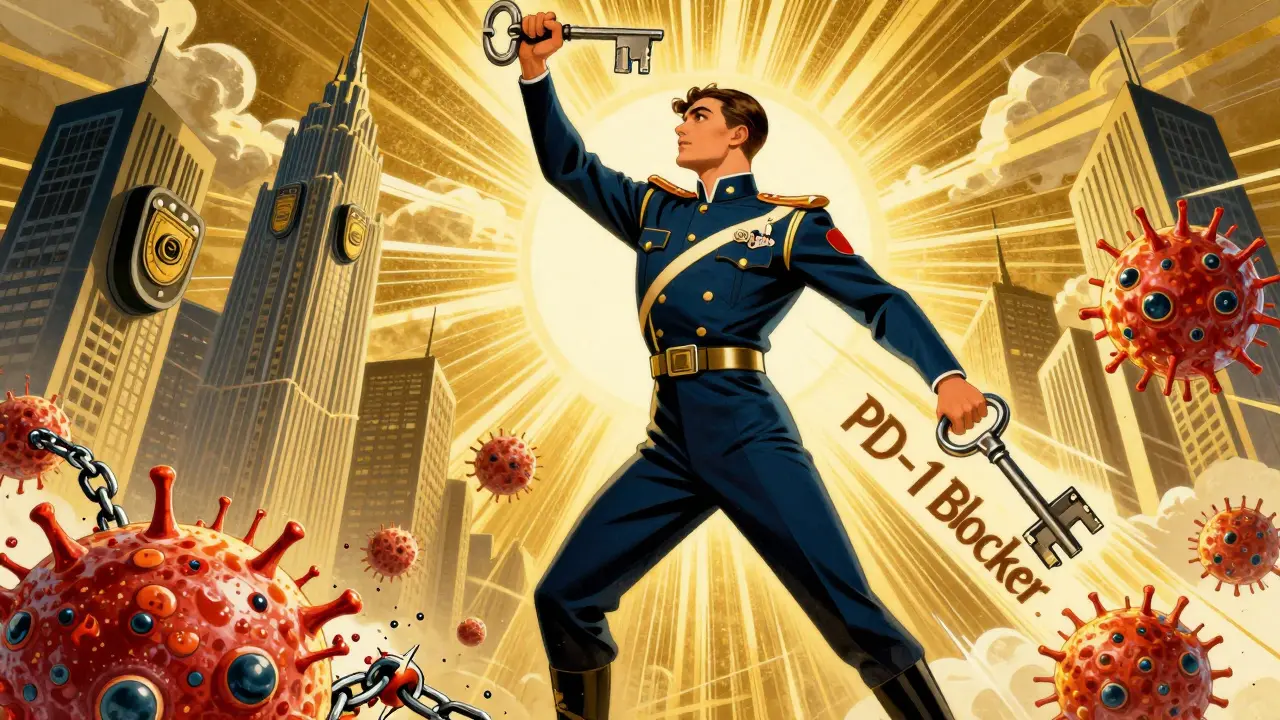
When your body’s own immune system is the best weapon against cancer, why aren’t we using it more effectively? For decades, cancer treatment meant cutting, burning, or poisoning tumors with chemotherapy and radiation. But now, a quiet revolution is happening in oncology - one that doesn’t attack cancer directly, but wakes up the body’s natural defenses. Two therapies, checkpoint inhibitors and CAR-T cell therapy, are at the heart of this shift. They work in completely different ways, yet both are rewriting the rules of how we fight cancer.
What Are Checkpoint Inhibitors?
Imagine your immune system as a car. It has an accelerator - the signals that tell T cells to attack invaders - and a brake. Cancer cells are sneaky. They learn to press that brake, telling your immune system to stand down. Checkpoint inhibitors are drugs that cut those brake lines.
These are monoclonal antibodies - lab-made proteins - that block key proteins on immune cells or cancer cells. The two biggest targets are PD-1/PD-L1 and CTLA-4. Drugs like pembrolizumab (Keytruda) and nivolumab (Opdivo) block PD-1. Ipilimumab (Yervoy) blocks CTLA-4. When these brakes are released, T cells can finally see and kill cancer cells.
The first checkpoint inhibitor, ipilimumab, got FDA approval in 2011 for advanced melanoma. Before that, survival for late-stage melanoma was measured in months. After, some patients lived for years. Not everyone responds - only about 20 to 40% do - but for those who do, the results can be lasting. Some people remain cancer-free a decade later.
But there’s a cost. When you remove the brakes, your immune system can go too far. That’s called an immune-related adverse event (irAE). Common side effects include fatigue, rash, diarrhea, and thyroid problems. In rare cases, it can attack the lungs, liver, or even the brain. Managing these side effects requires doctors who know what to look for - and when to pause treatment.
How CAR-T Cell Therapy Works
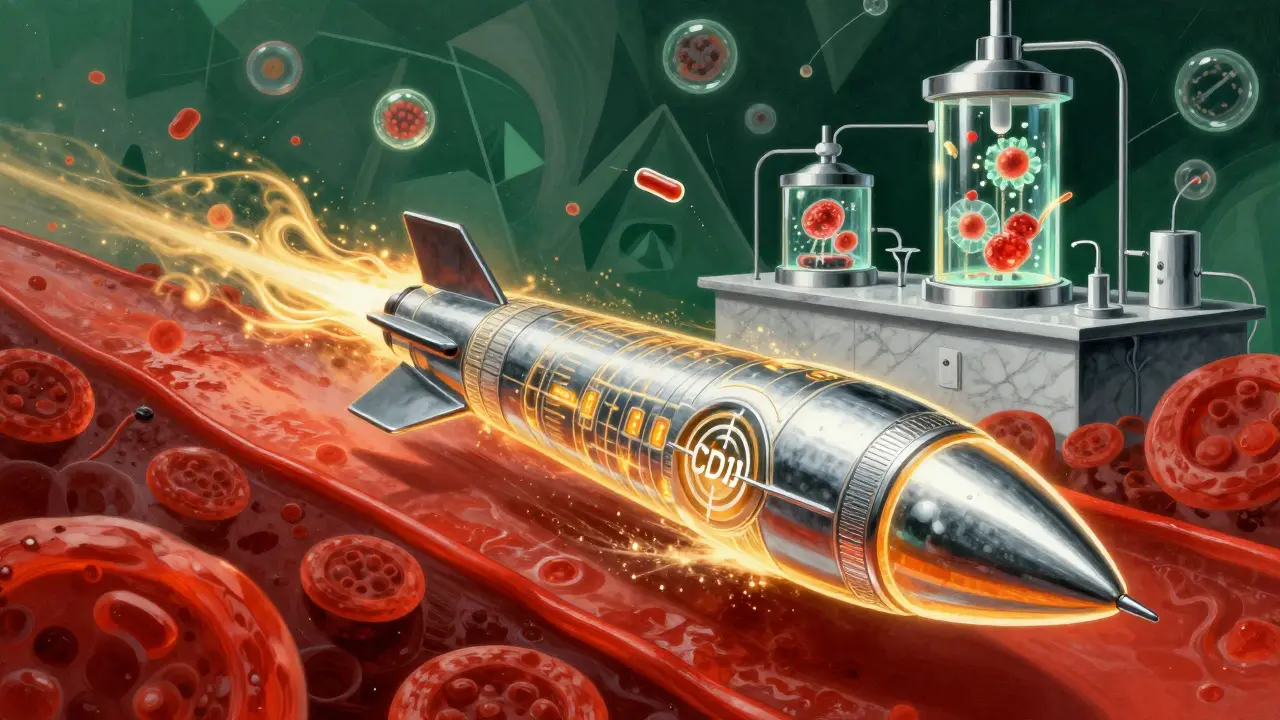
CAR-T therapy is like giving your immune system a custom-made missile. It’s not a drug you swallow or receive through an IV. It’s a living treatment made from your own cells.
Here’s how it works: First, doctors pull blood from the patient and separate out T cells - the soldiers of the immune system. These cells are sent to a lab, where they’re genetically engineered to carry a special receptor called a chimeric antigen receptor (CAR). This CAR is designed to lock onto a specific protein on cancer cells - like CD19 on B-cell leukemia.
Once modified, the CAR-T cells are multiplied in large bioreactors - sometimes into hundreds of millions. Then, after the patient gets a round of chemotherapy to clear space in their immune system, the cells are infused back in. They multiply further inside the body and hunt down cancer cells like guided missiles.
The first CAR-T therapy, tisagenlecleucel (Kymriah), was approved in 2017 for children with relapsed acute lymphoblastic leukemia. In clinical trials, 80% of patients went into complete remission. That’s unheard of in advanced leukemia. For adults with certain types of lymphoma, response rates are similar.
But CAR-T isn’t without danger. About 50 to 70% of patients develop cytokine release syndrome (CRS) - a flood of inflammatory signals that can cause high fever, low blood pressure, and trouble breathing. Up to 40% get neurotoxicity - confusion, seizures, or even coma. These are serious, but manageable in centers with experience. The American Society for Transplantation and Cellular Therapy says a center needs to treat at least 10 to 15 patients to get good at handling these reactions.
Why CAR-T Works Better in Blood Cancers
Why does CAR-T crush leukemia but struggle with lung or breast cancer? It comes down to the battlefield.
Leukemia cells float freely in the blood and bone marrow. They’re easy targets. Solid tumors, like those in the pancreas or colon, are surrounded by a thick wall of scar tissue, immune-suppressing cells, and chemicals that shut down T cells. CAR-T cells can’t get in. Even if they do, they get tired, or worse - they’re turned off by the same checkpoints that block natural T cells.
That’s why response rates for CAR-T in solid tumors are below 10% in most trials. In contrast, for B-cell ALL, complete response rates hit 60 to 90%. For non-Hodgkin lymphoma, it’s 50 to 70%. But for ovarian cancer? Less than 5%.
One reason is the tumor microenvironment. Solid tumors pump out signals that exhaust T cells. They also hide by losing the antigens CAR-T cells are designed to recognize. It’s like the cancer changes its face.
Combining Both Therapies - The Next Big Leap
What if you could combine the best of both worlds? That’s exactly what researchers are doing.
Checkpoint inhibitors wake up the immune system. CAR-T cells bring the firepower. Together, they might overcome the weaknesses of each.
Early trials are testing CAR-T cells that also carry checkpoint-blocking proteins inside them. Instead of giving a patient two separate drugs - one CAR-T and one anti-PD-1 - scientists are engineering the CAR-T cells to make their own PD-1 blocker right at the tumor site. This keeps the drug where it’s needed and avoids the dangerous side effects of giving it systemically.
One study in mice showed this approach cut immune pneumonitis by 42% and boosted tumor-killing by 37%. It’s not just safer - it’s smarter.
Other ideas are in the works: CAR-T cells that secrete IL-12 to attract more immune cells, or ones that block LAG-3 or TIM-3 - two other immune checkpoints. Some labs are even building “off-the-shelf” CAR-T cells from healthy donors, so patients don’t wait weeks for their own cells to be made.
As of March 2024, there are 47 active clinical trials combining CAR-T and checkpoint inhibitors. Sixty-eight percent of them are focused on solid tumors - the hardest targets.
Cost, Access, and the Real-World Divide
These therapies are miracles - but they’re not equally available.
Checkpoint inhibitors cost between $100,000 and $150,000 a year. CAR-T therapy? Around $373,000 to $475,000 per treatment. That’s not just expensive - it’s a barrier. In the U.S., Medicaid patients are 23% less likely to get checkpoint inhibitors than those with private insurance. Black patients are 31% less likely to get CAR-T than White patients.
And it’s not just money. CAR-T requires specialized centers. In the U.S., 87% of CAR-T treatments happen in academic hospitals - even though they make up only 15% of cancer centers. Rural patients often can’t travel for weeks-long treatments. Manufacturing takes 3 to 5 weeks. A patient with aggressive lymphoma might not have that time.
Meanwhile, checkpoint inhibitors are “off-the-shelf.” A pharmacy can ship them. CAR-T is custom-made, one patient at a time. That’s why the global CAR-T market, though only 5% of the $128.4 billion immunotherapy industry in 2022, is projected to grow at 28.3% per year through 2030. The demand is there. The infrastructure isn’t.
What’s Next?
The future of immunotherapy isn’t about choosing between checkpoint inhibitors and CAR-T. It’s about blending them - and making them better.
Researchers are now targeting new checkpoints like PTP1B, an internal brake on T cells. In mouse studies, blocking PTP1B while using CAR-T therapy doubled the number of immune cells inside tumors. That’s a game-changer.
Another idea: making CAR-T cells more persistent. Right now, they often burn out after a few months. Scientists are tweaking the CAR design - swapping CD28 for 4-1BB signaling domains - to make them last longer. Some are adding genes that help T cells survive in harsh tumor environments.
And the goal isn’t just to treat cancer - it’s to cure it. For some, it’s already happening. A child with leukemia who was given CAR-T in 2017 is now a teenager, cancer-free. A man with melanoma treated with checkpoint inhibitors in 2012 still has no signs of disease.
These therapies aren’t perfect. They’re complex, risky, and expensive. But they prove one thing: the immune system, when properly guided, can do what drugs and radiation never could - remember the enemy, and destroy it for good.

Side Effects Compared
| Side Effect | Checkpoint Inhibitors | CAR-T Therapy |
|---|---|---|
| Fatigue | 35-50% | 35-50% |
| Fever | 25-40% | 50-70% |
| Rash | 30-40% | 10-20% |
| Colitis (intestinal inflammation) | 10-15% | 5-10% |
| Hypothyroidism | 5-10% | Less than 5% |
| Cytokine Release Syndrome (CRS) | 1-5% | 50-70% |
| Immune Effector Cell-Associated Neurotoxicity (ICANS) | 1-3% | 20-40% |
| Immune Pneumonitis | 5-10% | 1-5% |
Frequently Asked Questions
Are checkpoint inhibitors and CAR-T therapy the same thing?
No. Checkpoint inhibitors are drugs that block signals cancer uses to hide from the immune system. They’re given through an IV and work on any T cell in the body. CAR-T therapy is a personalized treatment where your own T cells are removed, genetically changed to target cancer, multiplied, and put back in. It’s a living drug - not a pill or injection.
Which cancers respond best to CAR-T therapy?
CAR-T works best in certain blood cancers: B-cell acute lymphoblastic leukemia (ALL), diffuse large B-cell lymphoma, follicular lymphoma, and multiple myeloma. In these cancers, complete response rates can reach 60-90%. For solid tumors like lung, breast, or colon cancer, success is still very limited - usually under 10%.
Why is CAR-T therapy so expensive?
Each CAR-T treatment is custom-made for one patient. It takes 3 to 5 weeks to collect cells, engineer them in a lab, grow billions of them, test them for safety, and ship them back. The process needs highly trained staff, sterile labs, and complex equipment. That’s why it costs $373,000 to $475,000. Checkpoint inhibitors are mass-produced drugs, so they’re cheaper.
Can you get CAR-T therapy if you live in a rural area?
It’s hard. CAR-T is only available at specialized centers - usually big academic hospitals. In the U.S., 87% of treatments happen at these centers, even though they’re only 15% of all cancer facilities. Patients often need to travel for weeks, stay near the hospital for monitoring, and have strong support systems. Access is still unequal, especially for low-income and minority patients.
Do these therapies work for everyone?
No. Checkpoint inhibitors help 20-40% of patients in responsive cancers like melanoma or lung cancer. Many don’t respond because their tumors don’t have enough immune cells to begin with. CAR-T works well in blood cancers but rarely in solid tumors. Even when it works, some patients relapse because the cancer changes or the CAR-T cells wear out. Research is focused on making them work for more people.
What’s the biggest challenge ahead for immunotherapy?
Making these treatments work for solid tumors - and making them accessible. Right now, CAR-T and checkpoint inhibitors help a small group. The goal is to extend that to everyone. That means improving how CAR-T cells survive in tumors, reducing side effects, cutting costs, and fixing the deep inequalities in who gets treated.
What to Watch For Next
The next five years will see more “smart” CAR-T cells - ones that can switch on only inside tumors, or that carry multiple targeting receptors. Allogeneic (off-the-shelf) CAR-T products from healthy donors are entering late-stage trials. If they work, they could cut costs and wait times dramatically.
Meanwhile, new checkpoint targets like LAG-3 and TIM-3 are being added to drug pipelines. Drugs blocking these are already approved for melanoma and may soon be combined with CAR-T.
One thing is clear: cancer treatment is no longer just about killing cells. It’s about teaching the body to fight smarter. And for the first time, we’re seeing real, lasting cures - not just temporary remissions. The revolution isn’t coming. It’s already here.
this is all just big pharma hype anyway they just wanna keep us sick so we keep buying their drugs
i read this whole thing and still dont get how its different from just letting your body heal itself
The precision of these therapies is staggering-checkpoint inhibitors essentially disarm molecular camouflage, while CAR-T reprograms your immune soldiers with bespoke targeting systems. It’s not just medicine anymore; it’s bioengineering poetry.
look i get it immunotherapy sounds cool but why is it so damn expensive like come on we’re talking about cells here not rocket science
i think its amazing but why cant we make it cheaper for everyone 🤔
The data on CAR-T response rates in B-cell malignancies is genuinely transformative. But as the post notes, the tumor microenvironment in solid tumors is a fortress-T cells get exhausted, antigens vanish, and suppressive signals overwhelm them. The next frontier is engineering CAR-T cells to resist exhaustion via 4-1BB co-stimulation or secreting IL-12 to remodel the niche. It’s not magic-it’s iterative biology.
It’s fascinating how different cultures approach this. In the UK, we’re cautious about cost and equity, while in the US, innovation races ahead. But both sides agree: if we can make this work for solid tumors, it changes everything. I hope the next decade brings balance, not just breakthroughs.
this whole thing is just a distraction from real healthcare problems like clean water and basic meds why are we wasting money on million dollar cell therapies when people can't even get insulin
the 80% remission rate in pediatric ALL sounds great until you realize 20% still die and half the survivors get cytokine storms. this isn't a cure it's a gamble with a 50% chance of hospitalization
they say it's revolutionary but i bet the FDA got pressured by lobbyists and the real side effects are buried in appendix E. remember thalidomide? this is just the same thing with better PR
the idea of CAR-T cells that make their own checkpoint blockers?? 🤯 that’s like giving your immune system a Swiss Army knife. if this works, it’s the future. i’m so here for it 💪