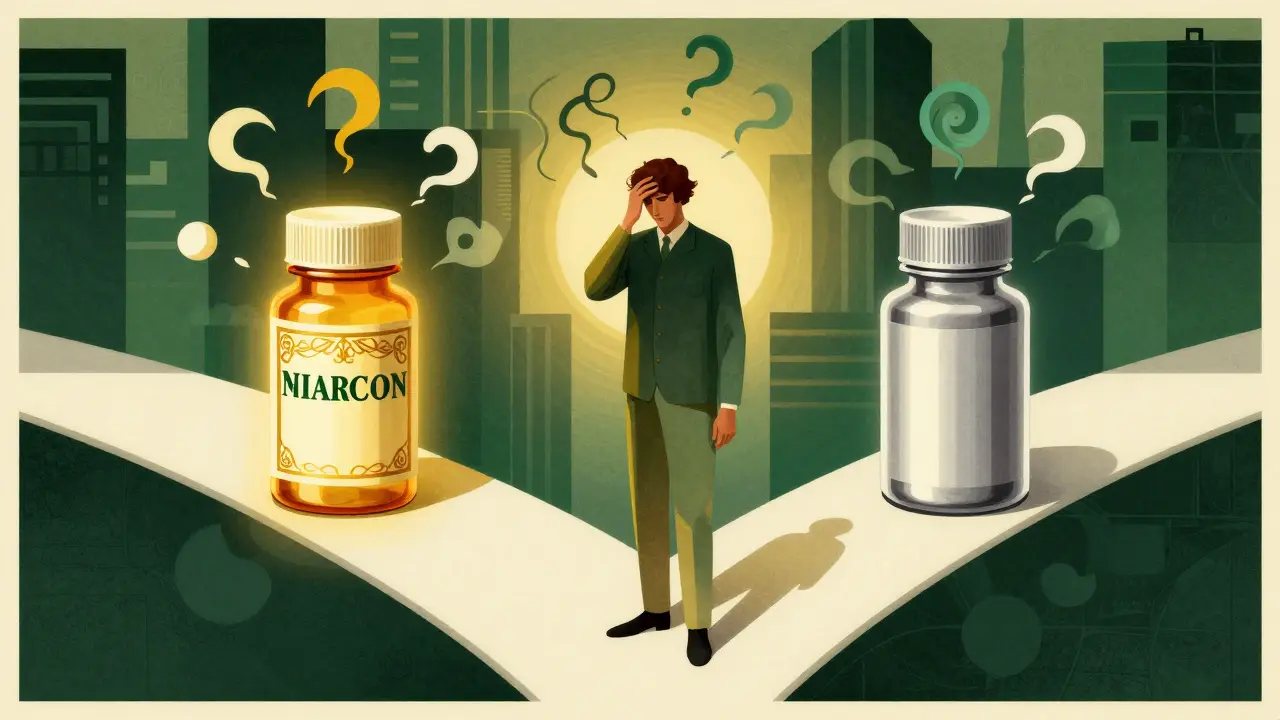
Imagine being told your prescription is too expensive and that a cheaper alternative exists. You agree to switch, but within days, you feel different. Maybe the headache returns, or the energy dip hits harder. Your instinct screams that the new pill isn't working. But science says it should. This disconnect between what you feel and what the data shows is exactly where Patient support groups are organized communities where patients exchange information, address concerns, and collectively advocate for better understanding of generic drugs. come in.
In 2022, generics made up 90% of all prescriptions filled in the U.S., yet they accounted for only 12% of total spending. That’s a massive saving for everyone. But here’s the catch: about 10% of patients still resist switching. Why? Because trust isn’t built on statistics alone. It’s built on shared stories. When real people talk about their wins, their fears, and their adjustments, those numbers start to make sense.
The Real Reason Patients Hesitate to Switch
You’ve probably heard that generic drugs are just as good as brand-name ones. And technically, you’re right. The FDA requires generics to prove bioequivalence, meaning they must deliver 80-125% of the same active ingredient into your bloodstream compared to the brand name. For most people, this tiny range makes zero difference.
But “most” doesn’t always include you. If you have a sensitive condition like epilepsy or bipolar disorder, even small variations can feel huge. A 2009 study published in PubMed Central found that 29% of patients switching from brand to generic antiepileptics reported reduced effectiveness-even though objective tests showed no change. That gap? Often called the nocebo effect. You expect it not to work, so your body reacts accordingly.
This is where peer experience becomes powerful. In Facebook groups like "Generic Medication Users United" (which has over 14,300 members), 68% of new users express concern about efficacy changes. But after three months of reading others’ journeys, 82% report increased satisfaction. People aren’t convinced by brochures-they’re convinced by someone who said, “I felt weird at first too, but it passed.”
How These Groups Actually Work
Not all support groups are created equal. Some thrive because they combine personal stories with professional oversight. Others spiral into misinformation if left unchecked. According to a PMC study, 34% of online discussions about generic meds contained inaccurate claims-until pharmacists stepped in, dropping that number to just 8%.
Here’s what effective groups usually look like:
- Moderated forums where healthcare pros validate shared experiences
- Condition-specific focus areas (e.g., diabetes, hypertension)
- Buddy systems pairing newcomers with seasoned members
- Quarterly updates aligned with FDA guidelines
Take the Generic Drug Patient Alliance, for example. They maintain a library of 157 condition-specific FAQ documents updated every quarter. Members cross-reference their own symptoms with peer-reviewed studies, including a 2019 JAMA Internal Medicine analysis of 47 clinical trials confirming therapeutic equivalence across cardiovascular meds.
These groups don’t replace doctors. They complement them. Think of them as emotional scaffolding while your body adjusts to a new medication.
Why Peer Stories Outperform Brochures
FDA research from 2022 showed something surprising: personalized experience-sharing increased acceptance of generics by 32%, compared to standard informational brochures. That’s not close. It’s transformative.
Brochures give facts. Stories give context. When Dr. Vineet Arora led the IMPROVE project at University of Chicago Medicine, she discovered that patient narratives could shift provider attitudes. Her team included 14 investigators from top medical institutions, and one key finding stood out: when patients saw others successfully managing chronic conditions on generics, their confidence jumped by 27%.
And let’s be honest-who do you trust more? A sterile pamphlet or a mom who says, “My blood pressure dropped two weeks after switching, and I haven’t gone back since”? Especially among disadvantaged populations, culturally tailored support groups proved 40% more effective than general education campaigns, according to CDC research.

The Risks of Going Unmoderated
Let’s get real for a second. Not every group is helpful. Reddit’s r/Pharmacy community had a thread titled “Switched to generic statin and felt different - am I crazy?” With 472 comments, 89% of respondents admitted initial concerns-but 76% said symptoms resolved within two weeks. One user cited FDA bioequivalence standards to reassure others. Solid stuff.
Now compare that to an unmoderated Facebook group in 2019 where side effects were wrongly blamed on generic substitution instead of disease progression. Seventeen members stopped taking essential meds. That’s dangerous.
Without structure, anecdote turns into alarmism. That’s why expert consensus matters. Dr. Aaron Kesselheim of Harvard Medical School warned in a 2020 JAMA commentary that “unverified patient anecdotes can reinforce misconceptions about generic inferiority.” He recommended structured frameworks-not open mic sessions.
What Makes a Group Worth Joining?
If you’re thinking about joining a patient support group, ask yourself these questions:
- Is there a pharmacist or clinician involved?
- Do they reference FDA standards or peer-reviewed studies?
- Are success stories balanced with realistic timelines?
- Do they encourage dialogue with your doctor rather than replacement?
A good sign? Look for groups affiliated with organizations like the American College of Physicians (ACP) or the Association for Accessible Medicines (AAM). ACP reports that 78% of effective groups incorporate healthcare professionals to validate shared experiences. AAM estimates these groups influence around 18% of hesitant patients’ decisions to switch.
Also check response times. CDC-recognized groups maintain 24-hour pharmacist response windows. Unaffiliated ones average 72+ hours. Time matters when you’re dealing with health anxiety.

Who Benefits Most From These Groups?
Chronic disease management is where these groups shine brightest. Hypertension, diabetes, asthma-conditions requiring long-term adherence see the biggest gains. Why? Because consistency builds trust. Once you ride out the adjustment period, you stick with it.
Data backs this up. Patients initiated on generics show 15-20% higher medication adherence rates than those on brand names, largely due to lower costs. That translates directly into better outcomes, especially for folks juggling multiple prescriptions.
Demographics matter too. Medicare beneficiaries lead participation at 58%, followed by commercially insured patients at 33%. Rural communities benefit disproportionately, with CDC noting particular effectiveness where transportation barriers limit access to care.
Looking Ahead: Where Support Is Headed
The future looks promising-and integrated. In 2023, the FDA launched the Patient Experience Metrics program, formalizing how support group insights feed into regulatory decisions. Meanwhile, GDUFA III allocates $4.7 million specifically for patient education initiatives.
Big pharma isn’t ignoring this trend either. By 2027, ASPE projects optimized support could push generic substitution rates from 87% to 95%, unlocking an extra $4 billion in savings. Major pharmacy benefit managers are already building API connections to support platforms for real-time adherence monitoring.
Still, caution remains necessary. Without standardized quality metrics, proliferation of unvetted channels risks undermining confidence. That’s why FDA accreditation standards for medically significant groups are now under discussion.
Are generic medications really just as effective as brand-name drugs?
Yes. Generics must meet strict FDA bioequivalence standards, delivering 80-125% of the same active ingredient as brand names. For most people, this small variation causes no noticeable difference. However, some individuals may experience temporary side effects during transition, which often resolve within two weeks.
Can patient support groups help me decide whether to switch to a generic?
Absolutely. Studies show that hearing from others who’ve made the switch increases confidence by up to 32%. Look for moderated groups with healthcare professionals verifying claims, such as those affiliated with the American College of Physicians or the Association for Accessible Medicines.
What should I do if I feel worse after switching to a generic?
First, talk to your doctor before stopping any medication. Many early discomforts are part of the adjustment phase and fade within 1-2 weeks. Share your experience in a trusted support group-you’ll likely find others went through the same thing and bounced back.
Are online support groups safe places to discuss medication changes?
Only if they’re properly moderated. Research shows 34% of unmonitored online discussions contain inaccurate claims. Seek groups with pharmacist verification, regular content reviews, and clear disclaimers encouraging consultation with licensed providers.
How much money can I save by using generic medications?
Generics save patients roughly $313 billion annually in the U.S. While individual savings vary, many users report cuts of 80-85% off original prices. Even modest switches add up significantly over time, especially for chronic conditions needing lifelong treatment.