
Bupropion Drug Interaction Checker
Bupropion (Zyban) is an effective smoking cessation medication, but dangerous interactions can occur with certain other drugs. This tool checks for potentially harmful interactions with your current medications.
Always consult your doctor before starting any new medication. This tool is for informational purposes only and not a substitute for professional medical advice.
Quitting smoking isn’t just about willpower. For many people, it’s a biological battle. That’s where bupropion comes in - a medication originally designed for depression but now one of the most trusted tools for breaking nicotine addiction. Marketed as Zyban for smoking cessation, it doesn’t replace nicotine like patches or gum. Instead, it changes how your brain responds to cravings. But here’s the catch: if you’re taking other meds, bupropion can interact in dangerous ways. Ignoring these interactions could mean more than just a failed quit attempt - it could put your health at risk.
How Bupropion Actually Helps You Quit Smoking
Bupropion works differently than nicotine replacement therapy. While patches and lozenges flood your system with nicotine to ease withdrawal, bupropion goes straight to the source: your brain’s reward system. It blocks the reuptake of dopamine and norepinephrine, two chemicals that get hijacked by nicotine. When you smoke, your brain gets a rush. When you quit, it crashes. Bupropion smooths out that crash before it even starts.
Studies show it cuts cravings by about 40% compared to placebo. In clinical trials, about 19-23% of people using bupropion stayed smoke-free after six months - that’s two to three times higher than those on a sugar pill. It’s especially helpful for people who’ve tried nicotine products and still couldn’t quit, or those who don’t want to use any form of nicotine at all.
But it doesn’t work overnight. Unlike nicotine gum that eases cravings within minutes, bupropion takes time. You need to start taking it 1-2 weeks before your quit date. This gives your body enough time to build up therapeutic levels. Most people begin with 150 mg once daily for three days, then switch to 150 mg twice daily, at least eight hours apart. The full course usually lasts 7-9 weeks. Skipping this ramp-up period? That’s one reason people say it “didn’t work.”
Key Drug Interactions: What You Must Avoid
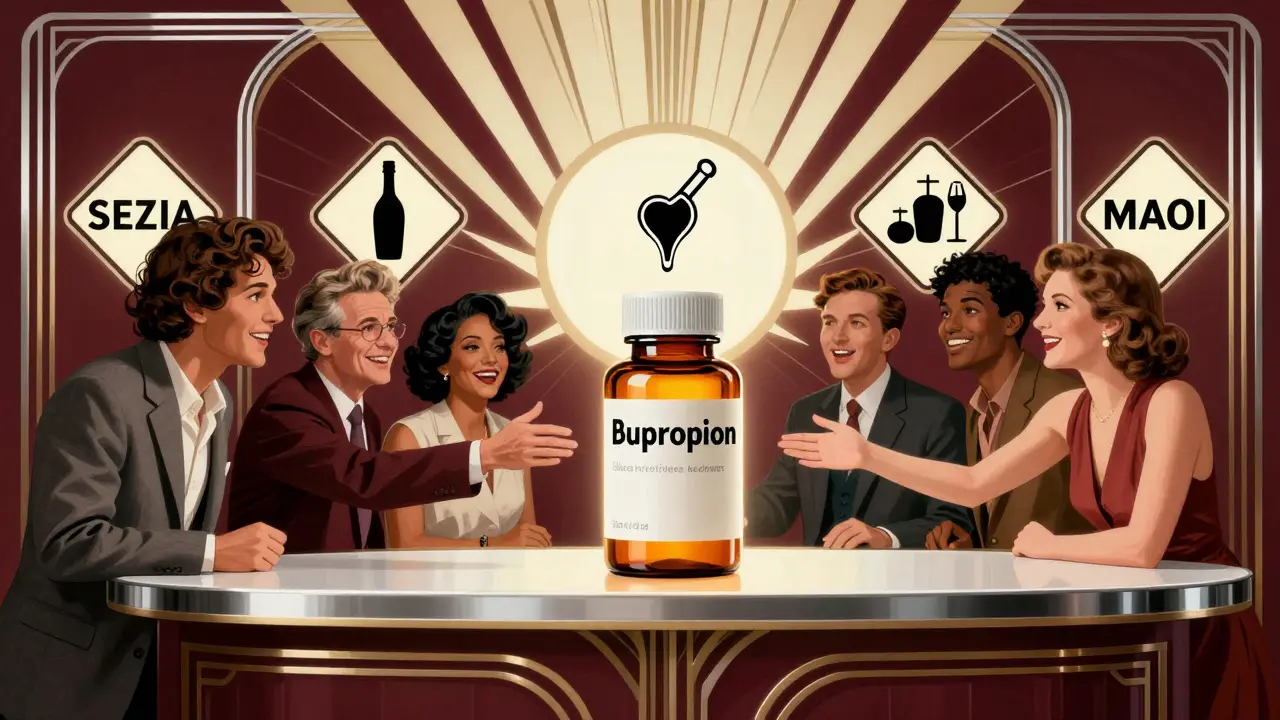
Not all medications play nice with bupropion. Some combinations can cause serious side effects - even seizures. Here’s what you need to know:
- MAOIs (monoamine oxidase inhibitors): These are older antidepressants like phenelzine or tranylcypromine. Taking bupropion within 14 days of stopping an MAOI can trigger a dangerous spike in blood pressure, serotonin syndrome, or seizures. This is an absolute no-go. If you’ve ever been on an MAOI, wait at least two weeks before starting bupropion.
- Varenicline (Chantix): You might think combining two smoking cessation drugs would double your success. But the FDA warns against this. While some studies say it’s safe, others show increased risk of mood changes, agitation, and suicidal thoughts. Most doctors avoid this combo unless under strict supervision.
- Other antidepressants: SSRIs like sertraline or fluoxetine aren’t off-limits, but they can raise your seizure risk slightly. If you’re already on an antidepressant, your doctor needs to check for overlapping effects. Bupropion doesn’t affect serotonin much, but mixing it with drugs that do can tip the balance.
- Alcohol and stimulants: Heavy drinking increases seizure risk, especially if you’re already prone to them. Same goes with ADHD meds like Adderall or street drugs like cocaine. Even moderate alcohol use while on bupropion can make insomnia worse - and sleep trouble is already one of the top reasons people quit taking it.
- CYP2B6-metabolized drugs: Bupropion is broken down by a liver enzyme called CYP2B6. If you’re taking medications that affect this enzyme - like methadone, ketamine, or certain HIV drugs - your bupropion levels can spike or drop unpredictably. This is why genetic testing is becoming more common in addiction clinics. About 25% of people have a slower version of this enzyme, meaning they’re more likely to experience side effects.
Who Shouldn’t Take Bupropion at All
It’s not just about drug interactions - some people shouldn’t use bupropion because of their health history:
- History of seizures: Even one seizure in your past makes bupropion risky. The baseline seizure risk is low - about 1 in 1,000 - but it jumps sharply if you have epilepsy, a brain injury, or a history of alcohol withdrawal seizures.
- Eating disorders: People with anorexia or bulimia have a higher chance of seizures on bupropion. The exact reason isn’t clear, but it’s strong enough that the FDA lists this as a hard contraindication.
- Allergy to bupropion: If you’ve ever had a rash, swelling, or trouble breathing after taking it, don’t try again.
- Current use of other bupropion products: You can’t take Zyban and Wellbutrin at the same time. They’re the same drug. Doubling up raises your risk of side effects without adding benefit.

Side Effects: What Most People Experience
Not everyone has bad reactions, but side effects are common enough that nearly 30% of users stop taking it before finishing the course. The most frequent complaints:
- Insomnia: Affects about 24% of users. It’s not just trouble falling asleep - some people wake up at 3 a.m. and can’t go back down. The fix? Take your second dose before 5 p.m. and avoid caffeine after noon.
- Dry mouth: Around 12% report this. Chewing sugar-free gum or sipping water helps more than you’d think.
- Headaches: About 9% get them, usually mild and short-lived. Over-the-counter painkillers are fine unless you’re on other meds that interact.
- Nausea: Happens in 13% of users. Taking bupropion with food cuts this down significantly.
- Weight changes: Unlike quitting with nicotine patches (where weight gain is common), many users report little to no weight gain - or even slight weight loss. That’s why some people prefer it.
One surprising thing? Most side effects fade after the first two weeks. If you’re struggling with sleep or nausea, stick it out. The payoff - staying smoke-free - is worth it.
Real User Stories: What People Actually Say
Online forums like Reddit and Drugs.com have over 1,200 reviews. The split is pretty even - about half say it saved their life, half say it made things worse.
One user wrote: “Zyban eliminated my cravings completely after 10 days. I didn’t miss smoking at all.” Another said: “I lost 12 pounds in two months. My sister gained 20 when she quit with patches.”
But the complaints are loud too: “Tried Zyban twice - both times got severe insomnia. Quit after two weeks.” “Didn’t work quickly enough. My cravings were unbearable before the drug kicked in.”
Here’s the truth: bupropion isn’t magic. It’s a tool. If you start it too late, you’ll feel overwhelmed. If you skip doses, it won’t build up. If you drink too much, you’re inviting risk. But if you follow the plan - start early, take it consistently, avoid bad combos - your odds of success jump dramatically.
Cost and Accessibility: Why It’s Still Popular
Bupropion’s biggest advantage? Price. A 30-day supply of generic bupropion SR costs around $35 out-of-pocket. Compare that to varenicline (Chantix), which runs $550 or more. Even with insurance, many plans still make bupropion the first-line choice because it’s cheaper and just as effective for many people.
In the U.S., 18.7% of quit attempts in 2022 involved bupropion - either alone or with nicotine patches. It’s especially popular among people with depression. About 35% of those taking antidepressants for depression who smoke are prescribed bupropion for quitting. That’s because it treats both conditions at once.
And it’s not just for cigarettes anymore. New research shows bupropion helps with vaping cessation too. The same brain pathways are involved. The CDC is now updating its guidelines to include e-cigarette users in bupropion recommendations.
What’s Next? The Future of Bupropion
The field is evolving. In 2023, the FDA approved a new combo - bupropion with a nicotine patch. Early results show 31% quit rates at six months, compared to 23% with bupropion alone. That’s a big jump.
Researchers are also testing a new version of bupropion with a lower seizure risk. It’s still in trials, but early data looks promising.
And personalized medicine is coming. Genetic tests can now tell if you’re a slow metabolizer of bupropion. If you are, your doctor might lower your dose to avoid side effects. This isn’t routine yet - but in five years, it might be standard.
One thing’s clear: bupropion isn’t going away. It’s affordable, effective, and works where other drugs don’t. The key is using it right - and knowing what not to mix it with.
What to Do If You’re Considering Bupropion
Don’t self-prescribe. Talk to your doctor. Bring a full list of everything you take - supplements, OTC meds, even herbal teas. Tell them about your medical history: seizures, eating disorders, mental health, alcohol use.
If you’re cleared to start:
- Set your quit date 1-2 weeks ahead.
- Start with 150 mg once daily for three days.
- Switch to 150 mg twice daily (morning and early afternoon).
- Avoid alcohol and caffeine after 2 p.m.
- Take it with food to reduce nausea.
- Don’t stop suddenly - taper only if your doctor says so.
And if you feel worse - more anxious, depressed, or have strange thoughts - call your doctor immediately. These aren’t normal side effects. They’re warning signs.
Can I take bupropion if I’ve had a seizure before?
No. If you’ve ever had a seizure - even one time - bupropion is not safe for you. The risk of another seizure increases significantly with this medication. Talk to your doctor about alternatives like varenicline or behavioral therapy.
How long does it take for bupropion to start working?
It takes 7-10 days for bupropion to build up in your system. That’s why you need to start taking it 1-2 weeks before your quit date. If you wait until the day you quit to start, you’ll likely struggle with intense cravings. Don’t rush it - the timing matters.
Is bupropion better than nicotine patches?
It depends. Nicotine patches help with physical withdrawal. Bupropion targets the brain’s craving response. Studies show similar quit rates at six months - around 17-20%. But bupropion is better if you want to avoid nicotine entirely, have depression, or are worried about weight gain. Patches are better if you need immediate relief from cravings.
Can I drink alcohol while on bupropion?
It’s not recommended. Alcohol lowers your seizure threshold, and bupropion already raises that risk. Even moderate drinking can make insomnia worse. If you’re trying to quit smoking, cutting alcohol helps - it’s one of the biggest triggers for relapse.
What if bupropion doesn’t work for me?
You’re not alone. About 30% of users don’t respond. That doesn’t mean you’ll never quit. Try varenicline, nicotine replacement, or a combination of both. Behavioral support - like counseling or quitlines - can double your success rate. Don’t give up. Try a different approach.
Really appreciate this breakdown. I’ve been on bupropion for 6 months now, quit smoking cold turkey after 15 years, and honestly? It didn’t feel like a battle-it felt like my brain finally stopped lying to me.
People think quitting is about willpower, but no-it’s neurochemistry. This med doesn’t mask cravings, it rewires the narrative. I used to think, ‘One cigarette won’t hurt.’ Now? That voice is gone. Not because I’m strong. Because my dopamine isn’t screaming for a fix anymore.
Side effects? Yeah, insomnia for the first two weeks. Took my second dose at 3 p.m. instead of 5, cut caffeine after noon, and boom-sleep came back. Dry mouth? Chewing gum helped more than I expected.
And honestly? The weight thing. I lost 8 pounds. Not because I was dieting. Just… no more food-as-reward. It’s weird how habits stack.
If you’re on the fence, start early. Don’t wait until quit day. Let it build. And please, talk to your doctor about every med you’re on. I was on a low-dose SSRI-my prescriber checked for overlap. Smart move.
This isn’t magic. But it’s science. And science, when used right, is powerful.
Y’all are too soft. If you can’t quit smoking without a drug, you’re weak. No one in my family ever needed bupropion. We just said ‘no’ and stuck to it.
These meds are just Big Pharma’s way of making money off addiction. You think your brain needs help? It’s not broken. You’re just lazy.
And don’t get me started on mixing it with antidepressants. You’re just trading one dependency for another. Grow a spine.
lol i tried zyban and got so much insomnia i was up at 3am scrolling tiktok for 3 weeks straight
also i drank 2 beers one night and almost had a seizure (jk lol but like… i was scared)
still quit tho. 2 years smoke free. worth the weird brain vibes
I’ve been a pharmacist for 12 years, and I’ve seen this play out too many times.
Bupropion works best when it’s part of a plan-not a magic bullet. People think, ‘I’ll take this and just quit tomorrow.’ That’s not how it works.
The real win isn’t just the med-it’s pairing it with counseling, setting a quit date, avoiding triggers. I’ve had patients who quit smoking and never touched bupropion because they found a quitline and a support group. That’s the gold standard.
And yes, the cost difference between bupropion and Chantix is insane. Insurance should cover both, but they don’t. That’s a system failure, not a patient failure.
so like… bupropion
idk
maybe it works
or maybe its just placebo
who even knows anymore
Just wanted to say-this post saved my life.
I was on the verge of giving up after three failed attempts. Then I read the part about starting bupropion two weeks before quitting. I did it. Took it slow. Didn’t drink. Took it with food. And boom-day 10, I didn’t even think about smoking.
Also, the insomnia? Totally worth it. I sleep like a baby now. No more midnight cravings.
You’re not broken. You’re just using the wrong tool. This one works. Trust the process.
And if you’re scared to talk to your doctor? Bring this post. I did. They were impressed.
You got this. 💪
Did you know the FDA approved bupropion in 1989 but didn’t approve it for smoking until 1997? That’s 8 years of silence. Why? Because they were pressured by Big Tobacco.
And now they’re pushing combos with nicotine patches? That’s not progress-that’s a trap. You think they want you to quit? No. They want you to use MORE drugs.
Genetic testing? That’s how they track you. CYP2B6? That’s a backdoor. They’re building a database.
And don’t get me started on vaping. The CDC changed guidelines because they’re being funded by pharmaceutical lobbyists.
Wake up. This isn’t medicine. It’s control.
It’s funny how we treat quitting smoking like a moral failure.
What if addiction isn’t about weakness? What if it’s about trauma? About loneliness? About systems that don’t care if you live or die?
Bupropion doesn’t fix those things. But it buys you time. Time to find a therapist. Time to rebuild your life. Time to realize you’re not a bad person for needing help.
I used to think I had to suffer to be worthy of quitting.
Turns out, I just needed a little chemical grace.