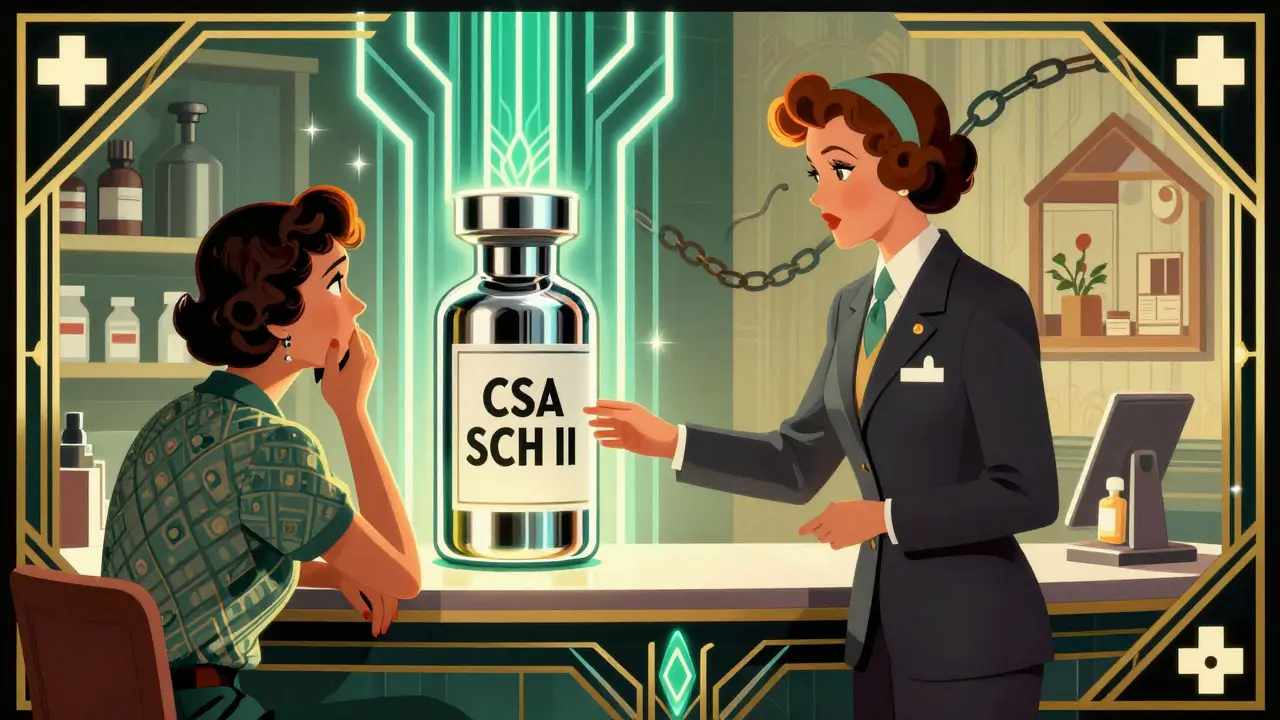
When you pick up a prescription at the pharmacy, the label on the bottle might look like any other - name, dosage, instructions. But if it’s a controlled substance, that label carries hidden rules. It’s not just about how often to take it. It’s about controlled substance labels and the federal system that controls every step of its journey - from manufacturer to your medicine cabinet. These rules aren’t arbitrary. They’re based on science, abuse potential, and decades of policy. And if you’re a patient, a caregiver, or a healthcare worker, understanding them can save time, prevent errors, and even protect your health.
What Makes a Drug a Controlled Substance?
Not all prescription drugs are treated the same under U.S. law. Only those classified as controlled substances fall under the Controlled Substances Act (CSA), passed in 1970. This law groups drugs into five schedules, based on three key factors: their potential for abuse, whether they have accepted medical use, and how likely they are to cause dependence - physical or psychological. The DEA, or Drug Enforcement Administration, manages this system. But they don’t decide alone. The FDA and the Department of Health and Human Services review scientific data before any drug gets scheduled. That’s why some drugs, like oxycodone or Adderall, are tightly controlled, while others, like certain cough syrups, are easier to get. The system was designed to create a “closed loop” - so every pill, every prescription, every refill is tracked. Manufacturers, pharmacies, and doctors must all register with the DEA to handle these drugs.The Five Schedules Explained
The schedule number tells you the risk level. Lower numbers mean higher risk. Here’s how they break down:- Schedule I: No accepted medical use. High abuse potential. Examples: heroin, LSD, marijuana (at the federal level). These can’t be prescribed. Ever.
- Schedule II: High abuse risk, but accepted medical use. These are powerful - think fentanyl, oxycodone, morphine, Adderall, and methamphetamine. Prescriptions can’t be refilled. You need a new one each time. In most states, they must be written on special tamper-resistant paper. Electronic prescriptions are allowed in some cases, but strict rules apply.
- Schedule III: Moderate to low abuse potential. These include hydrocodone with acetaminophen (like Vicodin), ketamine, and some anabolic steroids. Up to five refills are allowed within six months. Electronic prescriptions are standard.
- Schedule IV: Low abuse potential. Benzodiazepines like Xanax and Valium, sleep aids like Ambien, and tramadol fall here. Same refill rules as Schedule III: five refills in six months. Easy to prescribe electronically.
- Schedule V: Lowest risk. These often contain small amounts of codeine or other narcotics. Think cough syrups with less than 200mg of codeine per 100ml, or antidiarrheal meds with diphenoxylate. Some can be bought over-the-counter with pharmacist approval. Refills are usually allowed without restrictions.
Notice how the same drug can appear in multiple schedules? Codeine is a perfect example. Pure codeine is Schedule II. Codeine with acetaminophen in a 15mg dose? Schedule III. A cough syrup with 1.5mg per 5ml? Schedule V. The formulation changes everything.
What’s on the Label - and What’s Not
The physical label on your bottle will show the drug name, dose, directions, and pharmacy info. But the schedule code? That’s not printed there. Instead, it’s buried in the DEA’s internal system - and pharmacists use it behind the scenes. Each controlled substance has a unique Controlled Substance Code Number (CSCN). You’ll see abbreviations like “CSA SCH II” or “NARC” on pharmacy inventory sheets or electronic records. These codes tell the system: “This is a Schedule II drug. No refills. Original paper script required unless electronic is authorized.” For patients, this means confusion. You might get the same pill - say, hydrocodone - from two different doctors. One script says “no refills.” The other says “refill twice.” Why? Because one is written for a Schedule III version (with acetaminophen), and the other is for a Schedule II version (pure hydrocodone, which is rare but possible). Pharmacists catch this difference. Patients often don’t.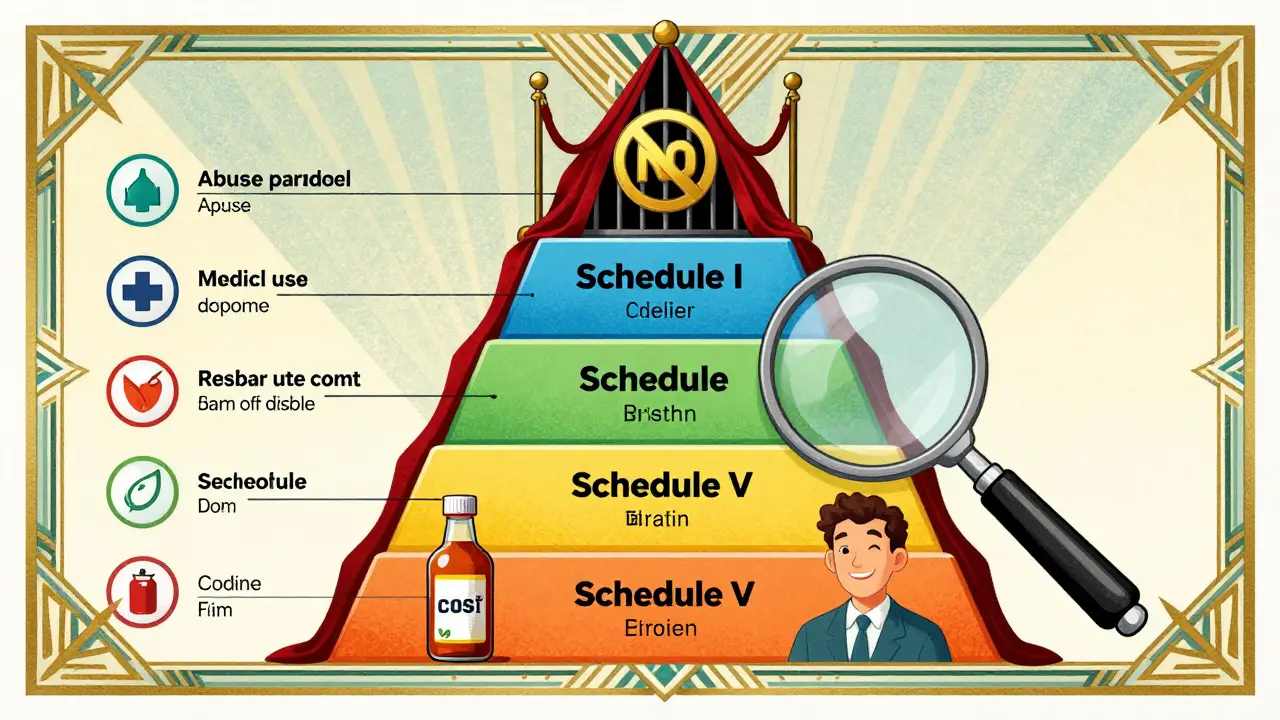
Why Refill Rules Matter
The refill restrictions aren’t just bureaucracy. They’re safety measures. Schedule II drugs carry a high risk of dependence. Requiring a new prescription each time forces a doctor to reevaluate your condition. It stops “doctor shopping.” It prevents stockpiling. But it also creates friction. Oncology nurses report spending 15 extra minutes per Schedule II prescription just to verify DEA numbers, check paper quality, and log everything. Pharmacists say 92.7% of all controlled substance prescriptions they fill are Schedule III to V - meaning the system is mostly handling lower-risk drugs. Yet the strictest rules apply to the smallest group. A 2023 Reddit poll of 342 pharmacists found that 78% believe the current system creates unnecessary barriers - especially for Schedule II drugs. Patients wait longer. Clinics get backed up. Prescriptions get denied over tiny paperwork errors. Meanwhile, addiction specialists say the clear schedule distinctions help them talk to patients about risk. “If you know it’s Schedule II, you know it’s serious,” one clinic director told Addiction Professional magazine.Real-World Confusion and Legal Gaps
The biggest flaw in the system? Inconsistency. Marijuana is still federally classified as Schedule I - no medical use, high abuse potential. Yet 38 states allow medical cannabis. That creates a legal gray zone. Patients can legally buy it in California but can’t get a DEA prescription for it. Pharmacies won’t fill it. Insurance won’t cover it. Even more confusing: synthetic drugs like fentanyl analogs are being added to Schedule I via emergency orders - sometimes within weeks. But cannabis, despite decades of research and millions of users, stays stuck. Experts like Dr. Lisa Thompson from the University of Colorado say the scheduling process needs to be faster and more science-based. Psychotherapist Benjamin Zelinsky puts it bluntly: “It can give people an understanding of the risks, but as we’ve seen, it’s not really an effective tool.”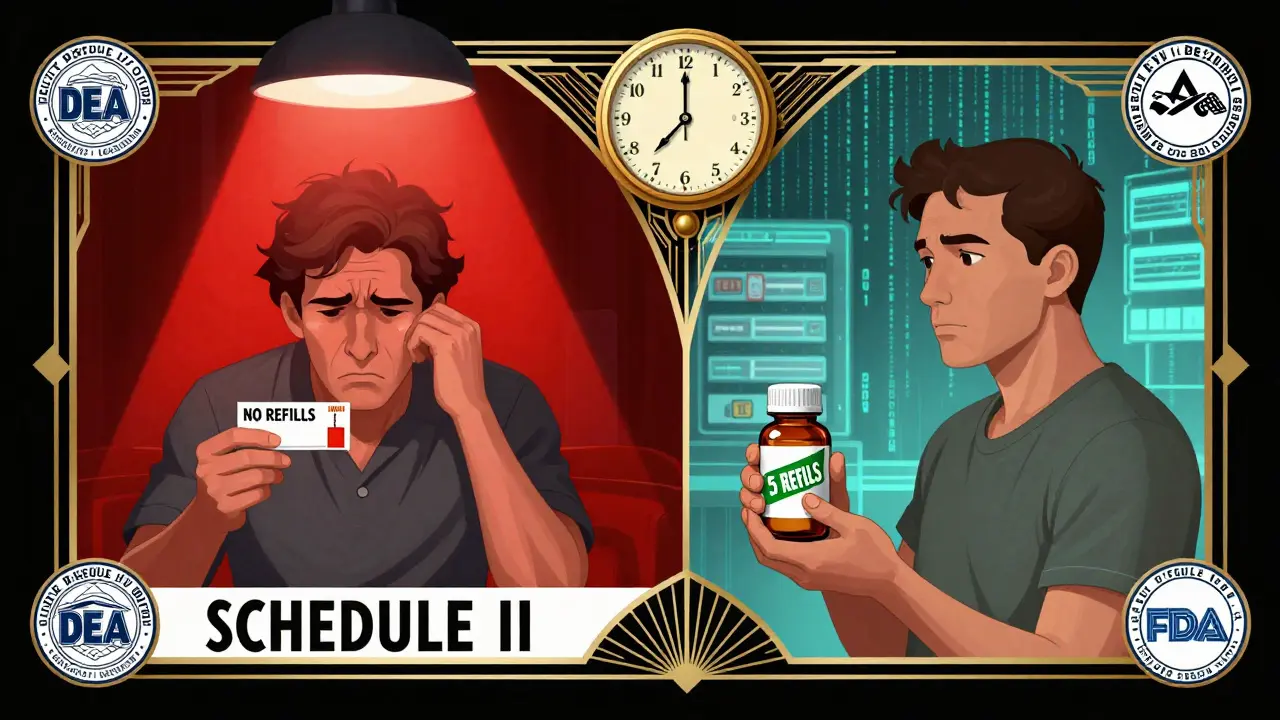
What’s Changing - and What’s Coming
In August 2023, the Department of Health and Human Services recommended moving marijuana from Schedule I to Schedule III. If approved, it would be the first major change since 1970. That could open the door for insurance coverage, research funding, and fewer legal conflicts. It would also signal that the system is finally adapting to science - not politics. The DEA is also speeding things up. Their 2023 Strategic Plan aims to cut the average scheduling review time from 24 months to 12 by 2025. They’ve already made progress - the Controlled Substance Ordering System (CSOS) now lets pharmacies order Schedule II drugs electronically in under 24 hours, down from 3-5 days. Industry analysts predict more changes ahead. A 2023 Deloitte survey found 68% expect at least two Schedule I substances to be rescheduled by 2028. Experts from the Rand Corporation think we’ll eventually move to a six- or seven-schedule system to better separate risks - like distinguishing between a high-dose opioid and a low-dose stimulant.What You Need to Know as a Patient
You don’t need to memorize the schedules. But you should understand a few things:- If your prescription says “no refills,” it’s likely Schedule II. Don’t assume you can call in for more.
- If your doctor writes a new script every month, it’s not because they’re being difficult - it’s the law.
- If you’re given a cough syrup or diarrhea medicine with codeine, it’s probably Schedule V. It’s low risk, but still regulated.
- Always check the label for the drug name and strength. Same pill, different schedule, different rules.
- If your pharmacy refuses to refill a Schedule II drug, they’re not being rude - they’re following federal law.
Ask your pharmacist if you’re unsure. They see the codes daily. They know what’s allowed. Don’t assume your doctor knows the exact schedule of every drug - many don’t. It’s not their job to memorize the DEA’s codebook. It’s yours to understand the implications.
Why This System Still Matters
The controlled substance system isn’t perfect. It’s outdated in places. It’s inconsistent. But it’s not useless. It’s the reason you can’t walk into a pharmacy and buy a bottle of oxycodone like you would ibuprofen. It’s why doctors can’t just prescribe fentanyl for a headache. It’s why millions of prescriptions are tracked, logged, and monitored - not to punish patients, but to prevent addiction, diversion, and overdose. The goal isn’t to lock people out of medicine. It’s to make sure the right people get the right drugs, safely. As new substances emerge - from synthetic opioids to designer stimulants - this system adapts. Slowly. Imperfectly. But it adapts. If you’re on a controlled substance, know your schedule. Know your refill limits. Know that the label on your bottle is just the surface. The real rules are written in federal law - and they’re there for a reason.What does it mean if my prescription is Schedule II?
If your prescription is Schedule II, it means the drug has a high potential for abuse and dependence, but it’s still used medically. You cannot get refills - you need a new prescription from your doctor each time. In most states, the prescription must be written on paper with special security features, though electronic prescriptions are allowed under strict conditions. Common examples include oxycodone, fentanyl, Adderall, and methamphetamine.
Can a Schedule III drug be refilled?
Yes, Schedule III drugs can be refilled up to five times within six months from the date the prescription was written. After that, you need a new prescription. These include medications like hydrocodone with acetaminophen (Vicodin), ketamine, and some anabolic steroids. Electronic prescriptions are allowed and commonly used.
Why is marijuana still Schedule I if it’s legal in my state?
Marijuana remains federally classified as Schedule I - meaning no accepted medical use and high abuse potential - despite being legal for medical or recreational use in 38 states. This creates a legal conflict between state and federal law. The federal government has not yet changed its classification, though the Department of Health and Human Services recommended rescheduling it to Schedule III in August 2023. Until that change is finalized, marijuana is still illegal under federal law, even if legal in your state.
Do all controlled substances require a prescription?
Most do - but not all. Schedule V substances, such as certain cough syrups with low-dose codeine or antidiarrheal medications with diphenoxylate, can sometimes be purchased over-the-counter with pharmacist approval. Even then, the pharmacist must verify your identity and record the sale. Schedule I substances, like heroin or LSD, cannot be legally obtained by anyone, even with a prescription.
How do pharmacists know which schedule a drug is?
Pharmacists use the DEA’s Controlled Substance Code Number (CSCN), which is built into pharmacy software and inventory systems. Each drug has a unique code - for example, “CSA SCH II” for oxycodone or “NARC” for narcotics. These codes trigger automatic rules in the system: no refills for Schedule II, electronic prescription limits for Schedule III, etc. Pharmacists don’t need to memorize the schedules - the system tells them what to do.
Can a doctor prescribe a Schedule I drug?
No. Schedule I drugs have no accepted medical use under federal law, so they cannot be prescribed by any licensed provider. This includes heroin, LSD, ecstasy, and marijuana (federally). Even if a doctor believes a Schedule I drug could help a patient, prescribing it is illegal and could result in loss of license or criminal charges.
Why are some codeine products Schedule III and others Schedule V?
The schedule depends on the concentration and formulation. Pure codeine is Schedule II. Codeine combined with acetaminophen in tablets (like in some pain meds) is Schedule III. But when codeine is in a cough syrup with very low concentrations - less than 200 milligrams per 100 milliliters - it’s classified as Schedule V. The lower the dose and the more it’s diluted with other ingredients, the lower the risk - and the lower the schedule.
If you’re managing a controlled substance, always keep your prescription records. Know your refill limits. Ask questions if something doesn’t make sense. The system is complex, but it’s designed to keep you safe - not to confuse you.
OMG this is SO important!! 🙌 I had no idea my Vicodin was Schedule III and my oxycodone was Schedule II-no wonder my pharmacy always acts like I’m stealing drugs when I ask for a refill 😅 Thanks for breaking it down so clearly!!
The distinction between Schedule II and III medications is clinically significant and not arbitrary. The regulatory framework, while cumbersome, reduces diversion and supports patient safety through structured oversight. Misinterpretation of refill policies often stems from inadequate patient education, not bureaucratic inefficiency.
Why are we letting other countries dictate our drug policy? We got a Constitution, we got DEA, we got common sense. Marijuana in Schedule III? Nah. Let it stay locked up. If you want it, go to Canada. We don’t need this weak stuff here.
i read this and cried a little 😭 my mom takes tramadol for her back and she thought she could just ask for refills like her blood pressure pills… the pharmacist had to explain it 3 times and she felt so dumb. thank u for making this clear. u r a angel 🙏
While the scheduling system is undeniably complex, it serves as a necessary safeguard against misuse and public health crises. The disparity between federal and state marijuana laws, however, highlights a critical need for harmonization. A unified, science-based approach would enhance both legal clarity and clinical efficacy.
so like… if my cough syrup has codeine but its schedule v, can i just buy it without a doc? or do they still make me show id? lol
Wow. A 2,000-word essay on pharmacy paperwork. Truly groundbreaking. I’m crying.
Of course the system’s flawed. But who else is gonna protect us from the drug addicts and the liberals who think ‘science’ means ‘whatever feels right’? I’m not letting my kids near any of this mess. Schedule I stays I. End of story.
Let me get this straight: Fentanyl = Schedule II, but weed = Schedule I? 🤯 The DEA’s got more drama than a Netflix soap opera. Someone’s got a grudge against cannabis and it’s not even based on science-it’s based on 1970s fear porn. Time to update the rulebook before we all die of boredom waiting for change.
How dare you suggest marijuana should be rescheduled?! This is exactly why our youth are falling apart-because people keep softening the rules. Schedule I exists for a reason. You think it’s ‘politics’? No. It’s survival. 🙏
It is imperative to recognize that the Controlled Substances Act, as codified under Title 21 of the United States Code, Section 812, establishes a hierarchical risk-assessment taxonomy predicated upon pharmacodynamic, epidemiological, and public health metrics. The proposed rescheduling of cannabis, while politically expedient, necessitates rigorous re-evaluation of its pharmacological profile, neurotoxicological potential, and longitudinal abuse liability-none of which have been conclusively demonstrated to meet the threshold for Schedule III classification under current DEA guidelines.