Have you ever wondered why your pharmacist insists you take that specific pill on an empty stomach, while another one must be eaten with a heavy meal? It’s not just arbitrary rules to make your life complicated. The food in your gut actively changes how your body absorbs medicine. Get the timing wrong, and you might end up with half the dose in your blood-or worse, dangerous side effects.
This isn't minor advice; it's critical pharmacology. Research shows that ignoring these instructions contributes to about 30% of treatment failures for certain drugs. In this guide, we’ll break down exactly how food interacts with medications, why timing matters so much, and how to adjust your routine to get the best results from your prescriptions.
How Food Changes Drug Absorption
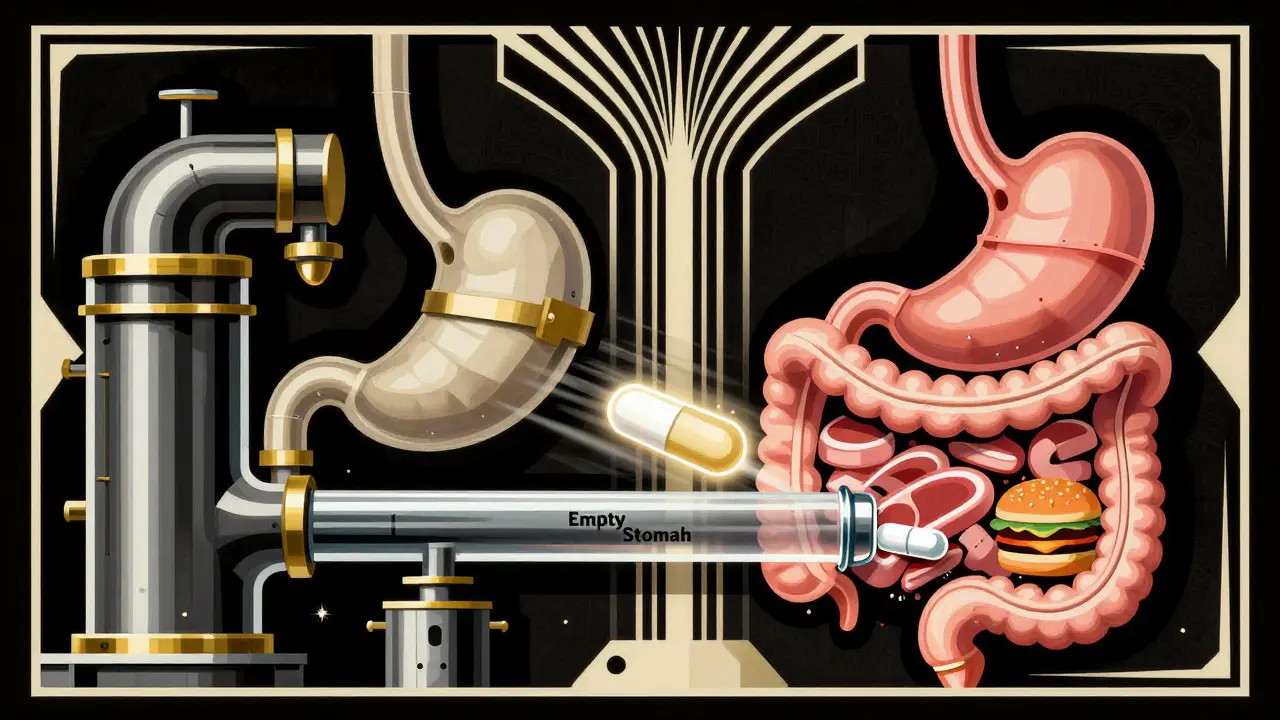
To understand why timing matters, you first need to look at what happens inside your stomach. When you eat, your body slows down gastric emptying, which is the process by which food leaves the stomach and enters the small intestine. Normally, things move through quickly, but a meal can slow this process by 30-50%. Since most drugs are absorbed in the small intestine, not the stomach, this delay changes everything.
Think of it like traffic. If you take a pill on an empty stomach, it zips through the stomach and hits the absorption site fast. Take it with a high-fat meal-think 50-60 grams of fat-and that "traffic jam" lasts 1.5 to 2 hours longer. For a painkiller like acetaminophen, this means peak levels in your blood hit in 45 minutes when fasting, but wait 90 to 120 minutes if you’ve just eaten a burger.
But it’s not just about speed. Food also changes how much drug actually gets into your system, known as bioavailability, defined as the proportion of a drug that enters circulation when introduced into the body. Some drugs, like the antifungal griseofulvin, love fat. They become 200-300% more absorbable because bile secretions help dissolve them. Others, like tetracycline antibiotics, hate calcium. Eating dairy with them can slash absorption by 50-75%, rendering the medicine nearly useless.
The Rules of Timing: Empty Stomach vs. With Food
You’ve likely seen these phrases on labels, but they have very specific medical definitions. Understanding them is key to taking your meds correctly.
- Empty Stomach: This doesn’t mean you can’t eat all day. It means you must take the drug at least one hour before eating or two hours after finishing a meal. This ensures your stomach is clear so the drug can pass through without interference.
- With Food: This usually means taking the medication within 30 minutes of starting your meal. You don’t necessarily need a full feast; sometimes a small snack (200-300 calories) is enough to protect your stomach lining or boost absorption.
Why does this distinction matter? Consider levothyroxine, a common thyroid medication. If you take it with breakfast, food can block 30-55% of the drug from being absorbed. That’s a massive drop in efficacy. Conversely, antibiotics like nitrofurantoin actually absorb 40% better when taken with food. Taking them on an empty stomach might leave you under-treated.
| Medication Class | Timing Recommendation | Reason |
|---|---|---|
| Thyroid Hormones (e.g., Levothyroxine) | Empty Stomach (1 hr before food) | Food reduces absorption by up to 55% |
| NSAIDs (e.g., Ibuprofen) | With Food | Reduces risk of stomach bleeding and acid reflux |
| Certain Antibiotics (e.g., Tetracyclines) | Empty Stomach (Avoid Dairy) | Calcium binds to drug, blocking absorption |
| Antifungals (e.g., Griseofulvin) | With High-Fat Meal | Fat increases solubility and absorption by 200-300% |
| Sulfonylureas (Diabetes Meds) | 30 Mins Before Meal | Prevents dangerous drops in blood sugar (hypoglycemia) |
Specific Drugs That Demand Precision
Not all medications are created equal. About 25% of commonly prescribed drugs require strict timing. Let’s look at a few major categories where getting it wrong has real consequences.
Thyroid Medications: As mentioned, levothyroxine is finicky. Mount Elizabeth Hospital guidelines stress that even coffee or juice can interfere. Stick to plain water and wait at least 30 minutes before eating anything. Many patients report persistent symptoms despite "correct" dosing only to find out they were sipping their morning latte too soon.
Diabetes Medications: Sulfonylureas like glipizide stimulate insulin production. If you take these on an empty stomach, your blood sugar can plummet dangerously low (below 70 mg/dL). The rule here is usually 30 minutes before a meal, ensuring food arrives in your system as the insulin peaks. Similarly, newer GLP-1 agonists like semaglutide often require a buffer period; taking them too close to food can reduce absorption by nearly half.
Pain Relievers (NSAIDs): Ibuprofen and naproxen are harsh on the stomach lining. Taking them with food acts as a buffer. Studies show that taking NSAIDs with food cuts stomach pain rates from 42% down to 12%. However, note that enteric-coated versions are designed to bypass the stomach, so strict fasting isn’t always required for those specific formulations.
Common Mistakes Patients Make
Even well-intentioned people mess this up. A survey of 5,000 users found that 78% felt better taking NSAIDs with food, yet 45% misunderstood what "take with food" meant for other drugs. Here are the biggest pitfalls:
- The "Snack" Misunderstanding: Some think "with food" means a full Thanksgiving dinner. For many drugs, a piece of toast or a banana is enough to trigger the necessary physiological response without altering absorption negatively.
- Dairy Interactions: Calcium is a notorious blocker. If you’re on tetracycline or fluoroquinolone antibiotics, keep milk, cheese, and yogurt at least two hours away from your dose. One Reddit user shared a story of a recurring UTI that only cleared up after separating doxycycline from calcium-rich foods.
- Inconsistent Routines: Taking your med with breakfast one day and skipping it the next creates wild swings in blood levels. Consistency is key. If you take it with dinner, always take it with dinner.
Tips for Better Adherence
Changing habits is hard, especially when you’re managing multiple conditions. Here is how to make timing stick:
- Set Alarms: Use your phone to set a reminder 60 minutes before your first meal for empty-stomach drugs. Another alarm can remind you to take the pill right then.
- Pair with Habits: Link your medication to an existing routine. Brushing teeth, pouring coffee, or sitting down for lunch can serve as visual cues.
- Use Digital Tools: Apps like Medisafe or MyTherapy allow you to set specific "take with food" or "empty stomach" reminders. Data shows users who activate these features make 27% fewer timing errors.
- Ask Your Pharmacist: Don’t guess. Ask specifically: "Does this need a full meal, or will a cracker do?" and "What happens if I miss the window?" Pharmacists are trained to translate complex pharmacokinetics into simple daily instructions.
The Future of Medication Timing
We’re moving toward more personalized approaches. Current guidelines are based on averages, but everyone’s digestion is different. New technologies, like ingestible sensors, are being tested to monitor gastric pH and emptying rates in real-time. Early trials suggest this could improve drug absorption consistency by 38% for sensitive medications.
Additionally, researchers are exploring chronopharmacology-timing drugs not just around meals, but around your circadian rhythm. Combining meal timing with time-of-day administration could boost efficacy by up to 30% for certain classes. For now, sticking to the label instructions remains the safest bet, but expect clearer, more standardized language in prescription guidelines in the coming years.
What does "take on an empty stomach" really mean?
It means you should take the medication at least one hour before eating or two hours after finishing a meal. This ensures your stomach is empty so the drug can pass quickly into the small intestine for optimal absorption.
Can I take my pills with just water and a snack?
For medications labeled "take with food," a small snack (like a piece of bread or a banana) is often sufficient to protect your stomach or aid absorption. You do not always need a large, high-fat meal unless specified by your doctor or pharmacist.
Why does milk affect some antibiotics?
Milk contains calcium, which can bind to certain antibiotics like tetracyclines and fluoroquinolones. This binding prevents the drug from being absorbed into your bloodstream, reducing its effectiveness by up to 75%. Always separate these meds from dairy by at least two hours.
Does food slow down painkillers?
Yes, food slows gastric emptying, which delays the onset of action for painkillers like acetaminophen. However, for NSAIDs like ibuprofen, taking them with food is recommended to prevent stomach irritation and bleeding, even if it slightly delays pain relief.
What happens if I accidentally take an empty-stomach pill with food?
Don’t panic. For most chronic medications, a single instance won’t cause harm, though the dose may be less effective. Do not double up on the next dose. Monitor for symptoms and contact your pharmacist or doctor if you’re concerned about missed efficacy.