
When your nose runs, your chest feels tight, or you wake up gasping at night, it’s not just a cold - it could be your airways reacting to allergens. For millions of people, especially in places like Durban where pollen and humidity mix, allergic asthma and allergic rhinitis are everyday battles. One drug that keeps showing up in prescriptions is montelukast. But what exactly does it do? And is it really the right choice for you?
What Are Leukotrienes, and Why Do They Matter?
Your body makes chemicals called leukotrienes when you breathe in allergens like dust, pollen, or pet dander. These aren’t just harmless byproducts - they’re troublemakers. Leukotrienes cause your airways to swell, tighten, and fill with mucus. Think of them like alarm bells ringing nonstop in your lungs and nose. In asthma, they trigger coughing, wheezing, and shortness of breath. In allergic rhinitis, they cause runny noses, congestion, and sneezing. The problem? These chemicals don’t respond to antihistamines like Zyrtec or Claritin. That’s where montelukast comes in.How Montelukast Works - Simply Put
Montelukast, sold under the brand name Singulair and as generics, doesn’t stop allergens from entering your body. Instead, it blocks the receptors that leukotrienes latch onto. Specifically, it targets the CysLT1 receptor, which is the main doorway these inflammatory chemicals use to cause damage. When montelukast sits in that doorway, leukotrienes can’t bind. No binding means no swelling, no tightening, no excess mucus. It’s like putting a lock on the door so the troublemakers can’t get in.Unlike steroids or rescue inhalers, montelukast doesn’t give you instant relief. It’s not a fire extinguisher - it’s a smoke detector and alarm system. You need to take it every day, even when you feel fine. Benefits usually start showing up within 24 to 48 hours, but full effect can take up to a week. That’s why it’s not used for sudden asthma attacks. If you’re wheezing right now, you need your inhaler - not a pill you took this morning.
Who Gets Prescribed Montelukast?
Montelukast is approved for two main uses: chronic asthma and allergic rhinitis. For asthma, it’s for people aged 2 and older. For allergic rhinitis, it’s used in adults and children as young as 6 months. But here’s the key: it’s not the first thing doctors reach for.In asthma, inhaled corticosteroids (ICS) like fluticasone are the gold standard. They reduce inflammation directly in the lungs. Montelukast? It’s the backup plan. Doctors turn to it when:
- The patient can’t use an inhaler properly - especially young kids or older adults with shaky hands
- There are side effects from steroids (like hoarseness or thrush)
- The person has both asthma and allergic rhinitis - montelukast works on both
For allergic rhinitis, second-generation antihistamines like loratadine or cetirizine are still first-line. Montelukast is second-choice. But if you’ve tried antihistamines and still feel stuffed up, or if your symptoms are worse at night, montelukast might help. Studies show it reduces nasal congestion better than placebo, but not as well as Zyrtec or Claritin.
The Real-World Benefits: What Patients Actually Notice
I’ve seen this in clinic after clinic: a parent brings in their 5-year-old who’s been waking up coughing every night. They’ve tried nasal sprays, antihistamines, even humidifiers. Nothing sticks. Then we add montelukast. Within a week, the coughing stops. The child sleeps through the night. The rescue inhaler use drops from daily to once a week. That’s the power of consistent, targeted therapy.For adults, the wins are similar:
- Less nighttime wheezing - especially if you’re allergic to dust mites or mold
- Fewer emergency visits or urgent care trips
- Reduced need for albuterol inhalers
- Improved morning peak flow (a measure of lung function)
One study found patients on montelukast reduced their beta-agonist use by 40% and improved their morning lung capacity by 12%. That’s not magic - it’s science. But it only works if you take it daily. Skip a day? You might not notice right away, but the protection fades.

What Montelukast Doesn’t Do
It’s just as important to know what montelukast can’t do:- It won’t stop an asthma attack. If you’re having trouble breathing, use your rescue inhaler - then call your doctor.
- It won’t fix exercise-induced symptoms as well as albuterol.
- It won’t clear nasal congestion as fast as a decongestant or nasal steroid.
- It won’t replace allergy shots or immunotherapy for long-term control.
And here’s something many don’t realize: montelukast doesn’t work for everyone. About 30% of users report little to no improvement. If you’ve tried it for 4 weeks and feel no difference, talk to your doctor. Maybe it’s not the right tool for your body.
Side Effects - The Good, The Bad, and The Weird
Montelukast is generally safe. Most people have no issues. Common side effects include:- Headache (about 1 in 10 people)
- Stomach pain or nausea
- Cough
But there’s a serious warning you can’t ignore. In 2020, the FDA added a boxed warning - the strongest kind - about neuropsychiatric side effects. These include:
- Depression
- Agitation
- Sleep disturbances
- Strange dreams or nightmares
- Thoughts of self-harm
These are rare - less than 1% of users - but they’re real. If you or your child starts acting differently after starting montelukast, stop the medication and call your doctor immediately. Don’t wait. This isn’t something to brush off.
How It Compares to Other Options
| Treatment | Best For | Onset of Action | Dosing | Side Effects |
|---|---|---|---|---|
| Montelukast | Chronic asthma + allergic rhinitis; children who can’t use inhalers | 24-48 hours (max in 1 week) | Once daily, oral | Headache, stomach pain, rare neuropsychiatric effects |
| Inhaled Corticosteroids (ICS) | First-line asthma control | Days to weeks | Twice daily, inhaler | Throat irritation, oral thrush |
| Second-Gen Antihistamines (Zyrtec, Claritin) | Allergic rhinitis | 1-3 hours | Once daily, oral | Drowsiness (rare with newer ones) |
| Rescue Inhalers (Albuterol) | Asthma attacks | 5 minutes | As needed | Tremors, fast heartbeat |
| Nasal Corticosteroids (Flonase) | Severe nasal congestion | 3-7 days | Once daily, spray | Nosebleeds, dryness |
Montelukast’s biggest advantage? It’s oral. No tricky inhaler technique. No messy sprays. Just one pill a night. That’s why it’s so popular for kids - and why parents often prefer it.
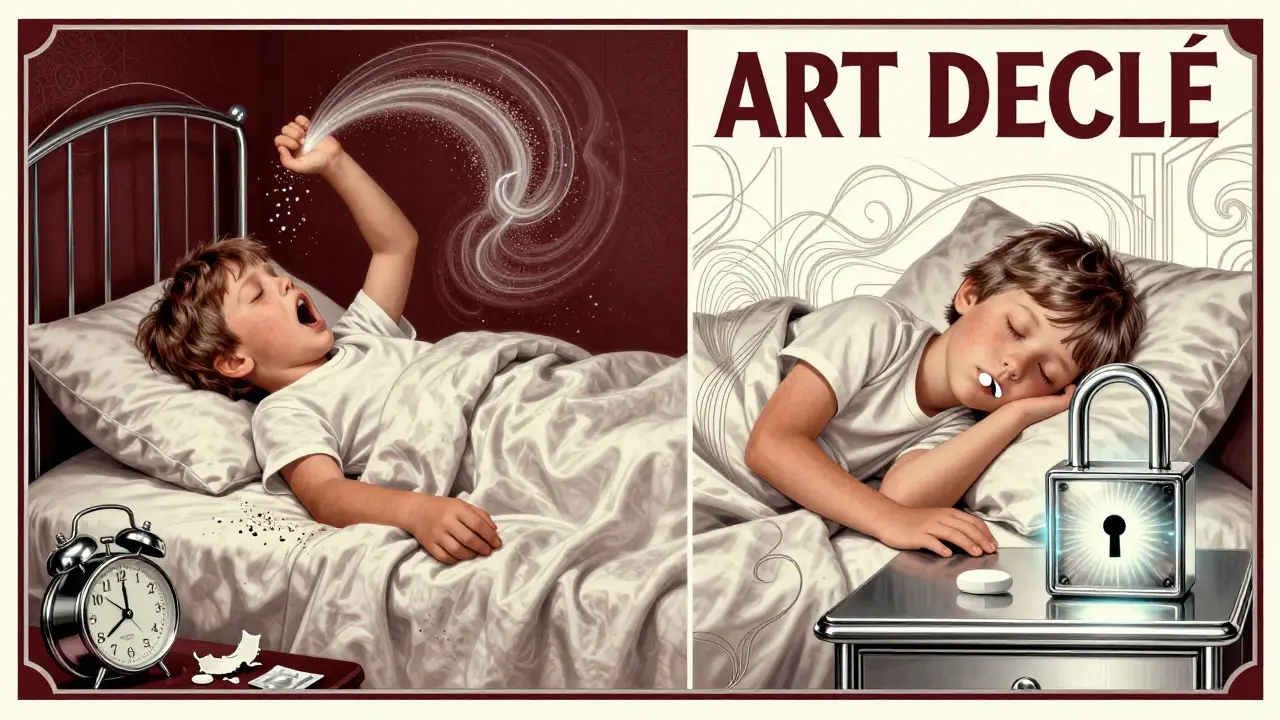
Who Should Avoid It?
Montelukast isn’t for everyone. Avoid it if:- You’ve had a previous allergic reaction to it
- You’re already on zileuton (another leukotriene drug) - they shouldn’t be combined
- You have a history of depression, anxiety, or suicidal thoughts
- You’re pregnant or breastfeeding - talk to your doctor first
Also, don’t stop it suddenly if you’ve been taking it for months. Talk to your provider about how to taper off safely.
Cost and Availability
In South Africa and the U.S., generic montelukast is cheap - often under $10 a month. That’s why it’s still widely used, even though newer biologic drugs exist. Those biologics (like dupilumab) are powerful, but they cost thousands and require injections. For most families, montelukast remains the practical middle ground: effective enough, affordable, and easy to use.Final Thoughts - Is It Right for You?
If you or your child has persistent asthma or allergic rhinitis that doesn’t fully respond to antihistamines or nasal sprays - and if you struggle with inhaler technique - montelukast could be a game-changer. It’s not a miracle drug. It won’t fix everything. But for many, it’s the missing piece.Take it daily. Don’t expect instant relief. Watch for mood or sleep changes. And remember: it’s not a rescue tool. It’s a shield. Built slowly, day by day, to keep your airways from overreacting.
Can montelukast be used for sudden asthma attacks?
No. Montelukast is not designed for acute asthma attacks. It works slowly over days to reduce inflammation and prevent symptoms, but it has no effect during an active attack. If you’re wheezing, coughing severely, or having trouble breathing, use your rescue inhaler (like albuterol) immediately. Montelukast should never replace your fast-acting inhaler.
How long does it take for montelukast to start working?
Most people notice some improvement within 24 to 48 hours, especially in nighttime symptoms. But full benefits - like reduced use of rescue inhalers or better lung function - can take up to a week. That’s why it’s important to take it every day, even if you feel fine. Skipping doses reduces its preventive effect.
Is montelukast better than antihistamines for allergies?
For allergic rhinitis, antihistamines like cetirizine or loratadine are more effective at reducing sneezing, itching, and runny nose. Montelukast is better at reducing nasal congestion, especially if it’s caused by leukotrienes. It’s often used as a second-line option when antihistamines don’t fully control symptoms. For people with both asthma and rhinitis, montelukast offers dual benefits.
Can children take montelukast safely?
Yes. Montelukast is approved for children as young as 6 months for allergic rhinitis and 12 months for asthma. It comes in chewable tablets and oral granules that can be mixed with food, making it easier for young kids. It’s often used when inhalers are hard to use. However, parents should watch for behavioral changes like irritability, sleep disturbances, or unusual dreams, and report them to a doctor immediately.
Why is montelukast still prescribed if it’s not first-line?
Because it fills a real gap. Many people - especially children - struggle with inhaler technique or can’t tolerate steroids. Montelukast offers a simple, once-daily, non-steroid option that works on both upper and lower airways. It’s also affordable, widely available as a generic, and has a well-known safety profile. For these reasons, it remains a vital tool in asthma and allergy management, even if it’s not the top choice.
Next Steps - What to Do If You’re Considering Montelukast
If you’re thinking about trying montelukast:- Track your symptoms for a week - when do they get worse? At night? After exercise? Around pets?
- Ask your doctor if you’ve tried first-line options first - like nasal steroids or antihistamines.
- Discuss your lifestyle. Can you take a pill every night? Do you have trouble with inhalers?
- Watch for side effects. If you or your child becomes unusually moody, anxious, or has trouble sleeping, call your doctor right away.
- Don’t expect instant results. Give it at least 7 days before deciding if it works.
Montelukast won’t cure your allergies or asthma. But for many, it turns a daily struggle into something manageable. It’s not flashy. It’s not new. But in the right hands - and the right body - it still saves nights, breaths, and peace of mind.
Been on montelukast for my kid’s asthma for over a year now. No more 3 a.m. coughing fits. We tried nasal sprays, antihistamines, even a humidifier - nothing stuck until this. It’s not magic, but it’s consistent. Takes a week to kick in, so patience matters. No weird mood stuff either, which I was scared of after reading the FDA warning. Just quiet nights and fewer rescue inhaler puffs. Worth it.
One tip: give it at bedtime. Helps with the nighttime stuff and you won’t forget.
Also, don’t skip doses. I learned that the hard way - one missed pill and the cough came back. Slow build, steady shield.
They’re selling this like it’s the holy grail. Meanwhile, real medicine is inhaled steroids - the stuff that actually targets the lungs. This pill? It’s a Band-Aid on a broken leg. And don’t get me started on the FDA warning. If your kid starts acting weird, it’s not ‘just stress’ - it’s the drug. Why are we still prescribing this like it’s Advil? We’re just patching symptoms while ignoring root causes. Wake up, people.
Also, ‘affordable’ doesn’t mean ‘safe.’ Big Pharma loves cheap pills because they keep you hooked. I’d rather pay for allergy shots than risk my kid’s mental health for a placebo with side effects.
I love how this post breaks it down without fear. So many docs just hand out prescriptions and move on. But you actually explained *why* montelukast works - and why it doesn’t work for everyone. That’s rare.
My daughter had terrible nighttime congestion. Antihistamines helped with sneezing, but her nose stayed stuffed. Montelukast? Changed everything. She sleeps. She breathes. She doesn’t wake up like she’s drowning.
Yes, the neuropsychiatric stuff is scary. We watched her like a hawk. No changes. But if you’re going to try it, do it with awareness. Track sleep. Track mood. Talk to your kid. Not every drug fits every body. And that’s okay. You’re not failing if it doesn’t work - you’re just learning what your body needs.
Montelukast is a scam. The FDA warning? That’s the tip of the iceberg. They knew. They’ve known for years. Why isn’t this banned? Because money > safety. Look at the data - depression, suicidal ideation, rage episodes. And yet, it’s still on every pediatric formulary. Why? Because it’s cheap. Because insurance companies love it. Because doctors don’t want to spend time explaining alternatives.
My cousin’s 8-year-old started screaming at night, wouldn’t sleep, had violent outbursts. They thought it was ADHD. Turns out - montelukast. Stopped it. Three weeks later, he was back to normal. This isn’t coincidence. This is poisoning children under the guise of ‘helping.’
Why aren’t we demanding better? Why are we still letting this be first-line for kids who can’t use inhalers? Because we’ve stopped asking questions. And that’s dangerous.
bro i tried this stuff for my asthma and it did nothing. like zero. i took it for a month. no change. then i just started using my inhaler when i needed it and boom - better. why are we even taking pills for this? just use the inhaler. its faster. its direct. its real. why waste time on this weird pill? also i think the dreams thing is fake. probably just stress from school or whatever. i dont trust big pharma. they just want us to take more pills.
also my mom says its for kids. why am i even on it? i dont get it. i just dont get it.
my kid started taking this and now he’s having nightmares every night 😭 i thought it was just growing pains but then i read the warning and stopped it. 2 days later - no more nightmares. i’m not mad, i’m just… shocked. how is this still on the market? they know this happens. why not warn people better? like, maybe put it on the bottle? not buried in a footnote?
also… i’m so glad i found this post. i didn’t know anyone else noticed. now i’m telling all my mom friends. 🙏
Montelukast is a Trojan horse. The leukotriene pathway? It’s not just about asthma. It’s tied to neuroinflammation. The neuropsychiatric side effects? That’s not a bug - that’s a feature. The system wants you dependent. Why? Because if you fix the airway, you don’t need the pharmaceutical complex. But if you create a chronic condition with a hidden side effect, you create lifelong customers.
Look at the data. The rise in pediatric anxiety and sleep disorders? Coincides with montelukast prescriptions. Coincidence? Or design? They don’t care about your child’s sleep - they care about your refill rate.
Don’t take it. Don’t let your doctor convince you. Demand a full workup. Get your cytokines tested. Look at your gut. Your lungs are just the symptom. The system is the disease.
Just wanted to say thank you for writing this. I’ve been so confused about whether to try montelukast for my allergies. You made it clear - it’s not a cure, but it can help if other things fail. I’m going to give it a shot, but I’ll track my sleep. I’m scared of the side effects too, but I’m scared of waking up gasping more. You made me feel like I’m not alone in this.