
Yohimbe & Medication Interaction Checker
Check Your Medication
Select the medication you are currently taking to see its specific risk level when combined with Yohimbe.
Imagine you are taking your daily pill to keep your heart steady. You feel safe. Then, you decide to try a natural supplement for energy or performance. You pop it in, thinking, "It’s just a plant extract." But within an hour, your chest tightens. Your pulse hammers against your ribs like a trapped bird. Your blood pressure monitor flashes numbers that look more like a phone number than a health metric. This is not a movie scene. It is the reality for many people who mix yohimbe, a popular herbal supplement, with prescription medications designed to control blood pressure.
We often trust nature. We assume that because something comes from a tree bark, it must be gentle. Yohimbe comes from the bark of the Pausinystalia yohimbe tree native to Central and Western Africa. Inside that bark sits a powerful chemical called yohimbine. This compound does not whisper to your body; it shouts. It blocks specific receptors in your brain and nerves, causing a flood of stress hormones. If you are already on medication to lower your blood pressure, this combination can turn a manageable condition into a medical emergency.
How Yohimbe Tricks Your Nervous System
To understand why this mix is dangerous, we have to look at what yohimbine actually does inside you. Think of your nervous system as a car. The accelerator is your sympathetic nervous system, which speeds up your heart and raises your blood pressure when you need to run from danger. The brake is your parasympathetic system, which calms you down.
Normally, your body has a check engine light-a feedback loop involving alpha-2 adrenergic receptors. These receptors tell your body to stop releasing norepinephrine, a hormone that spikes your heart rate and constricts your blood vessels. When these receptors work correctly, they keep your blood pressure stable.
Yohimbine acts as an alpha-2 adrenergic receptor antagonist. In plain English, it jams the brakes. It blocks those receptors so they cannot signal your body to calm down. The result? Your body keeps pumping out norepinephrine. Your heart races. Your blood vessels squeeze tighter. Your blood pressure shoots up. A study by the California Poison Control System found that in cases where people took yohimbe, 67% experienced tachycardia (a heart rate over 100 beats per minute) and 58% had high blood pressure readings above 140 mmHg systolic. That is not a mild side effect. That is a physiological storm.
The Dangerous Dance with Blood Pressure Meds
Now, imagine you are taking medication to lower that pressure. You might be on clonidine, lisinopril, or metoprolol. These drugs work hard to keep your cardiovascular system relaxed. Yohimbe works hard to do the exact opposite. When you take them together, you are not just canceling each other out. You are creating chaos.
| Medication Class | Common Examples | Interaction Mechanism | Risk Level |
|---|---|---|---|
| Alpha-2 Agonists | Clonidine (Catapres), Guanfacine | Direct antagonism. Yohimbine blocks the drug's active site. | Critical |
| Beta-Blockers | Metoprolol, Atenolol | Unopposed alpha-adrenergic stimulation leads to severe vasoconstriction. | High |
| ACE Inhibitors | Lisinopril, Enalapril | Counteracts vasodilation; causes unpredictable BP spikes. | High |
| Calcium Channel Blockers | Amlodipine, Diltiazem | Increases heart rate significantly, straining the heart muscle. | Moderate to High |
| Diuretics | Hydrochlorothiazide | Additive stress on kidneys and cardiovascular system. | Moderate |
The interaction with clonidine is particularly nasty. Clonidine works by stimulating those same alpha-2 receptors to lower blood pressure. Yohimbine blocks them. It is like pressing the gas pedal while someone else is pulling the handbrake. Medical reports show this combination can cause blood pressure to spike by 30 to 50 mmHg in minutes. That is enough to trigger a hypertensive crisis, which can damage your kidneys, eyes, and brain.
The Lottery of Supplement Quality
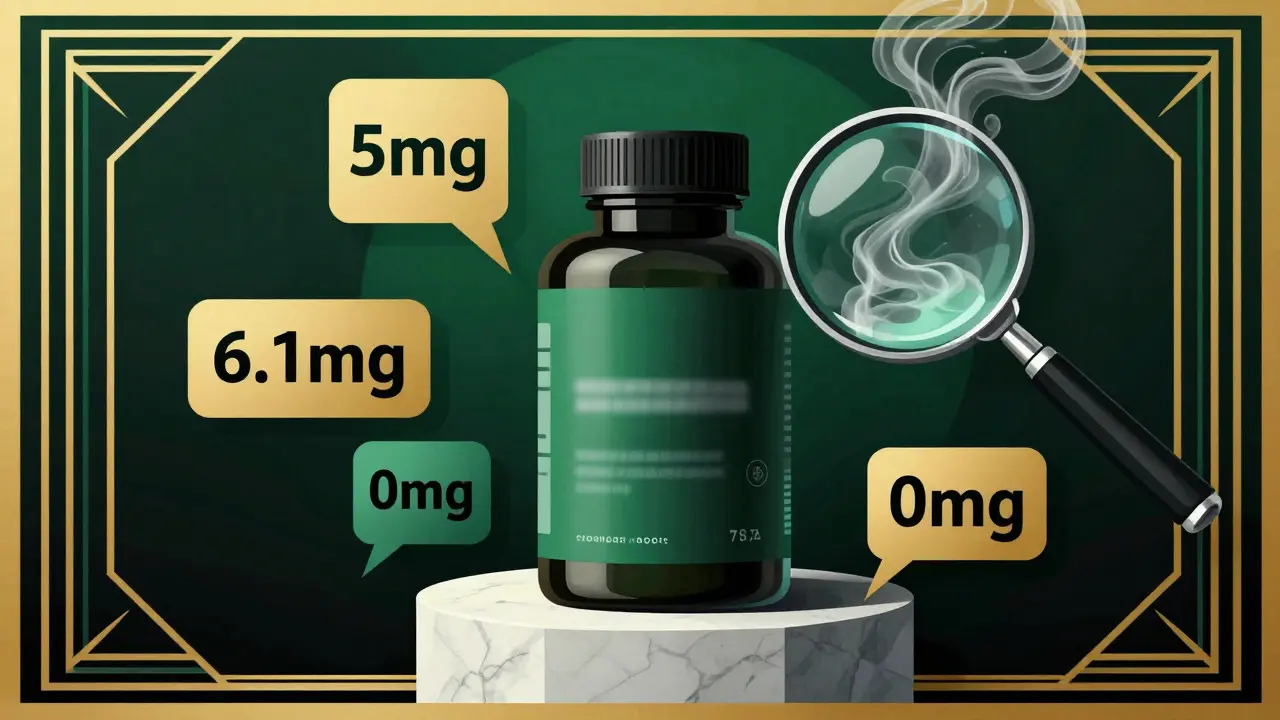
If the pharmacology wasn’t scary enough, consider what is actually in the bottle. You buy a jar labeled "Natural Energy Boost." It says it contains 5 mg of yohimbine. You trust the label. You shouldn’t.
Supplements are not regulated like drugs. The FDA does not test every batch before it hits the shelf. A 2015 analysis of 49 U.S. supplement brands revealed a terrifying range. Some pills contained zero yohimbine. Others contained 6.1 mg. One brand had synthetic yohimbine instead of the plant extract. ConsumerLab.com tested products in 2022 and found that 68% failed to accurately list their contents. Some were under-labeled by 200%, meaning you got way less than expected. Others were over-labeled by 400%, meaning you accidentally took four times the intended dose.
This variability makes dosing impossible to predict. For a healthy person, a bad dose might mean a jittery afternoon. For someone with hypertension, a hidden overdose of yohimbine can send them to the emergency room. The Memorial Sloan Kettering Cancer Center warns that commercially available supplements contain highly variable amounts of yohimbine, significantly increasing cardiovascular risk.

Real Stories, Real Danger
Data tells us one thing; human stories tell us another. On online forums dedicated to high blood pressure management, users share harrowing tales. One user posted about nearly dying after combining yohimbe with lisinopril. Their systolic blood pressure hit 200 mmHg. They described feeling like their heart was trying to escape their chest. Another user reported racing hearts and dizziness after just one capsule.
These are not isolated incidents. The American Heart Association reviewed data from 2015 to 2021 and documented 43 cases of dangerous blood pressure fluctuations linked directly to yohimbe use. In a broader review, yohimbe was implicated in 14.2% of all supplement-related emergency department visits for hypertension between 2020 and 2023. That is a huge slice of the pie for a single herb.
Dr. David Kiefer, an expert in integrative medicine, stated clearly in a JAMA Internal Medicine review that yohimbe represents one of the most dangerous herbal supplements for patients with hypertension. He cited its unpredictable dose-response relationship. You never know exactly how your body will react, especially when mixed with other chemicals.
Who Is Most at Risk?
You might think, "I only have slightly elevated blood pressure. I’m not on meds yet. Am I safe?" Not necessarily. Yohimbe affects anyone with underlying cardiovascular issues. The risks extend beyond just high blood pressure medications.
- People with Kidney Disease: Yohimbine is processed through the liver and excreted by the kidneys. If your kidneys are compromised, the drug stays in your system longer, amplifying the effects.
- Those Taking Antidepressants: Many antidepressants, specifically SNRIs like venlafaxine and tricyclics like amitriptyline, increase norepinephrine levels. Adding yohimbine creates a double whammy of stress hormones. A 2022 study documented 17 cases of severe hypertension requiring emergency intervention when these combinations were used.
- Individuals with Anxiety Disorders: Since yohimbine triggers physical symptoms of panic (racing heart, sweating), it can induce severe anxiety attacks even in people without pre-existing mental health conditions.
- Men Seeking Erectile Dysfunction Treatment: Yohimbe was originally approved for this purpose decades ago. However, newer medications like sildenafil (Viagra) are safer and more effective. Using yohimbe for ED while having undiagnosed heart disease is a recipe for disaster.
What Should You Do Instead?
If you are looking for energy, weight loss support, or sexual health improvements, there are safer paths. The allure of yohimbe is often its promise of quick results. But the cost can be too high.
For energy, focus on sleep hygiene, hydration, and moderate caffeine intake. Caffeine also raises blood pressure, but it is well-studied, and you can control the dose precisely. For weight loss, evidence-based strategies like calorie deficit and strength training offer sustainable results without risking a stroke. For sexual health, talk to your doctor. There are FDA-approved treatments that interact predictably with blood pressure meds, allowing your doctor to manage the risks safely.
If you are currently taking yohimbe and have high blood pressure, do not stop your medication. Do not start stopping the supplement abruptly if you have been taking it long-term, though short-term use is common. Instead, make an appointment with your healthcare provider. Be honest. Tell them exactly what you have taken, when you took it, and how much. They need this information to protect you.
Regulatory Landscape and Future Outlook
The world is waking up to the dangers of yohimbe. While it remains legal in the United States as a dietary supplement, many other countries have banned it. Canada implemented a complete sales prohibition in 2020. The European Medicines Agency banned it in 2018, citing unacceptable cardiovascular risks. Australia has also restricted its sale.
In the U.S., the FDA has issued public health warnings and mandatory recalls. In January 2023, the FDA recalled 17 yohimbe supplement brands after testing showed wild inconsistencies in potency. The agency lists yohimbe as a "high-risk supplement" in its enforcement priorities. Experts predict the market will decline sharply as awareness grows and regulations tighten. By 2027, analysts expect an 18-22% annual drop in sales due to these factors.
The message is clear: the era of casual yohimbe use is ending. The science is solid. The risks are real. Your heart is worth more than a questionable boost from a bottle.
Can I take yohimbe if my blood pressure is normal?
Even if your blood pressure is currently normal, yohimbe can cause sudden spikes. If you have any history of heart issues, kidney problems, or anxiety, it is best to avoid it. The variability in supplement quality means you could accidentally ingest a high dose, triggering a hypertensive episode regardless of your baseline health.
How quickly does yohimbe affect blood pressure?
Yohimbine has a short half-life, typically ranging from 0.5 to 1.5 hours. Peak plasma concentrations occur about 1 hour after oral administration. This means you can experience rapid increases in heart rate and blood pressure within 30 to 60 minutes of taking the supplement.
Why is yohimbe banned in Europe and Canada but not the US?
Different countries regulate supplements differently. The US classifies yohimbe as a dietary supplement under the DSHEA act, which does not require pre-market approval for safety. Countries like Canada and members of the EU classify it as a drug or prohibited substance due to its potent pharmacological effects and narrow therapeutic window, leading to bans.
What are the symptoms of a yohimbe-induced hypertensive crisis?
Symptoms include severe headache, blurred vision, chest pain, shortness of breath, nosebleeds, extreme anxiety, palpitations, and sweating. If you experience these symptoms after taking yohimbe, seek emergency medical attention immediately.
Are there safer alternatives to yohimbe for energy or weight loss?
Yes. For energy, prioritize sleep, balanced nutrition, and moderate caffeine. For weight loss, focus on sustainable lifestyle changes like resistance training and calorie management. Always consult your doctor before starting any new supplement regimen, especially if you have existing health conditions.