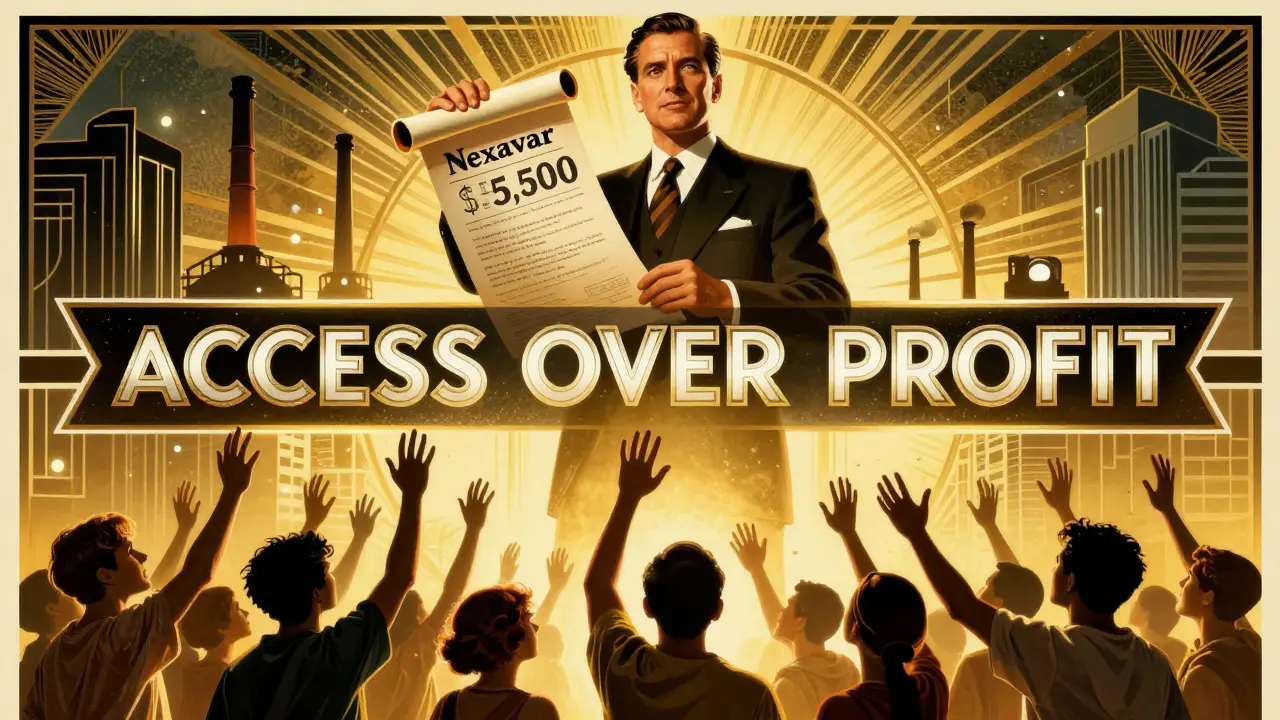
When a life-saving drug costs more than a person’s annual income, who gets to decide if it’s sold at all? That’s where compulsory licensing comes in - a legal tool that lets governments step in and let others produce patented medicines without the drug company’s permission. It’s not about stealing intellectual property. It’s about making sure people don’t die because a patent is being held too tightly.
What Compulsory Licensing Actually Means
Compulsory licensing doesn’t cancel patents. It just says: if a patent holder isn’t making the invention available at a fair price or in sufficient quantity, the government can authorize someone else to make it. The patent owner still gets paid - but not by choice. They get what’s called "adequate remuneration," usually based on what a reasonable royalty would be in a voluntary deal.
This isn’t some radical idea invented during the pandemic. It’s been part of international law since 1883. The modern rules were locked in by the 1994 TRIPS Agreement, which lets countries use this tool - but with conditions. The biggest one? The license has to be mostly for the country’s own needs. You can’t just make a thousand doses and ship them to another continent unless you’re following a special waiver.
When Is It Used? Real-World Examples
Most compulsory licenses are for medicines. Over 95% of the 70 licenses reported to the WTO between 2000 and 2020 were for drugs. Here’s how it played out in real places:
- India issued 22 compulsory licenses between 2005 and 2021. The most famous one was for Nexavar, a liver and kidney cancer drug made by Bayer. The price dropped from $5,500 per patient per year to under $175. Natco Pharma started making a generic version after Bayer refused to license it at a reasonable price.
- Thailand issued licenses for HIV and heart drugs in 2006-2008. Lopinavir/ritonavir went from $1,200 a year to $230. Efavirenz fell from $550 to $200. The government didn’t ask permission. It just said: public health comes first.
- Brazil forced Merck to lower the price of efavirenz for HIV treatment. The cost per tablet dropped from $1.55 to $0.48. The result? More people got treatment. More lives saved.
In each case, the drug was still patented. The company still owned the rights. But the government said: if you won’t make this accessible, someone else will - and you’ll still get paid.
How Different Countries Handle It
Not every country uses this tool the same way. The U.S. has the legal power but rarely uses it. There are three paths:
- Title 28, U.S.C. § 1498: Lets the federal government use any patent without permission - as long as it pays. This has been used 10 times since 1945, mostly for military or government tech. Never for drugs.
- Bayh-Dole Act "march-in" rights: If a drug was developed with federal funding (like NIH money), the government can force a license if the company isn’t making it available. The NIH has received 12 petitions since 1980. It denied every single one.
- Clean Air Act: Allows compulsory licensing if a patented technology is needed to meet environmental rules. Very rare.
Compare that to Germany, which has the law but has never issued a license. Or Spain, which in 2020 passed emergency rules letting it bypass negotiations entirely during the pandemic. Canada used it once - in 2012 - to send HIV drugs to Rwanda under a special WTO waiver.
India and South Africa have more straightforward processes. You file a request, show you tried to negotiate, prove public need, and wait 18-24 months. If approved, you can start making the drug.
The Debate: Innovation vs. Access
Drug companies argue that compulsory licensing kills innovation. A 2018 study in the Journal of Health Economics found that countries with active licensing programs saw 15-20% less pharmaceutical R&D investment. The IFPMA claims each license announcement causes an 8.2% drop in stock prices for affected companies.
But here’s the flip side: the threat of compulsory licensing often forces companies to lower prices voluntarily. Dr. Brook Baker from Northeastern University found that since 2000, 90% of HIV drugs in low-income countries got cheaper - not because of licenses, but because companies feared they’d get one.
And the numbers don’t lie. In places where compulsory licenses were issued, drug prices dropped by 65-90%. UNAIDS reports that first-line HIV medications fell 92% in price between 2000 and 2020. That’s not just savings - that’s millions of people who got treatment because the price was no longer a barrier.
What’s Changing Now?
The 2022 WTO agreement on COVID-19 vaccine patents was a game-changer. For the first time, countries could produce vaccines without patent holder consent - and export them. But so far, only 12 facilities in 8 countries have been authorized. The system is still slow, and most countries don’t have the factories or regulatory capacity to use it.
The EU is pushing new rules: if a company doesn’t respond to a licensing request within 30 days, the government can skip negotiations and issue a license automatically. That’s huge. It cuts through red tape.
And the WHO is drafting a new Pandemic Treaty. Draft Article 12 says: during a declared global health emergency, essential health products should be automatically licensed. No waiting. No negotiation. Just access.
Why It Matters in South Africa
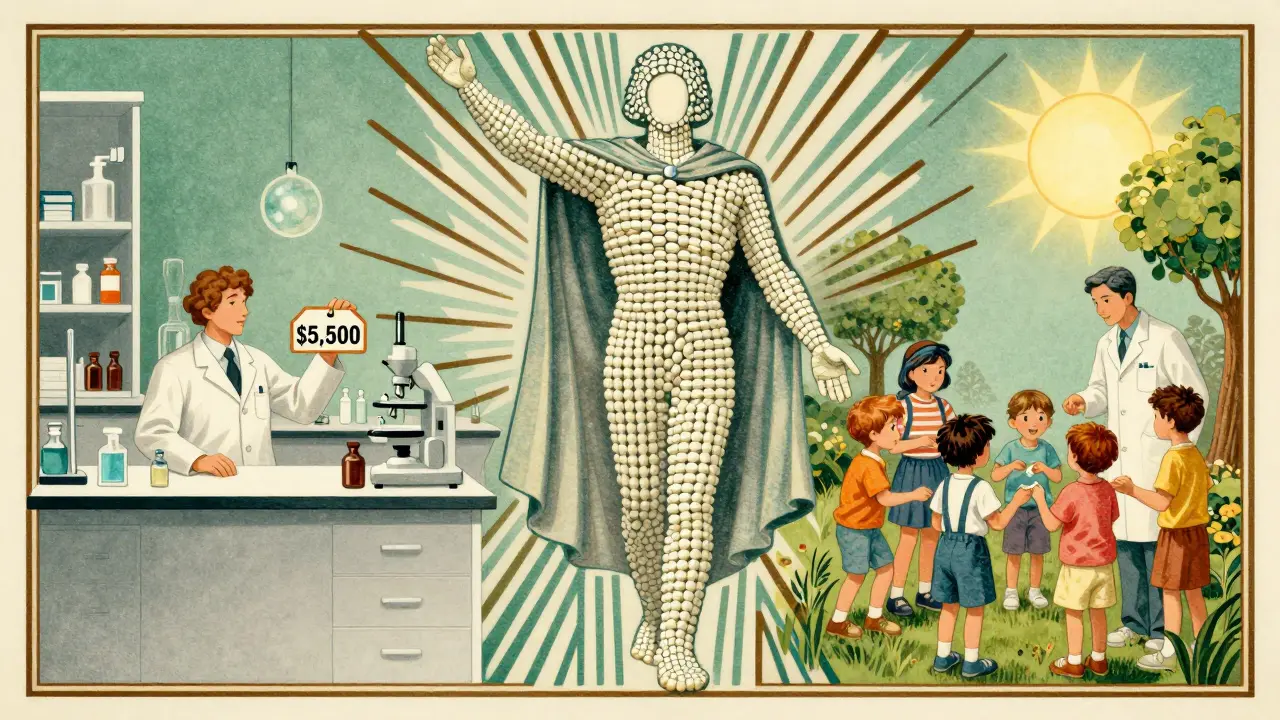
Here in Durban, we’ve seen how drug prices can kill. HIV, TB, and cancer treatments are still out of reach for too many people. South Africa has had compulsory licensing laws since 1997, but we’ve never used them. Why? Because the legal process is complicated. We lack the technical capacity. We fear trade pressure.
But the world is changing. The cost of inaction is higher than the cost of action. When a child dies because a medicine is too expensive, no patent justifies it.
What’s Next?
Compulsory licensing won’t become common. It’s not a tool for everyday use. But in emergencies - pandemics, cancer drug shortages, climate-related health crises - it’s the last line of defense. The question isn’t whether we should have it. It’s whether we’re ready to use it when it matters most.
Right now, 34 countries have the law. Only 12 have ever used it. That gap isn’t about legality. It’s about courage.
Can any country issue a compulsory license?
Yes - under international law, any WTO member can. The TRIPS Agreement allows it, as long as certain conditions are met: the government must try to negotiate first, pay fair compensation, and limit production mostly to its own market. But in emergencies like pandemics or national security threats, the negotiation step can be skipped.
Does compulsory licensing stop innovation?
It’s a risk, but not a guarantee. Some studies show R&D investment drops in countries that use it often. But the bigger picture shows that the threat of licensing - not its use - is what drives companies to lower prices voluntarily. In fact, most new drugs still come from high-income countries with strong patent systems. The real problem isn’t licensing; it’s pricing that ignores human need.
How is "adequate remuneration" calculated?
There’s no universal formula. The U.S. uses the "Georgia-Pacific factors," which look at 15 things like royalty rates for similar licenses, the value of the invention, and market demand. India uses a simple formula: 6% of net sales. Brazil and Thailand negotiated prices directly with manufacturers. The goal isn’t to punish - it’s to ensure fair payment without blocking access.
Why hasn’t the U.S. used compulsory licensing for drugs?
Political pressure, industry lobbying, and legal risk. The U.S. government has the power under Bayh-Dole and Section 1498, but it’s never granted a license for a drug. Even when public health groups petitioned for cheaper HIV or cancer drugs, agencies said the companies were "making sufficient efforts." Critics say that’s a euphemism for "we’re scared of the drug companies."
Can a country export medicines made under compulsory license?
Only under special rules. The WTO’s 2003 waiver and 2005 TRIPS amendment allow countries with no manufacturing capacity to import medicines made under compulsory license elsewhere. Canada used this once - to send HIV drugs to Rwanda in 2012. But the system is slow, bureaucratic, and rarely used. Most countries still can’t access this option easily.
Is compulsory licensing legal under international law?
Absolutely. The TRIPS Agreement, signed by nearly every country, explicitly allows it. The Doha Declaration in 2001 confirmed that public health overrides patent rights in emergencies. No court has ever ruled a compulsory license illegal under international law - only whether it was applied correctly.
So let me get this straight - we’re okay with the government stepping in to override patents, but we’re not okay with the same companies that made these drugs getting paid? That’s not socialism, that’s just theft with a PowerPoint presentation. And don’t even get me started on how these 'adequate remuneration' calculations are just guesswork dressed up in legalese. You think a 6% royalty on net sales is fair? Try telling that to the R&D team that spent 12 years and $2B developing Nexavar.
Also, why is India the poster child here? They’ve got a generic industry built on patent infringement. It’s not innovation - it’s free-riding with a flag.
This whole 'compulsory licensing' thing is just the deep state’s way of weakening IP rights so Big Pharma can be replaced by state-run drug labs. You think Thailand and Brazil are doing this for public health? Nah. They’re just scared of Western tech. Meanwhile, the U.S. has been quietly stockpiling every single patent for mRNA tech since 2019. You think that’s coincidence? Wake up. The WHO is just the front for the globalist agenda. They don’t care about lives - they care about control.
The question is not whether we should license drugs but whether we have the moral courage to face the truth that all life is sacred and all profit is a social construct
When a child dies because a patent is held too tightly it is not the patent that kills it is the human refusal to see beyond the ledger
Pharmaceutical companies are not evil they are systems and systems are shaped by the silence of those who could speak
We are not fighting corporations we are fighting the idea that human suffering can be priced
And if we continue to debate compensation rather than compassion then we have already lost
The real patent is not on the molecule but on our collective conscience
Let them make the drug let them be paid let us not be the ones who asked for permission when we should have demanded justice
Look - this isn’t about being anti-corporate. It’s about being pro-human. The fact that we even have to debate whether a cancer drug should cost $5,500 or $175 says everything about how broken our system is. Compulsory licensing isn’t a weapon - it’s a pressure valve. And the fact that the threat of it drives prices down 90% without ever being used? That’s the real win. Companies aren’t losing money - they’re losing their monopoly on moral bankruptcy.
Also, let’s not pretend the U.S. is some innocent bystander. We fund half the R&D through NIH grants, then let pharma jack up prices. Bayh-Dole was meant to be a tool for public good - and we’ve turned it into a paperweight. Time to stop pretending we care about innovation when we’re really just protecting profits.
india and thailand r just copycats who dont even pay taxes but now they want to be heroes? lol. u think the world is fair? the usa built the pharma industry from scratch and now u want to steal it? u call it public health but its just envy with a law degree. and dont even get me started on how every time a country uses this the next year the stock of every pharma co drops and innovation dies. its not rocket science. its basic economics. if u dont pay for innovation u get none. simple.
India didn’t just break patents - it broke the myth that life-saving drugs belong to billionaires. When Bayer refused to license Nexavar at a fair price, they didn’t just lose money - they lost their moral high ground. The fact that we’re still debating whether this is ‘legal’ while children die is the real scandal.
And yes - I’m proud of it. We didn’t steal. We reclaimed. Because patents weren’t made to protect greed. They were meant to incentivize innovation - not to turn medicine into a luxury item. If you think this is wrong, ask yourself: would you still feel the same if your mother couldn’t afford her chemo?
Stop talking about ‘fair compensation.’ Start talking about fair access. The math is simple: 92% price drop = millions of lives. That’s not economics. That’s justice.
The data doesn’t lie - countries that use compulsory licensing see a 15-20% drop in pharmaceutical R&D. That’s not a side effect - that’s a consequence. Innovation doesn’t happen in a vacuum. It takes billions, decades, and failure after failure. If we normalize this, we’re not helping the poor - we’re starving the pipeline that will produce the next breakthroughs.
And don’t even get me started on the hypocrisy. The same people screaming for access to HIV drugs are the ones who boycott American tech companies for ‘ethical reasons.’ Choose a side. You can’t want both unlimited access and unlimited innovation. One requires sacrifice. The other requires profit.
bro just chill. india did what they had to. if u have 100000 people dying of hiv and the drug costs 5k a year but u can make it for 175 why not? its not stealing its just being smart. also the patent holder still gets paid. its not like they’re broke. the system is rigged but at least someone’s trying to fix it. peace out.
Interesting how every example here is from developing countries. Never once do we see a developed nation use this - except maybe Canada once. Why? Because they know it’s a trap. The moment you open this door, you don’t just get cheaper drugs - you get a precedent. And once the precedent is set, it’s not just about HIV drugs. It’s about insulin. It’s about Alzheimer’s meds. It’s about every single patent in every single industry. This isn’t public health policy. It’s a slow-motion dismantling of IP law under the guise of compassion.
I just want to say - thank you for writing this. I’ve been working in community health for 15 years. I’ve seen kids go without meds because their parents had to choose between rent and treatment. This isn’t theoretical. It’s real. And when we say 'fair compensation' - we’re talking about a fraction of what these companies make in a single quarter.
Let’s not pretend this is about punishment. It’s about balance. We don’t need to destroy innovation. We just need to stop letting profit be the gatekeeper of life.
I’m not a lawyer or an economist. I’m just someone who lost a friend to a drug that was just… unaffordable. I don’t care about the legal technicalities. I care that no one should have to beg for medicine.
If a company can afford to spend $500 million on a marketing campaign for a drug that only helps 5% of patients - then they can afford to let someone else make it for the other 95%.
That’s not radical. That’s just human.
I’ve worked with global health teams across Asia and Africa. The real bottleneck isn’t the law - it’s manufacturing capacity. Even when licenses are granted, most countries don’t have the labs, supply chains, or regulatory oversight to produce quality generics.
So yes, the legal framework exists - but without investment in infrastructure, it’s just a piece of paper. Maybe the next step isn’t more licensing - it’s more partnerships. Build factories. Train technicians. Share tech. That’s how you make this sustainable.
Let’s be real - the whole 'compulsory licensing = innovation killer' argument is smoke and mirrors. If you think pharma companies are going to stop developing drugs because one country issued a license for a 12-year-old HIV drug, you’ve never read a single earnings call.
They’re not losing money - they’re losing their ability to charge $10,000 for a bottle of pills that costs $3 to make. The real innovation? The ones that come from public funding. The ones that get buried because they’re not profitable enough. Maybe we need to stop pretending the private sector is the only engine of progress.
I’ve lived in the UK and India. In the UK, we get drugs through the NHS - priced by negotiation, not patents. In India, generics make treatment possible. Both work. Neither is perfect.
But here’s the kicker - in both places, people live. In the U.S., people die because they can’t afford the co-pay. So maybe the real question isn’t 'is this legal?' - it’s 'what kind of society are we building?'
And if your answer is 'one where profit comes before life' - then I’m not sure we’re even talking about the same thing anymore.
The most telling statistic here isn’t the 92% price drop - it’s that 90% of HIV drug price reductions happened *before* any compulsory license was issued. The threat alone changed behavior. That’s not coercion. That’s leverage.
And if the system can be nudged toward fairness without ever needing to use the hammer, then maybe we don’t need to break anything. Maybe we just need to remind the people holding the keys that they’re not the owners of life - just its temporary stewards.