
When a brand-name drug’s patent expires, you’d expect cheaper generic versions to hit the market quickly. But in reality, it often takes years longer-sometimes over five years-because of legal battles no one talks about. These aren’t random lawsuits. They’re carefully timed, strategically filed, and often settled in ways that keep prices high and patients waiting. This is the hidden world of patent litigation in generic pharmaceutical markets.
How the System Was Supposed to Work
The U.S. government created the Hatch-Waxman Act in 1984 to fix a broken system. Before it, brand-name drug companies had a monopoly until their patent expired, and generics couldn’t enter until then. But getting approval for a generic took years of costly clinical trials-even though the drug was already proven safe and effective. Hatch-Waxman changed that. It let generic manufacturers file an Abbreviated New Drug Application (ANDA), skipping most trials. All they had to do was prove their version was bioequivalent. But there was a catch. If a generic company believed a brand’s patent was invalid or didn’t apply, they could file a Paragraph IV certification. That triggered a 30-month clock. During that time, the FDA couldn’t approve the generic, even if everything else was perfect. The brand company had 45 days to sue. If they did, the clock started. The idea was simple: protect innovation, but also speed up competition. That balance worked-for a while.The Orange Book: Where the Real Fight Begins
The key to all this is the FDA’s Orange Book. It’s not a book you can buy. It’s a public database listing every patent tied to a brand-name drug. Only certain patents belong there: those covering the active ingredient, how it’s made, how it’s used, or how it’s formulated. That’s the law. But here’s where things go off track. Brand companies started listing patents that don’t meet the rules. Patents on the inhaler’s dose counter. Patents on the packaging. Patents on the color of the pill. These have nothing to do with whether the drug works. But under current rules, if it’s listed in the Orange Book, it triggers a 30-month stay. And that’s exactly what’s happening. In 2025, Judge Chesler in New Jersey ruled against Teva in a case involving ProAir® HFA, an asthma inhaler. Teva had challenged six patents on the device’s dose counter. The court said: those patents don’t claim the drug. The drug is albuterol sulfate. The counter is just hardware. Listing them was illegal. That ruling could wipe out 15-20% of currently listed patents. But until then, these improper listings keep working.Serial Litigation: The Slow-Motion Lockdown
Brand companies don’t just file one lawsuit. They file a series of them. One patent expires? They sue on another. Another patent expires? They sue again. This is called serial litigation. And it’s become a standard tactic. The Association for Accessible Medicines tracked ten cases where this happened. In one, a drug’s original patent expired in 2012. Generic versions were blocked until 2021-nine years later-because the brand company kept filing new patent challenges on minor components. The drug was still on the market, still expensive, and patients couldn’t get the cheaper version. This isn’t rare. It’s routine. The FTC found that improper Orange Book listings delay generic entry for about 1,000 drugs every year. That costs the U.S. healthcare system $13.9 billion annually. That’s not a typo. $13.9 billion. Every year. Just from patents that shouldn’t even be listed.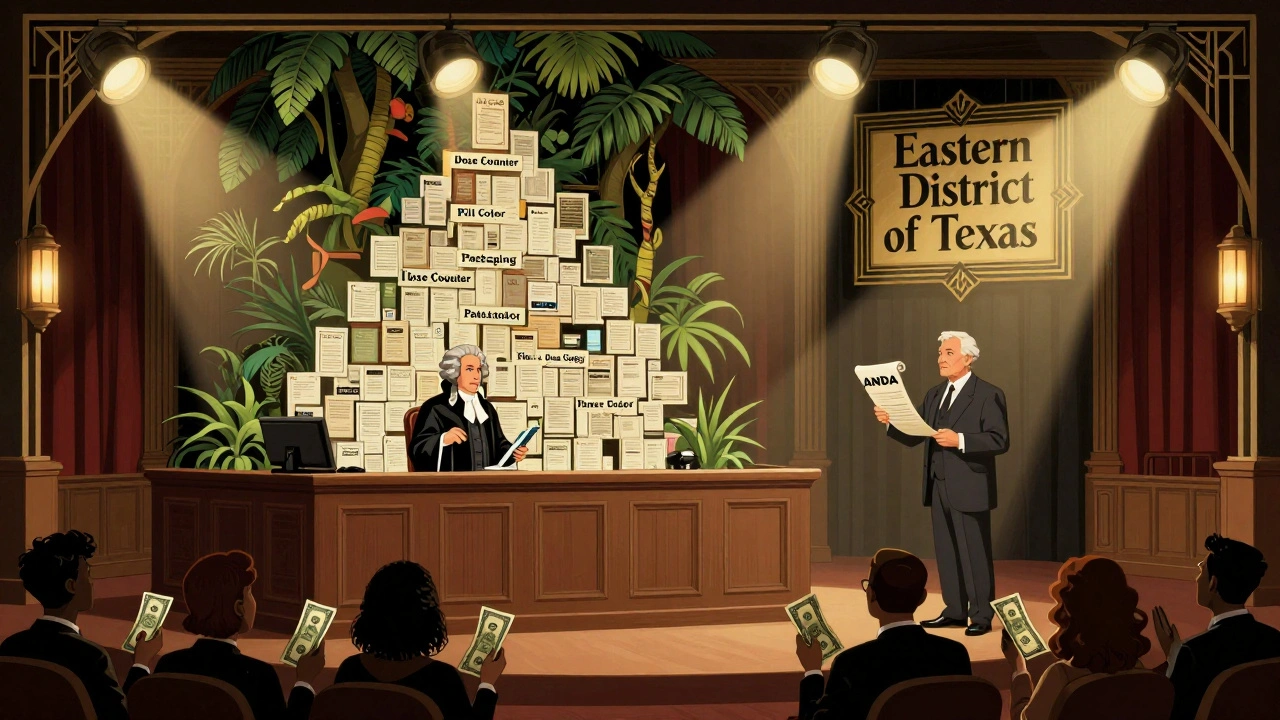
Why the Eastern District of Texas Is Ground Zero
Where do these lawsuits happen? Mostly in one place: the Eastern District of Texas. After the TC Heartland decision in 2017 tried to stop forum shopping, many thought patent cases would spread out. But by 2024, the Eastern District of Texas had become the top venue again-38% of all patent cases were filed there. Why? Because judges there know patent law inside and out. They move fast. They’re predictable. And brand companies know they’ll get a favorable hearing. Compare that to the Western District of Texas (22%) or Delaware (15%). The numbers don’t lie. This isn’t random. It’s strategy. The venue choice isn’t about convenience. It’s about winning.Settlements: Are They Helping or Hurting?
You hear a lot about “pay-for-delay” settlements. The idea: a brand company pays a generic maker to stay out of the market. It sounds shady. And sometimes, it is. But here’s the twist. A 2025 report by the IQVIA Institute, commissioned by the same group that criticizes these tactics, found something surprising: on average, patent settlements actually get generics to market five years earlier than they would have without any deal. Why? Because without a settlement, litigation drags on for years. The generic company runs out of money. The brand company wins by exhaustion. So if you ban settlements, you don’t get more generics. You get fewer ANDAs filed. Fewer challenges. Fewer lawsuits. And even longer delays. The FTC disagrees. They’ve challenged over 300 improper patent listings in 2024 alone. In May 2025, they sent warning letters to 200 more patents across 17 drugs. Their argument? Settlements are just a cover for anti-competitive behavior. But the data shows a more complicated picture: sometimes, settlements are the only way a generic company can survive long enough to enter the market.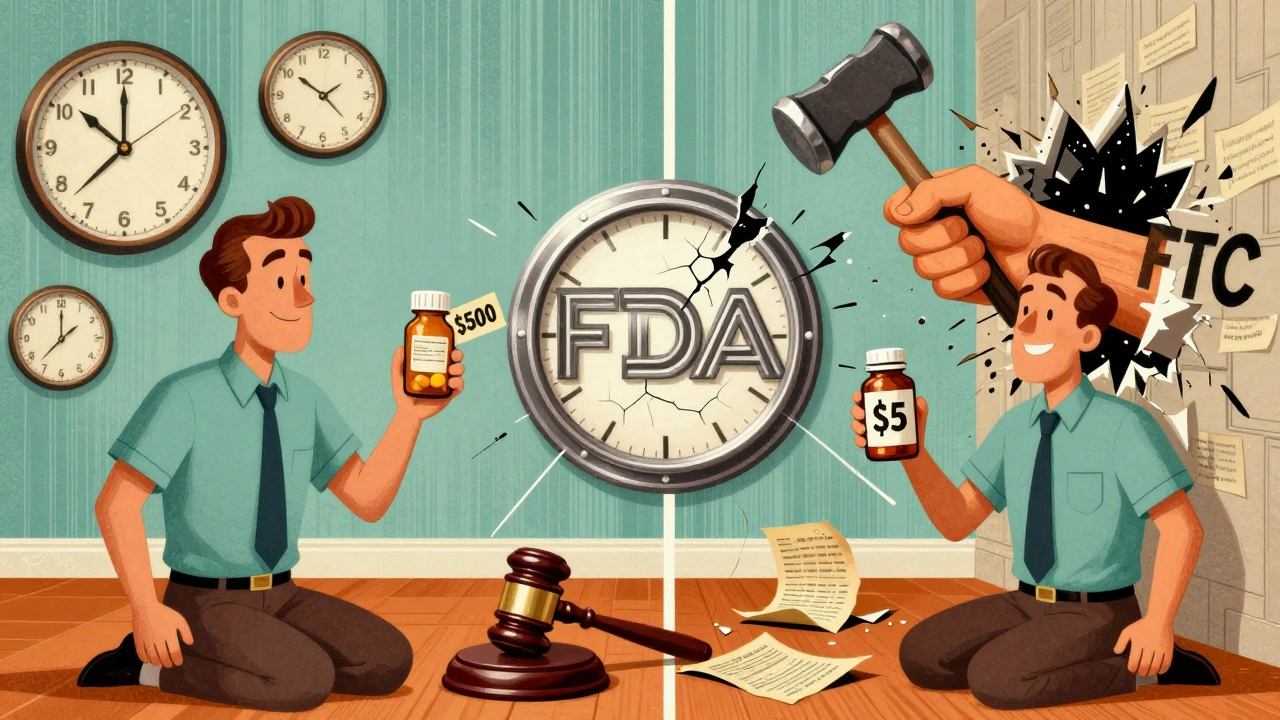
The Patent Thicket Problem
Think of a patent thicket as a wall of patents. Not one big one. Dozens. Hundreds. For some drugs, it’s insane. Eliquis (apixaban) has 67 patents. Semaglutide (Ozempic, Wegovy, Rybelsus) has 152. Oncology drugs? On average, 237 patents per product. That’s not innovation. That’s obstruction. Professor Rachel Sachs from Washington University calls this a “patent thicket.” And it’s not just about quantity. It’s about timing. Companies file patents years before the drug even launches. They wait. They watch. And when a generic company shows up, they hit them with every patent they’ve ever filed. The result? Generic manufacturers can’t afford to fight all of them. Even if they win one case, they lose the war. The legal bills are too high. The risk is too great.What’s Changing? And What’s Next?
There are signs the system is cracking under pressure. The FDA is proposing new rules: brand companies must certify under penalty of perjury that every patent they list in the Orange Book meets the legal standard. That’s huge. Right now, there’s no real penalty for listing junk patents. That changes in Q2 2026-if the rule goes through. Generic companies are also turning to the Patent Trial and Appeal Board (PTAB) for inter partes reviews (IPRs). These are faster, cheaper ways to challenge patents outside of court. IPR filings against pharma patents jumped 47% from 2023 to 2024. But even that’s getting harder. In April 2025, the Supreme Court ruled in Smith & Nephew v. Arthrex that generic companies need a stronger legal standing to file IPRs. That’s a setback. Meanwhile, law firms like Fish & Richardson and Quinn Emanuel are seeing 35-40% revenue growth in patent litigation. That tells you something: this isn’t slowing down. It’s growing.Who Pays the Price?
Patients. Families. Public health systems. Everyone who needs medicine but can’t afford it. The average time from brand drug approval to first generic entry has doubled since 2005-from 14 months to 28 months. For cancer drugs, it’s worse. On average, generics wait 5.7 years after patent expiration to enter the market. That’s not a glitch. It’s the system working as designed-for the companies that game it. The Hatch-Waxman Act was meant to bring down drug prices. It still can. But only if we fix the loopholes. Only if we stop letting companies hide behind patents that have nothing to do with the drug itself. Only if we stop letting litigation become a tool for market control instead of a check on innovation. The question isn’t whether generics should be allowed in. The question is: why are we still letting this happen?What is the Hatch-Waxman Act and how does it affect generic drugs?
The Hatch-Waxman Act of 1984 created a legal pathway for generic drug companies to bring cheaper versions to market without repeating expensive clinical trials. It allows them to file an Abbreviated New Drug Application (ANDA) and challenge brand-name patents through a Paragraph IV certification. If the brand company sues, the FDA must wait 30 months before approving the generic, giving time for legal resolution. The goal was to balance innovation with competition, but it’s now being exploited to delay generic entry.
What is the Orange Book and why does it matter?
The Orange Book is the FDA’s official list of patents associated with brand-name drugs. Only patents covering the active ingredient, formulation, method of use, or manufacturing process can be listed. But many companies list patents on delivery devices, packaging, or other non-essential features. These improper listings trigger automatic 30-month delays in generic approval, even if the patent has nothing to do with the drug’s effectiveness. Courts are now starting to strike these down, but many remain active.
What are pay-for-delay settlements and are they illegal?
Pay-for-delay settlements occur when a brand-name company pays a generic manufacturer to delay launching its version. The FTC considers these anti-competitive and has sued over 300 such agreements. But recent studies show that in many cases, these settlements still get generics to market faster than prolonged litigation would. The real issue isn’t settlement itself-it’s when payments are disguised as something else, like consulting fees, to hide the real purpose: blocking competition.
Why is the Eastern District of Texas a hotspot for patent lawsuits?
The Eastern District of Texas became the top venue for patent litigation because its judges are experienced in complex patent cases, procedures are favorable to plaintiffs, and cases move quickly. After a 2017 Supreme Court ruling tried to limit venue shopping, many expected this to change. But by 2024, 38% of all patent cases were filed there-more than double the next busiest district. Brand companies prefer it because they’re more likely to win or force a favorable settlement.
How do patent thickets block generic drugs?
A patent thicket is when a single drug is protected by dozens or even hundreds of patents-many filed years in advance. For example, semaglutide (Ozempic) has 152 patents. Generic companies can’t afford to fight them all. Even if they win one case, another patent is still in force. This creates a legal wall that delays entry for years, even after the original patent expires. Oncology drugs have the worst thickets, averaging 237 patents per product.
What’s being done to fix this system?
The FDA is preparing new rules requiring brand companies to certify under penalty of perjury that every Orange Book patent meets legal standards-expected in Q2 2026. The FTC is actively challenging improper listings, and generic manufacturers are using inter partes reviews (IPRs) at the Patent Trial and Appeal Board to challenge patents faster and cheaper. But recent Supreme Court rulings have made IPRs harder to file. Without stronger enforcement, these efforts may not be enough to stop the trend.
The system is broken, but not because of malice-because of inertia. Generic manufacturers are underfunded, the FDA is understaffed, and courts are overloaded. The Hatch-Waxman Act was brilliant in theory, but without enforcement, it’s just parchment with good intentions. We need real penalties for Orange Book abuse, not just warnings.
Patent thickets are just corporate greed dressed up as innovation
They file patents on the color of the pill and call it IP
And we wonder why meds cost a fortune
Let me just say, as someone who actually read the FTC reports and the IQVIA study and cross-referenced the PTAB filings-this isn’t about patents, it’s about rent-seeking. The Eastern District of Texas is basically a patent mafia hub. And the fact that Fish & Richardson’s revenue is up 40%? That’s not a coincidence. That’s a business model built on patient suffering. Also, ‘pay-for-delay’ isn’t always bad-if the alternative is 7 years of litigation and zero generics. But when the payment is disguised as a ‘consulting fee’? Yeah, that’s fraud. Just saying.
The real tragedy isn’t the lawsuits-it’s that we’ve normalized this. We accept that a cancer drug should take five years to become affordable after patent expiry. We don’t protest. We don’t vote. We just pay. The Hatch-Waxman Act was supposed to be a bridge between innovation and access. Now it’s a moat. And the companies building the moat are the same ones who wrote the original law. We need structural reform, not band-aids. The FDA’s new perjury rule is a start, but it won’t mean anything unless someone goes to jail for lying about patent eligibility.
It’s easy to point fingers at big pharma, but let’s not forget the role of the legal system in enabling this. Judges in the Eastern District of Texas aren’t evil-they’re just following precedent, and precedent is built on decades of rulings that favored patent holders. The system rewards persistence, not fairness. Generic companies can’t afford to fight 152 patents on one drug. They need a faster, cheaper, standardized path to challenge-like a patent review tribunal specifically for pharmaceuticals, with binding timelines and capped legal fees. We’ve done this for software patents. Why not for life-saving medicines? It’s not just ethical-it’s economic sense.
Wait-so the Supreme Court just made it harder for generics to challenge patents via IPRs? That’s like removing the fire extinguisher from a building that’s on fire. And the fact that 38% of all patent cases are filed in one district? That’s not judicial efficiency-that’s forum shopping on steroids. And the Orange Book? It’s supposed to be a public registry, but it’s being used as a weapon. If you list a patent on the packaging of a pill, and that patent has nothing to do with the active ingredient, you’re not protecting innovation-you’re gaming the system. The FDA’s new perjury rule is the first real step in years. But we need Congress to act too-no more automatic 30-month stays for non-substantive patents. End the abuse. Now.
This is all a cover-up. Big Pharma owns the FDA. The judges. The Congress. The entire system is rigged. The ‘patent thicket’? That’s just the tip of the iceberg. Did you know some companies patent the same molecule under different names just to reset the clock? And the settlements? They’re not ‘helping’-they’re bribes. The FTC is just a toothless tiger. The real villains are the lawyers who profit from this. You think this is about science? No. It’s about money. And if you think the next president will fix it-you’re dreaming. They’re all bought and paid for. Wake up.
imagine if we treated patents like we treat traffic lights-no loopholes, no excuses, just rules that work for everyone
generic drugs should be affordable, not a legal maze
we can fix this. we just need to care enough
Thank you for writing this. I’ve been waiting for someone to lay it all out like this. I have a family member who needs Ozempic. We pay $1,200 a month. The generic could be $50. The fact that we’re still waiting because of a patent on the pen’s button? That’s not capitalism. That’s cruelty. I’m not mad-I’m motivated. Time to call our reps. And maybe start a petition. We can’t wait for the system to fix itself.