When you pick up a prescription at the pharmacy, there is a very good chance it is not the brand-name drug originally developed by a pharmaceutical giant. In fact, about 90% of prescriptions filled in the United States are for generic drugs, which are significantly cheaper but must meet the same high standards as their brand-name counterparts. But how do we know these lower-cost alternatives are safe? The answer lies in the rigorous manufacturing oversight conducted by the U.S. Food and Drug Administration (FDA). This system isn't just a rubber stamp; it is a complex web of laws, scientific reviews, and physical inspections designed to protect public health.
The Legal Foundation: Hatch-Waxman and the ANDA Pathway
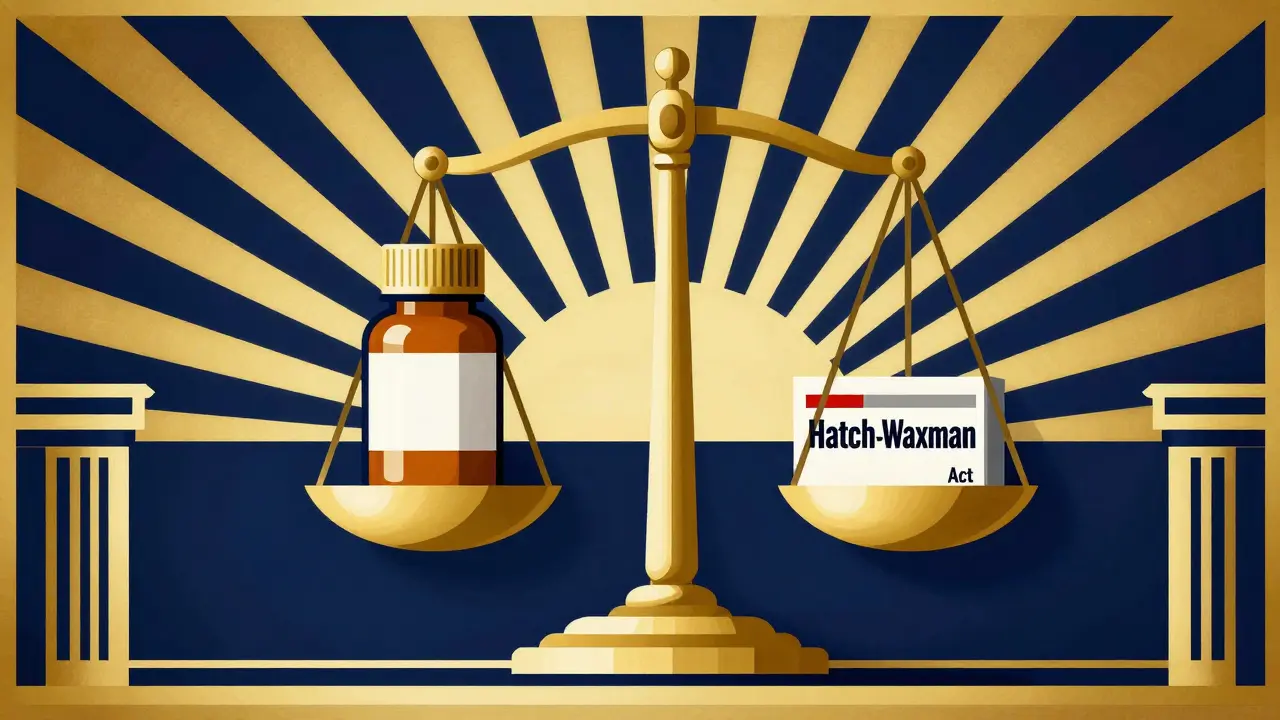
To understand how the FDA oversees generic drugs, you first need to look at the rules that allow them to exist. Before 1984, generic manufacturers had to repeat expensive clinical trials to prove their drugs were safe, which made little sense if the active ingredient was already proven safe by a brand-name company. That changed with the passage of the Drug Price Competition and Patent Term Restoration Act of 1984, commonly known as the Hatch-Waxman Amendments.
This legislation created a shortcut called the Abbreviated New Drug Application (ANDA). Instead of proving safety from scratch, generic makers only need to show that their product is "bioequivalent" to the reference-listed drug (the brand-name version). This means the generic drug must deliver the same amount of active ingredient into the patient's bloodstream within the same time frame. The FDA’s Center for Drug Evaluation and Research (CDER), specifically the Office of Generic Drugs (OGD), handles these applications. They check everything from the chemical makeup to the labeling to ensure it matches the original drug exactly.
Bioequivalence: The Core Safety Standard
The term bioequivalence is often misunderstood. It doesn’t mean the pills look identical or taste the same. It refers to pharmacokinetics-how your body absorbs, distributes, metabolizes, and excretes the drug. For a generic to be approved, its bioavailability must fall within a strict range of 80% to 125% compared to the brand-name drug. In practice, most generics land between 90% and 110%, ensuring that patients receive the exact therapeutic effect without unexpected spikes or drops in medication levels.
If a generic fails this test, it cannot reach the market. The FDA reviews data from human studies where volunteers take both the brand and generic versions under controlled conditions. Only when the statistical models confirm no significant difference in absorption does the OGD move forward. This step is critical because even small deviations can lead to treatment failure or toxicity, especially for drugs with a narrow therapeutic index, such as those used for epilepsy or heart conditions.
Current Good Manufacturing Practices (cGMP)
Getting the formula right is only half the battle. How the drug is made matters just as much. The FDA enforces Current Good Manufacturing Practices (cGMP) regulations to ensure consistency and quality in every batch produced. cGMP requires manufacturers to implement three critical systems:
- Material Control: Strict tracking of raw materials from receipt to storage to prevent contamination or mix-ups.
- Process Controls: Written procedures for every manufacturing step, including monitoring critical parameters like temperature and pressure.
- Quality Testing: Rigorous laboratory testing of raw ingredients, in-process materials, and finished products using validated methods.
These rules are not suggestions. If a facility fails to adhere to cGMP, the FDA can halt production, seize products, or shut down the plant entirely. The goal is to eliminate variability so that the pill you take today performs exactly like the one you took last month.

Inspections: Domestic and Foreign Challenges
Paperwork review is essential, but the FDA also needs to see the factories in action. Inspectors visit manufacturing sites to verify compliance with cGMP. Historically, the FDA faced resource constraints, leading to delays in pre-approval inspections. However, the implementation of the Generic Drug User Fee Amendments (GDUFA) has dramatically improved this process. GDUFA allows the FDA to collect fees from generic drug applicants, which funds additional inspectors and modernizes review technology.
A major focus of recent years has been foreign inspections. Many generic drugs and their active pharmaceutical ingredients (APIs) are manufactured overseas, particularly in countries like India and China. In 2019, the FDA found quality issues in 15% of foreign facilities inspected, compared to 8% of domestic ones. To address this gap, GDUFA III, launched in 2022, commits $1.1 billion through 2027 specifically to enhance foreign inspection capabilities. The agency aims to increase annual foreign inspections to 1,500 by 2025, using a risk-based scheduling system to prioritize high-risk facilities.
| Facility Type | Inspection Rate | Quality Issues Found |
|---|---|---|
| Domestic Facilities | Higher frequency | 8% |
| Foreign Facilities | Increasing via GDUFA III | 15% |
Post-Market Surveillance: Catching Problems Early
Approval is not the end of the story. The FDA continuously monitors generic drugs after they hit the shelves. This post-market surveillance relies heavily on the MedWatch program, which collects adverse event reports from consumers and healthcare professionals. The FDA processes approximately 1.3 million reports annually. The Division of Clinical Safety and Surveillance (DCSS) analyzes this data to detect signals of potential safety issues, such as unexpected side effects or medication errors.
If a pattern emerges, the OGD can take swift action. This might include issuing Dear Healthcare Provider Letters to alert doctors, updating product labeling, or mandating voluntary recalls. The Drug Safety Oversight Board (DSB), established by the FDA Amendments Act of 2007, provides independent advice on handling emerging safety issues across all drug categories, including generics. This multi-layered approach ensures that problems are identified and resolved before they cause widespread harm.
The Economic Impact of Safe Generics
Why does all this oversight matter? Beyond safety, generic drugs are a cornerstone of affordable healthcare. They account for only 23% of total drug expenditures in the U.S. despite representing 90% of prescriptions. According to the Association for Accessible Medicines, generic drugs save the American healthcare system an estimated $313 billion annually. Without the FDA’s rigorous oversight, this cost-saving benefit would come at the expense of patient safety. By ensuring that generics are truly equivalent to brand-name drugs, the FDA enables millions of people to access necessary treatments without financial ruin.
Future Directions: Modernizing Oversight
The landscape of generic drug regulation continues to evolve. The FDA is addressing challenges posed by complex generic products, such as inhalers and topical creams, through the Complex Generic Drug Products Initiative. Additionally, the agency is implementing real-time data monitoring and electronic tracking systems mandated by the Drug Supply Chain Security Act (DSCSA). These technologies help trace drugs from manufacturer to patient, reducing the risk of counterfeit products entering the supply chain. As Commissioner Robert Califf noted in 2023, enhancing oversight of foreign manufacturing remains a top priority, with plans to leverage new funding and technology to maintain the highest standards of quality and safety.
Are generic drugs as safe as brand-name drugs?
Yes. The FDA requires generic drugs to demonstrate bioequivalence to their brand-name counterparts, meaning they must have the same active ingredient, strength, dosage form, and route of administration. They must also meet identical standards for quality, performance, and intended use. Extensive clinical data supports the conclusion that generics are therapeutically equivalent to brand-name drugs.
What is the role of GDUFA in generic drug safety?
The Generic Drug User Fee Amendments (GDUFA) provide the FDA with additional resources to review generic drug applications and inspect manufacturing facilities. Since its inception, GDUFA has increased application review capacity by 75% and enabled more frequent inspections of foreign facilities, thereby strengthening overall oversight and reducing approval timelines.
How does the FDA handle safety issues after a generic drug is approved?
The FDA uses post-market surveillance systems like MedWatch to monitor adverse events. If safety signals are detected, the Office of Generic Drugs can issue warnings, update labels, or mandate recalls. The Drug Safety Oversight Board also provides expert advice on managing emerging safety concerns.
Why are foreign inspections important for generic drug safety?
Many generic drugs and their ingredients are manufactured overseas. Historical data showed higher rates of quality issues in foreign facilities compared to domestic ones. Enhanced foreign inspections, funded by GDUFA III, help ensure that international manufacturers comply with U.S. cGMP standards, protecting patients from substandard products.
What is bioequivalence, and why is it required?
Bioequivalence demonstrates that a generic drug delivers the same amount of active ingredient into the bloodstream over the same period as the brand-name drug. It is required to ensure that the generic will perform identically in terms of efficacy and safety, allowing patients to switch between brands without risk.
It is really reassuring to see that there are so many checks and balances in place for the medicine we take every day. I used to worry about switching from brand name to generic, but reading about bioequivalence makes me feel much better about it. It is good to know that the FDA actually looks at how our bodies absorb these drugs rather than just checking if they look the same. Thank you for explaining this so clearly! :)
You think this system is foolproof?!! It is not!!! The FDA is underfunded and overworked!! They miss things all the time!! And don't get me started on the foreign inspections!! They are a joke!! A complete joke!!! How can you trust a pill made in a factory thousands of miles away??!!
Actually u r wrong about the whole thing lol. The real issue is the active pharmaceutical ingredients being sourced from places with no oversight whatsoever. The cGMP is basically a suggestion for most overseas manufacturers because the FDA cant possibly inspect everyone. Its a huge coverup for corporate greed. Big Pharma wants you to think generics are safe so they can sell their expensive brands to the rich while the rest of us get contaminated trash. Wake up sheeple. The data is manipulated by the very people who profit from it. There is no such thing as true bioequivalence when the excipients vary wildly. It's all about the money.
I appreciate the detailed breakdown of the Hatch-Waxman Amendments. It is interesting to learn that the shortcut for approval was created specifically to avoid redundant clinical trials. This seems like a logical approach to reduce costs without compromising safety standards, provided the bioequivalence tests are rigorous enough.
This is a great explanation for anyone who has been confused about why generic drugs are cheaper. It helps to understand that the cost savings come from skipping the initial research phase, not from cutting corners on quality. Knowing that the FDA inspects factories and tests batches gives me confidence in the system. We should all be grateful for affordable healthcare options.
Oh please, spare me the corporate propaganda. You act like the FDA is some benevolent guardian angel, but they are just another government agency full of bureaucrats who don't care about your health. I switched back to brand names years ago because I refuse to gamble with my life. These generics give me headaches and make me feel terrible. It's not placebo, it's reality. Stop trying to convince us that cheap is good. Cheap is dangerous. :)
While the article attempts to present a balanced view of the regulatory landscape, one must consider the inherent limitations of statistical sampling in bioequivalence studies, which often fail to account for individual metabolic variances that could lead to adverse outcomes in specific patient populations, thereby rendering the blanket assertion of safety somewhat misleading and overly optimistic in its conclusions regarding long-term therapeutic consistency across diverse demographic groups.
It is quite evident that the general public lacks a fundamental understanding of pharmacokinetics and the rigorous scientific methodologies employed by regulatory bodies. The notion that generic drugs are inferior is a persistent myth propagated by those who either lack education or deliberately seek to undermine established medical protocols. One would expect a higher level of discourse than this baseless skepticism. The data speaks for itself, and it is imperative that individuals respect the expertise of qualified professionals rather than relying on anecdotal evidence or unfounded fears.
people complain but dont read the labels. if it works fine why pay more. simple math.