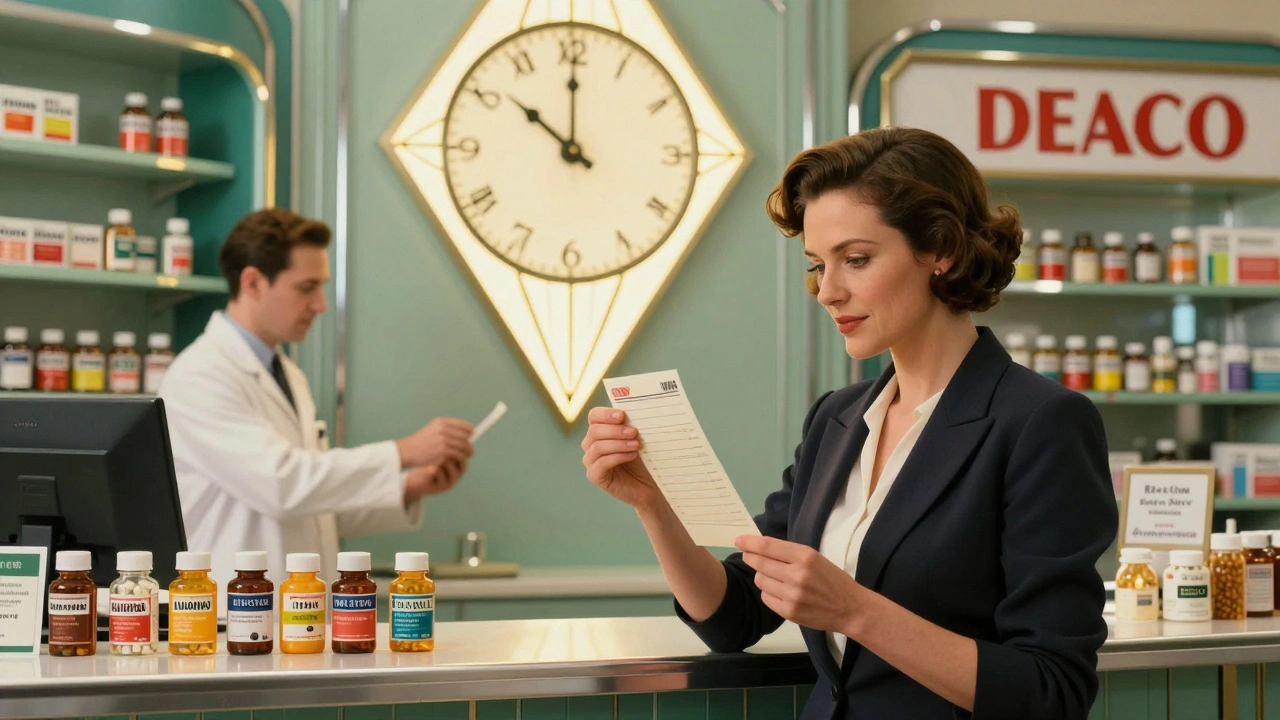
Every year, thousands of people in South Africa get the wrong medicine at the pharmacy-not because the pharmacist made a careless mistake, but because no one stopped to double-check. You walk in with a prescription, wait your turn, get handed a bottle, pay, and leave. But what if the label says metformin when your doctor wrote metoprolol? Or what if the dosage is ten times higher than it should be? These aren’t rare accidents. They happen more often than you think. And the worst part? You don’t have to wait for someone else to fix it. You can protect yourself-with a simple, personal checklist.
Why You Need a Personal Safety Checklist
Pharmacies are busy. Pharmacists are stretched thin. Even the most careful ones can miss a typo, misread a handwriting, or grab the wrong bottle in a rush. Studies show that up to 1 in 20 prescriptions filled in South Africa have some kind of error-wrong drug, wrong dose, wrong patient. Most are caught before they cause harm, but not all. And if you’re on multiple medications, especially for diabetes, heart disease, or high blood pressure, the risk goes up fast. You can’t control the pharmacy’s workload. But you can control what you do before you leave the counter. A personal safety checklist isn’t about doubting the pharmacist. It’s about adding a second set of eyes-your eyes-to the process. It’s the same reason you check your bank statement or your credit card bill. You don’t assume it’s perfect. You verify.Your 5-Step Pharmacy Safety Checklist
Here’s what to do every single time you pick up a prescription. Do this even if you’ve been getting the same medicine for years. Changes happen. Prescriptions get updated. Names get mixed up. Don’t skip this.- Confirm your full name and date of birth-out loud. When the pharmacist calls your name, don’t just walk up. Say, “Yes, that’s me. My full name is [Your Full Name], and I was born on [Date].” This forces them to cross-check your identity with the prescription. Many errors happen because two people have similar names or birthdays.
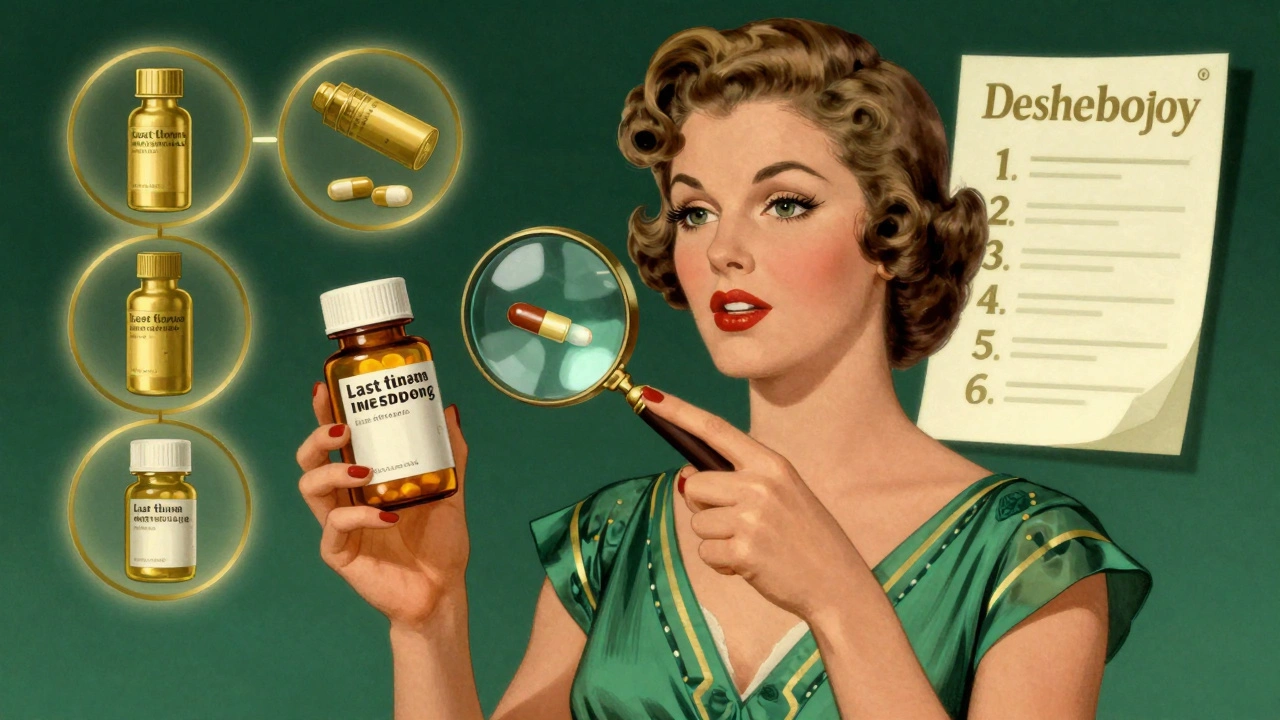
- Compare the pill bottle to your prescription slip. The prescription slip your doctor gave you should list: the medicine name (brand or generic), strength (like 5mg or 500mg), how many pills, and how often to take them. Hold it next to the label on the bottle. Do they match exactly? If the bottle says “Amlodipine 10mg” but your prescription says “Amlodipine 5mg,” stop. Ask why. Don’t assume it’s a typo the pharmacist will fix later.
- Check the physical pills. Open the bottle. Look at the pills. Do they look like the ones you got last time? Color? Shape? Markings? If they’re different, ask: “Is this the same medicine I usually get?” Sometimes, pharmacies switch brands or generics without telling you. That’s legal-but you need to know. A different-looking pill doesn’t mean it’s wrong, but it means you need to ask.
- Ask what the medicine is for. Even if you’ve taken it before, say: “Just to confirm, I’m taking this for [condition], right?” For example: “I’m taking this for high blood pressure?” If the pharmacist says, “Actually, this is for your diabetes,” that’s a red flag. Your doctor may have changed your meds, but you need to know. This step catches mix-ups between similar-sounding drugs like metformin and metoprolol.
- Ask about side effects and what to watch for. Don’t just take the leaflet. Ask: “What’s the most important thing I should watch out for in the first week?” Common side effects like dizziness or nausea are normal. But if you’re told, “If you feel your heart racing or your vision blurs, come back immediately,” that’s critical info. Write it down. If you forget, call the pharmacy later.
What to Bring to Your Pharmacy Visit
You’re not just showing up with a prescription. You’re showing up prepared. Here’s what to carry every time:- Your current medication list-all pills, supplements, and creams. Write them down. Include doses and why you take them. Use a phone note if you don’t have paper. This helps the pharmacist spot interactions.
- Your doctor’s prescription slip, not just the barcode. The slip has details the label might leave out.
- A phone or notebook to write down answers. Don’t rely on memory.
- A photo of your last prescription bottle if you’re unsure about pill appearance. Snap a quick picture when you get home. Use it next time.
What to Do If Something Feels Off
You’re not being difficult. You’re being smart. If something doesn’t match, say it. Use these phrases:- “I’ve been taking this for three months, and the pills look different. Can we double-check?”
- “My doctor prescribed 5mg, but this bottle says 10mg. Did they change it?”
- “I’m not sure I understand why I’m taking this. Can you explain it again?”
Common Mistakes People Make
Even with good intentions, people slip up. Here’s what not to do:- Don’t assume the pharmacist remembers your history. They see 50 people a day. You’re one of them.
- Don’t trust the label alone. Labels can be printed wrong. Machines glitch.
- Don’t wait until you feel sick to check. Prevention beats reaction every time.
- Don’t feel guilty for asking questions. A good pharmacist respects patients who ask.
Real-Life Example: What Went Wrong
In Durban last year, a 68-year-old woman took a new blood pressure pill. She didn’t check the label. She didn’t ask what it was for. The pharmacy had mixed up her prescription with another patient’s. The pill was actually for heart rhythm, not blood pressure. Within three days, she felt dizzy, faint, and had chest pain. She went to the hospital. Her heart rate was dangerously low. The doctor found the error. She spent a week in hospital. She had to restart her meds. She didn’t have to go through that if she’d used the checklist.
How This Fits Into Bigger Safety Systems
You might think, “Why isn’t this standard?” Because right now, pharmacy safety is built around systems-not people. Pharmacists use checklists to verify prescriptions, but those are internal. They’re not designed for you. That’s changing slowly. In countries like Canada and the UK, patients are being trained to verify their meds. In South Africa, it’s still up to you. But that doesn’t mean you can’t lead the change. When you ask questions, you help the system get better.Next Steps: Make It a Habit
Print this checklist. Stick it on your fridge. Save it on your phone. Use it every time you pick up medicine-even refills. After a few visits, you won’t need to read it. You’ll just do it. That’s when you’re truly safe.Medication errors don’t always cause immediate harm. But when they do, they can change your life. You don’t need to be an expert. You just need to be careful. And you’re already doing that by reading this. Now go use the checklist.
Can I trust the pharmacist to catch all mistakes?
Pharmacists are trained to catch errors, but they’re not perfect. They work under pressure, handle dozens of prescriptions a day, and sometimes make human mistakes. Your job isn’t to replace them-it’s to be a backup. A second set of eyes. That’s how safety works in real life.
What if I’m not sure about the medicine’s name or dosage?
Ask the pharmacist to show you the original prescription. Most pharmacies keep digital copies. If they can’t or won’t, call your doctor’s office. You have the right to know exactly what you’re taking. Never guess.
Do I need to check every refill, even if it’s the same medicine?
Yes. Every single time. Pharmacies switch generic brands, change bottle sizes, or mislabel refills. Even if you’ve taken the same pill for years, the label can be wrong. Never assume.
What if the pharmacist gets upset when I ask questions?
A good pharmacist welcomes questions. If someone gets defensive, it’s a red flag. Politely say, “I’m sorry, but I need to be sure this is right for my health.” Then leave and go to another pharmacy. Your safety matters more than their ego.
Can I use a mobile app to help me check my meds?
Yes. Apps like Medisafe or MyTherapy let you log your prescriptions and send alerts. But don’t rely on them alone. They can’t verify what’s in the bottle. Use them as a reminder tool, not a replacement for checking the label and pills yourself.
What to Do After Your Visit
Once you get home:- Store your medicines in a dry, cool place, away from kids and pets.
- Keep your medication list updated. Add new ones, remove old ones.
- Set phone alarms for doses if you take more than one pill a day.
- If you notice a pattern of errors-wrong pills, wrong doses, wrong labels-report it to the pharmacy manager. Write it down. If nothing changes, report it to the South African Pharmacy Council.
Medication safety isn’t a one-time fix. It’s a habit. The more you practice checking, the safer you become. And the safer you are, the more you help make pharmacies better for everyone.
Man i seen this in india too
Pharmacist give me insulin instead of metformin once
I just stared at bottle
Didn't say nothing
Went home took it
Woke up in ER
Now i check everything
Even if i know the pill
Even if its my grandma
Even if she's been taking it 10 years
Its not their job to save you
Its yours
This is so important and so under-discussed. I used to think pharmacists were infallible until my dad nearly died from a dosage error. Now I carry a printed checklist in my wallet. I don't care if people stare. I'd rather be embarrassed than dead.
The epistemological framework here is compelling-agency as a distributed cognitive system where the patient becomes a node of verification within a flawed institutional architecture. The checklist isn't merely procedural; it's an ontological reassertion of bodily sovereignty against algorithmic and human error cascades. The pharmacological ontology of the pill-its color, shape, inscription-is not merely semantic but phenomenological. When the pill looks different, the body knows before the mind processes it. This is embodied epistemology in action. The pharmacy system treats medication as data. But the patient is not a data point. The patient is the final arbiter of biological truth.
why do u need a checklist for a pill
just take what they give u
they know better
u r not a doctor
stop bein weird
also why u take so many meds anyway
u prob just stressin too much
Have you considered that this checklist is just a Band-Aid on a system designed to fail? The pharmaceutical-industrial complex profits from complexity. The more medications you take, the more errors occur, the more you become dependent. This checklist makes you complicit in your own medicalization. The real solution is systemic: universal healthcare, pharmacist-to-patient ratios, and mandatory AI double-checks. Until then, you're just a cog in the machine, checking your own pills like a prisoner counting bricks.
Look, I get it. But this is why America’s healthcare is so broken. In the UK, they have pharmacists who know your entire history. In Canada, they call you before dispensing. Here? You’re on your own. And you know what? That’s fine. We don’t need hand-holding. We need to stop treating medicine like a grocery run. If you can’t handle your own health, maybe you shouldn’t be on 12 pills.
The checklist is a heuristic response to systemic entropy. The pharmacy’s internal QA protocol operates under a 98% accuracy assumption. But in high-complexity polypharmacy environments, the probability of compound error exceeds 12%. The checklist reduces variance. It’s not about trust-it’s about entropy mitigation. The pill’s physical morphology is a cryptographic signature. Discrepancies are non-negotiable. You don’t verify because you distrust. You verify because the system is designed to be probabilistically unsafe.
I work in a pharmacy in Chicago and I can tell you-patients who ask questions make our jobs easier. We actually love it when someone says, ‘Wait, this doesn’t look right.’ It gives us a chance to catch our own mistakes before something bad happens. I’ve had patients bring in pictures of their old pills. We keep those on file. It’s not weird. It’s smart. And honestly? It makes me feel like I’m doing something meaningful.
OMG YES 😭 I once took a pill that looked like a candy and didn’t check… my heart was racing for 3 hours 😵💫 I now have a sticky note on my fridge with this checklist and I show it to the pharmacist every time 🙏 I even printed it in bold font and laminated it 🤯
You’re not just protecting yourself-you’re protecting everyone else too! Every time you speak up, you make the system better for the next person. I used to be shy but now I say ‘I’m checking my meds’ like it’s my superpower 💪 You’re not being difficult-you’re being a hero. Keep going. You’ve got this!
This checklist is the emotional labor of modern healthcare. You’re not just verifying dosage-you’re performing the role of the absent physician, the underfunded nurse, the overworked pharmacist. You’re the unpaid quality assurance officer of a broken system. And yet you’re blamed for being ‘difficult.’ The real tragedy isn’t the error. It’s that your vigilance is the only thing keeping you alive-and society rewards you with silence.
I’ve been doing this for years. Always check the name, the dose, the pills. Always. My mom had a stroke because she trusted the label. I won’t let that happen again. I write everything down. I keep a folder. I take pictures. I’m not paranoid. I’m prepared.
I’m sorry but I have to say this-this checklist is a symptom of a society that has normalized medical neglect. You’re not just checking pills-you’re performing emotional labor for a system that refuses to care. And now you’re teaching others to do the same? This isn’t empowerment. It’s exploitation dressed as safety. Someone should be holding the pharmacy accountable, not asking patients to become amateur pharmacists. This isn’t bravery. It’s resignation.