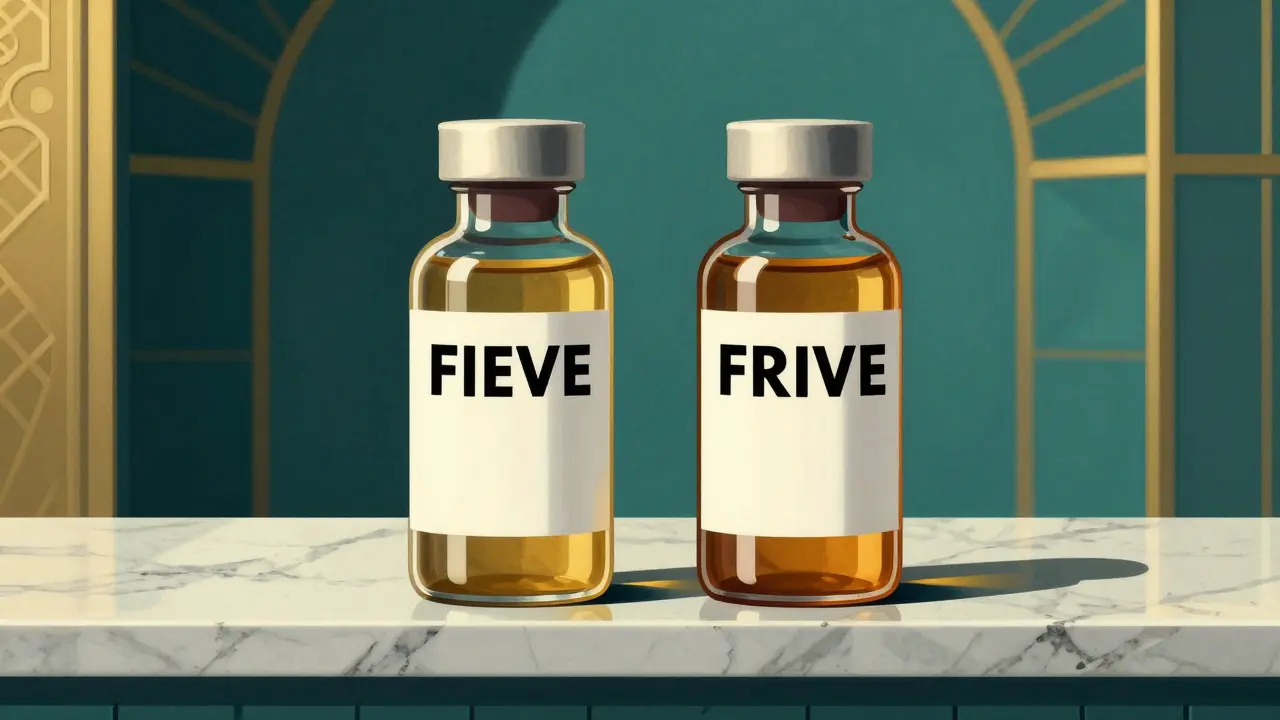
Imagine a pharmacy where two bottles sit side-by-side. One is predniSONE and the other is predniSOLONE. To a tired nurse at 3 AM or a rushed pharmacist, those names look almost identical. A single slip of the eye can lead to a patient receiving the wrong dose or the wrong drug entirely. This is where Tall-Man Lettering is a typographic technique that uses selective capitalization within drug names to differentiate look-alike, sound-alike (LASA) medications. By breaking the visual pattern of a word, it forces the brain to stop and notice the difference.
The Basics of LASA Medications
In the medical world, we deal with LASA Medications, which is shorthand for "Look-Alike, Sound-Alike." These are drugs that either have names that look similar when written or sound similar when spoken. The risk is high; research from the Institute for Safe Medication Practices (ISMP) has shown that roughly one in every 1,000 orders filled in hospitals can result in an error due to name confusion.
Tall-man lettering isn't just about random caps. It's a strategic tool designed to reduce the cognitive load on healthcare providers. Instead of relying on a mental checklist, the visual cue does the work for you. For example, instead of writing vinblastine and vincristine, using vinBLAStine and vinCRIStine makes the distinction immediate and obvious.
How to Implement Tall-Man Lettering Effectively
If you're looking to bring this system into your clinic or pharmacy, you can't just wing it. Inconsistency is actually a risk factor-if one system uses one pattern and another uses something else, you're just adding to the confusion. Following a standardized list is the only way this works.
The U.S. Food and Drug Administration (FDA) suggests capitalizing the dissimilar parts of the name, starting from the left. For instance, if you're distinguishing between CISplatin and CARBOplatin, the capitalization starts where the names diverge. The FDA maintains a specific list of recommended pairs, while the ISMP offers a more extensive list of 252 pairs that is updated quarterly to account for new drugs entering the market.
To roll this out in a professional setting, consider this typical five-phase approach:
- Form a Working Group: Get your pharmacists, IT staff, and nursing leads in one room to agree on which list (FDA or ISMP) you'll follow.
- Audit Your Systems: Identify every place drug names appear. This includes Electronic Health Records (EHR), automated dispensing cabinets, and physical prescription labels.
- Set the Rules: Decide exactly how the lettering will appear across all platforms to ensure a seamless visual transition.
- Execute the Change: Update the software and labels. This usually takes the most time, often around 8 weeks for a medium-sized facility.
- Monitor Results: Track "near-misses" and errors to see if the changes are actually helping.
Comparing the Major Standards
Depending on where you practice, you might encounter different guidelines. While the goal is the same, the specific letters capitalized can vary. For example, the FDA might focus on one part of a name while the ISMP focuses on another.
| Feature | FDA Guidelines | ISMP Guidelines | National Mixed-Case (Australia) |
|---|---|---|---|
| Primary Goal | Regulatory safety standard | Clinical practice safety | National healthcare consistency |
| List Size | ~72 specific pairs | ~252 pairs (Updated quarterly) | ~192 pairs |
| Approach | Left-to-right divergence | Maximum visual contrast | National consensus list |

Real-World Pros and Cons
Is it a magic bullet? Not exactly. Many experts, including those at the American Society of Health-System Pharmacists, view it as a "necessary but insufficient" part of safety. It's a layer of defense, not the whole wall.
The Wins:
- Lower Cognitive Load: It's much faster to see "SONE" vs "SOLONE" than to read every single letter of a ten-letter word.
- Low Cost: Unlike buying expensive new hardware, updating a text field in a database is relatively cheap. Some hospitals have implemented this for as little as AU$1,200.
- Immediate Impact: In simulated tests, eye-tracking studies showed a 35% drop in selection errors when tall-man lettering was used.
The Pitfalls:
- The "False Security" Trap: Some clinicians argue that relying on lettering makes people stop double-checking, which is dangerous.
- Font Issues: If your EHR uses a tiny, cramped font, the capital letters don't stand out, rendering the system useless.
- Syllable Blindness: It doesn't work well for drugs that sound identical but are spelled differently, or drugs where the difference is only at the very beginning.
Integrating Technology and AI
We're moving beyond static text. Modern systems like Epic Systems are piloting AI-enhanced lettering. Instead of a fixed list, the AI looks at real-time error data. If a specific drug is being mixed up frequently in a certain ward, the system can dynamically adjust the capitalization to make that specific drug stand out more. Preliminary data suggests this is 29% more effective than standard lists.
However, as barcode scanning and voice recognition become universal, some wonder if we'll even need this. The consensus from safety experts is that as long as humans are reading labels, we need a visual safeguard. Even the most advanced automated system can't stop a human from grabbing the wrong vial if the label isn't clear.
Does tall-man lettering actually stop medication errors?
It significantly reduces selection errors by providing a visual alert. While some studies show mixed results on actual patient harm, simulated eye-tracking tests show a 35% reduction in errors. It is most effective when used as part of a "defense-in-depth" strategy alongside barcode scanning and double-checks.
Which list should I use: FDA or ISMP?
The FDA list is a regulatory baseline and is generally smaller. The ISMP list is more comprehensive and updated more frequently, making it a favorite for clinical pharmacists. The key is not which one you choose, but that you apply it consistently across every single system in your facility.
Can I just create my own tall-man patterns?
No. Creating your own patterns is dangerous because it leads to inconsistency. If a nurse is used to one pattern in the EHR but sees another on the pharmacy label, it can cause a "cognitive clash" that actually increases the risk of an error. Always use an established, peer-reviewed list.
Is tall-man lettering required by law?
While not a law in the sense of a criminal statute, organizations like The Joint Commission (NPSG.01.01.01) require the differentiation of look-alike drug names for accreditation. Failure to have a system for managing LASA drugs can result in failing safety audits.
What are the biggest challenges during implementation?
The biggest hurdle is legacy software. Older pharmacy management systems may not support mixed-case lettering or may have font restrictions that make the capitals look like regular letters. Coordination between the IT department and the clinical staff is essential to ensure the lettering is visible and consistent.
Next Steps for Healthcare Managers
If you're managing a facility, don't treat this as a one-time IT update. Start by performing a gap analysis: find where your current labels differ from the ISMP or FDA lists. If you have a small clinic, prioritize the top 20 most commonly used LASA drugs in your specific practice.
For those in larger hospitals, coordinate with your EHR vendor to see if they have built-in safety modules. Ensure your nursing staff is trained to recognize these patterns not as "typos," but as critical safety alerts. Finally, remember that no matter how clear the lettering is, the final check should always involve a secondary verification for high-alert medications.