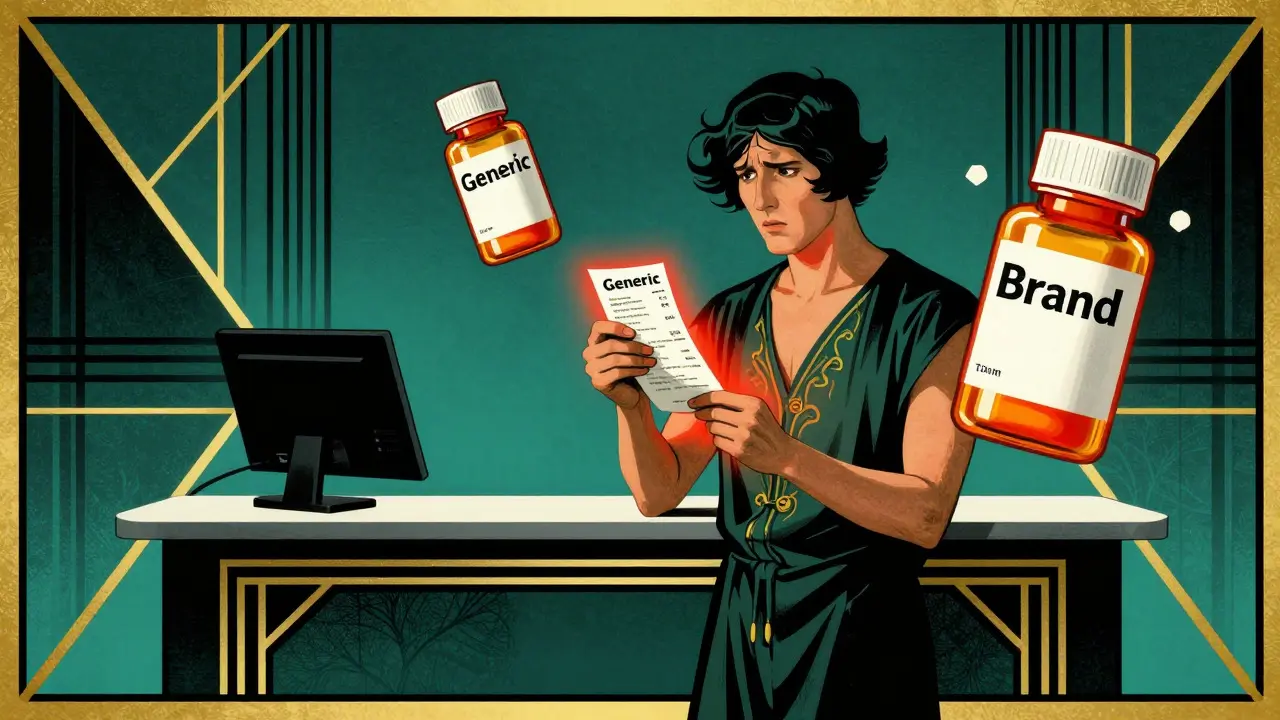
You walk into the pharmacy, hand over your prescription, and stare at the receipt. The generic option is supposed to be cheaper. It’s the golden rule of healthcare, right? Yet, you’ve heard stories-maybe even experienced it yourself-where the "cheap" generic ended up costing more than the brand-name version. How does that happen?
It feels like a glitch in the matrix. But it isn’t. The system we use to price medications in the United States is complex, often counterintuitive, and heavily influenced by insurance structures rather than just the pill itself. While generic drugs are indeed significantly less expensive on paper, what you actually pay out of pocket depends on a web of factors including your insurance plan type, government policies like Medicare Part D, and opaque supply chain practices.
The Basic Rule: Why Generics Are Usually Cheaper
To understand why things sometimes go wrong, we first need to look at how they usually work. Generic drugs are medications that contain the same active ingredients as their brand-name counterparts but are sold under different names at lower prices. The Food and Drug Administration (FDA) requires these generics to demonstrate bioequivalence, meaning they work the same way in your body as the original brand-name drug. They may have different inactive ingredients-like fillers or binders-but the therapeutic effect is identical.
Because generic manufacturers don’t have to recoup billions in research and development costs, they can sell these drugs for a fraction of the price. On average, generic medications cost 80% to 85% less than their brand-name versions. In fact, nine out of ten prescriptions filled in the U.S. are for generic drugs. Despite this volume, brand-name drugs still account for nearly 75% of total prescription drug expenditures because their list prices are so high.
For most people with standard private insurance, this math works in your favor. You get the cheap generic, your insurance covers a portion, and you pay a small copay. But this simple picture changes dramatically depending on how your specific insurance plan is designed.
How Your Insurance Plan Changes the Price Tag
Your out-of-pocket cost isn't determined solely by the drug's price; it's determined by your insurance benefit design. A 2021 study published in JAMA Network Open by Rome et al. analyzed 79 brand-name drugs and found no direct correlation between drug list prices and what patients actually paid. Why? Because of two main payment structures: fixed copayments and coinsurance.
- Fixed Copayments: If your plan charges a flat fee (e.g., $10 per prescription), you are insulated from price hikes. Even if the manufacturer raises the list price by 16.7% (a median increase seen in some studies), you still pay $10. The insurer absorbs the difference.
- Coinsurance or Deductibles: If your plan requires you to pay a percentage of the drug’s cost (e.g., 20%), you are directly exposed to list price increases. When the price goes up, your bill goes up.
This means that for many commercially insured patients, the sticker price of a drug is irrelevant if they have a flat copay. However, for those with high-deductible health plans or coinsurance models, every dollar increase in the manufacturer’s list price translates directly to higher out-of-pocket spending for the patient.
The Medicare Part D Trap: When Generics Cost More
If you are on Medicare Part D, the rules change again, and here is where the system gets truly confusing. There is a structural flaw in Medicare known as the "coverage gap" or "donut hole." This gap exists between when you reach your initial coverage limit and when you hit catastrophic coverage.
Here is the catch: Brand-name drug manufacturers are required by law to provide discounts during this coverage gap. These discounts count toward your out-of-pocket spending, helping you reach catastrophic coverage faster. Once you hit catastrophic coverage, you only pay 5% of the drug price. Generic drug manufacturers, however, do not provide these same mandatory discounts.
Research from Vanderbilt University Medical Center revealed a startling consequence of this policy. In 2019, patients using brand-name drugs needed to spend only $982 out of pocket to reach catastrophic coverage. Patients relying on generic drugs had to spend $3,730-a threshold 279% higher. This meant that for some patients, taking a brand-name drug was actually financially safer because it helped them exit the expensive coverage gap sooner.
This disparity worsened in 2020 when the out-of-pocket spending requirement for catastrophic coverage increased from $5,100 to $6,350. For Medicare enrollees, this created scenarios where high-priced specialty generics could cost patients more out of pocket than their brand-name counterparts simply due to how the coverage gap mechanics work.
| Feature | Generic Drugs | Brand-Name Drugs |
|---|---|---|
| Average Cost Reduction | 80-85% less than brand | Baseline price |
| Prescription Volume | ~90% of all prescriptions | ~10% of all prescriptions |
| Total Expenditure Share | ~18% of retail drug spending | ~75% of retail drug spending |
| Medicare Coverage Gap Discount | No mandatory discount | Mandatory manufacturer discount |
| Bioequivalence | Required by FDA | N/A (Original reference) |

The Hidden Middlemen: Why You Might Overpay for Generics
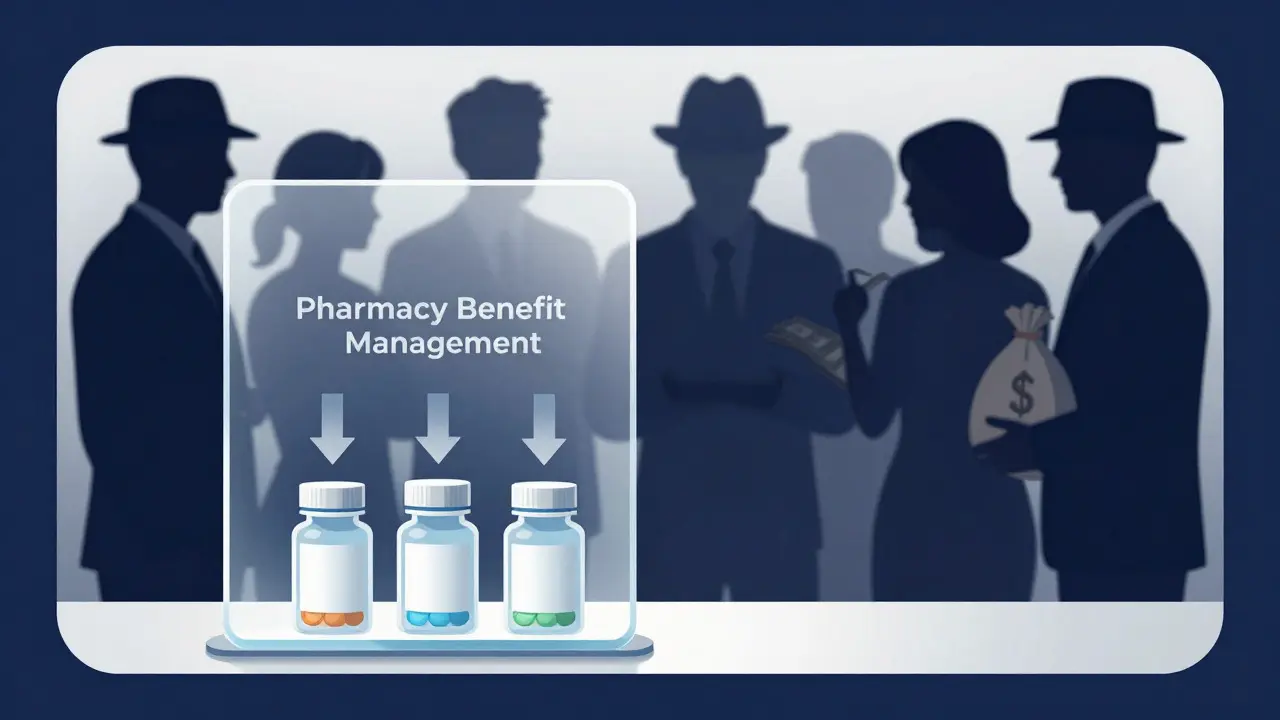
Even outside of Medicare quirks, there is another reason you might be paying too much for generics: lack of price transparency. Pharmacy Benefit Managers (PBMs) act as intermediaries between insurers, pharmacies, and drug manufacturers. They negotiate rebates and manage formularies, but their profits are often opaque.
An analysis by the Schaeffer Center at USC found that market distortions cause patients to potentially overpay for generics by 13% to 20%. This happens because middlemen prioritize higher intermediary profits over lower system costs. Despite generics saving the U.S. healthcare system an estimated $338 billion in 2020 alone, patients are still bleeding money due to these inefficiencies.
Furthermore, while total prices for generic drugs (what the insurer pays plus what you pay) have fallen by nearly 80% over recent years, direct out-of-pocket payments by insured consumers have declined by only about 50%. This suggests that insurers are capturing more of the savings, while patients see a smaller share of the benefit.
Workarounds: Cash Prices and Transparent Pharmacies
So, what can you do if your insurance is making you pay more for a generic than expected? You might consider bypassing insurance entirely. This sounds counterintuitive, but it’s becoming a viable strategy for many.
In 2020, only 4% of U.S. prescriptions were filled with cash payments. However, 97% of those cash payments were for generic drugs. Models like Mark Cuban’s Cost Plus Drug Company (MCCPDC) and Blueberry Pharmacy have gained popularity by offering transparent, low-margin pricing. A 2024 study by Kouzy found that patients could save on 11.8% of generic prescriptions by purchasing from MCCPDC instead of using insurance, with a median savings of $4.96 per script.
Uninsured patients saw the greatest benefits from these alternative models, while Medicaid patients saw little to no savings due to existing caps on pharmacy reimbursement rates. For commercially insured individuals, checking the cash price against your copay before buying can reveal surprising deals. If your insurance copay is $15, but the cash price at a transparent pharmacy is $8, you’re better off paying cash.
Navigating Prior Authorizations and Substitutions
Sometimes, the issue isn’t just price-it’s access. Doctors can require brand-name drugs by writing "dispense as written" or "do not substitute" on prescriptions. Conversely, if you prefer a brand despite the cost, you can refuse the generic substitution.
When a brand is medically necessary-for example, if a patient has an allergy to a filler in the generic-the doctor must file a prior authorization with the insurance company. This process involves the insurer reviewing the medical reasoning before deciding whether to cover the more expensive brand. Without this step, the patient is left footing the entire bill.
Dr. Eric D’Agostino, a pharmacist at Brown University Health, emphasizes that generic medications are just as safe and effective as branded ones. Misconceptions about quality often drive unnecessary demand for brands, leading to higher costs for patients who don’t realize they are paying a premium for marketing rather than medicine.
Looking Ahead: Policy Changes and Caps
The landscape is shifting. There is ongoing congressional interest in capping out-of-pocket spending in Medicare Part D, which would alleviate some of the burden on seniors. The Medicare Payment Advisory Commission (MedPAC) has also recommended addressing the imbalance in the coverage gap, though experts warn that simply excluding manufacturer discounts from out-of-pocket calculations might level the playing field by making brand-name drugs more expensive, rather than making generics cheaper.
As of 2026, patients remain caught in the middle of these policy debates. Until systemic reforms take full effect, understanding your specific insurance design, checking cash prices, and questioning unexpected bills are the best tools available to manage your medication costs.
Are generic drugs really the same as brand-name drugs?
Yes. The FDA requires generic drugs to contain the same active ingredients and demonstrate bioequivalence to brand-name drugs. They work the same way in the body, though they may have different inactive ingredients like fillers or dyes.
Why did my generic drug cost more than the brand name?
This can happen in Medicare Part D due to the "coverage gap" mechanics. Brand-name manufacturers provide discounts in the gap that count toward your out-of-pocket maximum, helping you reach catastrophic coverage faster. Generics do not always offer these same discounts, potentially leaving you paying more out of pocket for longer.
Should I pay cash for my generic prescription instead of using insurance?
It depends on your plan. If your insurance copay is higher than the cash price at a transparent pharmacy like Cost Plus Drug Company, paying cash can save you money. Studies show patients can save on a significant portion of generic prescriptions by bypassing insurance for cash purchases.
What is the difference between a copay and coinsurance?
A copay is a fixed amount you pay per prescription (e.g., $10), regardless of the drug's price. Coinsurance is a percentage of the drug's cost (e.g., 20%). With coinsurance, if the drug price rises, your out-of-pocket cost rises too. With a copay, you are protected from price hikes.
Do Pharmacy Benefit Managers (PBMs) affect my drug costs?
Yes. PBMs negotiate prices between insurers and manufacturers. Lack of transparency in PBM practices can lead to patients overpaying for generics by 13-20% due to middlemen profits and supply chain inefficiencies, according to research from the USC Schaeffer Center.