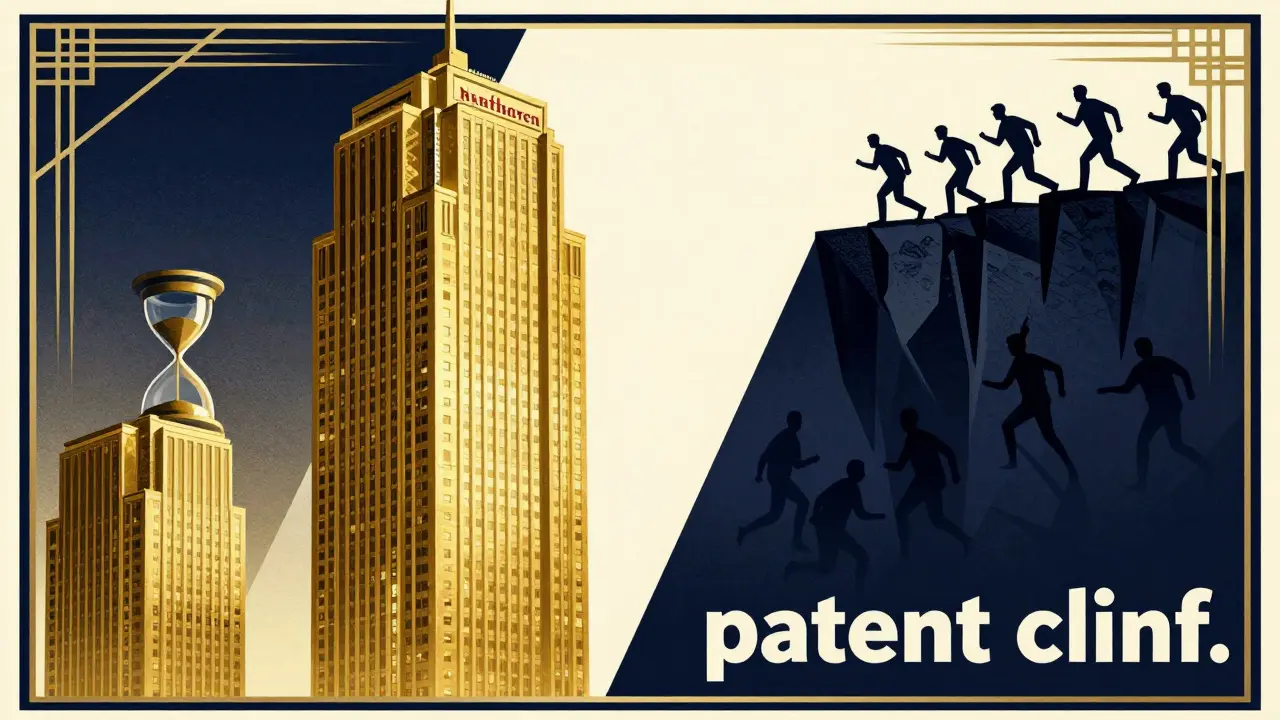
Imagine you’ve spent billions developing a life-saving drug. You hold the patent, you control the market, and the revenue is flowing in. Then, suddenly, the clock runs out. Competitors rush in with cheaper versions, and your sales plummet by up to 90% in a single year. This "patent cliff" is every pharmaceutical company’s worst nightmare. But there’s a loophole-a strategic move that lets big pharma companies keep selling their own product at lower prices without losing total control. It’s called an authorized generic.
Authorized generics are not just a quirky footnote in the industry; they are a calculated financial weapon. They allow brand-name manufacturers to compete directly against the very competitors trying to steal their market share. So, why do companies like Pfizer or Merck choose this path? The answer lies in protecting revenue, manipulating market dynamics, and keeping patients on the exact same formulation they trust.
What Exactly Is an Authorized Generic?
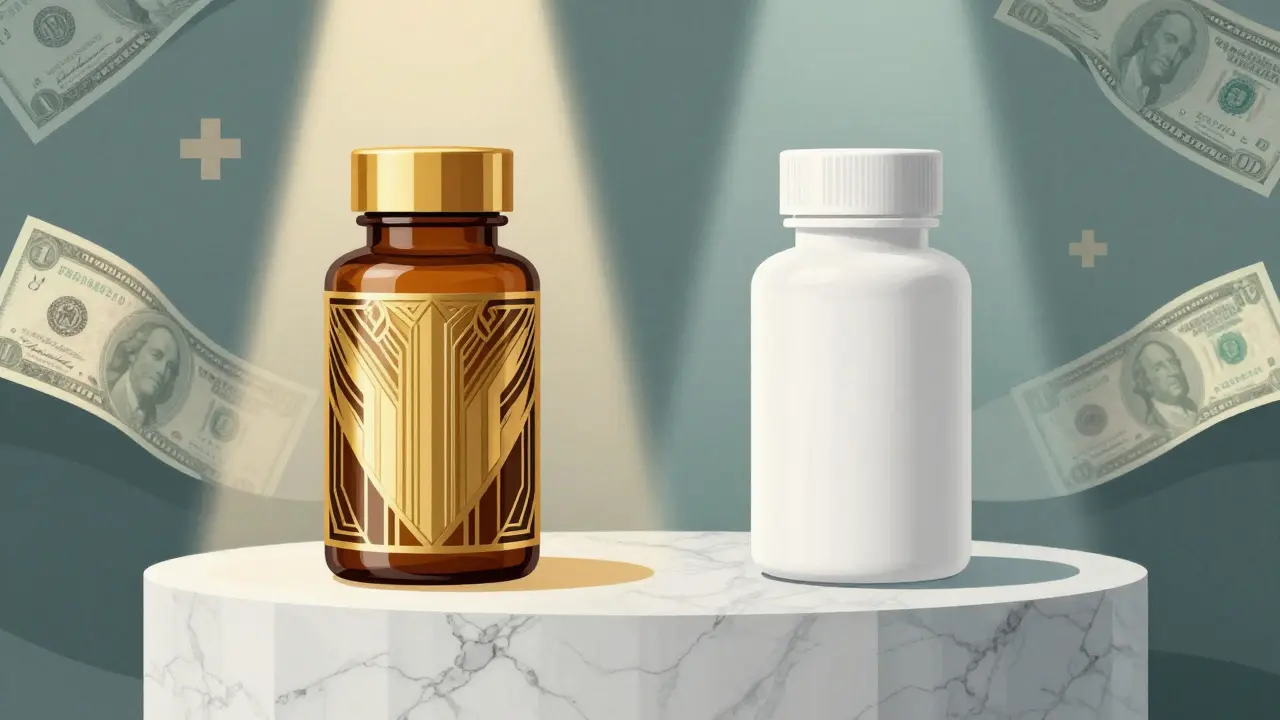
To understand the strategy, we first need to define the product. An authorized generic is a prescription drug that contains the exact same active and inactive ingredients as its brand-name counterpart but is sold under a different name or label, usually at a lower price. Crucially, it is manufactured by the original brand company itself.
This is where it gets interesting. A traditional generic drug is made by a completely different company. That competitor must prove their version is "bioequivalent"-meaning it works the same way in the body-but they can use different fillers, dyes, or binders (inactive ingredients). An authorized generic skips all of that. It comes from the same factory, using the same recipe, under the same New Drug Application (NDA) as the brand name. The only difference is the box it comes in and the price tag.
Think of it like this: If the brand name is the premium, branded coffee sold at a fancy cafe, the traditional generic is a store-brand coffee that tastes similar but uses different beans. The authorized generic is the exact same beans from the same roaster, just repackaged in a plain bag and sold at a discount grocery store next door. You get the same quality, but the manufacturer captures the savings instead of letting a competitor take them.
The Core Motivation: Defending Against the Patent Cliff
The primary driver for launching an authorized generic is defense. When a drug’s patent expires, the monopoly ends. In the United States, the Hatch-Waxman Act grants the first generic applicant 180 days of exclusivity. During this window, only one generic competitor can legally sell the drug. This creates a temporary duopoly: the expensive brand name and the single, cheaper generic.
If the brand company does nothing, that sole generic competitor enjoys massive profits because they face no other cheap alternatives. Patients switch en masse, and the brand loses most of its market share. By launching an authorized generic during this 180-day window, the brand company inserts itself into the low-price tier. According to data from Health Affairs (2022), about 70% of authorized generics in markets with this exclusivity period launch before or during this window.
This move serves two purposes:
- Capping Competitor Profits: By competing with the first generic entrant, the brand prevents that competitor from setting high "monopoly" generic prices. The Federal Trade Commission (FTC) noted in their 2011 report that prices were significantly lower when innovators launched authorized generics during this period.
- Preserving Revenue: Instead of losing 100% of the volume to the generic, the brand retains some sales through its own authorized version. For a blockbuster drug making $1 billion a year, capturing even 15-20% of the generic market via an authorized version can save over $100 million annually.
Market Segmentation and Price Discrimination
Economists call this "price discrimination," but in plain English, it means charging different prices to different customers for the same product. Pharmaceutical companies use authorized generics to segment the market based on willingness to pay.
Not all patients or insurance plans react the same way to cost. Some insurers will only cover the cheapest option. Others might still prefer the brand name if it’s covered by a specific formulary. By offering both a premium brand and a discounted authorized generic, the manufacturer casts a wider net.
| Feature | Brand Name Drug | Traditional Generic | Authorized Generic |
|---|---|---|---|
| Manufacturer | Original Innovator | Third-Party Competitor | Original Innovator |
| Ingredients | Proprietary Formula | Bioequivalent Active Ingredients | Identical to Brand (Active & Inactive) |
| Price Point | Premium | Low | Low (but higher than traditional generics) |
| Regulatory Pathway | New Drug Application (NDA) | Abbreviated NDA (ANDA) | Original NDA |
| Strategic Goal | Maximize Profit Pre-Patent Expiry | Capture Market Share Post-Expiry | Defend Revenue & Limit Competitor Gains |
This dual-channel approach ensures that price-sensitive consumers don’t flee entirely to a competitor’s generic. They might switch from the brand, but they stay within the same corporate family. This is particularly effective for drugs where patient loyalty to a specific brand name is strong, or where physicians are hesitant to switch patients to unknown formulations.
The Regulatory Shortcut: Speed Over Bureaucracy
Time is money in the pharmaceutical industry. Traditional generic manufacturers must go through the Abbreviated New Drug Application (ANDA) process. While faster than creating a new drug from scratch, this still involves rigorous testing to prove bioequivalence and can take months or even years depending on regulatory backlogs.
Authorized generics bypass this hurdle entirely. Because they are produced under the original brand’s NDA, they do not need separate FDA approval for safety and efficacy. The manufacturer simply notifies the FDA that they intend to market the drug under a different label. This allows the brand company to hit the market almost instantly when generic threats emerge.
This speed is a critical tactical advantage. If a brand company sees a competitor filing for generic approval, they can launch their authorized version weeks later, rather than waiting for a third-party generic to navigate the ANDA process. It turns a slow, defensive posture into a rapid counter-attack.
Consumer Trust and Clinical Continuity
You might wonder: Do patients actually care? Surprisingly, yes. A 2005 study by Roper Public Affairs & Media found that over 80% of Americans wanted the option of authorized generic prescription drugs. Why? Because many patients have experienced issues with traditional generics.
While active ingredients must be identical, inactive ingredients (fillers, binders, coatings) can differ between brands and traditional generics. For most people, this doesn’t matter. But for sensitive individuals, these differences can cause allergic reactions, digestive issues, or perceived changes in effectiveness. This is especially true for drugs with a narrow therapeutic index, where small changes in absorption can impact health outcomes.
An authorized generic offers the best of both worlds: the affordability of a generic with the clinical continuity of the brand. Physicians who have prescribed the brand name for years know exactly how it performs. Knowing that the authorized generic is chemically identical gives them confidence to recommend it, knowing their patients won’t experience unexpected side effects from new fillers.

Real-World Examples of the Strategy
This isn’t just theory; it’s a widespread practice. Between 2010 and 2019 alone, researchers identified 854 authorized generic launches in the U.S. market. Here are a few notable cases:
- Celebrex (Celecoxib): Pfizer launched an authorized generic of its popular arthritis drug Celebrex. By doing so, they maintained a presence in the generic market while preventing competitors from dominating the space.
- Colcrys (Colchicine): Prasco Laboratories marketed an authorized generic of Colcrys, allowing them to capture price-sensitive segments while retaining the premium brand for those willing to pay more.
- Concerta (Methylphenidate ER): Watson/Activas used an authorized generic strategy for this ADHD medication, ensuring that even as patents expired, they controlled a significant portion of the supply chain.
Companies like Greenstone Pharmaceuticals (a subsidiary of Pfizer) and Impax Laboratories have built entire business models around this strategy. They don’t just dip their toes in; they specialize in managing the transition from brand to generic, maximizing the tail-end value of blockbuster drugs.
The Future: Authorized Biosimilars?
As the industry evolves, so does the strategy. The next frontier is biologics-complex drugs derived from living organisms, such as insulin or monoclonal antibodies. These drugs face their own version of patent cliffs, with competitors entering via the biosimilar pathway.
Industry analysts predict that brand manufacturers will attempt to adapt the authorized generic model to biologics, creating "authorized biosimilars." However, the regulatory landscape here is murkier. The FDA has not explicitly defined a pathway for authorized biosimilars, creating both uncertainty and opportunity. As Deloitte’s 2023 pharmaceutical trends report suggests, we may see more sophisticated pricing models and outcome-based contracts tied to these products in the coming years.
For now, authorized generics remain a powerful tool in the pharma arsenal. They protect jobs, preserve research funding, and offer patients a trusted, affordable alternative. It’s a win-win for the manufacturer and the consumer, leaving only the third-party generic competitors wondering why they lost the battle.
Are authorized generics safe?
Yes, authorized generics are considered just as safe as the brand-name drug. Because they contain the exact same active and inactive ingredients and are manufactured by the same company under the same FDA-approved New Drug Application (NDA), they meet the same strict safety and quality standards. The only differences are the packaging and the price.
How are authorized generics different from regular generics?
The main difference is the manufacturer and the formulation. Regular generics are made by different companies and may use different inactive ingredients (like fillers or dyes), though the active ingredient must be bioequivalent. Authorized generics are made by the original brand company and use the identical formula, including all inactive ingredients. They also bypass the lengthy ANDA approval process required for traditional generics.
Why would a brand company sell its own drug at a lower price?
It’s a strategic move to protect revenue when patents expire. By launching an authorized generic, the brand company competes with third-party generic manufacturers. This helps them retain some market share that would otherwise be lost entirely to competitors. It also prevents the first generic competitor from enjoying a temporary monopoly and charging higher prices during the 180-day exclusivity period.
Do doctors prefer prescribing authorized generics?
Many doctors appreciate authorized generics because they offer clinical continuity. Since the formulation is identical to the brand name, physicians don’t have to worry about patients experiencing side effects due to different inactive ingredients found in traditional generics. This is particularly important for patients with sensitivities or those taking drugs with narrow therapeutic indices.
Is the authorized generic strategy legal?
Yes, it is fully legal and regulated by the FDA. The Federal Trade Commission (FTC) has monitored this practice and found that it often leads to lower prices for consumers during the critical period after patent expiration. While some critics argue it can limit competition, the evidence shows that authorized generics increase competition by adding another low-cost option to the market.