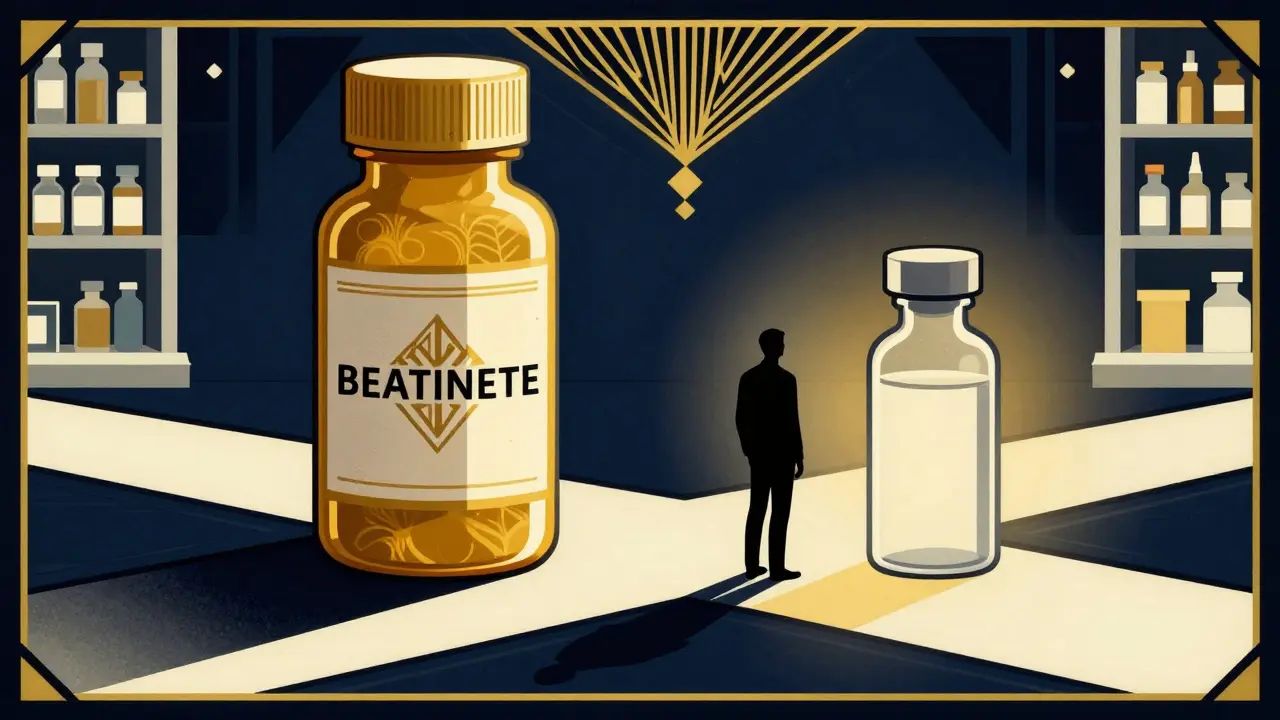
Why would a patient stick with a $500 monthly prescription when an equally effective generic costs just $20? Traditional economics says it makes no sense. Rational actors should always choose the cheaper option if the outcome is the same. But in the real world of pharmaceutical decision-making, logic often takes a backseat to fear, habit, and trust. This isn't about patients being "irrational" or "uneducated." It's about how our brains are wired.
This is where behavioral economics comes in. By blending psychology with economic theory, we can see why people make the choices they do-and how to design systems that help them make better ones. If you're a healthcare provider, a policy maker, or even a patient trying to understand your own habits, understanding these hidden drivers is crucial. The stakes are high: non-adherence costs the U.S. healthcare system $289 billion annually and contributes to 125,000 avoidable deaths each year.
The Psychology Behind the Prescription
To understand why patients reject cheaper alternatives, we have to look at three major cognitive biases identified by pioneers like Daniel Kahneman and Amos Tversky. These aren't minor quirks; they are powerful forces that override price sensitivity almost every time.
- Loss Aversion: We feel the pain of losing something twice as strongly as the pleasure of gaining something equivalent. For a patient on a stable medication, switching to a new drug feels like a risk of losing their current health status. Research shows that 68% of patients will stay on their current regimen even if an alternative is 30% cheaper, simply because they fear the unknown side effects of the new option.
- Risk Aversion: In healthcare, the potential downside of a wrong choice (getting sicker) feels catastrophic compared to the upside of saving money. This leads to "status quo bias," where sticking with what you know is the safest bet, regardless of cost.
- Confirmation Bias: Patients often believe that more expensive drugs are inherently safer or more effective. A 2022 study found that despite evidence to the contrary, many consumers associate higher prices with higher quality, leading them to actively seek out brand-name drugs over generics.
These biases explain why simple price transparency rarely changes behavior. You can't just show a patient a lower price and expect them to switch. You have to address the emotional weight of the decision.
Beyond Education: Nudges That Work
For decades, the standard solution for poor medication adherence was education. Hand out brochures. Explain the benefits. Tell patients why taking their pills matters. While well-intentioned, this approach has limited impact. A 2022 scoping review of 44 studies showed that traditional educational programs typically yield only a 5-8% improvement in adherence.
Behavioral economics offers a different toolkit: "nudges." These are subtle changes to the environment or presentation of choices that guide behavior without restricting freedom. Here are three proven strategies:
- Defaults: This is the most powerful nudge. When doctors' electronic health records (EHRs) automatically suggest the most appropriate, cost-effective drug as the first option, prescribing patterns shift dramatically. One study found that modifying order sets during drug shortages increased appropriate substitutions by 37.8%. Patients don't have to think; the right choice is already made for them.
- Framing Effects: How you present information changes how it's received. In vaccination campaigns, telling people a vaccine is "95% effective" increases uptake by 18.4 percentage points compared to saying it is "5% ineffective." The math is the same, but the psychological impact is vastly different. Apply this to prescriptions: focus on what the patient gains (energy, clarity, longevity) rather than what they lose (symptoms, risk).
- Social Norms: We are social creatures who look to others for cues on how to behave. An HIV adherence study showed a 22.3% improvement when clinics displayed posters showing that "Most patients in this clinic take their meds daily." Knowing that peers are adhering creates a gentle pressure to conform to positive health behaviors.
Barriers to Adherence: It's Not Just About Willpower
Understanding the 'why' is only half the battle. To improve outcomes, we must also identify the specific barriers that prevent patients from following their treatment plans. Cencora research highlights four primary hurdles that require tailored interventions:
| Barrier | Impact on Adherence | Recommended Behavioral Intervention |
|---|---|---|
| Polypharmacy | Each additional medication reduces adherence by 8.3% | Simplify regimens; use pill organizers with clear visual cues. |
| Asymptomatic Conditions | Adherence rates are 32.7% lower than for symptomatic conditions | Connect medication to long-term goals (e.g., "Stay active for your grandkids"). |
| Negative Medication Beliefs | Accounts for 41.2% of discontinuations | Address fears directly; provide transparent data on side effects vs. benefits. |
| Mental Health Comorbidities | Depression reduces adherence by 28.4% | Integrate mental health support into chronic care management. |
Notice that cognitive load plays a huge role here. Patients managing multiple medications face adherence rates that are 23.7% lower than those on single-drug regimens. The complexity itself is a barrier. Simple solutions, like reducing dosing frequency, can have a linear positive effect on compliance.

The Role of Technology and Digital Therapeutics
Technology is transforming how we apply behavioral insights. SMS reminders are cheap and effective, but framing matters. A 2021 study found that messages framed around loss aversion-such as "Don't lose your streak!"-improved adherence by 19.7% compared to neutral reminders like "Take your medication."
More advanced solutions are emerging too. Smart pill bottles that track usage and send feedback to both patients and providers show a 24.3% higher adherence rate. However, cost remains a factor. These devices cost about $47.50 per patient monthly, compared to $8.25 for basic SMS programs. Healthcare systems must weigh the ROI carefully, especially since only 38.4% of community hospitals currently have dedicated resources for behavioral economics initiatives.
Looking ahead, machine learning is set to personalize these nudges further. Early pilot studies from 2023 suggest that algorithms predicting individual responsiveness to specific interventions could increase effectiveness by 42.3%. Imagine a system that knows Patient A responds best to social proof, while Patient B needs financial incentives, and adjusts its messaging accordingly.
Ethical Considerations and Implementation Challenges
While the results are promising, applying behavioral economics isn't without controversy. Some critics, including Harvard Medical School professor Dr. Aaron Kesselheim, argue that constraining clinician prescribing behaviors through default settings can be unethical. Others counter that these interventions preserve liberty because they can be overridden if the prescriber chooses to act differently.
Implementation also faces practical hurdles. Integrating behavioral tools into existing EHR systems is difficult, with 78.3% of institutions reporting compatibility issues. Furthermore, maintaining the effect of these interventions over time is challenging; only 34.2% of programs sustain their initial adherence improvements at the 12-month mark. Staff training is another significant investment, requiring an average of 12.7 hours per clinician to effectively deploy these strategies.
Despite these challenges, the trend is clear. The FDA's 2023 draft guidance on "Patient-Focused Drug Development" now explicitly requires sponsors to evaluate how dosing frequency and regimen attributes impact patient decision-making using behavioral frameworks. This regulatory shift signals that behavioral economics is moving from an experimental niche to a core component of pharmaceutical policy.
What is behavioral economics in the context of healthcare?
Behavioral economics in healthcare combines psychological insights with economic models to explain how patients and providers make decisions. It focuses on cognitive biases like loss aversion and risk aversion that influence choices about medication adherence and treatment options, often deviating from purely rational cost-benefit analyses.
Why do patients prefer expensive brand-name drugs over generics?
Patients often choose expensive brands due to confirmation bias (believing higher price equals higher quality) and risk aversion (fear of unknown side effects in generics). Additionally, loss aversion makes them reluctant to switch from a familiar treatment, even if a cheaper alternative is equally effective.
How can "nudges" improve medication adherence?
Nudges are subtle changes to the choice architecture that guide behavior without forcing it. Examples include setting cost-effective drugs as defaults in prescribing software, framing vaccine efficacy positively ("95% effective" vs. "5% failure"), and using social norms (displaying peer adherence rates) to encourage compliance.
What are the biggest barriers to medication adherence?
The four primary barriers are polypharmacy (taking multiple medications), asymptomatic conditions (where patients don't feel immediate benefits), negative beliefs about medications, and mental health comorbidities like depression. Each additional medication can reduce adherence by 8.3%.
Is it ethical to use behavioral economics to influence patient choices?
Ethics in behavioral economics depend on implementation. Most experts agree that "libertarian paternalism"-using nudges that guide toward better health outcomes while preserving the freedom to choose otherwise-is ethical. However, transparency is key, and interventions should not coerce patients into treatments that may not suit their individual needs.